

Lovart

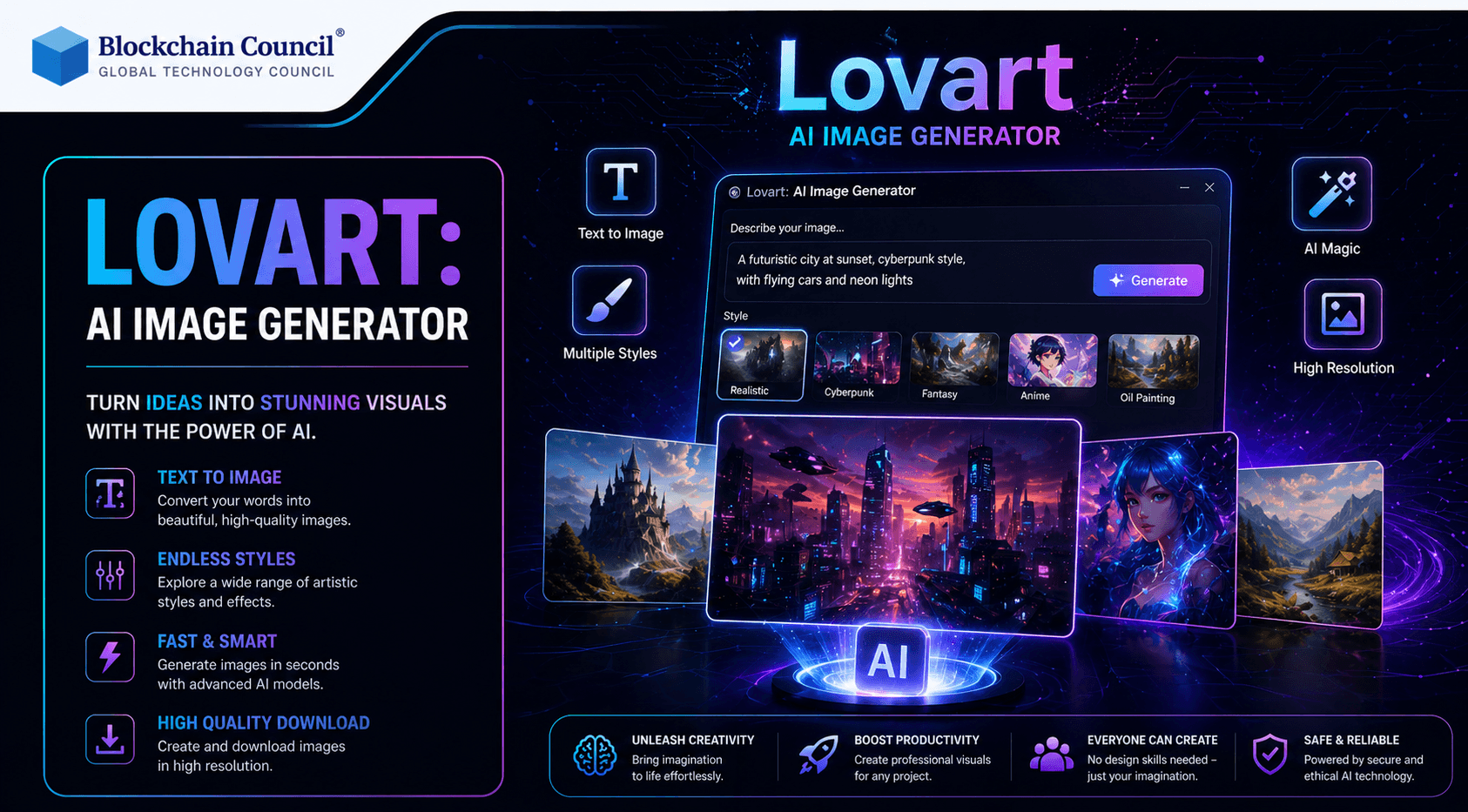
Artificial intelligence continues to reshape industries, and one of the most fascinating developments is its influence on creative domains. Lovart, a term increasingly associated with AI-driven creativity and digital artistry, represents the convergence of technology and human imagination. It reflects how modern tools are not just automating tasks but actively participating in artistic expression and innovation.
As AI evolves, professionals are investing in structured learning paths like the AI expert certification to better understand how these systems function and how they can be applied in creative and technical fields. Similarly, specialized programs such as the Claude AI expert Certification and ChatGPT Expert certification are helping individuals master AI tools that drive innovations like Lovart.

This article explores Lovart in depth, covering its meaning, applications, latest developments, and future potential in the evolving digital landscape.
What is Lovart?
Lovart can be understood as a blend of “love” and “art,” symbolizing creative expression enhanced by artificial intelligence. It represents a new wave of digital creativity where AI tools collaborate with humans to produce art, design, content, and even interactive experiences.
Unlike traditional art forms, Lovart emphasizes the partnership between human intuition and machine intelligence. AI systems can analyze patterns, generate visuals, and even compose music, while humans guide the creative direction and emotional depth.
The Rise of AI in Creative Industries
The creative industry has undergone a massive transformation with the introduction of AI technologies. Tools powered by machine learning and natural language processing are now capable of generating content, designing visuals, and assisting in storytelling.
For example, writers use AI to generate drafts, designers use it to create visual concepts, and marketers use it to optimize campaigns. Many professionals are enhancing their technical capabilities through programs like the AI Powered coding expert Course, which helps them integrate AI into creative workflows.
Lovart emerges as a concept within this transformation, representing the artistic side of AI adoption.
Key Features of Lovart
AI-Assisted Creativity
Lovart relies heavily on AI tools to assist in generating creative outputs. These tools can produce artwork, write stories, and even create music compositions.
Personalization
AI systems can tailor creative outputs based on user preferences, making Lovart highly personalized and adaptable.
Scalability
Unlike traditional art, AI-driven creativity allows for rapid production and scalability, enabling creators to generate large volumes of content efficiently.
Collaboration Between Human and AI
Lovart is not about replacing artists but enhancing their capabilities. The collaboration between human creativity and AI efficiency is at its core.
Applications of Lovart
Digital Art and Design
AI tools are widely used to create digital paintings, illustrations, and graphic designs. Artists can experiment with styles and techniques that were previously difficult to achieve.
Content Creation
Writers and content creators use AI to generate blogs, scripts, and marketing materials. This improves productivity and allows for faster content delivery.
Marketing and Branding
Businesses use AI-generated visuals and content to enhance branding and marketing strategies. Many professionals are exploring this field through an AI powered digital marketing expert course, which focuses on leveraging AI for effective campaigns.
Entertainment Industry
AI is being used in film production, music composition, and game development. Lovart plays a role in creating immersive and interactive experiences.
Real-World Examples of Lovart
One notable example is the use of AI-generated art in advertising campaigns. Brands are increasingly using AI tools to create unique visuals that capture audience attention.
Another example is AI-assisted music composition, where artists use algorithms to generate melodies and harmonies. This allows musicians to experiment with new sounds and styles.
In the gaming industry, AI is used to create dynamic environments and characters, enhancing user experience and engagement.
Benefits of Lovart
Enhanced Creativity
AI tools expand creative possibilities by offering new perspectives and ideas.
Time Efficiency
Creators can produce content faster, reducing the time required for brainstorming and execution.
Cost Reduction
Automation reduces the need for extensive resources, making creative processes more cost-effective.
Accessibility
Lovart makes creativity accessible to individuals who may not have traditional artistic skills.
Challenges and Limitations
Despite its advantages, Lovart also faces several challenges:
Lack of Originality
AI-generated content may sometimes lack true originality, as it relies on existing data patterns.
Ethical Concerns
Issues related to copyright, ownership, and authenticity are still being debated.
Over-Reliance on AI
Excessive dependence on AI tools can limit human creativity and critical thinking.
Quality Control
AI outputs often require human refinement to ensure accuracy and quality.
Latest Developments in Lovart
In 2026, Lovart has seen significant advancements due to improvements in AI technologies.
Enhanced image generation tools with higher accuracy
Improved natural language processing for content creation
Integration with virtual and augmented reality
Real-time collaboration between AI and users
These developments are making Lovart more sophisticated and widely adopted across industries.
The Role of AI Certifications in Lovart
As AI continues to evolve, certifications play a crucial role in helping professionals stay competitive. Programs like the AI expert certification and Claude AI expert Certification provide structured learning and practical knowledge.
These certifications enable individuals to understand AI tools deeply and apply them effectively in creative and technical fields.
Future of Lovart
The future of Lovart is closely tied to advancements in AI and technology.
Increased automation in creative processes
More personalized and adaptive content
Integration with emerging technologies like VR and AR
Greater collaboration between humans and AI
As these trends continue, Lovart is expected to become a significant part of the digital ecosystem.
Conclusion
Lovart represents a new era of creativity where artificial intelligence and human imagination work together. It is transforming how art, content, and digital experiences are created and consumed.
While it offers numerous benefits, it also requires careful consideration of ethical and creative challenges. The key to success lies in balancing AI capabilities with human creativity and critical thinking.
Professionals who invest in learning and adapting to these technologies will be better positioned to thrive in this evolving landscape.
Frequently Asked Questions
1. What is Lovart in simple terms?
Lovart refers to the combination of artificial intelligence and creative expression. It represents how AI tools are used to create art, content, and digital experiences. This concept focuses on collaboration between humans and machines rather than replacement. It is becoming increasingly popular in industries like marketing, design, and entertainment. Overall, Lovart simplifies and enhances the creative process.
2. How does Lovart use AI?
Lovart uses AI to generate creative outputs such as images, text, and music. AI algorithms analyze patterns and produce content based on user input. This allows creators to experiment with new ideas quickly. It also improves efficiency and reduces manual effort. The result is a more dynamic and innovative creative process.
3. Is Lovart replacing human artists?
Lovart is not replacing human artists but supporting them. AI tools assist in generating ideas and speeding up workflows. However, human creativity and emotional understanding remain essential. Artists still play a key role in guiding and refining outputs. The combination leads to better results overall.
4. What industries use Lovart?
Lovart is used in industries such as marketing, entertainment, education, and design. Businesses use it for branding and content creation. The entertainment industry uses it for music and visual effects. Education sectors use it for learning tools. Its applications continue to expand across fields.
5. Can beginners use Lovart tools?
Yes, beginners can easily use Lovart tools with minimal experience. Many AI platforms are designed to be user-friendly. Simple prompts can generate useful outputs. Over time, users can improve their skills and understanding. This makes it accessible to a wide audience.
6. What are the benefits of Lovart?
Lovart offers benefits such as increased creativity, efficiency, and accessibility. It allows users to create content faster and with less effort. It also reduces costs associated with traditional methods. Additionally, it opens opportunities for non-experts to explore creativity. These advantages make it highly valuable.
7. Are there risks in using Lovart?
Yes, there are risks such as ethical concerns and lack of originality. AI-generated content may raise copyright issues. Over-reliance on AI can also limit human creativity. Quality control is another challenge. Users need to balance AI usage carefully.
8. How can I learn Lovart skills?
You can learn Lovart skills by exploring AI tools and taking relevant courses. Certifications provide structured learning and practical knowledge. Practice is essential to improve understanding. Experimenting with different tools helps build expertise. Continuous learning is important in this field.
9. Is Lovart expensive to implement?
Lovart can be cost-effective compared to traditional creative methods. Many AI tools are affordable or even free. Businesses can reduce production costs significantly. However, advanced tools may require investment. Overall, it offers good value for money.
10. Can Lovart improve productivity?
Yes, Lovart significantly improves productivity. It automates repetitive tasks and speeds up content creation. This allows creators to focus on strategy and innovation. Time efficiency increases overall output. Productivity gains are one of its main advantages.
11. What tools are used in Lovart?
Various AI tools are used in Lovart, including image generators and language models. These tools assist in creating visuals, text, and audio. They are designed to handle different creative tasks. Users can choose tools based on their needs. The ecosystem continues to grow.
12. Is Lovart suitable for businesses?
Yes, Lovart is highly suitable for businesses. It helps improve marketing, branding, and customer engagement. Companies can create personalized content efficiently. It also reduces operational costs. Businesses benefit from improved performance.
13. Can Lovart be used in education?
Lovart is useful in education for creating learning materials and visual content. It helps simplify complex topics. Students can use it for projects and assignments. Teachers can enhance teaching methods. It supports interactive learning.
14. What is the future of Lovart?
The future of Lovart includes more advanced AI tools and automation. It will integrate with technologies like VR and AR. Personalization will improve significantly. Adoption will continue to grow across industries. It is expected to play a major role in digital transformation.
15. Can Lovart generate original content?
Lovart can generate content that appears original, but it is based on existing data patterns. Human input is needed to ensure uniqueness. Refinement improves originality. It works best as a collaborative tool. Creativity improves with human involvement.
16. How accurate is Lovart output?
Lovart outputs are generally accurate but may require verification. AI systems can sometimes produce errors. Reviewing and editing content is important. Accuracy improves with better prompts. Users should always validate results.
17. Is Lovart easy to learn?
Lovart is relatively easy to learn, especially with modern AI tools. Beginners can start with basic features and gradually advance. Practice improves skills over time. Learning resources are widely available. Consistency leads to mastery.
18. Can Lovart help in marketing?
Yes, Lovart is highly effective in marketing. It helps create engaging content and visuals. Businesses can optimize campaigns using AI insights. This improves audience engagement. Marketing strategies become more efficient.
19. What skills are needed for Lovart?
Skills such as creativity, basic technical knowledge, and prompt writing are useful. Understanding AI tools enhances performance. Analytical thinking also helps in refining outputs. Continuous learning is important. These skills improve overall effectiveness.
20. How can I start using Lovart?
You can start by exploring AI tools and experimenting with simple projects. Learning through courses and certifications is helpful. Practice regularly to improve results. Gradually take on more complex tasks. This approach builds confidence and expertise.
Related Articles
View All
AI & ML
OpenAI Launches GPT-6.1 Terra: What’s New?
OpenAI has launched GPT-6.1 Terra, a faster and cheaper mid-tier model with stronger computer use, better image understanding and fewer errors. See what is new, what it costs, and who can use it.

AI & ML
Built to Catch AI Cheating: Rethinking Pre-Employment Assessments with HireValid
Explore how HireValid is rethinking pre-employment assessments with AI-resistant test design, integrity signals, candidate evidence, and human review to address AI-assisted cheating.

AI & ML
AI-Era Hiring Needs AI-Proof Tests: How HireValid Is Redefining Talent Assessment
Explore how HireValid is rethinking talent assessment for the AI era with job-relevant tests, anti-cheating design, integrity signals, and human-reviewed evidence of candidate ability.
Trending Articles
AWS Career Roadmap
A step-by-step guide to building a successful career in Amazon Web Services cloud computing.
How Blockchain Secures AI Data
Understand how blockchain technology is being applied to protect the integrity and security of AI training data.

Can DeFi 2.0 Bridge the Gap Between Traditional and Decentralized Finance?
The next generation of DeFi protocols aims to connect traditional banking with decentralized finance ecosystems.