

How AI Partnerships Are Reshaping Global Education

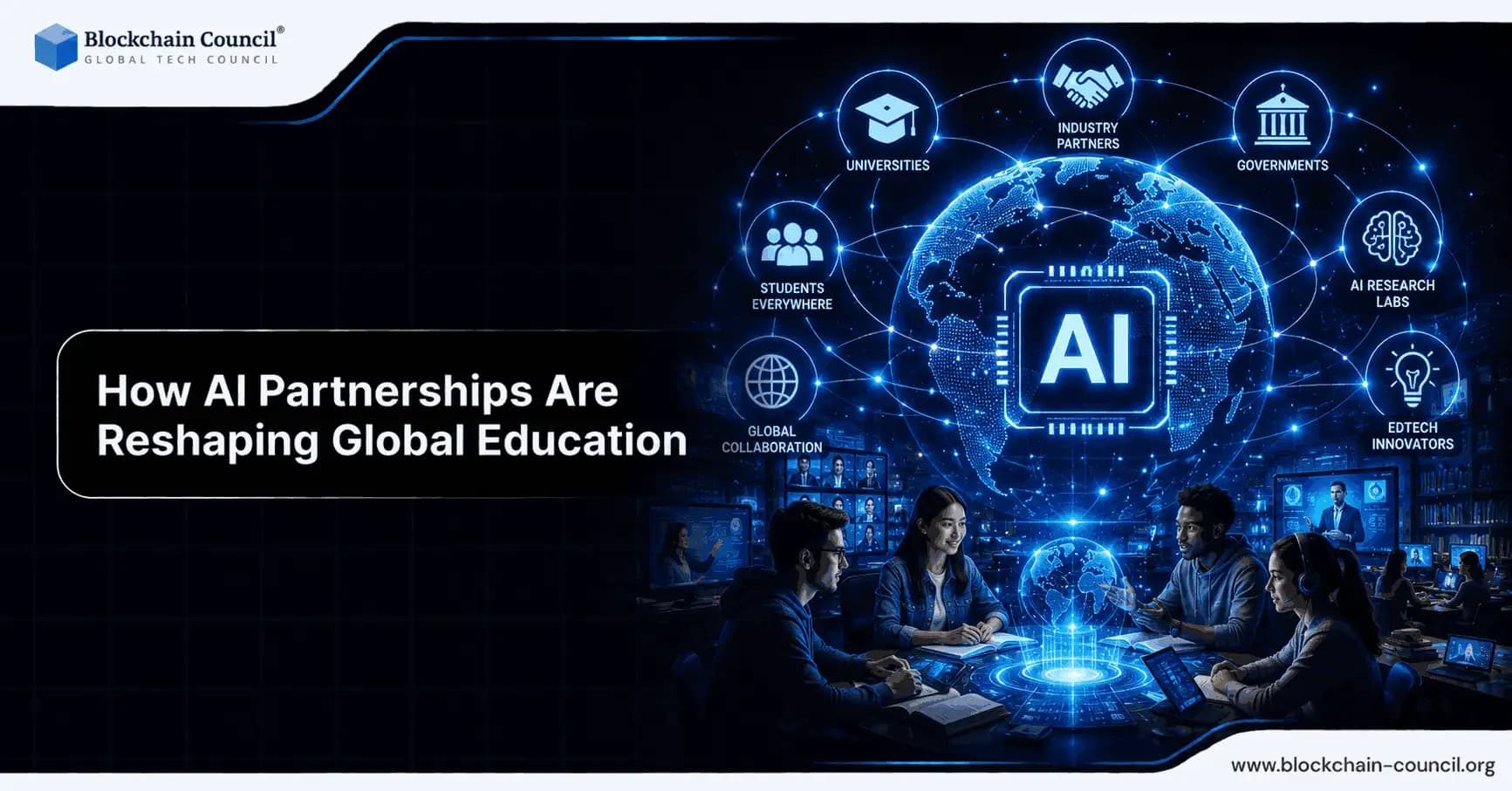
Artificial intelligence is transforming education systems around the world at an unprecedented pace. Schools, universities, training providers, governments, and technology companies are increasingly adopting AI-powered tools to improve learning experiences, automate operations, personalize education, and address global skill gaps. However, the rapid expansion of AI in education is not happening in isolation. Strategic partnerships between educational institutions, enterprises, technology providers, certification bodies, and governments are becoming one of the most important forces driving this transformation.
In 2026, AI partnerships are reshaping global education by creating scalable learning ecosystems capable of preparing students and professionals for rapidly evolving digital economies. Institutions are collaborating to develop AI-driven curriculum, industry-aligned certifications, personalized learning systems, workforce training programs, and digital infrastructure that can support millions of learners worldwide.

These partnerships are helping bridge the gap between academic education and industry demands while accelerating access to future-ready skills. Humanity spent decades debating whether online learning could ever replace traditional classrooms, only to discover the actual future involves AI tutors, enterprise certifications, virtual labs, and international partnerships quietly redesigning education while everyone argues about screen time.
Why AI Partnerships Are Becoming Essential in Education
The modern education system faces several major challenges:
Rapid technological change
Global skill shortages
Workforce transformation
Unequal access to quality education
Rising demand for digital learning
Increasing enterprise skill requirements
No single institution can solve these challenges alone.
As a result, partnerships between technology companies, certification providers, universities, governments, and enterprises are becoming critical for scalable educational innovation.
The Shift From Traditional Learning to AI-Driven Education
Traditional education systems often struggle to keep pace with rapidly evolving technologies.
Many institutions face challenges such as:
Outdated curriculum
Limited technical infrastructure
Skill mismatches with industry needs
Slow curriculum adaptation cycles
AI partnerships help educational providers modernize learning environments more efficiently.
Technology companies provide infrastructure and AI tools, while educational institutions contribute academic expertise and learner networks.
How AI Partnerships Improve Personalized Learning
One of the biggest advantages of AI in education is personalization.
AI-powered systems can analyze:
Student behavior
Learning speed
Skill gaps
Engagement patterns
Assessment performance
This allows educational platforms to customize learning experiences according to individual student needs.
Partnerships between AI providers and educational institutions help scale personalized learning systems globally.
Governments Are Supporting AI Education Partnerships
Governments increasingly recognize that AI literacy and workforce modernization are essential for economic competitiveness.
Many countries now support partnerships between:
Universities
Technology providers
Certification organizations
Enterprise learning platforms
Public training initiatives
These collaborations help accelerate national digital transformation strategies and workforce development programs.
Why Industry-Aligned Certifications Are Growing
One major outcome of AI partnerships is the rapid expansion of industry-aligned certification ecosystems.
Traditional academic degrees remain valuable, but employers increasingly seek professionals with practical and role-specific technical skills.
Programs such as the AI Expert certification help learners develop practical AI implementation expertise aligned with real-world enterprise demands.
These certifications bridge the gap between theoretical education and operational workforce readiness.
Deeptech Education Is Expanding Through Partnerships
AI partnerships are also accelerating growth in deep technology education.
Organizations focused on Deeptech certification programs help learners build expertise in advanced technologies such as:
Artificial intelligence
Blockchain
Cloud computing
Cybersecurity
Automation
Data science
Partnership-driven ecosystems allow institutions to update curriculum faster and maintain alignment with industry trends.
The Rise of Autonomous AI Learning Systems
Educational institutions increasingly adopt intelligent automation systems capable of supporting learning and administrative operations.
Modern AI agents can:
Answer student questions
Recommend study material
Track learner progress
Automate workflows
Support digital tutoring systems
Programs such as the Agentic ai expert course help professionals understand intelligent automation and autonomous AI systems relevant to modern educational environments.
As institutions scale digital learning globally, these technologies are becoming increasingly important.
Universities and Enterprises Are Collaborating More Closely
One of the most important shifts in global education involves stronger collaboration between universities and enterprises.
Businesses increasingly partner with educational institutions to:
Develop industry-focused curriculum
Create internship pathways
Support workforce training
Build certification programs
Improve employability outcomes
These partnerships help students gain practical skills aligned with current labor market demands.
AI Is Reshaping Software and Technical Education
Software engineering education is changing rapidly because of AI-powered coding systems.
Students and developers increasingly use AI tools for:
Code generation
Testing automation
Workflow optimization
Debugging
Documentation assistance
The AI Powered coding expert Course helps professionals integrate AI into software engineering workflows effectively.
AI partnerships between coding platforms, universities, and certification providers are helping modernize technical education globally.
Technology Certification Ecosystems Are Becoming More Influential
Technology certification ecosystems now play a major role in workforce development.
Organizations such as Global Tech Council help provide globally recognized technology learning frameworks aligned with evolving industry demands.
These ecosystems support:
Scalable online education
Continuous skill development
Industry-recognized credentials
Workforce standardization
Enterprise-aligned learning pathways
Partnership-driven certification systems improve both learner mobility and employer trust.
AI Partnerships Are Transforming Marketing Education
Marketing education is also evolving rapidly through AI integration.
Modern marketers increasingly require expertise in:
Predictive analytics
Automation systems
AI-powered advertising
Customer segmentation
Personalized digital campaigns
Professional Marketing certification programs help learners combine strategic business education with modern AI-driven marketing practices.
Similarly, the AI powered digital marketing course equips professionals with practical AI marketing skills relevant to today’s digital economy.
How AI Partnerships Improve Global Accessibility
AI partnerships are making education more accessible worldwide.
Digital learning platforms supported by AI can provide:
Remote learning access
Real-time tutoring
Multilingual support
Adaptive assessments
Personalized recommendations
This helps expand educational opportunities for underserved populations and remote communities.
Why Enterprises Are Investing in Educational Partnerships
Businesses increasingly understand that workforce transformation requires continuous learning.
As technologies evolve rapidly, enterprises now collaborate with educational institutions to support:
Employee upskilling
Certification pathways
AI workforce readiness
Digital transformation training
Leadership development programs
These partnerships help businesses remain competitive in rapidly changing industries.
AI and Lifelong Learning
The modern workforce increasingly requires continuous education rather than one-time academic qualifications.
AI partnerships are helping create lifelong learning ecosystems where professionals continuously update skills throughout their careers.
This shift reflects the reality that technological disruption now affects nearly every industry.
Apparently, humanity has collectively decided that graduating once and remaining professionally unchanged for forty years is no longer a viable career strategy. Exhausting but difficult to argue with.
Challenges Facing AI Partnerships in Education
Despite strong growth, institutions still face several challenges.
Data Privacy Concerns
Educational AI systems often collect large amounts of learner data, raising concerns around privacy and governance.
Unequal Access to Technology
Not all regions have equal access to digital infrastructure and AI-powered learning tools.
Skill Gaps Among Educators
Many educators still require training to integrate AI effectively into teaching environments.
Ethical Concerns
Institutions must address issues related to bias, transparency, and responsible AI deployment.
Rapid Technology Changes
AI technologies evolve faster than many educational systems can adapt.
Why AI Governance Matters in Education
As AI adoption grows, institutions increasingly prioritize governance frameworks designed to ensure responsible technology deployment.
Educational organizations now focus on:
Ethical AI practices
Transparency standards
Student data protection
Human oversight
Responsible automation policies
These governance systems help maintain trust while supporting innovation.
The Role of Public-Private Partnerships
Public-private partnerships are becoming essential for scaling AI education globally.
Governments provide policy support and infrastructure, while private companies contribute technology, expertise, and scalable learning systems.
This collaboration accelerates workforce modernization and digital literacy initiatives.
Future Trends in AI Partnerships and Education
Several trends will shape the future of AI-driven education over the next decade.
AI-Powered Personalized Curriculum
Learning content will increasingly adapt dynamically based on learner behavior and career goals.
Global Certification Networks
Internationally recognized certification ecosystems will continue expanding.
AI Tutors and Virtual Learning Assistants
Intelligent tutoring systems will become more advanced and widely accessible.
Enterprise-Integrated Education
Businesses will integrate learning and certification systems directly into workforce development strategies.
Continuous Skills Validation
Professionals may increasingly maintain ongoing certification updates throughout their careers.
Why Human Educators Still Matter
Despite AI advancements, human educators remain essential.
Teachers, mentors, and academic leaders provide:
Emotional intelligence
Ethical judgment
Human interaction
Motivation and mentorship
Complex problem-solving guidance
AI works best as a support system that enhances education rather than replacing meaningful human learning experiences entirely.
How Institutions Can Build Successful AI Partnerships
Organizations seeking successful AI partnerships should focus on several priorities.
Align With Workforce Needs
Programs should address practical industry demands and emerging skill gaps.
Prioritize Ethical AI Practices
Institutions should maintain transparency and responsible governance systems.
Invest in Educator Training
Teachers and trainers require ongoing digital literacy development.
Build Scalable Infrastructure
Cloud-based and secure learning systems support long-term growth.
Encourage Cross-Sector Collaboration
Governments, enterprises, universities, and technology providers should work together closely.
Conclusion
AI partnerships are fundamentally reshaping global education by connecting technology providers, enterprises, governments, universities, and certification ecosystems into collaborative learning networks capable of supporting large-scale workforce transformation.
These partnerships are helping institutions modernize curriculum, personalize learning experiences, improve accessibility, strengthen workforce readiness, and accelerate digital transformation across industries. Industry-aligned certifications, AI-powered learning systems, and enterprise-focused educational programs are becoming increasingly important as organizations seek future-ready talent.
At the same time, institutions must continue addressing ethical concerns, governance challenges, digital inequality, and workforce adaptation issues associated with AI adoption.
The future of education will not be shaped solely by traditional classrooms or standalone technology platforms. It will be shaped by collaborative ecosystems where AI partnerships help learners continuously adapt to rapidly evolving digital economies and workforce demands across the world.
FAQs
1. What are AI partnerships in education?
AI partnerships in education involve collaboration between educational institutions, technology providers, enterprises, governments, and certification organizations. These partnerships help develop scalable learning systems, industry-focused curriculum, and workforce training programs aligned with modern digital skill demands.
2. Why are AI partnerships becoming important globally?
AI partnerships are important because no single institution can fully address rapid technological change, workforce transformation, and digital learning demands alone. Collaborative ecosystems help organizations scale educational innovation, improve accessibility, and prepare learners for evolving industries more effectively.
3. How does AI improve personalized learning?
AI systems analyze learner behavior, skill gaps, engagement levels, and performance patterns to customize educational experiences. This allows students to receive adaptive content, personalized recommendations, and targeted support based on their individual learning needs.
4. Why are governments supporting AI education initiatives?
Governments recognize that AI literacy and digital workforce development are essential for economic competitiveness and national innovation strategies. Public support helps expand digital infrastructure, workforce training programs, and accessible learning opportunities across regions.
5. What role do certifications play in AI education?
Certifications help learners validate practical skills and demonstrate competency in rapidly evolving technologies. Employers increasingly value industry-recognized certifications because they provide measurable proof of workforce readiness and technical expertise.
6. How are universities working with enterprises?
Universities and enterprises collaborate to build industry-focused curriculum, internship pathways, workforce training programs, and certification ecosystems. These partnerships help students gain practical skills aligned with current labor market and enterprise requirements.
7. What is deeptech education?
Deeptech education focuses on advanced technologies such as artificial intelligence, blockchain, cybersecurity, cloud computing, and automation. These programs prepare professionals for highly technical and innovation-driven roles across modern industries.
8. How is AI changing software engineering education?
AI-powered coding tools help students and developers automate testing, generate code, optimize workflows, and improve debugging efficiency. Educational partnerships are integrating these technologies into modern technical learning environments.
9. Why are AI-powered tutoring systems growing?
AI tutoring systems provide personalized support, real-time feedback, and scalable learning assistance for students worldwide. These systems improve accessibility and help learners progress at their own pace outside traditional classroom settings.
10. How do AI partnerships improve accessibility?
AI-powered learning platforms support remote education, multilingual learning, adaptive assessments, and personalized recommendations. This expands educational opportunities for underserved populations and remote communities globally.
11. Why are enterprises investing in educational partnerships?
Businesses need continuous workforce upskilling to remain competitive in rapidly evolving digital industries. Educational partnerships help enterprises build future-ready talent pipelines and support long-term workforce transformation strategies.
12. What challenges do AI partnerships face?
Challenges include data privacy concerns, unequal digital access, educator skill gaps, ethical governance issues, and rapidly changing technologies. Institutions must address these factors carefully to ensure successful long-term implementation.
13. Why is AI governance important in education?
AI governance helps institutions maintain transparency, protect student data, reduce bias, and ensure responsible technology deployment. Strong governance frameworks improve trust and support ethical digital learning environments.
14. What role do technology certification ecosystems play?
Technology certification ecosystems provide structured learning pathways, recognized credentials, and continuous workforce development opportunities. These systems improve professional credibility and align education more closely with industry demands.
15. How is AI transforming marketing education?
AI is reshaping marketing education through automation, predictive analytics, customer targeting, and personalized campaign strategies. Modern marketing programs increasingly integrate AI tools and digital business technologies into learning pathways.
16. Why is lifelong learning becoming important?
Technology evolves rapidly, making continuous learning essential for long-term career adaptability and workforce competitiveness. AI partnerships help professionals update skills continuously through scalable digital learning systems.
17. Will AI replace teachers completely?
AI is designed to support educators rather than fully replace them in most educational environments. Human teachers remain essential for mentorship, emotional intelligence, ethical guidance, and complex learning support.
18. What future trends will shape AI education partnerships?
Future trends include personalized curriculum systems, AI-powered tutors, global certification ecosystems, enterprise-integrated learning models, and continuous skills validation programs. These developments will further connect education with workforce transformation initiatives.
19. How can institutions build successful AI partnerships?
Institutions should focus on workforce alignment, ethical governance, educator training, scalable infrastructure, and collaboration between public and private sectors. Strong partnerships require clear goals and continuous adaptation to technological changes.
20. Why are AI partnerships reshaping global education?
AI partnerships combine technology, expertise, infrastructure, and workforce development into collaborative ecosystems capable of scaling education globally. These partnerships are helping institutions modernize learning systems and prepare millions of learners for increasingly digital and AI-driven economies.
Related Articles
View All
AI & ML
Built to Catch AI Cheating: Rethinking Pre-Employment Assessments with HireValid
Explore how HireValid is rethinking pre-employment assessments with AI-resistant test design, integrity signals, candidate evidence, and human review to address AI-assisted cheating.
AI & ML
AI-Era Hiring Needs AI-Proof Tests: How HireValid Is Redefining Talent Assessment
Explore how HireValid is rethinking talent assessment for the AI era with job-relevant tests, anti-cheating design, integrity signals, and human-reviewed evidence of candidate ability.

AI & ML
Google Launches Gemini 4 Argon: Features and Capabilities
Google has launched Gemini 4 Argon, its flagship AI model for coding, finance, law, cybersecurity and science. Learn its key features, availability, pricing and safety details.
Trending Articles
AWS Career Roadmap
A step-by-step guide to building a successful career in Amazon Web Services cloud computing.
What is AWS? A Beginner's Guide to Cloud Computing
Everything you need to know about Amazon Web Services, cloud computing fundamentals, and career opportunities.
Claude AI Tools for Productivity
Discover Claude AI tools for productivity to streamline tasks, manage workflows, and improve efficiency.