

Gme AI

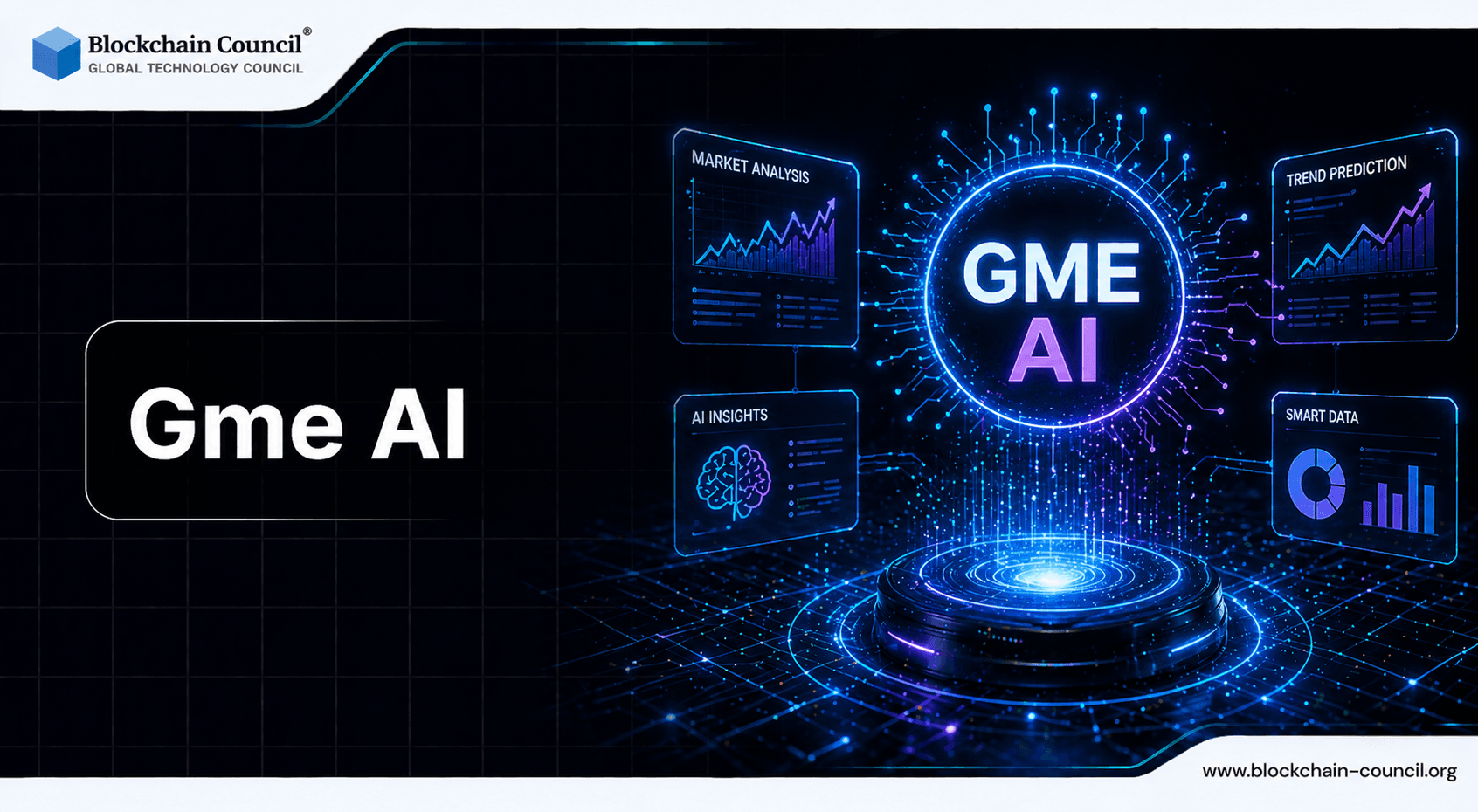
Artificial Intelligence is evolving rapidly, and one of the most significant developments in recent years is Gemini AI, Google’s advanced multimodal AI system. Designed to compete with leading AI models, Gemini represents a new generation of intelligent systems capable of understanding and generating text, images, code, and more.
Gemini AI is not just another chatbot. It is a comprehensive AI platform built to handle complex reasoning, improve productivity, and support a wide range of real-world applications.

This article explores Gemini AI in detail, including its features, architecture, use cases, recent developments, and its impact on industries.
What Is Gemini AI?
Gemini AI is a family of advanced AI models developed by Google. It is designed to process and generate multiple types of data, including text, images, audio, and code.
Unlike earlier models, Gemini is built as a multimodal system, meaning it can understand and combine different types of inputs in a single workflow.
Key capabilities include:
Natural language understanding
Image and video interpretation
Code generation and debugging
Data analysis and reasoning
This makes Gemini AI a versatile and powerful tool.
Evolution of Gemini AI
Gemini AI is the result of years of research and development.
From Bard to Gemini
Google initially introduced Bard as a conversational AI. Gemini represents the next step, offering deeper capabilities and improved performance.
Multimodal Architecture
Gemini was designed from the ground up to handle multiple data types, unlike earlier models that focused mainly on text.
Continuous Improvement
Google continues to update Gemini with better reasoning, faster responses, and improved accuracy.
This evolution highlights the rapid progress in AI technology.
Key Features of Gemini AI
Gemini AI offers a range of advanced features.
Multimodal Understanding
Gemini can process text, images, and other inputs simultaneously.
Advanced Reasoning
It can solve complex problems and provide detailed explanations.
Code Generation
Developers can use Gemini for writing, debugging, and optimizing code.
Integration with Google Ecosystem
Gemini integrates with tools like Google Workspace, Search, and Cloud.
Real-Time Assistance
It provides instant responses and support for various tasks.
These features make Gemini AI highly versatile.
Recent Developments in Gemini AI
Gemini AI has seen significant updates.
Improved Performance
Newer versions demonstrate better reasoning and accuracy.
Expanded Context Window
Gemini can handle longer inputs and more complex tasks.
Enterprise Integration
Businesses are increasingly adopting Gemini for workflows and automation.
Enhanced Safety Measures
Google continues to improve safeguards and reduce harmful outputs.
These developments enhance its reliability and usability.
Real-World Example: Business Productivity
A corporate team used Gemini AI to automate report generation.
Instead of manually compiling data, the team used Gemini to:
Analyze datasets
Generate summaries
Create presentations
This reduced workload and improved efficiency.
Benefits of Gemini AI
Gemini AI offers several advantages.
Efficiency
Tasks are completed faster with AI assistance.
Accuracy
Advanced models provide reliable outputs.
Scalability
Businesses can scale operations using AI tools.
Accessibility
Users from different backgrounds can benefit.
These benefits make Gemini a valuable tool.
Challenges and Limitations
Despite its strengths, Gemini AI has limitations.
Occasional Errors
AI may produce incorrect or incomplete information.
Data Dependency
Performance depends on training data quality.
Ethical Concerns
Issues such as bias and privacy must be addressed.
User Over-Reliance
Users may depend too heavily on AI outputs.
Understanding these limitations is important.
Gemini AI vs Other AI Models
Gemini competes with other leading AI systems.
Strengths
Strong multimodal capabilities
Integration with Google tools
Advanced reasoning
Considerations
Different models may perform better in specific tasks.
Choosing the right AI depends on use case.
Role of Gemini AI in Digital Transformation
Gemini AI is driving digital transformation.
Organizations use it to:
Automate workflows
Improve decision-making
Enhance customer experiences
This leads to increased efficiency and innovation.
Skills Required to Work with Gemini AI
To use Gemini effectively, users need relevant skills.
The AI Expert Certification provides foundational knowledge of AI technologies.
For conversational AI systems, the Claude AI Certification offers insights into advanced models.
Professionals can also benefit from the ChatGPT Expert Certification, which focuses on prompt engineering and AI interaction.
Developers can enhance their expertise through the AI Powered Coding Expert Course, which covers building AI applications.
Additionally, marketers can explore the AI Powered Digital Marketing Course to understand AI-driven strategies.
Gemini AI in Different Industries
Gemini AI is used across multiple sectors.
Healthcare
AI assists with data analysis and research.
Finance
It supports risk assessment and analytics.
Education
Students and educators use AI for learning and research.
Marketing
Businesses use AI for content creation and campaign optimization.
These applications highlight its versatility.
Future of Gemini AI
The future of Gemini AI looks promising.
Improved Personalization
AI will adapt to individual users.
Greater Integration
Gemini will connect with more tools and platforms.
Enhanced Multimodal Capabilities
It will handle more complex data types.
Ethical AI Development
Stronger guidelines will ensure responsible use.
These trends will shape its growth.
Impact on Everyday Life
Gemini AI is becoming part of daily life.
From writing emails to solving complex problems, it assists users in various tasks.
Its accessibility makes it widely useful.
Conclusion
Gemini AI represents a major advancement in artificial intelligence, offering powerful multimodal capabilities and a wide range of applications. As part of Google’s AI ecosystem, it is shaping the future of technology and digital interaction.
While challenges remain, the potential of Gemini AI is significant. Understanding its capabilities and limitations will help users and organizations make the most of this powerful tool.
Frequently Asked Questions (FAQs)
1. What is Gemini AI?
Gemini AI is an advanced artificial intelligence model developed by Google. It is designed to understand and generate multiple types of content, including text, images, and code. Unlike traditional chatbots, it focuses on deeper reasoning and more accurate responses. It is widely used for productivity, research, and automation tasks.
2. How does Gemini AI work?
Gemini AI works using large-scale machine learning models trained on vast datasets. It analyzes user input, understands context, and generates relevant responses. It uses advanced neural networks to process information and improve accuracy over time. This allows it to handle complex queries and provide useful outputs.
3. What are the main features of Gemini AI?
Gemini AI offers features such as multimodal understanding, advanced reasoning, and code generation. It can process different types of inputs at once and provide detailed outputs. It also integrates with various tools and platforms, making it highly versatile for different use cases.
4. Who can use Gemini AI?
Gemini AI can be used by individuals, businesses, developers, and students. It is accessible to anyone who needs help with writing, coding, analysis, or research. Its flexibility makes it suitable for both beginners and advanced users.
5. What are the benefits of Gemini AI?
The main benefits include improved productivity, faster task completion, and better decision-making. It helps users save time by automating repetitive tasks. It also provides insights and suggestions that enhance efficiency and creativity.
6. What are the limitations of Gemini AI?
Gemini AI may sometimes produce incorrect or incomplete information. Its performance depends on the quality of data and prompts provided by users. It also requires human oversight to ensure accuracy, especially in critical tasks.
7. How is Gemini AI used in business?
Businesses use Gemini AI for automating workflows, generating content, and analyzing data. It helps improve efficiency and reduce operational costs. Companies also use it to enhance customer experience and decision-making processes.
8. Is Gemini AI safe to use?
Gemini AI includes safety measures to reduce harmful outputs. However, users should still use it responsibly and verify important information. Data privacy and ethical use are important considerations when using any AI system.
9. How does Gemini AI compare to other AI models?
Gemini AI stands out due to its multimodal capabilities and integration with Google’s ecosystem. It performs well in reasoning and handling complex tasks. However, different AI models may excel in specific areas depending on the use case.
10. What skills are needed to use Gemini AI effectively?
Basic digital literacy and understanding of prompts are helpful. Users who learn prompt engineering and AI fundamentals can get better results. Technical skills are beneficial but not always required for general use.
11. Can Gemini AI write code?
Yes, Gemini AI can generate, debug, and optimize code in multiple programming languages. Developers use it to speed up coding tasks and solve technical problems. However, the output should always be reviewed for accuracy.
12. How does Gemini AI improve productivity?
It automates repetitive tasks such as writing, summarizing, and data analysis. This allows users to focus on more important work. It also provides quick insights, reducing the time needed for research and decision-making.
13. What industries use Gemini AI?
Gemini AI is used in industries such as healthcare, finance, education, and marketing. Each sector uses it differently, from data analysis to content creation. Its flexibility makes it useful across many fields.
14. What is the future of Gemini AI?
The future of Gemini AI includes improved accuracy, better personalization, and deeper integration with tools and platforms. It is expected to become more powerful and widely adopted in both personal and professional environments.
15. How does Gemini AI handle data?
Gemini AI processes user input to generate responses but follows security and privacy guidelines. Organizations using it must ensure proper data handling practices. Users should avoid sharing sensitive information unnecessarily.
16. Can Gemini AI replace humans?
Gemini AI is designed to assist, not replace humans. It can handle repetitive and analytical tasks, but human judgment and creativity remain essential. It works best as a support tool rather than a replacement.
17. What are the ethical concerns of using Gemini AI?
Ethical concerns include bias in AI outputs, data privacy, and misuse of technology. Responsible use and transparency are important to ensure that AI benefits users without causing harm.
18. How does Gemini AI learn?
Gemini AI is trained on large datasets using machine learning techniques. It learns patterns and relationships in data to generate responses. Updates and improvements are made over time to enhance performance.
19. How is Gemini AI integrated into platforms?
Gemini AI is integrated into various applications, including Google tools and cloud services. This allows users to access AI features directly within their workflows, improving efficiency and convenience.
20. Why is Gemini AI important?
Gemini AI represents a major advancement in artificial intelligence. It improves how people interact with technology and enhances productivity across industries. Its impact is significant in shaping the future of digital innovation.
Related Articles
View All
AI & ML
OpenAI Launches GPT-6.1 Terra: What’s New?
OpenAI has launched GPT-6.1 Terra, a faster and cheaper mid-tier model with stronger computer use, better image understanding and fewer errors. See what is new, what it costs, and who can use it.

AI & ML
Built to Catch AI Cheating: Rethinking Pre-Employment Assessments with HireValid
Explore how HireValid is rethinking pre-employment assessments with AI-resistant test design, integrity signals, candidate evidence, and human review to address AI-assisted cheating.
AI & ML
AI-Era Hiring Needs AI-Proof Tests: How HireValid Is Redefining Talent Assessment
Explore how HireValid is rethinking talent assessment for the AI era with job-relevant tests, anti-cheating design, integrity signals, and human-reviewed evidence of candidate ability.
Trending Articles
AWS Career Roadmap
A step-by-step guide to building a successful career in Amazon Web Services cloud computing.
What is AWS? A Beginner's Guide to Cloud Computing
Everything you need to know about Amazon Web Services, cloud computing fundamentals, and career opportunities.
Blockchain in Supply Chain Provenance Tracking
Supply chains are under pressure to prove not just efficiency, but also authenticity, sustainability, and fairness. Customers want to know if their coffee really is fair trade, if the diamonds are con