

Astrology and AI
 Michael Willson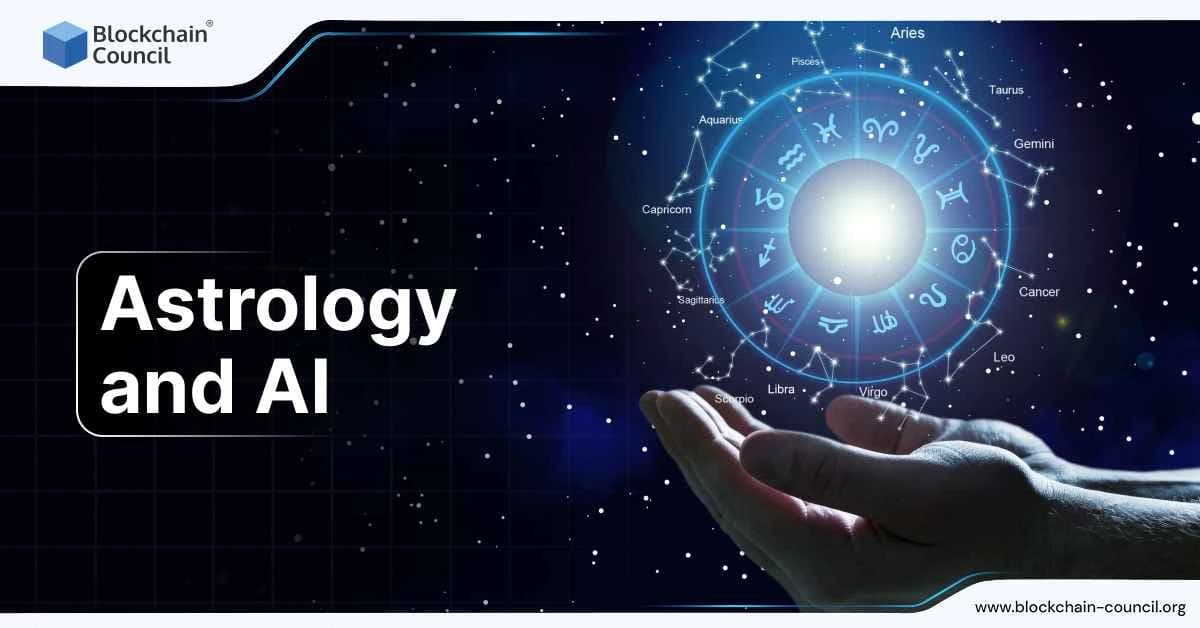
Astrology has always been about finding meaning in the stars, but artificial intelligence is giving it a new shape. AI astrology tools now deliver instant horoscopes, personalized birth charts, and even long-term forecasts by analyzing planetary data alongside user details. Instead of waiting for an astrologer to prepare charts, people can get detailed predictions from their phones in seconds. This mix of old traditions and new technology is why AI astrology is growing so quickly. If you are curious about how it works and what it means for the future, an AI certification can help you understand the systems behind these predictions.
How AI Is Transforming Astrology
AI is not just calculating zodiac signs. It is being used to process planetary transits, retrogrades, and lunar phases in real time. Apps are moving beyond generic sun sign readings by including birth date, exact time, and location to build detailed charts. Platforms like Vaya, which recently raised funding to expand its services, are examples of how astrology businesses are blending machine learning with traditional methods. In some parts of the world, such as Thailand, people are even using AI for fortune-telling tasks like palm or face readings because of the low cost and quick access.

Accuracy and Reliability
AI astrology apps often claim to be accurate, but the results are mixed. On the technical side, calculations of signs and planetary positions are generally correct. The challenge lies in interpretation. Machine learning can highlight patterns in large datasets, but it cannot replace human intuition or cultural nuance. Some academic research has tested algorithms like neural networks and Bayesian models for astrological predictions, showing that AI can process data well but still lacks emotional depth. Users should see AI astrology as an assistant rather than a replacement for traditional astrologers.
Why People Are Interested
The main appeal of AI astrology is convenience. Younger generations, especially Gen Z, prefer apps that offer instant insights and daily updates. These tools are interactive, providing not just forecasts but also mood tracking and compatibility analysis. Many users trust them for self-reflection, while others enjoy the entertainment value. The growing demand shows that people want a blend of guidance, technology, and accessibility. For professionals who want to explore the data side of this trend, the Data Science Certification offers skills to analyze complex datasets like those used in astrology platforms.
Risks and Concerns
Privacy remains one of the biggest challenges. Most AI astrology apps ask for sensitive details such as birth date, birth time, and location. How this information is stored or used is not always clear. Another risk is over-reliance, where people take predictions as fixed truths. This can cause anxiety, especially with negative forecasts. Cultural bias is also an issue, as Vedic, Western, and BaZi astrology all have unique interpretations that AI may oversimplify. For businesses trying to address these risks, blockchain technology courses can provide knowledge about securing personal data in predictive systems.
Business Growth and Career Opportunities
Astrology startups are drawing serious attention. Funding rounds, like the one led by Vaya, show that investors see potential in AI-driven astrology. Devotional platforms are also using AI to match users with priests, interpret charts, and increase engagement. This is more than entertainment; it is becoming an industry that blends spirituality, data, and business. For individuals aiming to build a career around such applications, the Marketing and Business Certification can help in understanding consumer behavior and scaling digital products. At the same time, exploring AI certs is useful for those who want to expand into broader applications of artificial intelligence.
How AI Is Shaping Astrology in 2025
| Area | What’s Happening |
| App Features | Real-time planetary transits, birth chart automation, mood tracking, compatibility checks |
| Accuracy | Correct calculations of signs and houses, but interpretation still lacks human depth |
| User Trends | Gen Z and millennials driving adoption; preference for personalized and fast insights |
| Cultural Reach | Thailand using AI for fortune-telling like palm readings; global demand for localized apps |
| Academic Research | Studies using machine learning (neural nets, Bayesian models) for predictive astrology |
| Funding & Startups | Vaya raised $1.5M to expand AI-astrology services |
| Ethical Concerns | Privacy risks with birth data, vague predictions causing anxiety |
| Spiritual Apps | Devotional platforms integrating AI for chart readings and user engagement |
| Hybrid Models | People using AI apps for quick forecasts, astrologers for deeper interpretation |
| Market Growth | More multilingual support, interactive design, and global expansion |
Conclusion
Astrology and AI together represent a fascinating shift where ancient belief systems meet modern algorithms. From real-time horoscopes to startup-backed platforms, this field is growing rapidly. While AI brings speed, scale, and accessibility, it also introduces new challenges around privacy, accuracy, and cultural sensitivity. For those interested in personal exploration, these apps offer convenience and novelty. For professionals, certifications in AI, data science, blockchain, and marketing provide ways to engage with this trend responsibly. The stars may remain the same, but the way we interpret them is changing fast with AI.
Related Articles
View All
AI & ML
How to Use GPT-6 Astra for Free
Find out whether GPT-6 Astra is available for free, which ChatGPT plans currently include access, and what options users have for trying OpenAI’s latest AI model.
AI & ML
Fable vs GPT: Fable 5.1 vs GPT-6 Astra Compared
A practical Fable vs GPT comparison covering Fable 5.1, GPT-6 Astra, Claude, ChatGPT, benchmarks, pricing, and real enterprise use cases.

AI & ML
GPT 6 Astra: What OpenAI's New Frontier LLM Means for AI, Cybersecurity, and Work
GPT 6 Astra is OpenAI's new frontier LLM, with gated access, Critical cybersecurity capability, and major implications for ChatGPT, developers, and enterprises.
Trending Articles
The Role of Blockchain in Ethical AI Development
How blockchain technology is being used to promote transparency and accountability in artificial intelligence systems.

Top 5 DeFi Platforms
Explore the leading decentralized finance platforms and what makes each one unique in the evolving DeFi landscape.
Blockchain in Supply Chain Provenance Tracking
Supply chains are under pressure to prove not just efficiency, but also authenticity, sustainability, and fairness. Customers want to know if their coffee really is fair trade, if the diamonds are con