

An AI Stuck in 1930

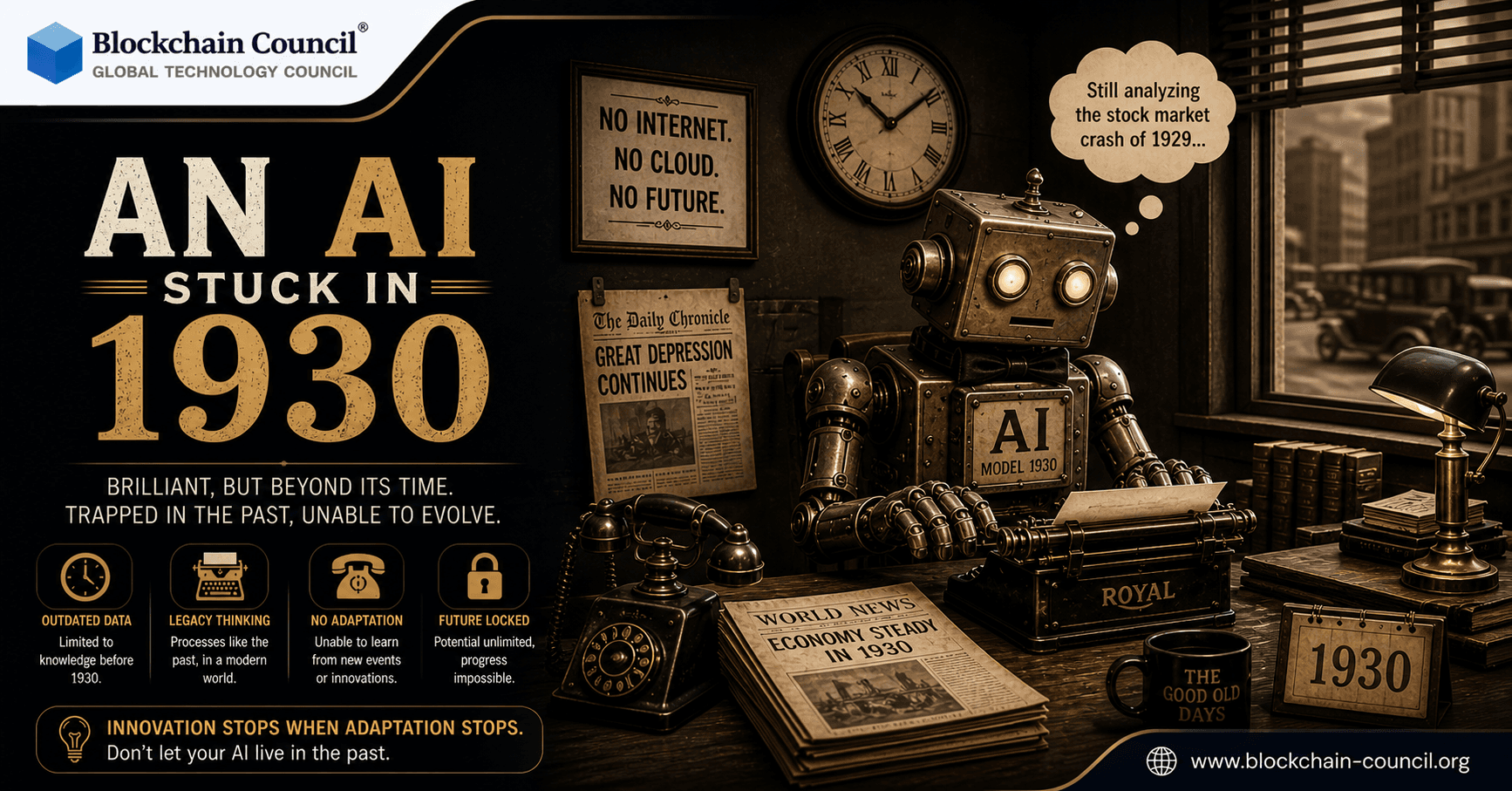
Artificial intelligence is designed to learn, adapt, and evolve. But what happens when an AI system is effectively “stuck” in a different time period? The idea of an AI operating with the mindset, data, and worldview of 1930 offers a fascinating lens through which we can examine the limitations of machine learning, the role of data in shaping intelligence, and the risks of outdated knowledge.
While no modern AI is literally trapped in the year 1930, the concept highlights a real issue. AI systems are only as current and accurate as the data they are trained on. When that data becomes outdated, biased, or incomplete, the system’s outputs can resemble a frozen snapshot of the past.

Understanding the Concept of a Time-Locked AI
An AI “stuck in 1930” is a metaphor for systems that operate using outdated information. Such an AI would reflect the social norms, technological understanding, and cultural assumptions of that era.
In practical terms, this means:
Limited understanding of modern technology
Outdated social perspectives
Incomplete or incorrect knowledge of current events
This concept helps illustrate how critical it is to continuously update and refine AI systems.
Professionals seeking to understand how AI evolves over time often explore structured learning paths like the AI expert certification, which explains how data influences AI behavior.
How AI Becomes “Stuck” in the Past
Dependence on Training Data
AI models rely heavily on the data used during training. If that data is outdated, the model’s understanding of the world will also be outdated.
For example, an AI trained only on historical datasets may lack awareness of modern advancements such as cloud computing, social media, or recent scientific discoveries.
Lack of Continuous Learning
Some AI systems are not designed to update themselves in real time. Without regular updates, they can become disconnected from current realities.
This is similar to a person who stops learning after a certain point. Their knowledge becomes fixed, and over time, it becomes less relevant.
Bias Embedded in Historical Data
Data from the past often reflects the biases and limitations of that time. An AI trained on such data may unintentionally replicate outdated or harmful perspectives.
This highlights the importance of ethical AI development and careful dataset selection.
Real-World Parallels
Outdated Recommendation Systems
Some recommendation engines struggle to adapt to changing user preferences. They may continue suggesting irrelevant content based on old data patterns.
Legacy Software Systems
Older systems in industries like banking or healthcare often rely on outdated algorithms. These systems can behave like an AI “stuck in the past,” unable to adapt to modern needs.
Static Chatbots
Early chatbots often failed to understand evolving language trends or user expectations. Without updates, they quickly became ineffective.
The Risks of Outdated AI Systems
Poor Decision-Making
An AI operating with outdated knowledge can make incorrect or irrelevant decisions. This can impact industries such as finance, healthcare, and logistics.
Reduced User Trust
Users expect AI systems to provide accurate and current information. When systems fail to meet these expectations, trust is lost.
Ethical and Social Concerns
Outdated perspectives can lead to biased or inappropriate outputs. This raises serious ethical concerns, especially in sensitive applications.
The Role of Agentic AI in Preventing Stagnation
Agentic AI systems are designed to act independently and adapt to new information. These systems can update their knowledge and respond to changing environments.
Unlike static models, agentic AI can:
Continuously learn from new data
Adjust behavior based on context
Interact dynamically with other systems
Professionals interested in building such systems can explore the Agentic AI expert certification, which focuses on advanced AI capabilities.
How Modern AI Avoids Being “Stuck”
Continuous Data Updates
Modern AI systems are regularly updated with new data to ensure accuracy and relevance.
Feedback Loops
User feedback helps refine AI behavior and improve performance over time.
Hybrid Learning Models
Combining pre-trained models with real-time data allows AI to stay current while maintaining stability.
Applications and Lessons for Businesses
Marketing and Consumer Behavior
Businesses using AI for marketing must ensure their systems reflect current trends. Outdated data can lead to ineffective campaigns.
Programs like the AI powered digital marketing course help professionals understand how to keep AI-driven strategies relevant.
Software Development
Developers must design systems that can adapt and evolve. Static systems are more likely to become obsolete.
The AI Powered coding expert Course provides insights into building adaptive AI solutions.
The Future of Adaptive AI
The concept of an AI stuck in 1930 serves as a reminder of the importance of adaptability. Future AI systems will likely focus on:
Real-time learning
Context-aware decision-making
Continuous improvement
As technology advances, the goal is to create systems that evolve alongside human knowledge rather than lag behind it.
Conclusion
The idea of an AI stuck in 1930 is not just a thought experiment. It highlights a fundamental challenge in artificial intelligence: the need to stay current.
AI systems are shaped by the data they consume. Without regular updates and careful design, they risk becoming outdated and ineffective. By focusing on adaptability, continuous learning, and ethical development, we can ensure that AI remains relevant and beneficial.
Understanding these principles is essential for anyone working with AI, as the future of technology depends on systems that can learn, adapt, and grow.
FAQs
1. What does it mean for an AI to be stuck in 1930?
It means the AI operates using outdated knowledge and perspectives similar to those from that time period. It lacks awareness of modern developments and technologies. This concept is used to illustrate the importance of updating AI systems. It highlights how data influences behavior.
2. Can AI actually get stuck in the past?
AI does not literally get stuck in time, but it can behave as if it is outdated. This happens when it relies on old data or lacks updates. Such systems may produce irrelevant or incorrect outputs. Continuous learning helps prevent this issue.
3. Why is training data important for AI?
Training data shapes how AI understands the world. If the data is outdated or biased, the AI will reflect those limitations. Accurate and current data improves performance. It ensures better decision-making.
4. What are the risks of outdated AI systems?
Outdated AI can make poor decisions and provide incorrect information. It may also reflect outdated social biases. This can lead to ethical concerns. It reduces user trust.
5. How can AI systems stay updated?
AI systems can stay updated through regular data updates and feedback loops. Real-time learning also helps. These methods ensure accuracy. They improve performance over time.
6. What is agentic AI?
Agentic AI refers to systems that can act independently and adapt to new information. These systems can learn continuously. They are more flexible than traditional models. They represent the future of AI.
7. How does outdated AI affect businesses?
Outdated AI can lead to poor decisions and ineffective strategies. It reduces efficiency and competitiveness. Businesses may lose customer trust. Keeping systems updated is essential.
8. Can outdated AI be fixed?
Yes, outdated AI can be improved by retraining it with new data. Updating algorithms also helps. Continuous monitoring is important. These steps restore relevance.
9. What industries are most affected by outdated AI?
Industries like healthcare, finance, and marketing are highly affected. These sectors rely on accurate data. Outdated systems can cause serious issues. Regular updates are necessary.
10. How does AI learn over time?
AI learns by analyzing data and adjusting its behavior. Machine learning models improve with more data. Feedback helps refine performance. Learning is continuous.
11. What role does ethics play in AI development?
Ethics ensures AI systems are fair and unbiased. It prevents harmful outcomes. Developers must consider social impact. Responsible design is essential.
12. Can AI adapt to new trends?
Yes, modern AI systems can adapt to new trends through continuous learning. They analyze updated data. This helps them stay relevant. Adaptability is key.
13. What is the difference between static and adaptive AI?
Static AI does not update after training. Adaptive AI learns and evolves over time. Adaptive systems are more effective. They handle changing environments better.
14. How can developers prevent outdated AI?
Developers can use updated datasets and implement feedback loops. Regular testing is also important. These steps ensure accuracy. They improve reliability.
15. Why is continuous learning important in AI?
Continuous learning keeps AI relevant and accurate. It allows systems to adapt to changes. This improves performance. It ensures long-term usefulness.
16. What are feedback loops in AI?
Feedback loops involve using user input to improve AI performance. They help identify errors. This leads to better results. They are essential for improvement.
17. Can AI replace human decision-making?
AI can assist in decision-making but cannot fully replace humans. Human judgment is still important. AI provides support. It enhances efficiency.
18. How does outdated AI impact users?
Users may receive incorrect or irrelevant information. This reduces trust. It affects user experience. Keeping AI updated improves satisfaction.
19. What is the future of AI systems?
The future involves more adaptive and intelligent systems. AI will become more autonomous. It will integrate across industries. Continuous learning will be key.
20. Should professionals learn about AI systems?
Yes, understanding AI is important for modern careers. It improves job opportunities. Professionals can stay competitive. Learning AI skills is valuable.
Related Articles
View All
AI & ML
Built to Catch AI Cheating: Rethinking Pre-Employment Assessments with HireValid
Explore how HireValid is rethinking pre-employment assessments with AI-resistant test design, integrity signals, candidate evidence, and human review to address AI-assisted cheating.
AI & ML
AI-Era Hiring Needs AI-Proof Tests: How HireValid Is Redefining Talent Assessment
Explore how HireValid is rethinking talent assessment for the AI era with job-relevant tests, anti-cheating design, integrity signals, and human-reviewed evidence of candidate ability.

AI & ML
Google Launches Gemini 4 Argon: Features and Capabilities
Google has launched Gemini 4 Argon, its flagship AI model for coding, finance, law, cybersecurity and science. Learn its key features, availability, pricing and safety details.
Trending Articles
The Role of Blockchain in Ethical AI Development
How blockchain technology is being used to promote transparency and accountability in artificial intelligence systems.
AWS Career Roadmap
A step-by-step guide to building a successful career in Amazon Web Services cloud computing.

Top 5 DeFi Platforms
Explore the leading decentralized finance platforms and what makes each one unique in the evolving DeFi landscape.