

AI in India: From Experimentation to National Scale Adoption
 Suyash Raizada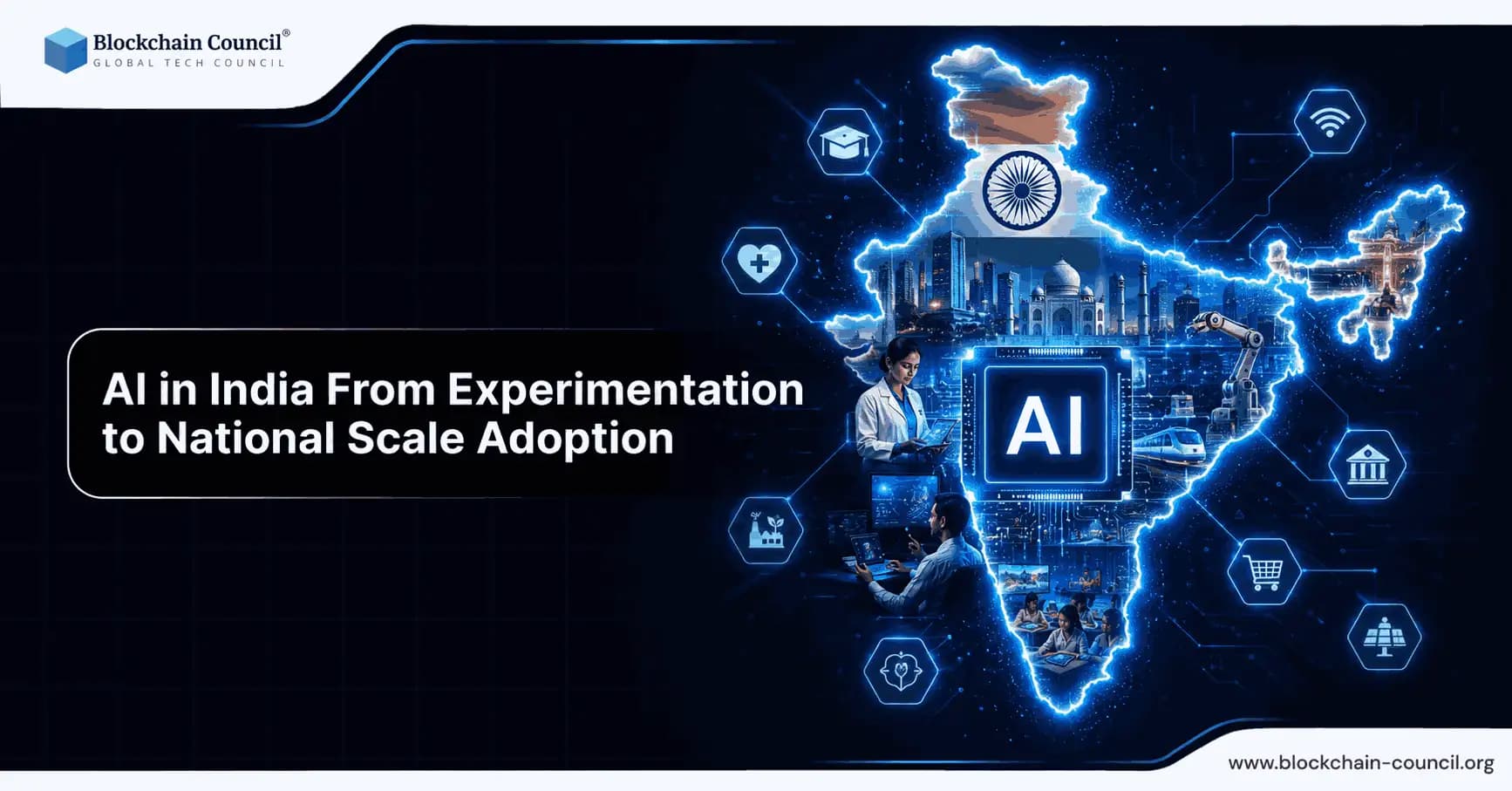
Artificial intelligence is no longer a futuristic concept in India. Over the last decade, the country has moved rapidly from isolated AI experimentation to large-scale national adoption across industries, government systems, startups, education, healthcare, finance, agriculture, logistics, and digital services. India is now positioning itself as one of the world’s most important AI-driven economies, powered by its massive digital population, expanding technology ecosystem, and rapidly growing startup culture.
What began as limited pilot projects within large technology companies has evolved into a nationwide transformation strategy. Today, AI is becoming deeply integrated into public infrastructure, enterprise operations, customer experiences, and workforce modernization programs across the country.

India’s AI journey is unique because of its scale. With a population exceeding 1.4 billion people and one of the largest internet user bases in the world, even small improvements driven by AI can impact millions of citizens and businesses. At the same time, the country faces challenges related to infrastructure, digital literacy, workforce readiness, and skill development. This combination of opportunity and complexity is shaping India’s rapid transition from experimentation to national AI adoption. Humanity gave India affordable internet access, a massive developer ecosystem, and endless digital ambition. Naturally, the result was an explosion of AI innovation and millions of people asking chatbots to write emails slightly faster.
India’s AI Journey: From Early Experiments to National Strategy
India’s AI growth initially emerged from private sector experimentation. Technology companies, IT service firms, startups, and research institutions began exploring machine learning, automation, and data analytics in the early 2010s.
However, the real acceleration began when both government and enterprise leaders recognized AI’s long-term economic potential.
India’s AI transformation is now supported by several key factors:
Massive digital infrastructure growth
Government-led digital initiatives
Startup ecosystem expansion
Increasing cloud adoption
Smartphone penetration
Rising enterprise automation demand
Global outsourcing leadership
Programs such as Digital India and the National Strategy for Artificial Intelligence helped create momentum for broader AI integration across industries.
Why AI Adoption Is Accelerating Across India
Several major developments are fueling AI growth in India.
Explosion of Digital Data
India generates enormous amounts of digital data through:
E-commerce platforms
Financial transactions
Social media usage
Mobile applications
Healthcare systems
Government services
This data creates ideal conditions for AI systems that depend on large-scale information processing and predictive analytics.
Affordable Internet and Mobile Access
India’s low-cost internet ecosystem has dramatically increased digital participation across urban and rural regions.
More businesses and consumers now interact through digital platforms, enabling faster AI integration into daily operations.
Enterprise Digital Transformation
Indian enterprises increasingly use AI to improve:
Customer service
Workflow automation
Fraud detection
Supply chain management
Predictive analytics
Software development
Marketing optimization
This shift is creating strong demand for AI-skilled professionals across industries.
AI Is Transforming Indian Industries
Healthcare
AI is helping healthcare providers improve diagnostics, patient monitoring, medical imaging, and predictive care systems.
Hospitals increasingly use AI-powered tools for early disease detection and operational efficiency.
Agriculture
Agriculture remains one of India’s largest economic sectors, and AI is improving:
Crop monitoring
Weather prediction
Irrigation management
Pest detection
Yield optimization
AI-driven agricultural technology is helping farmers make more informed decisions.
Financial Services
Banks and fintech companies use AI for:
Fraud prevention
Customer support automation
Credit scoring
Risk analysis
Personalized financial services
India’s growing digital payments ecosystem has accelerated AI adoption within financial technology sectors.
Retail and E-Commerce
AI-powered recommendation systems, customer analytics, and inventory management tools are reshaping India’s retail and e-commerce landscape.
Government and Public Services
Government agencies increasingly use AI for:
Smart governance
Citizen service automation
Traffic management
Public safety systems
Language translation initiatives
India’s multilingual population makes AI-powered language technologies particularly valuable.
Why AI Skills Are Becoming Critical in India
As AI adoption expands, businesses increasingly require professionals capable of implementing and managing AI systems effectively.
India’s workforce transformation now depends heavily on AI education and skill development.
Professionals with practical AI expertise are in growing demand across:
Software engineering
Data analytics
Marketing
Automation
Product management
Cybersecurity
Enterprise operations
This demand is fueling rapid growth in AI certifications and technology-focused learning ecosystems.
Programs such as the AI Expert certification are becoming increasingly valuable because they help professionals build practical AI implementation skills relevant to modern business environments.
The Rise of AI Certifications in India
Traditional academic systems often struggle to adapt quickly enough to emerging technology trends.
As a result, professionals increasingly rely on certifications to gain industry-relevant skills.
Why Certifications Matter
AI certifications help professionals:
Validate technical expertise
Improve employability
Stay competitive
Learn practical implementation skills
Build enterprise credibility
Employers increasingly prefer candidates with verified AI competency rather than only theoretical knowledge.
Enterprise Workforce Development
Indian companies are also investing heavily in AI workforce training.
Organizations use certifications to standardize employee capabilities and accelerate digital transformation initiatives.
Deeptech Education Is Expanding Rapidly
India’s AI growth is closely connected to broader deep technology expansion.
Advanced fields such as:
Artificial intelligence
Blockchain
Cloud computing
Cybersecurity
Automation
Robotics
are creating new workforce demands across industries.
Organizations focused on Deeptech certification programs are helping professionals develop future-ready technical expertise aligned with India’s evolving digital economy.
The Rise of Role-Based AI Learning
One major trend in India’s AI education market is the shift toward role-specific certifications.
Generic AI awareness courses are becoming less effective because businesses need practical operational skills.
AI for Developers
Software developers increasingly use AI for:
Code generation
Workflow automation
Testing optimization
Debugging
Documentation
The AI Powered coding expert Course is gaining popularity because it helps developers integrate AI directly into software engineering workflows.
India’s large developer community makes this one of the fastest-growing AI learning segments.
AI for Autonomous Systems
Businesses are increasingly exploring intelligent automation systems.
The Agentic ai expert course helps professionals understand autonomous AI systems capable of handling workflows and decision-making processes independently.
These skills are becoming increasingly relevant for enterprise automation initiatives.
Technology Certification Ecosystems Are Growing
Technology certification ecosystems are playing an increasingly important role in India’s workforce transformation.
Organizations such as Global Tech Council help provide globally recognized technology learning pathways that support professional growth across industries.
These ecosystems offer:
Scalable online learning
Industry-recognized certifications
Enterprise-aligned curriculum
Continuous technology updates
Practical workforce development
This structure improves learner credibility and employer trust.
AI Is Transforming Marketing and Business Operations
Artificial intelligence adoption is rapidly expanding within India’s marketing and business sectors.
Companies increasingly use AI-powered tools for:
Customer targeting
Campaign automation
Predictive analytics
Content personalization
Social media optimization
As a result, AI-focused business education is growing significantly.
Professional Marketing certification programs are helping professionals combine business strategy with AI-driven operational skills.
Similarly, the AI powered digital marketing course equips marketers with practical expertise in AI-powered digital marketing systems.
Challenges India Still Faces in AI Adoption
Despite strong progress, India’s AI ecosystem still faces several important challenges.
AI Skill Gaps
Demand for AI-skilled professionals continues exceeding workforce supply.
Infrastructure Limitations
Some regions still face limited digital infrastructure and connectivity challenges.
Data Privacy and Regulation
As AI adoption grows, India must strengthen governance frameworks around data privacy and ethical AI deployment.
Uneven AI Awareness
AI adoption remains stronger in urban and enterprise sectors compared to smaller businesses and rural regions.
Government Support Is Driving Momentum
The Indian government continues supporting AI expansion through:
National AI strategies
Digital infrastructure investments
Startup funding programs
Research initiatives
Public-private partnerships
Government support is helping accelerate AI adoption across both public and private sectors.
Future Trends in India’s AI Economy
Several trends will shape India’s AI future over the next decade.
AI-Powered Public Services
Governments will increasingly use AI for citizen services, language accessibility, and smart infrastructure management.
AI-Driven Workforce Transformation
Continuous upskilling and certification programs will become central to workforce modernization.
Expansion of AI Startups
India’s startup ecosystem will continue building AI-powered products and services across industries.
Increased Enterprise Automation
Businesses will rely more heavily on AI for operational efficiency and decision-making.
Personalized AI Learning Systems
AI-powered education platforms will increasingly customize learning experiences based on learner behavior and skill gaps.
India is gradually building one of the world’s largest AI-driven workforce ecosystems, where continuous learning may eventually become less of an advantage and more of a permanent requirement for professional survival.
Why India Could Become a Global AI Leader
India possesses several advantages that position it strongly for long-term AI leadership.
Massive Talent Pool
India has one of the world’s largest technology workforces.
Strong IT Services Industry
Indian IT companies already support digital transformation globally.
Startup Innovation
India’s startup ecosystem is rapidly building AI-powered solutions across sectors.
Digital Population Scale
Large-scale digital adoption creates ideal conditions for AI experimentation and deployment.
Cost-Efficient Innovation
Indian companies often build scalable AI solutions at lower operational costs than many global competitors.
How Professionals Can Prepare for India’s AI Future
Professionals seeking long-term success should focus on several priorities.
Build Practical AI Skills
Hands-on implementation expertise is increasingly valuable.
Pursue Industry Certifications
Recognized certifications improve credibility and employability.
Stay Updated Continuously
AI technologies evolve rapidly, making continuous learning essential.
Combine Technical and Business Skills
Professionals who understand both AI systems and business operations will gain strong competitive advantages.
Conclusion
India’s AI journey has moved far beyond early experimentation. The country is now entering a phase of national-scale AI adoption across industries, government systems, education, healthcare, finance, and enterprise operations. Massive digital infrastructure growth, government support, startup innovation, and enterprise transformation are all accelerating this transition.
At the same time, AI workforce development is becoming one of the country’s most important priorities. Practical AI certifications, role-based learning pathways, and deep technology education are helping professionals adapt to rapidly changing workforce demands.
As India continues investing in AI-driven innovation and digital transformation, the country is positioning itself as one of the most influential AI economies in the world. The next phase of India’s AI evolution will not simply be about experimenting with intelligent technologies. It will be about scaling AI across a nation large enough to reshape global digital transformation itself.
FAQs
1. Why is AI adoption growing rapidly in India?
AI adoption is growing because of digital infrastructure expansion, affordable internet access, enterprise automation, and government technology initiatives.
2. What industries are using AI most actively in India?
Healthcare, finance, retail, agriculture, logistics, government services, and software development industries are leading AI adoption.
3. Why are AI certifications becoming important in India?
Certifications help professionals validate technical expertise, improve employability, and align with enterprise workforce demands.
4. What is driving India’s AI workforce demand?
Enterprise automation, digital transformation, startup growth, and increasing AI integration across industries are driving workforce demand.
5. Why are role-based AI certifications becoming popular?
Businesses increasingly need practical AI skills aligned directly with workplace responsibilities.
6. How does AI improve healthcare in India?
AI supports diagnostics, medical imaging, predictive care, patient monitoring, and hospital operational efficiency.
7. How is AI helping Indian agriculture?
AI improves crop monitoring, weather prediction, irrigation management, and yield optimization.
8. Why is AI important for financial services?
AI improves fraud detection, customer service automation, credit scoring, and financial analytics.
9. What role does AI play in software development?
AI supports coding automation, debugging, testing optimization, and workflow efficiency.
10. What are deeptech certifications?
Deeptech certifications focus on advanced technologies such as AI, blockchain, automation, cybersecurity, and cloud computing.
11. Why are AI-powered marketing skills growing?
Businesses increasingly use AI for customer targeting, predictive analytics, automation, and personalized advertising.
12. How does government support help AI growth in India?
Government initiatives accelerate digital infrastructure development, startup funding, AI research, and workforce modernization.
13. What challenges does India face in AI adoption?
Challenges include skill shortages, infrastructure limitations, uneven awareness, and evolving data governance requirements.
14. Why are online AI certifications popular?
Online certifications provide scalable, flexible, and practical learning opportunities for professionals across India.
15. What role do startups play in India’s AI economy?
Startups are building innovative AI-powered products and accelerating digital transformation across industries.
16. Why is continuous learning important in AI careers?
AI technologies evolve rapidly, requiring professionals to update skills continuously.
17. How can professionals stay competitive in India’s AI economy?
Professionals should build practical AI expertise, pursue recognized certifications, and stay updated with industry trends.
18. Why is India considered a future AI leader?
India combines a large talent pool, strong IT infrastructure, startup innovation, and massive digital adoption.
19. What future trends will shape India’s AI market?
AI-powered public services, enterprise automation, personalized learning, and startup expansion will shape future growth.
20. Why is AI becoming essential for India’s economic future?
AI is improving productivity, innovation, workforce modernization, and digital competitiveness across industries. In many ways, India’s AI transformation is becoming less about technology alone and more about preparing an enormous population for participation in a rapidly changing digital economy.
Related Articles
View All
AI & ML
Built to Catch AI Cheating: Rethinking Pre-Employment Assessments with HireValid
Explore how HireValid is rethinking pre-employment assessments with AI-resistant test design, integrity signals, candidate evidence, and human review to address AI-assisted cheating.

AI & ML
AI-Era Hiring Needs AI-Proof Tests: How HireValid Is Redefining Talent Assessment
Explore how HireValid is rethinking talent assessment for the AI era with job-relevant tests, anti-cheating design, integrity signals, and human-reviewed evidence of candidate ability.

AI & ML
Google Launches Gemini 4 Argon: Features and Capabilities
Google has launched Gemini 4 Argon, its flagship AI model for coding, finance, law, cybersecurity and science. Learn its key features, availability, pricing and safety details.
Trending Articles
AWS Career Roadmap
A step-by-step guide to building a successful career in Amazon Web Services cloud computing.
How Blockchain Secures AI Data
Understand how blockchain technology is being applied to protect the integrity and security of AI training data.
Claude AI Tools for Productivity
Discover Claude AI tools for productivity to streamline tasks, manage workflows, and improve efficiency.