

AI Consulting

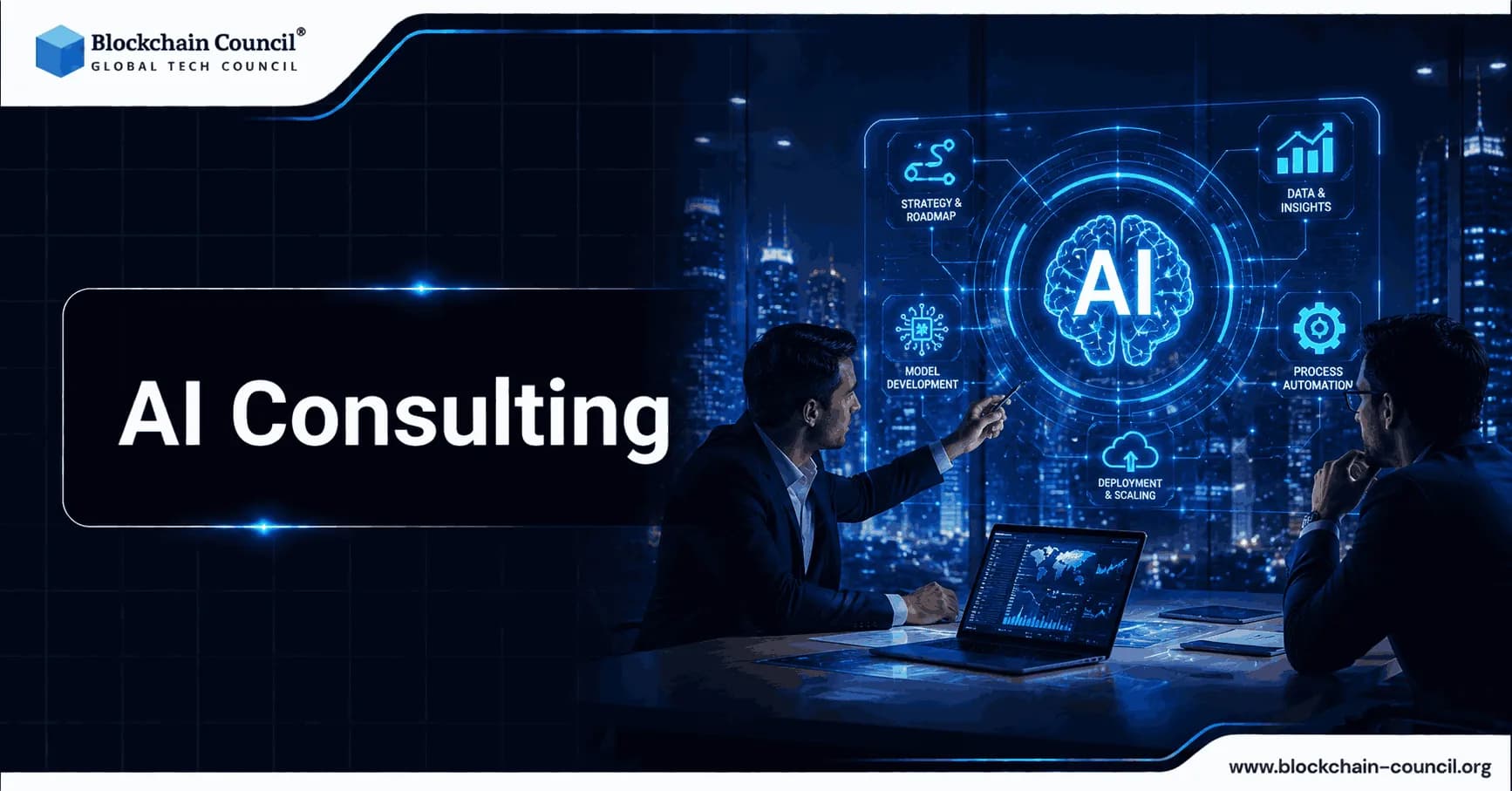
Artificial intelligence is rapidly becoming one of the most influential technologies in modern business. Organizations across industries are investing heavily in AI-driven systems to improve productivity, automate workflows, analyze data, enhance customer experiences, and gain competitive advantages. As AI adoption accelerates, businesses increasingly require expert guidance to understand how to implement these technologies effectively. This growing demand has led to the rapid expansion of AI consulting.
AI consulting refers to professional advisory services that help organizations understand, develop, implement, and manage artificial intelligence solutions. AI consultants work with businesses to identify opportunities for automation, improve operational efficiency, develop AI strategies, and integrate intelligent systems into existing workflows.

From healthcare and finance to retail, manufacturing, marketing, and education, AI consultants are helping organizations navigate the challenges and opportunities created by artificial intelligence.
Human beings spent decades building increasingly complicated business systems, then created artificial intelligence to manage the complications created by the systems they built themselves. A beautifully circular business model.
What Is AI Consulting?
AI consulting involves providing professional guidance and technical expertise related to artificial intelligence technologies and implementation strategies.
AI consultants typically help organizations:
Identify AI opportunities
Build AI adoption strategies
Improve workflow automation
Analyze business data
Deploy machine learning systems
Optimize operational processes
Train teams on AI technologies
The goal is to help businesses use artificial intelligence effectively while minimizing risks and maximizing value.
Why AI Consulting Is Growing Rapidly
AI consulting has become one of the fastest-growing technology service sectors because organizations increasingly recognize the importance of AI adoption.
Rapid AI Advancement
AI technologies are evolving quickly, making it difficult for businesses to keep pace internally.
Demand for Automation
Companies seek automation solutions to reduce repetitive work and improve efficiency.
Competitive Pressure
Businesses adopting AI technologies often gain operational and analytical advantages.
Lack of Internal Expertise
Many organizations lack in-house AI specialists capable of managing complex implementations.
These factors continue driving strong demand for AI consulting services.
The Role of an AI Consultant
AI consultants work at the intersection of business strategy and technology implementation.
Their responsibilities may include:
Assessing business processes
Identifying automation opportunities
Developing AI roadmaps
Recommending AI tools
Managing implementation projects
Supporting AI governance
Training teams
AI consultants must combine technical understanding with strong communication and strategic thinking skills.
Industries Using AI Consulting Services
Healthcare
Healthcare organizations use AI consulting for:
Predictive analytics
Medical imaging systems
Patient data analysis
Workflow automation
Finance
Financial institutions use AI for:
Fraud detection
Risk analysis
Customer support automation
Market forecasting
Retail and E-Commerce
Retail companies implement AI for:
Personalized recommendations
Inventory optimization
Customer analytics
Marketing automation
Manufacturing
Manufacturers use AI systems for:
Predictive maintenance
Robotics
Supply chain optimization
Quality control
Marketing
Businesses increasingly rely on AI consultants to improve digital marketing strategies and customer engagement.
AI consulting continues expanding across nearly every major industry.
Artificial Intelligence Skills for Consultants
Modern AI consultants require strong understanding of:
Machine learning
Data analytics
Automation systems
Cloud computing
AI governance
Business strategy
Programs such as the AI Expert certification help professionals understand practical AI systems, machine learning concepts, and automation technologies relevant to consulting environments.
AI literacy is becoming highly valuable in consulting careers.
Agentic AI and Business Automation
One major trend shaping AI consulting is the rise of agentic AI.
Agentic AI systems are designed to:
Operate autonomously
Execute workflows independently
Adapt to changing conditions
Manage multi-step tasks
The Agentic AI course explains how intelligent AI agents are transforming business operations and workflow automation.
AI consultants increasingly help businesses understand and implement autonomous AI systems.
Generative AI and Enterprise Consulting
Generative AI has become one of the most influential technologies in modern consulting.
Businesses now use generative AI for:
Content creation
Research assistance
Customer communication
Workflow automation
Data summarization
The Generative ai expert course helps professionals understand how generative AI technologies support business operations and digital transformation.
Generative AI is becoming central to many consulting projects.
AI-Powered Coding and Technical Consulting
Software development is increasingly supported by AI-assisted coding systems.
Modern AI tools help developers:
Generate code
Automate testing
Improve debugging
Streamline documentation
The AI Powered coding expert Course demonstrates how AI-powered development systems improve software engineering workflows.
Technical consultants increasingly rely on AI-supported development environments.
Deep Technology and AI Infrastructure
AI consulting often intersects with broader deep technology ecosystems involving:
Cloud infrastructure
Cybersecurity
Robotics
Blockchain
Advanced analytics
Organizations involved in Deeptech certification ecosystems help professionals understand advanced technologies shaping future business environments.
AI consulting increasingly involves managing interconnected digital systems.
Marketing and AI Consulting
Artificial intelligence is transforming digital marketing strategies significantly.
Businesses now use AI for:
Audience targeting
Personalized communication
Marketing analytics
Social media automation
Customer behavior prediction
Programs such as Marketing certification help professionals understand branding, digital communication, and audience engagement strategies enhanced by AI systems.
AI-driven marketing is becoming highly data-focused and automated.
Technology Skills and AI Consulting
AI consultants must remain updated on emerging technologies and digital trends.
Broader Tech certification programs help professionals build technical skills relevant to:
AI systems
Cloud computing
Cybersecurity
Data infrastructure
Automation technologies
Technology awareness is increasingly important in consulting roles.
Real-World Examples of AI Consulting
Example 1: Retail AI Transformation
An AI consultant may help a retail company implement:
Personalized recommendation systems
Inventory forecasting
AI-driven customer analytics
Example 2: Healthcare Automation
Healthcare organizations may work with consultants to automate:
Patient scheduling
Diagnostic analysis
Administrative workflows
Example 3: AI Customer Service Integration
Businesses increasingly use AI chatbots and virtual agents to improve customer support efficiency.
These examples demonstrate the wide-ranging impact of AI consulting.
Benefits of AI Consulting
Faster AI Adoption
Consultants help organizations implement AI technologies more efficiently.
Reduced Operational Costs
Automation systems can lower administrative and operational expenses.
Improved Decision-Making
AI systems provide faster access to business insights and predictive analytics.
Competitive Advantage
Organizations using AI effectively often improve productivity and customer experiences.
Better Strategic Planning
AI consultants help organizations align technology adoption with business goals.
These benefits continue driving investment in AI consulting services.
Challenges in AI Consulting
Despite rapid growth, AI consulting also presents challenges.
Data Privacy Concerns
Organizations must manage sensitive information responsibly.
AI Bias and Ethics
AI systems may produce biased or inaccurate outputs if poorly designed.
Technology Complexity
Many businesses struggle to understand AI implementation requirements.
Talent Shortages
Demand for AI professionals often exceeds available expertise.
Resistance to Change
Employees and organizations may hesitate to adopt new technologies.
Successful AI consulting requires balancing innovation with responsible implementation.
Human beings often fear artificial intelligence replacing jobs while simultaneously demanding faster service, instant communication, personalized recommendations, and 24-hour support. The contradictions remain impressively consistent.
The Future of AI Consulting
Several major trends are expected to shape future AI consulting markets.
Autonomous AI Systems
Businesses may increasingly adopt AI agents capable of independent decision-making.
AI Governance and Regulation
Organizations will require stronger governance frameworks for responsible AI usage.
Personalized AI Systems
Future AI solutions may become more adaptive to specific business environments.
Multimodal AI Integration
AI systems may combine:
Text
Voice
Images
Video
Real-time analytics
Industry-Specific AI Solutions
Consulting firms will likely develop specialized AI systems tailored to different sectors.
The future of AI consulting appears highly dynamic and technology-driven.
Why Businesses Need AI Consulting
AI adoption is no longer optional for many organizations seeking long-term competitiveness.
Businesses increasingly require expert guidance because:
AI systems are technically complex
Implementation risks are significant
Technology evolves rapidly
Competitive pressure is increasing
AI consultants help bridge the gap between business goals and technical execution.
AI Consulting Careers and Opportunities
AI consulting has become an attractive career path because it combines:
Technology
Strategy
Communication
Problem-solving
Innovation
Professionals entering AI consulting often benefit from:
Technical certifications
Data analytics skills
Cloud computing knowledge
Business strategy experience
AI consulting careers are expected to continue expanding significantly.
Conclusion
AI consulting has become one of the most important service sectors in the modern digital economy. As businesses increasingly adopt artificial intelligence technologies, organizations require expert guidance to implement AI systems effectively, responsibly, and strategically.
From workflow automation and generative AI to AI-powered coding and autonomous intelligent systems, artificial intelligence is transforming industries worldwide.
Programs such as the AI Expert certification, Agentic AI course, Generative ai expert course, AI Powered coding expert Course, Deeptech certification, Tech certification, and Marketing certification highlight the growing importance of AI literacy, technical expertise, and digital transformation skills.
As AI technologies continue evolving, organizations that successfully combine innovation, ethical governance, technical knowledge, and strategic planning will likely remain most competitive in the future economy.
Human beings created artificial intelligence to improve productivity, simplify workflows, and optimize decision-making. Then they immediately scheduled meetings to discuss how to use the artificial intelligence designed to reduce meetings. Civilization remains deeply committed to irony.
FAQs
1. What is AI consulting?
AI consulting involves providing expert guidance to businesses on how to implement, manage, and optimize artificial intelligence systems and automation technologies.
2. Why is AI consulting becoming popular?
Businesses increasingly adopt AI technologies to improve efficiency, automate workflows, reduce costs, and gain competitive advantages in digital markets.
3. What does an AI consultant do?
AI consultants analyze business processes, identify automation opportunities, recommend AI solutions, support implementation, and help organizations develop AI strategies.
4. Which industries use AI consulting services?
Healthcare, finance, retail, manufacturing, education, marketing, logistics, and customer service industries widely use AI consulting today.
5. How does AI improve business operations?
AI systems automate repetitive tasks, improve data analysis, enhance customer experiences, and support faster business decision-making.
6. Why do companies need AI consultants?
Many organizations lack internal AI expertise and need professional guidance to implement complex AI systems effectively and responsibly.
7. What skills are important for AI consultants?
AI consultants benefit from knowledge in machine learning, automation, data analytics, cloud computing, communication, and business strategy.
8. What is the AI Expert certification?
The AI Expert certification teaches practical AI concepts, machine learning systems, and automation technologies.
9. What is Agentic AI?
Agentic AI refers to autonomous AI systems capable of independently managing workflows, adapting to conditions, and executing tasks.
10. What does the Agentic AI course teach?
The Agentic AI course explains intelligent AI agents, workflow automation, and autonomous decision-making systems.
11. How is generative AI used in consulting?
Generative AI supports content creation, research, customer communication, workflow automation, and business productivity improvements.
12. What is the Generative ai expert course?
The Generative ai expert course helps professionals understand generative AI technologies and practical AI applications.
13. How does AI help software development?
AI systems support code generation, testing automation, debugging, and workflow optimization in software engineering environments.
14. What is the AI Powered coding expert Course?
The AI Powered coding expert Course demonstrates how AI-assisted coding improves software development productivity.
15. What are deep technologies?
Deep technologies include artificial intelligence, robotics, cybersecurity, blockchain, and cloud systems shaping future digital infrastructure.
16. Why is AI important in marketing?
AI improves audience targeting, customer engagement, campaign optimization, personalized communication, and marketing analytics.
17. What is a Marketing certification?
A Marketing certification teaches branding, digital communication, audience engagement, and marketing strategies.
18. What is a Tech certification?
Tech certification programs help professionals develop practical technical skills related to digital infrastructure and emerging technologies.
19. What challenges does AI consulting face?
AI consulting faces challenges including privacy concerns, ethical issues, implementation complexity, talent shortages, and organizational resistance to change.
20. What is the future of AI consulting?
Future AI consulting will likely focus on autonomous AI systems, governance frameworks, personalized automation, multimodal AI integration, and industry-specific solutions.
Related Articles
View All
AI & ML
Built to Catch AI Cheating: Rethinking Pre-Employment Assessments with HireValid
Explore how HireValid is rethinking pre-employment assessments with AI-resistant test design, integrity signals, candidate evidence, and human review to address AI-assisted cheating.
AI & ML
AI-Era Hiring Needs AI-Proof Tests: How HireValid Is Redefining Talent Assessment
Explore how HireValid is rethinking talent assessment for the AI era with job-relevant tests, anti-cheating design, integrity signals, and human-reviewed evidence of candidate ability.

AI & ML
Google Launches Gemini 4 Argon: Features and Capabilities
Google has launched Gemini 4 Argon, its flagship AI model for coding, finance, law, cybersecurity and science. Learn its key features, availability, pricing and safety details.
Trending Articles
The Role of Blockchain in Ethical AI Development
How blockchain technology is being used to promote transparency and accountability in artificial intelligence systems.

Top 5 DeFi Platforms
Explore the leading decentralized finance platforms and what makes each one unique in the evolving DeFi landscape.
How Blockchain Secures AI Data
Understand how blockchain technology is being applied to protect the integrity and security of AI training data.