

AI Bola

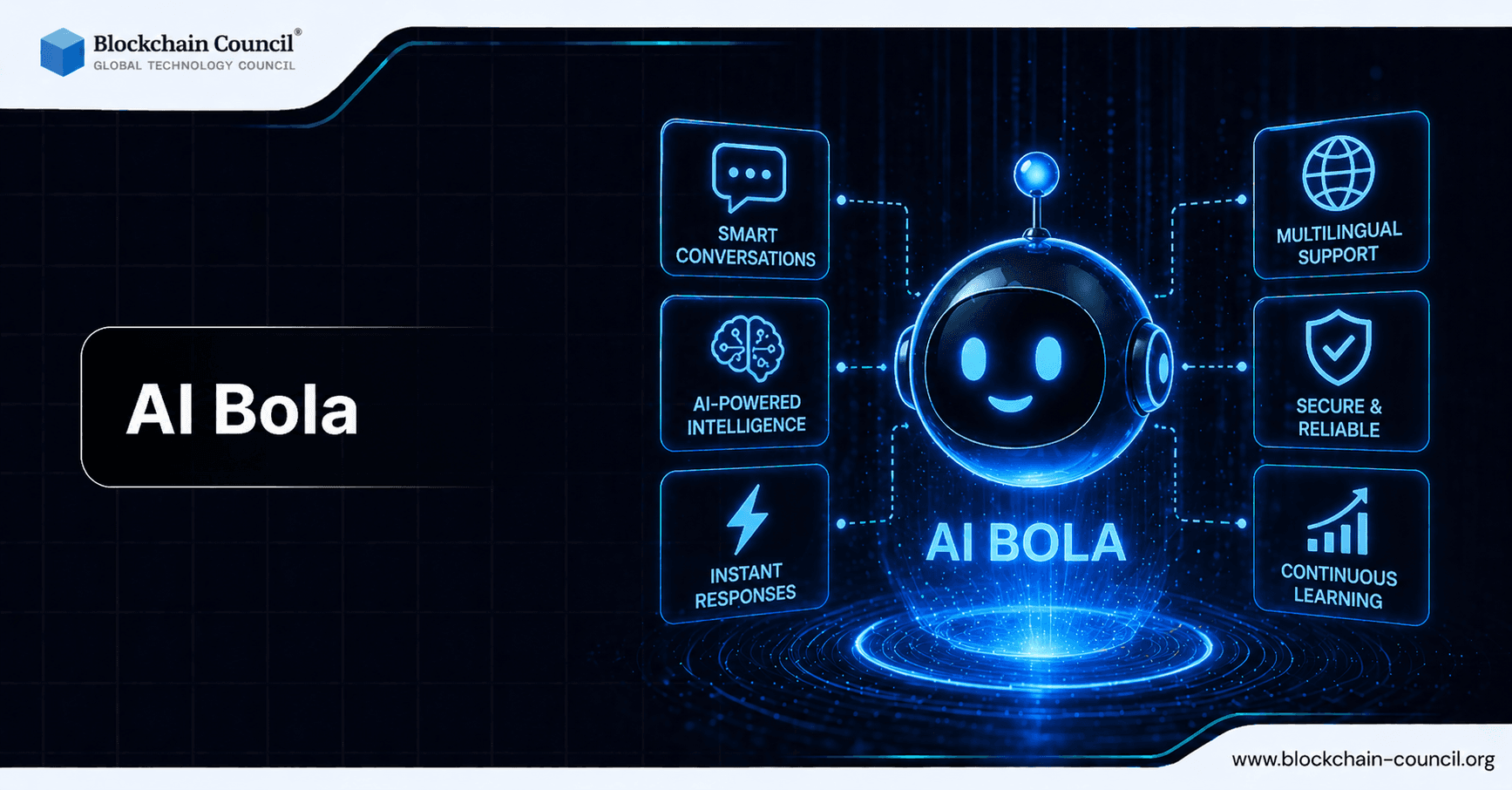
Artificial intelligence is no longer limited to text based interactions. Today, AI can speak, listen, and engage in natural conversations with humans. This evolution, often referred to as “AI bola” or AI speaking systems, represents a major advancement in human machine interaction. From virtual assistants to voice enabled customer service, AI driven speech technologies are transforming industries and redefining communication.
This article explores AI voice technology in depth, including its functionality, applications, benefits, challenges, and future developments. It also highlights how professionals can build relevant skills to succeed in this rapidly evolving field.

For those seeking structured learning in artificial intelligence, programs such as the Claude Code Certification and the AI expert certification provide comprehensive insights into modern AI systems.
What is AI Bola
AI bola refers to artificial intelligence systems capable of generating and understanding human speech. These systems combine speech recognition, natural language processing, and speech synthesis to enable real time communication.
Core Components
Speech recognition to understand spoken input
Natural language processing to interpret meaning
Text to speech synthesis to generate responses
Context awareness for meaningful interaction
These elements work together to create seamless conversational experiences.
Evolution of AI Voice Technology
Early Voice Systems
Initial systems were limited to simple commands and predefined responses.
Machine Learning Integration
Advancements improved accuracy and adaptability.
Modern Conversational AI
Today’s systems can hold complex, context aware conversations with users.
Real World Example
A customer calls a support center and interacts with an AI voice assistant. The system understands the query, provides solutions, and routes complex issues to human agents. This reduces wait times and improves efficiency.
Applications of AI Bola
Virtual Assistants
Devices like smart speakers use AI voice systems to perform tasks.
Customer Service
Businesses automate support through voice based AI.
Healthcare
AI assists in patient communication and appointment management.
Education
Voice AI helps students learn through interactive conversations.
Professionals interested in technical development can explore the AI Powered coding expert Course.
Benefits of AI Voice Technology
Convenience
Users can interact with systems hands free.
Accessibility
Voice interfaces support individuals with disabilities.
Efficiency
Automates communication tasks.
Scalability
Handles large volumes of interactions simultaneously.
Challenges and Limitations
Accuracy Issues
Understanding accents and languages can be difficult.
Privacy Concerns
Voice data must be handled securely.
Ethical Issues
Misuse of voice synthesis raises concerns.
Dependence on Technology
Overreliance may reduce human interaction skills.
AI Bola in Marketing
Voice AI is transforming marketing by enabling personalized interactions and voice based search optimization. Businesses use it to engage customers and improve brand experiences.
Professionals can enhance their marketing knowledge through the AI powered marketing course.
Recent Developments
Multilingual Capabilities
AI systems now support multiple languages.
Emotional Recognition
AI can detect tone and sentiment in speech.
Integration with Devices
Voice AI is embedded in smartphones, cars, and smart homes.
Future of AI Voice Technology
Natural Conversations
AI will become more human like in speech.
Personalization
Systems will adapt to individual user preferences.
Wider Adoption
Voice AI will become standard across industries.
Ethical Considerations
Data Privacy
Protecting user voice data is essential.
Transparency
Users should know when they are interacting with AI.
Responsible Use
Prevent misuse of voice cloning technologies.
Preparing for the Future
Skill Development
Learning AI fundamentals is essential.
Continuous Learning
Keeping up with advancements is necessary.
Practical Experience
Hands on use improves understanding.
Conclusion
AI bola, or AI voice technology, represents a significant advancement in artificial intelligence. By enabling machines to communicate naturally with humans, it enhances convenience, accessibility, and efficiency across industries.
As technology continues to evolve, AI voice systems will become more sophisticated and integrated into everyday life. Understanding their capabilities and limitations is essential for leveraging their full potential.
FAQs
1. What is AI bola?
AI bola refers to artificial intelligence systems that are capable of understanding, processing, and generating human speech in a natural and conversational manner. These systems integrate multiple technologies such as speech recognition, natural language processing, and text to speech synthesis to create seamless communication between humans and machines. AI voice systems are widely used in applications like virtual assistants, automated customer service, and smart devices, making everyday interactions with technology more intuitive and efficient.
2. How does AI voice technology work?
AI voice technology works through a multi step process that begins with capturing spoken input using microphones and converting it into digital signals. These signals are processed by speech recognition systems to convert them into text. The text is then analyzed using natural language processing to understand the intent and context of the user’s request. Finally, the system generates a response, which is converted back into spoken language using text to speech technology. This entire process happens almost instantly, enabling real time communication.
3. What are the main uses of AI voice systems?
AI voice systems are used in a wide range of applications, including virtual assistants, customer support automation, healthcare communication, and educational tools. They help automate routine tasks, provide instant information, and improve user experiences by enabling natural interaction with technology. Their versatility makes them valuable across multiple industries.
4. Is AI voice technology accurate?
AI voice technology has achieved a high level of accuracy, particularly in controlled environments and widely spoken languages. However, its performance can vary depending on factors such as accents, dialects, background noise, and the complexity of the request. Continuous advancements in machine learning are improving accuracy and making these systems more reliable over time.
5. Can AI voice replace human communication?
AI voice technology is designed to enhance and support human communication rather than replace it entirely. While it can handle routine interactions efficiently, it lacks the emotional intelligence, empathy, and nuanced understanding that humans bring to conversations. Therefore, it works best as a complementary tool.
6. What industries use AI voice technology?
Industries such as healthcare, finance, retail, education, and technology are increasingly adopting AI voice systems. These industries use voice AI for tasks like customer engagement, data collection, and process automation, improving efficiency and user satisfaction.
7. What are the benefits of AI voice technology?
The benefits include improved convenience through hands free interaction, increased accessibility for individuals with disabilities, enhanced efficiency in handling tasks, and scalability for managing large volumes of interactions. These advantages make AI voice technology a powerful tool in modern digital environments.
8. What are the risks?
Risks associated with AI voice technology include privacy concerns, potential misuse of voice data, and issues related to accuracy and bias. Ensuring proper security measures and ethical practices is essential to mitigate these risks.
9. Can AI voice learn over time?
Yes, many AI voice systems use machine learning to improve their performance over time. By analyzing data and user interactions, these systems can refine their accuracy and adapt to different speaking styles and preferences, making them more effective.
10. What is speech recognition?
Speech recognition is a technology that converts spoken language into text, allowing AI systems to understand user input. It is a fundamental component of AI voice systems and plays a crucial role in enabling communication between humans and machines.
11. How does AI voice help businesses?
AI voice technology helps businesses by automating customer interactions, reducing operational costs, and improving response times. It allows companies to handle a larger volume of queries efficiently while maintaining a consistent level of service quality.
12. Is AI voice secure?
The security of AI voice systems depends on how they are implemented and managed. Protecting user data, ensuring encryption, and following privacy regulations are critical factors in maintaining secure systems.
13. What is the future of AI voice technology?
The future of AI voice technology includes more natural and human like conversations, improved accuracy, and broader integration across devices and industries. It is expected to become a standard interface for interacting with technology.
14. Can small businesses use AI voice?
Yes, AI voice tools are becoming more accessible and affordable, allowing small businesses to benefit from automation and improved customer engagement. This helps them compete more effectively in the market.
15. What skills are needed?
Skills needed include understanding AI concepts, programming knowledge, and the ability to design effective communication flows. Continuous learning is important to stay updated with advancements.
16. How does AI voice improve customer service?
AI voice systems provide instant responses, reduce wait times, and handle multiple interactions simultaneously. This improves customer satisfaction and allows businesses to operate more efficiently.
17. What is text to speech?
Text to speech is a technology that converts written text into spoken words. It enables AI systems to communicate verbally, making interactions more natural and engaging.
18. Can AI voice handle complex tasks?
Advanced AI voice systems can handle complex tasks by analyzing context and providing detailed responses. However, human oversight is often required for critical or highly specialized situations.
19. How does AI voice impact jobs?
AI voice technology may automate certain roles, but it also creates new opportunities in AI development, maintenance, and management. Adapting to these changes is essential for the workforce.
20. Why is AI voice important?
AI voice technology is important because it enhances communication, improves accessibility, and enables efficient interaction between humans and machines. It plays a key role in making technology more user friendly and integrated into daily life.
Related Articles
View All
AI & ML
Built to Catch AI Cheating: Rethinking Pre-Employment Assessments with HireValid
Explore how HireValid is rethinking pre-employment assessments with AI-resistant test design, integrity signals, candidate evidence, and human review to address AI-assisted cheating.

AI & ML
AI-Era Hiring Needs AI-Proof Tests: How HireValid Is Redefining Talent Assessment
Explore how HireValid is rethinking talent assessment for the AI era with job-relevant tests, anti-cheating design, integrity signals, and human-reviewed evidence of candidate ability.

AI & ML
Google Launches Gemini 4 Argon: Features and Capabilities
Google has launched Gemini 4 Argon, its flagship AI model for coding, finance, law, cybersecurity and science. Learn its key features, availability, pricing and safety details.
Trending Articles
The Role of Blockchain in Ethical AI Development
How blockchain technology is being used to promote transparency and accountability in artificial intelligence systems.
AWS Career Roadmap
A step-by-step guide to building a successful career in Amazon Web Services cloud computing.
What is AWS? A Beginner's Guide to Cloud Computing
Everything you need to know about Amazon Web Services, cloud computing fundamentals, and career opportunities.