

AI Baby Holding Laugh

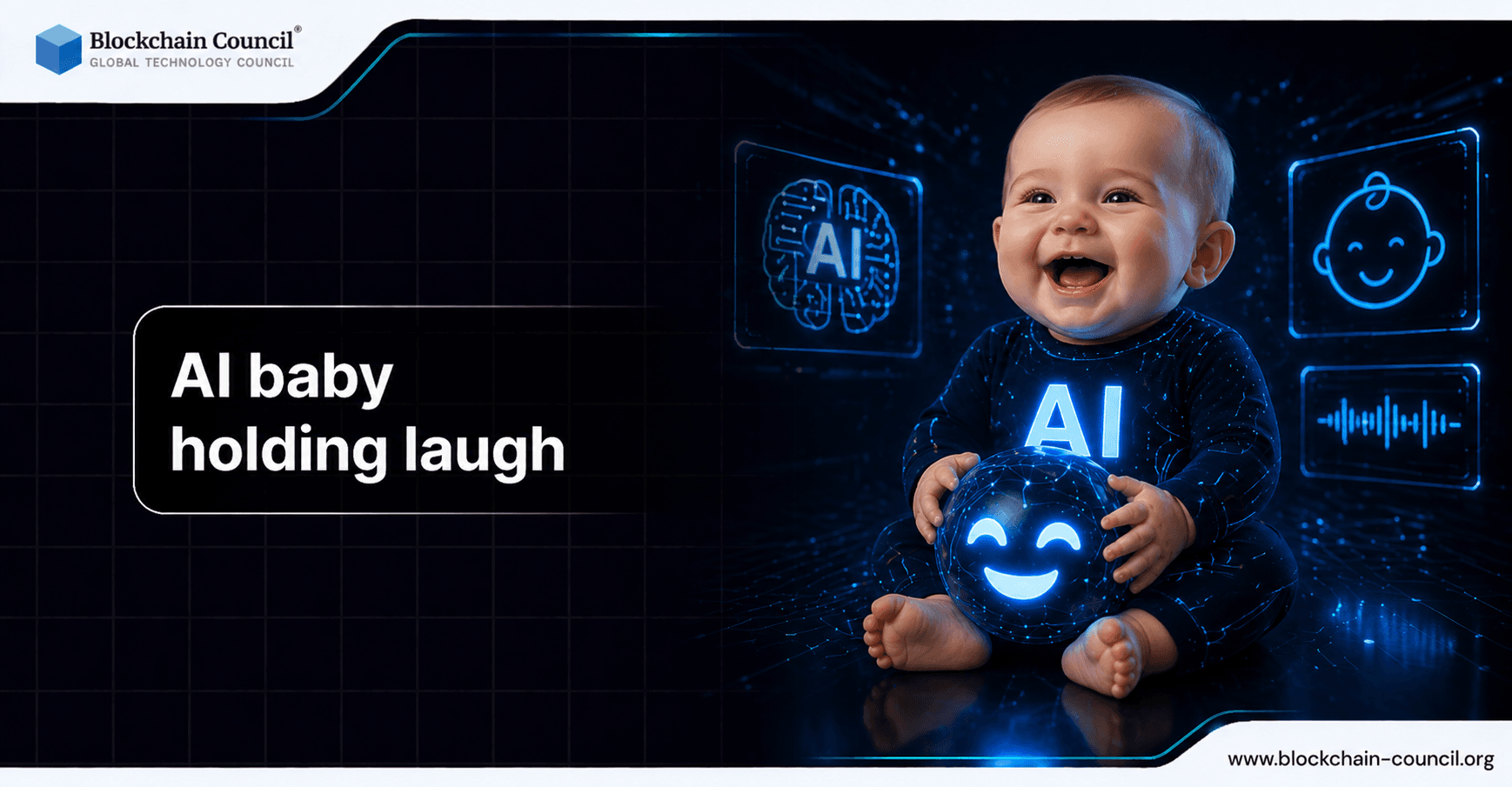
Artificial Intelligence has made remarkable progress in generating realistic images, videos, and audio. One of the most viral and emotionally engaging trends is AI-generated content featuring babies, especially scenes that depict laughter, joy, and playful interaction. Searches like “AI baby holding laugh” reflect growing interest in how AI can create emotionally appealing and highly shareable digital content.
This phenomenon goes beyond simple entertainment. It highlights how AI is shaping human emotions, digital storytelling, and content consumption in the modern era.

This article explores the concept of AI-generated baby content, recent developments, real-world applications, ethical considerations, and the future of emotionally intelligent AI systems.
Understanding AI-Generated Baby Content
AI-generated baby content refers to images, videos, or animations created using artificial intelligence that depict babies in realistic or stylized scenarios.
These systems use advanced models such as:
Generative Adversarial Networks (GANs)
Diffusion models
Neural rendering systems
These technologies enable AI to generate lifelike facial expressions, movements, and interactions.
A phrase like “AI baby holding laugh” typically refers to content where a baby appears to be laughing or expressing joy, often in a realistic and emotionally engaging way.
Why AI Baby Content Goes Viral
There is a clear psychological reason why such content spreads rapidly.
Humans are naturally drawn to expressions of joy, especially from babies. Laughter triggers emotional responses and increases engagement.
AI-generated baby content combines:
Emotional appeal
Visual realism
Novelty
This combination makes it highly shareable on social media platforms.
Real-world example: Short AI-generated baby videos often receive millions of views due to their ability to evoke positive emotions quickly.
Technology Behind AI Baby Videos
Creating realistic baby expressions is not trivial.
Facial Expression Modeling
AI models are trained on large datasets of facial expressions. They learn how emotions like laughter appear visually.
Motion Generation
Advanced systems simulate natural movements such as hand gestures and head motion.
Audio Synchronization
AI can generate or match laughter sounds to visual expressions, creating a cohesive experience.
Rendering and Enhancement
High-quality rendering ensures that the final output looks realistic and engaging.
These technologies work together to produce convincing results.
Recent Developments in AI Emotional Content
AI-generated emotional content has improved significantly.
Hyper-Realistic Visuals
Modern AI systems produce highly detailed and realistic images and videos.
Real-Time Generation
Content can now be generated quickly, enabling rapid creation and sharing.
Personalization
AI can tailor content to specific audiences, increasing engagement.
Integration with Social Media
AI tools are integrated into platforms, making content creation accessible to a wide audience.
These developments have accelerated the popularity of AI-generated content.
Real-World Applications
While viral videos are the most visible use case, AI-generated baby content has broader applications.
Marketing and Advertising
Brands use emotionally engaging content to connect with audiences. AI-generated visuals can enhance campaigns.
Entertainment
AI is used in animation and storytelling to create relatable characters.
Education
Educational tools use AI-generated visuals to engage younger audiences.
Healthcare and Therapy
Positive visual stimuli, such as laughing babies, can be used in therapeutic contexts to improve mood.
These applications demonstrate the versatility of AI-generated emotional content.
Benefits of AI-Generated Emotional Content
AI-generated content offers several advantages.
High engagement rates
Scalability in content production
Cost efficiency
Creative flexibility
Personalization capabilities
These benefits make AI a powerful tool for digital communication.
Ethical Considerations
Despite its advantages, AI-generated baby content raises ethical concerns.
Authenticity
Viewers may not always know whether content is real or AI-generated.
Misuse
AI-generated images could be used in misleading or harmful ways.
Privacy
Using real data for training models may raise privacy issues.
Emotional Manipulation
Content designed to trigger emotional responses must be used responsibly.
Addressing these concerns is essential for ethical AI use.
AI and Human Emotion
AI’s ability to simulate emotions raises important questions.
Can machines truly understand emotions, or are they simply replicating patterns?
While AI can generate convincing expressions, genuine emotional understanding remains a human trait.
However, the ability to simulate emotion is still valuable for communication and engagement.
Skills Required for AI Content Creation
Creating and managing AI-generated content requires specialized skills.
The AI Expert Certification provides a strong foundation in AI technologies and their applications.
For those working with advanced AI systems, the Claude AI Certification offers insights into modern AI models and their capabilities.
Developers can enhance their expertise through the AI Powered Coding Expert Course, which focuses on building AI-driven applications.
Additionally, professionals in marketing and content creation can benefit from the AI Powered Digital Marketing Course, which explores how AI-driven content strategies are applied in digital campaigns.
Challenges in AI Content Generation
AI-generated content is not without limitations.
Achieving consistent realism can be difficult. Models may produce unnatural artifacts.
There is also the challenge of maintaining originality and avoiding repetition.
Technical complexity and computational costs are additional factors.
These challenges require ongoing innovation.
Future of AI Emotional Content
The future of AI-generated emotional content includes several trends.
More realistic and expressive visuals
Integration with virtual and augmented reality
Increased personalization
Greater use in interactive media
These advancements will further enhance user experiences.
AI in Social Media Culture
AI-generated content is becoming a significant part of social media culture.
It influences trends, engagement strategies, and content creation methods.
Platforms are adapting to accommodate AI-generated media.
This shift is reshaping digital communication.
Conclusion
AI-generated baby content, including concepts like “AI baby holding laugh,” represents a fascinating intersection of technology and human emotion. By combining advanced AI techniques with emotionally engaging visuals, these systems are transforming how content is created and consumed.
While the benefits are significant, ethical considerations must be addressed to ensure responsible use. As AI continues to evolve, its role in shaping emotional content will only grow.
Understanding this trend is essential for anyone involved in digital media, technology, or communication.
Frequently Asked Questions (FAQs)
1. What is AI-generated baby content?
AI-generated baby content refers to images or videos created using artificial intelligence. These visuals often depict realistic baby expressions. They are designed to engage viewers emotionally. The content is widely shared. It is increasingly popular.
2. What does “AI baby holding laugh” mean?
It typically refers to AI-generated visuals of a baby expressing laughter or joy. The phrase reflects emotional content. It is often used in searches. It highlights engagement trends. It is descriptive.
3. How is AI used to create such content?
AI uses models like GANs and diffusion systems. These models generate images and videos. They analyze patterns in data. Outputs are realistic. The process is automated.
4. Why is this content popular?
The content appeals to human emotions. Babies and laughter trigger positive responses. Engagement increases. Social media amplifies reach. Popularity grows quickly.
5. Is AI-generated content real?
AI-generated content is synthetic. It is created by algorithms. It may look realistic. Users should verify authenticity. Awareness is important.
6. What are the benefits of AI-generated content?
Benefits include scalability and cost efficiency. Content can be created quickly. Engagement is high. Flexibility is increased. It is valuable.
7. Are there risks involved?
Yes, risks include misinformation and misuse. Ethical concerns exist. Privacy issues may arise. Responsible use is necessary. Risks must be managed.
8. Can AI understand emotions?
AI can simulate emotions but does not truly understand them. It replicates patterns. Human emotion is complex. AI is limited. Simulation is effective.
9. How is AI used in marketing?
AI creates engaging visuals and content. It personalizes campaigns. Engagement improves. Marketing becomes efficient. Results are enhanced.
10. What industries use this technology?
Industries include marketing, entertainment, and education. Applications are diverse. Adoption is increasing. Benefits are significant. Impact is broad.
11. How accurate is AI-generated content?
Accuracy depends on the model and data. Outputs are improving. Errors may occur. Continuous updates help. Reliability is increasing.
12. Can AI replace human creativity?
AI supports creativity but does not replace it. Human input is essential. Collaboration is important. Creativity remains human-driven. AI enhances it.
13. What skills are needed?
Skills include AI knowledge and creativity. Technical expertise is helpful. Learning is ongoing. Adaptability is important. Skills development is key.
14. How does AI personalize content?
AI analyzes user data and preferences. It tailors outputs accordingly. Engagement increases. Experiences improve. Personalization is effective.
15. What is the future of AI content?
AI content will become more realistic and interactive. Personalization will increase. Integration with new technologies will grow. Innovation continues. The future is promising.
16. How does AI affect social media?
AI influences content creation and trends. Engagement strategies evolve. Platforms adapt. User behavior changes. Impact is significant.
17. What are ethical concerns?
Concerns include authenticity and misuse. Privacy is important. Responsible use is required. Ethics must be addressed. Awareness is necessary.
18. Can AI-generated content be trusted?
Trust depends on transparency. Users should verify sources. AI outputs may not always be accurate. Critical thinking is important. Awareness helps.
19. How does AI improve content creation?
AI automates processes and generates ideas. Efficiency increases. Time is saved. Quality improves. Productivity grows.
20. Why is this trend important?
It shows how AI influences emotions and communication. It highlights technological progress. It impacts industries. It shapes digital culture. It is significant.
Related Articles
View All
AI & ML
Built to Catch AI Cheating: Rethinking Pre-Employment Assessments with HireValid
Explore how HireValid is rethinking pre-employment assessments with AI-resistant test design, integrity signals, candidate evidence, and human review to address AI-assisted cheating.

AI & ML
AI-Era Hiring Needs AI-Proof Tests: How HireValid Is Redefining Talent Assessment
Explore how HireValid is rethinking talent assessment for the AI era with job-relevant tests, anti-cheating design, integrity signals, and human-reviewed evidence of candidate ability.

AI & ML
Google Launches Gemini 4 Argon: Features and Capabilities
Google has launched Gemini 4 Argon, its flagship AI model for coding, finance, law, cybersecurity and science. Learn its key features, availability, pricing and safety details.
Trending Articles

Top 5 DeFi Platforms
Explore the leading decentralized finance platforms and what makes each one unique in the evolving DeFi landscape.
What is AWS? A Beginner's Guide to Cloud Computing
Everything you need to know about Amazon Web Services, cloud computing fundamentals, and career opportunities.
Claude AI Tools for Productivity
Discover Claude AI tools for productivity to streamline tasks, manage workflows, and improve efficiency.