

AI Baby Holding Laugh Meme

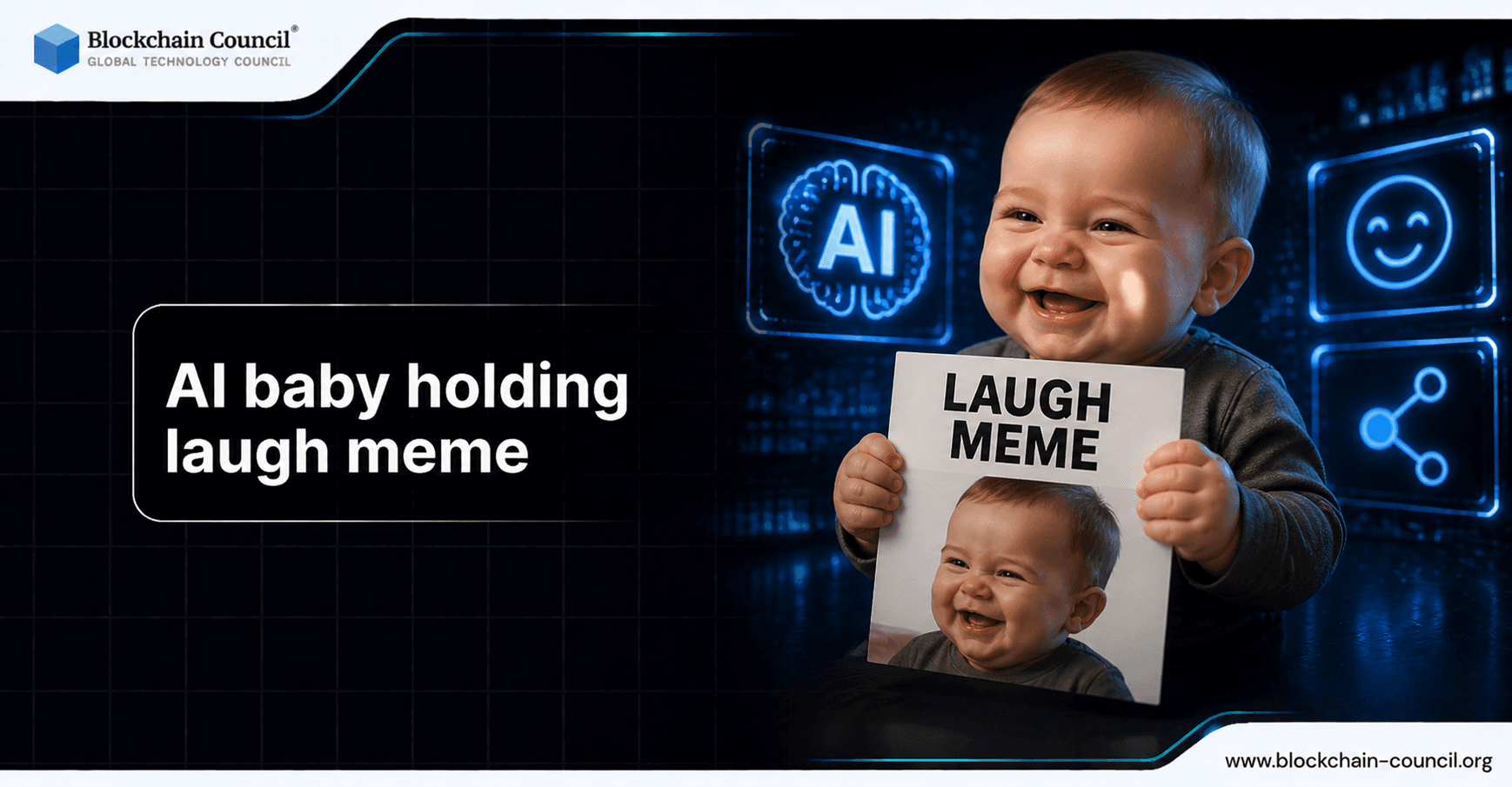
Artificial Intelligence has transformed how content is created, shared, and consumed across digital platforms. One of the most notable trends in recent years is the rise of AI-generated memes, particularly those featuring emotionally engaging visuals such as babies laughing or expressing joy. The “AI baby holding laugh meme” is a prime example of this phenomenon, combining humor, emotion, and advanced technology to create highly viral content.
These memes are not just random internet trends. They reflect deeper changes in how AI interacts with human psychology, creativity, and communication. By blending realistic visuals with emotional triggers, AI-generated memes are reshaping the landscape of online entertainment.

This article explores the concept of AI baby laugh memes, the technology behind them, recent developments, real-world applications, ethical considerations, and their future impact on digital culture.
What Is an AI Baby Holding Laugh Meme?
An AI baby holding laugh meme typically refers to a digitally generated image or video where a baby appears to be laughing or expressing joy, often combined with humorous captions or scenarios.
These memes are created using AI tools that generate:
Realistic baby faces and expressions
Natural-looking gestures and movements
Contextual humor through captions
The result is content that feels both authentic and entertaining, making it highly shareable.
Why These Memes Go Viral
The popularity of AI baby laugh memes is not accidental.
Humans are naturally drawn to:
Baby faces and expressions
Laughter and positive emotions
Simple, relatable humor
When AI combines these elements, it creates content that resonates across diverse audiences.
Real-world example: AI-generated baby memes often gain millions of views on platforms like Instagram, TikTok, and YouTube due to their universal appeal.
The emotional connection drives engagement, shares, and repeat viewing.
Technology Behind AI Meme Generation
Creating these memes involves several advanced technologies.
Generative AI Models
Models such as diffusion systems and GANs generate realistic images and videos. These systems learn patterns from large datasets to produce lifelike outputs.
Facial Expression Synthesis
AI analyzes how facial muscles move during laughter and replicates these patterns in generated images.
Caption Generation
Natural language processing enables AI to generate captions that match the visual content, enhancing humor.
Video Animation
Some tools animate static images, adding movement and sound to create more engaging content.
These technologies work together to produce high-quality memes.
Recent Developments in AI Meme Culture
AI-generated memes have evolved rapidly.
Increased Realism
Modern AI systems produce visuals that are nearly indistinguishable from real photos.
Faster Content Creation
Memes can be generated in seconds, allowing creators to respond quickly to trends.
Personalization
AI can tailor memes to specific audiences, increasing relevance and engagement.
Integration with Social Platforms
Many tools are now directly integrated with social media, simplifying content sharing.
These developments have accelerated the growth of AI meme culture.
Real-World Applications
While memes are often seen as entertainment, they have practical uses.
Marketing and Branding
Brands use AI-generated memes to connect with audiences in a relatable way. Humor increases engagement and brand recall.
Content Creation
Influencers and creators use AI tools to produce consistent and engaging content.
Education
Memes can be used to simplify complex topics and make learning more engaging.
Social Communication
Memes have become a universal language for expressing ideas and emotions.
These applications show the broader impact of AI-generated memes.
Benefits of AI Meme Generation
AI-generated memes offer several advantages.
Rapid content production
High engagement rates
Creative flexibility
Cost efficiency
Scalability
These benefits make AI a powerful tool for digital content creation.
Ethical Considerations
Despite their popularity, AI-generated memes raise important ethical questions.
Authenticity and Transparency
Users may not always know whether content is real or AI-generated.
Misrepresentation
AI-generated images could be used to create misleading or deceptive content.
Privacy Concerns
Training data may include real images, raising questions about consent.
Emotional Manipulation
Content designed to trigger emotions must be used responsibly.
Addressing these concerns is essential for ethical AI use.
AI and the Evolution of Humor
AI is changing how humor is created and shared.
Traditional humor relies on human creativity and cultural context. AI introduces new possibilities by generating unexpected combinations and patterns.
However, humor still depends on human interpretation. AI can assist, but it does not fully replace human creativity.
Skills Needed for AI Content Creation
Creating effective AI-generated memes requires technical and creative skills.
The AI Expert Certification provides a strong foundation in AI technologies and their applications.
For those working with advanced AI systems, the Claude AI Certification offers insights into modern AI models and their capabilities.
Developers can enhance their expertise through the AI Powered Coding Expert Course, which focuses on building AI-driven tools.
Additionally, professionals in marketing and social media can benefit from the AI Powered Digital Marketing Course, which explores how AI-driven strategies are applied in digital campaigns.
Challenges in AI Meme Creation
AI meme generation is not without challenges.
Maintaining originality can be difficult, as models may produce repetitive content.
Ensuring cultural sensitivity is also important, as humor varies across audiences.
Technical limitations may affect realism and quality.
These challenges require careful management.
Future of AI Memes
The future of AI-generated memes includes several trends.
Greater realism and expressiveness
Integration with augmented reality
Interactive meme experiences
Increased personalization
These advancements will continue to shape digital culture.
AI Memes and Social Media Trends
AI-generated memes are becoming a dominant force in social media.
They influence trends, engagement strategies, and content creation methods.
Platforms are adapting to accommodate AI-generated content.
This shift is transforming how users interact online.
Conclusion
The “AI baby holding laugh meme” is more than just a viral trend. It represents the intersection of technology, emotion, and creativity in the digital age. By leveraging advanced AI techniques, these memes create engaging and relatable content that resonates with audiences worldwide.
While the benefits are significant, ethical considerations must be addressed to ensure responsible use. As AI continues to evolve, its role in shaping humor and communication will only grow.
Understanding this trend is essential for anyone involved in digital media, marketing, or technology.
Frequently Asked Questions (FAQs)
1. What is an AI baby holding laugh meme?
It is an AI-generated meme featuring a baby expressing laughter or joy. The content combines visuals and humor. It is designed for engagement. It is widely shared. It is popular online.
2. How are these memes created?
They are created using generative AI models and NLP. Images and captions are generated. Systems analyze patterns. Outputs are produced quickly. The process is automated.
3. Why are these memes popular?
They appeal to emotions and humor. Babies and laughter create positive responses. Content is relatable. Social media amplifies reach. Popularity grows rapidly.
4. Are these memes real?
They are AI-generated and not real photographs. They may look realistic. Users should be aware. Verification is important. Transparency matters.
5. What technology is used?
Technologies include GANs and diffusion models. NLP is used for captions. AI processes data. Systems generate outputs. Technology is advanced.
6. Can businesses use AI memes?
Yes, businesses use them for marketing. Engagement increases. Branding improves. Content becomes relatable. It is effective.
7. What are the risks?
Risks include misinformation and misuse. Ethical concerns exist. Privacy issues may arise. Responsible use is required. Awareness is important.
8. How does AI affect humor?
AI introduces new ways to create humor. It generates content quickly. Creativity is enhanced. Human interpretation remains important. It is evolving.
9. Can AI replace meme creators?
AI supports creators but does not replace them. Human creativity is essential. Collaboration is important. AI enhances productivity. Balance is needed.
10. What industries use AI memes?
Industries include marketing, entertainment, and education. Applications are diverse. Adoption is increasing. Impact is significant. Benefits are clear.
11. How accurate are AI-generated images?
Accuracy depends on the model and data. Outputs are improving. Errors may occur. Continuous updates help. Reliability increases.
12. What skills are needed?
Skills include AI knowledge and creativity. Technical expertise helps. Learning is ongoing. Adaptability is important. Skills development is key.
13. How does AI personalize memes?
AI analyzes user preferences. Content is tailored accordingly. Engagement increases. Experiences improve. Personalization is effective.
14. What is the future of AI memes?
AI memes will become more realistic and interactive. Personalization will increase. Integration with new technologies will grow. Innovation continues. Growth is expected.
15. How do AI memes impact social media?
They influence trends and engagement. Content creation evolves. Platforms adapt. User behavior changes. Impact is significant.
16. Are AI memes ethical?
Ethics depend on usage. Responsible practices are important. Transparency is needed. Concerns must be addressed. Ethical use is essential.
17. Can AI-generated content be trusted?
Trust depends on transparency and verification. Users should be cautious. AI outputs may vary. Critical thinking is important. Awareness helps.
18. How does AI improve content creation?
AI automates processes and generates ideas. Efficiency increases. Time is saved. Quality improves. Productivity grows.
19. What challenges exist?
Challenges include originality and cultural sensitivity. Technical limitations exist. Ethical concerns must be addressed. Solutions are needed. Improvement continues.
20. Why is this trend important?
It highlights how AI influences communication and culture. It shows technological progress. It impacts industries. It shapes digital interaction. It is significant.
Related Articles
View All
AI & ML
OpenAI Launches GPT-6.1 Terra: What’s New?
OpenAI has launched GPT-6.1 Terra, a faster and cheaper mid-tier model with stronger computer use, better image understanding and fewer errors. See what is new, what it costs, and who can use it.

AI & ML
Built to Catch AI Cheating: Rethinking Pre-Employment Assessments with HireValid
Explore how HireValid is rethinking pre-employment assessments with AI-resistant test design, integrity signals, candidate evidence, and human review to address AI-assisted cheating.

AI & ML
AI-Era Hiring Needs AI-Proof Tests: How HireValid Is Redefining Talent Assessment
Explore how HireValid is rethinking talent assessment for the AI era with job-relevant tests, anti-cheating design, integrity signals, and human-reviewed evidence of candidate ability.
Trending Articles
The Role of Blockchain in Ethical AI Development
How blockchain technology is being used to promote transparency and accountability in artificial intelligence systems.
How Blockchain Secures AI Data
Understand how blockchain technology is being applied to protect the integrity and security of AI training data.
What is AWS? A Beginner's Guide to Cloud Computing
Everything you need to know about Amazon Web Services, cloud computing fundamentals, and career opportunities.