

AI Agents for Sales and Marketing: Lead Qualification, Personalization, and Campaign Automation

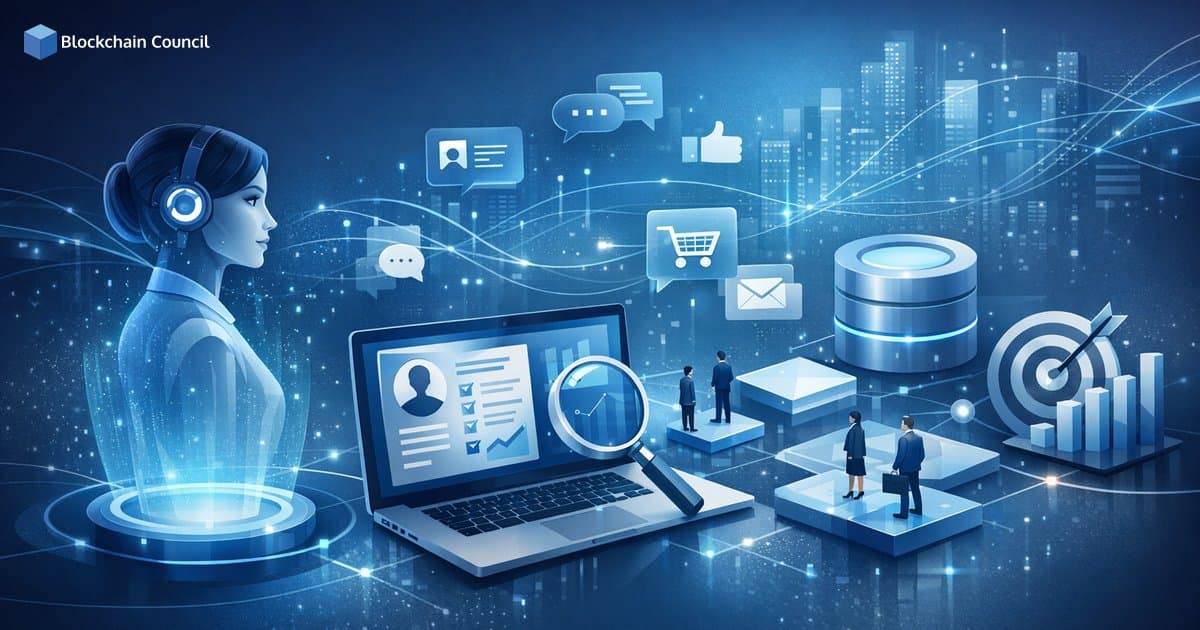
AI agents for sales and marketing are moving beyond simple chatbots and rule-based sequences. Modern deployments combine large language models (LLMs), event-driven decisioning, and CRM or RevOps data to qualify leads in real time, personalize outreach at scale, and automate multi-channel campaigns. Reported outcomes include 25-30% higher conversion rates in lead generation scenarios, up to 40% reduction in manual lead work, 33% faster meeting preparation, and 10% higher win rates in specific enterprise deployments.
This article breaks down what these agents do today, how they work, where they deliver the most value, and what organizations need to deploy them safely and effectively.

What Are AI Agents for Sales and Marketing?
AI agents for sales and marketing are software systems designed to perceive signals (intent, engagement, firmographics, product usage), decide actions (ask questions, route, nurture, escalate), and execute workflows (send messages, book meetings, update CRM) with limited human oversight. Unlike traditional automation that follows a fixed sequence, agents adapt to new inputs such as email replies, score changes, web events, or pipeline status updates.
Enterprise vendors describe these agents as proactive, autonomous applications that execute complex tasks, escalate issues when needed, and draw on business-specific data integrated into the CRM for analytics and coaching. The most effective deployments sit inside or tightly alongside a CRM and marketing automation platform, so agents act on the same data your teams use.
Core Capabilities Across the Revenue Funnel
1) Real-Time Lead Qualification and Prioritization
Lead qualification is one of the strongest near-term use cases because it is high volume, time-sensitive, and often repetitive. AI agents qualify and prioritize leads by combining multiple data types:
Fit signals: firmographic and demographic data aligned to your ideal customer profile (ICP).
Intent signals: behavioral data such as web activity, content engagement, replies, or product trial activity.
Enrichment: augmenting lead records using sources such as LinkedIn data, Clearbit, Apollo, and internal product telemetry.
Rather than waiting for form fills or manual SDR review, agents can engage immediately through web chat, email, SMS, WhatsApp, and voice. They ask ICP-specific questions, record structured answers, and update the CRM automatically. This reduces lead leakage, particularly when speed-to-lead determines which team wins the opportunity.
2) Autonomous Conversations and Meeting Scheduling
Many teams deploy agents that conduct full qualification dialogues and take the next step automatically:
Ask dynamic qualification questions based on persona, industry, and account context.
Handle objections or clarifications during inbound conversations.
Book meetings directly on sales calendars and confirm by email or SMS.
Update CRM fields such as lead status, stage, notes, and activity history.
Voice-based agents are increasingly used for inbound qualification and straightforward sales calls, particularly where prospects prefer phone interactions or where immediate follow-up is critical.
3) Personalization at Scale
Personalization has shifted from basic mail merge to context-aware messaging. AI agents generate tailored outreach sequences based on:
Persona and segment: role-specific pain points and industry language.
Engagement behavior: different follow-ups for high-intent versus low-intent leads based on opens, clicks, and replies.
CRM and opportunity context: account stage, prior meetings, competitors, or previous objections.
Product usage: trial activity, feature adoption, logins, and time-to-value signals.
The most effective implementations connect personalization to next-best action logic: the agent does not just generate copy, it decides whether to nurture, escalate to a human, or switch channels.
4) Campaign Automation Across Multiple Channels
Campaign automation is moving from scheduled sequences to adaptive, closed-loop workflows. Agents can:
Execute outbound motions across email, LinkedIn, and phone.
Trigger follow-ups based on replies, status changes, or time-based rules.
Route high-intent leads instantly to the right rep and notify the team when thresholds are met.
Run nurture programs that keep leads engaged until they show readiness to buy.
AI agents are increasingly positioned as capable of covering cold outreach, qualification, scheduling, follow-ups, and basic demo handling - tasks that historically required dedicated SDR capacity.
How AI Sales and Marketing Agents Work
Agentic Workflows Instead of Static Automation
Traditional marketing automation follows predefined steps. Agentic systems operate more like a decision engine:
Sense: ingest events such as a website visit, a reply, a score change, or a product action.
Reason: evaluate fit and intent against ICP criteria and funnel context.
Act: send a message, ask a question, book time, enrich data, or route to a rep.
This architecture is why many organizations describe the shift as moving from assistive tools to autonomous, closed-loop agents.
Tight CRM and RevOps Integration
CRM integration is not optional for meaningful outcomes. Agents need access to:
Account, contact, and opportunity records
Activity history and engagement signals
Routing rules and territories
Sales playbooks and qualification frameworks
When embedded into CRM workflows, agents enrich, score, route, and log actions without requiring reps to copy information across systems.
Multi-Channel and Multi-Modal Interfaces
Buyer journeys are fragmented across platforms. AI agents operate across:
Text: chat, email, SMS, WhatsApp
Voice: inbound qualification and outbound calling for repetitive scenarios
Data: CRM fields, enrichment sources, and product telemetry
Multi-channel coverage supports 24/7 engagement, faster speed-to-lead, and better capture of inbound demand.
Business Impact: What Metrics Are Improving?
While many performance figures are vendor- or deployment-specific, reported outcomes point in a consistent direction:
Conversion impact: AI lead generation agents have been reported to increase conversion rates by approximately 25-30% through improved targeting and qualification.
Efficiency gains: automation can reduce manual lead work by up to 40% in certain deployment scenarios.
Sales productivity: some enterprise deployments report 33% faster meeting preparation and a 10% increase in win rates.
Response time: instant engagement improves coverage and reduces missed opportunities, particularly outside business hours.
For RevOps leaders, the most actionable approach is to track speed-to-lead, qualified meeting rate, pipeline created per rep, and the percentage of leads contacted within SLA windows.
Practical Use Cases You Can Deploy Now
Use Case 1: Instant Inbound Qualification on Web Chat
An agent engages site visitors, asks a short set of ICP-aligned questions, enriches firmographic data, scores the lead, and then:
Books a meeting for qualified leads, or
Enrolls the lead in a nurture path if not yet sales-ready
Use Case 2: Cross-Channel Qualification (Email, WhatsApp, SMS, Voice)
Rather than forcing prospects into a single channel, agents continue qualification where the buyer is most responsive. This is particularly valuable for high-velocity inbound where prospects ask questions via email or messaging apps, and for teams that rely on phone-based discovery.
Use Case 3: Outbound SDR Automation with Human Escalation
Agents handle repetitive outbound motions end to end and escalate when defined thresholds are met - for example, when a prospect replies positively, requests pricing, or matches high-intent criteria. This keeps human reps focused on higher-value conversations while maintaining consistent follow-up across the pipeline.
Use Case 4: Lifecycle Nurture Programs That Convert at the Right Moment
Agents manage ongoing nurture with educational content and periodic check-ins, then route leads to sales when engagement crosses a defined threshold. This improves timing precision and reduces the manual overhead of monitoring large lead pools.
Governance, Compliance, and Trust
As agents become more autonomous, organizations need clear guardrails. Key controls include:
Policy and permissions: define what the agent can send, to whom, and through which channels.
Approval thresholds: require human review for higher-risk actions such as discounting, contractual statements, or regulated claims.
Audit trails: log conversations, decisions, and CRM updates for review and coaching.
Privacy and outreach compliance: align with GDPR and CAN-SPAM requirements and maintain consent and suppression logic.
These controls are especially important in regulated industries where noncompliant outreach or misstatements can create legal exposure.
Skills and Team Changes: From SDR Execution to Agent Operations
A common perspective is that AI agents absorb repetitive tasks while humans retain ownership of strategy, relationship building, and deal judgment. In practice, this shifts hiring and upskilling priorities toward:
RevOps and GTM systems thinking: designing workflows that align marketing, sales, and data functions.
Agent configuration and evaluation: defining ICP rules, testing conversation flows, and monitoring outcomes.
Data quality management: improving CRM hygiene so agents can make reliable decisions.
For professionals building expertise in this area, internal training paths that combine AI fundamentals with automation and governance provide a strong foundation. Relevant upskilling programs include the Certified AI Engineer and Certified Prompt Engineer certifications, along with role-aligned programs in data, cybersecurity, and governance that support the safe deployment of autonomous systems.
Conclusion: Where AI Agents for Sales and Marketing Are Headed
AI agents for sales and marketing are becoming a core operational layer across lead qualification, personalization, and campaign automation. The dominant pattern is clear: agents are moving from supporting individual reps to running closed-loop workflows that enrich, score, converse, schedule, route, and follow up across channels. Organizations that succeed will pair agent autonomy with strong CRM integration, clean data, and governance controls. The result is faster response, more consistent qualification, scalable personalization, and measurable gains in conversion and revenue efficiency.
For teams evaluating adoption, start with high-volume inbound qualification or repetitive outbound workflows, instrument metrics end to end, and expand scope as data quality and governance capabilities mature.
Related Articles
View All
Agentic AI
AI Agents for Business Process Automation: A Practical Guide for Managers
A practical guide for managers on using AI agents for business process automation, covering use cases, governance, ROI, architecture, and rollout steps.

Agentic AI
AI Agents and Zero-Knowledge Proofs: Privacy-Preserving Automation in Web3
Learn how AI agents and zero-knowledge proofs enable privacy-preserving automation in Web3, from ZKML and identity to compliance proofs.

Agentic AI
Decentralized AI Agents: How Blockchain Enables Trust, Transparency, and Automation
Decentralized AI agents use blockchain for auditable actions, smart contract limits, trusted data, and autonomous Web3 workflows across DeFi, gaming, and enterprise systems.
Trending Articles
The Role of Blockchain in Ethical AI Development
How blockchain technology is being used to promote transparency and accountability in artificial intelligence systems.

Top 5 DeFi Platforms
Explore the leading decentralized finance platforms and what makes each one unique in the evolving DeFi landscape.
How Blockchain Secures AI Data
Understand how blockchain technology is being applied to protect the integrity and security of AI training data.