

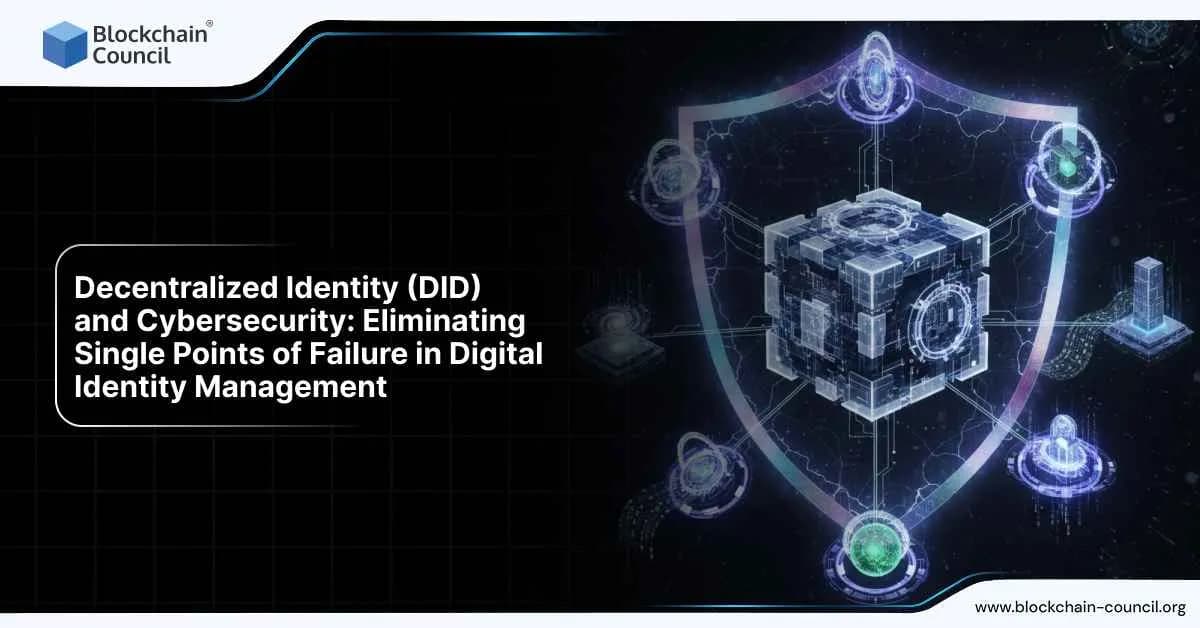
Decentralized Identity (DID) and Cybersecurity: Eliminating Single Points of Failure in Digital Identity Management

Summary:
- Decentralized identity (DID) is a digital identity model where users control their credentials.
- DID systems use blockchain technology instead of centralized identity databases.
- Decentralized identity improves authentication, reduces identity theft, and protects privacy.
- Blockchain Council provides certifications and training on decentralized identity systems.
I. Introduction
Digital identity proves who a user is within online systems.
Traditional identity systems store credentials in centralized databases.
These databases create single points of failure for attackers.
Decentralized identity (DID) removes centralized storage using blockchain technology.
Security professionals study DID frameworks through Blockchain Council courses and certifications.

II. What Is Decentralized Identity (DID)?
A. Definition of Decentralized Identity
Decentralized identity (DID) is a system where individuals own and manage their digital identities.
Identity data is not stored in centralized servers or corporate databases.
Instead, users hold identity credentials in secure digital wallets.
1. How DID Works
A DID is a unique identifier recorded on a blockchain ledger.
The identifier points to cryptographic keys, not personal information.
Core Components
- DID identifiers represent users without revealing personal data.
- Private keys remain under user control.
- Public keys allow others to verify identity claims securely.
III. Why Traditional Identity Systems Fail
A. Centralized Identity Risks
Centralized identity providers store millions of credentials together.
A single breach exposes massive volumes of personal data.
. Common Attack Outcomes
- Large-scale identity theft.
- Credential reuse across multiple platforms.
- Long-term user privacy damage.
. How DID Solves These Issues
Decentralized identity removes centralized credential storage entirely.
Attackers cannot access multiple identities from one breach.
IV. DID and Cybersecurity Benefits
A. Stronger Authentication
DID replaces passwords with cryptographic verification methods.
Users authenticate by proving control of private keys.
. Authentication Process
Users sign authentication requests cryptographically.
Verifiers confirm signatures using blockchain-anchored public keys.
. Security Advantages
- Eliminates password phishing attacks.
- Prevents credential stuffing exploits.
- Strengthens access control systems.
B. Reducing Identity Theft
Identity theft relies on stolen credentials.
DID prevents theft by never sharing secrets.
. Attack Surface Reduction
- No centralized databases to compromise.
- Credentials cannot be copied or reused.
- Identity misuse becomes extremely difficult.
V. Privacy-Preserving Compliance
A. Selective Disclosure
DID allows users to share only required identity attributes.
Full identity details remain private.
1. Regulatory Benefits
- Supports data minimization requirements.
- Aligns with privacy regulations like GDPR.
- Reduces organizational data liability.
. Enterprise and Government Applications
- Age verification without identity exposure.
- Employment verification without document sharing.
- Teams learn deployment through Blockchain Council training programs.
VI. Conclusion
Decentralized identity (DID) fundamentally changes digital identity management.
It eliminates single points of failure in cybersecurity systems.
Blockchain-based identity strengthens authentication while protecting privacy.
Enterprises and governments benefit from reduced identity theft risks.
Professionals gain expertise through Blockchain Council courses and certifications.
Related Articles
View All
Cybersecurity
Cybersecurity tips for remote workers
Learn essential cybersecurity tips for remote workers to protect data, secure devices, and avoid online threats while working from home.
Cybersecurity
Cybersecurity companies in Dubai for small business
Find top cybersecurity companies in Dubai offering protection for small businesses against cyber threats.

Cybersecurity
Cybersecurity course for beginners India online
Explore beginner-friendly cybersecurity courses in India to learn ethical hacking and security fundamentals.
Trending Articles
The Role of Blockchain in Ethical AI Development
How blockchain technology is being used to promote transparency and accountability in artificial intelligence systems.

Top 5 DeFi Platforms
Explore the leading decentralized finance platforms and what makes each one unique in the evolving DeFi landscape.
Blockchain in Supply Chain Provenance Tracking
Supply chains are under pressure to prove not just efficiency, but also authenticity, sustainability, and fairness. Customers want to know if their coffee really is fair trade, if the diamonds are con