

How Crypto Investigation Professionals Trace Stolen Funds Using On-Chain Analytics
 Suyash Raizada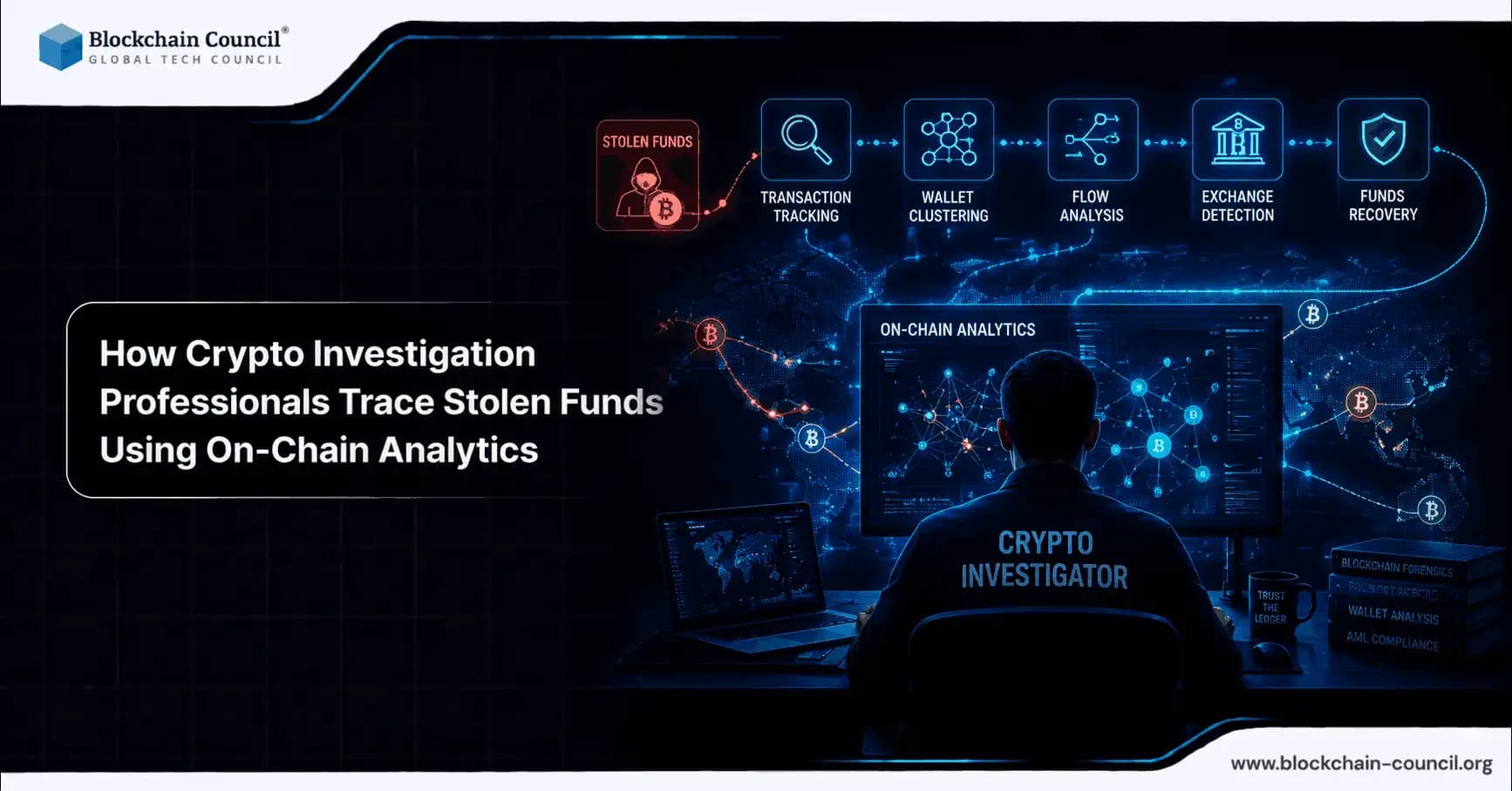
Tracing stolen funds using on-chain analytics has evolved from manual blockchain browsing into a disciplined forensic workflow. Because most public blockchains are transparent by design, investigators can reconstruct money flows in near real time, map relationships between wallets, and identify likely cash-out points such as centralized exchanges. Modern cases also blend on-chain signals with off-chain attribution like OSINT and KYC records to turn pseudonymous transactions into actionable leads.
Why On-Chain Analytics Works for Stolen Crypto Tracing
Unlike traditional banking rails where records may require subpoenas and long turnaround times, public blockchains expose transaction histories, timestamps, token movements, and smart contract interactions as shared state. On-chain analytics turns that raw data into investigation-ready intelligence by:

Reconstructing transaction paths across many hops quickly
Clustering related addresses to infer common control
Tagging risk entities such as mixers, bridges, and known scam infrastructure
Connecting to off-chain identity when funds touch regulated exchanges with KYC
Industry reporting has estimated crypto-related illicit activity at roughly $14 billion in 2024, underscoring why enterprises and investigators increasingly rely on blockchain forensics to respond to hacks, fraud, and ransomware.
The Modern Toolkit Used by Crypto Investigation Professionals
Professional investigations typically combine multiple tools, each optimized for a specific stage of the trace. Common categories include:
1) Blockchain Explorers for Ground Truth
Explorers like Etherscan, BscScan, and Solscan provide authoritative transaction details: token transfers, internal transactions, contract events, and current balances. Investigators use explorers to validate what automated platforms report and to pull exact artifacts for evidentiary records.
2) Graphing and Clustering Platforms
Graphing engines like Chainalysis Reactor, TRM Labs, and Elliptic Investigator visualize fund flows as networks. Their value lies in speed and scale: investigators can follow theft proceeds through complex paths, cluster wallets by behavior, and prioritize nodes that resemble cash-out activity. Many platforms also support cross-chain tracing across major ecosystems such as Ethereum, BNB Chain, and Solana.
3) Smart Contract Analysis for DeFi-Native Crimes
When theft involves DeFi, understanding where the money went often requires analyzing contract logic. Tools like Tenderly help replay transactions and inspect contract calls, while static analysis tools like Slither and MythX can support vulnerability and exploit context. This is relevant for cases involving malicious staking contracts, fake DEX front ends, or approval drainers.
4) Mixer and Cross-Chain Bridge Detection
Mixers and bridges are common laundering steps. Mixers attempt to break linkability; bridges move value across networks where tracing can fragment. Investigation platforms increasingly flag known mixer contracts and bridge endpoints, then correlate entry and exit patterns to re-link flows. Regulatory actions such as U.S. Treasury sanctions against certain mixing services have also increased compliance scrutiny around these touchpoints.
5) Off-Chain Attribution: OSINT and KYC
On-chain evidence shows interactions. Off-chain evidence can identify the actor. Professionals often combine:
OSINT: domain records, infrastructure reuse, social profiles, scam ad funnels, admin emails, and chat handles
KYC/AML records: when traced funds hit a regulated exchange, legal process can link deposit addresses to verified identities
Research from Elliptic indicates that a substantial share of illicit flows interact with regulated exchanges at some stage, which is why exchange escalation and preservation requests are central to recovery efforts.
6) Wallet Scanning for Recovery Seeds and Offline Analysis
Recent product developments in the industry include wallet scanning approaches that analyze balances and illicit exposure across many wallets and multiple chains while remaining offline, then feed results into visualization tools. In practice, this supports incident response, asset discovery, and cases where investigators are lawfully provided seed phrases or recovery material as part of litigation or corporate investigations.
Step-by-Step: How Stolen Funds Are Traced Using On-Chain Analytics
While every case differs, a typical workflow used by crypto investigation professionals follows these stages:
Step 1: Intake and Preservation
Investigators start by collecting and verifying core artifacts:
Victim addresses and suspected attacker addresses
Transaction hashes, timestamps, and affected assets
Chain and token standards involved
Exchange accounts, chats, and URLs tied to the incident
Preservation matters because threat actors rotate infrastructure quickly, and exchanges may require precise timestamps and hashes to locate deposits.
Step 2: Preliminary Tracing on the Origin Chain
The first pass identifies immediate outflows: where the stolen assets moved, whether they were swapped, and whether the attacker used aggregation steps such as splitting into multiple addresses. Explorers help confirm if the theft involved:
Direct transfers
Token swaps via DEX routers
Bridging transactions
Deposits into mixer contracts
Step 3: Behavioral Analysis and Clustering
Clustering is where on-chain analytics becomes forensic. Using heuristics and machine learning, analysts group addresses likely controlled by the same entity. Signals may include spending patterns, repeated counterparties, shared funding sources, and operational fingerprints. Graph analysis and clustering can reveal suspicious patterns even when criminals attempt to obfuscate flows.
Step 4: Cross-Chain Follow-Through
If value crosses chains through bridges, investigators flag the bridge transaction on the source chain, then locate the corresponding receipt or mint event on the destination chain. This is a common failure point for less experienced analysts, but modern investigation platforms streamline the mapping and help maintain continuity of evidence across networks.
Step 5: Identify Cash-Out Points and Escalation Targets
Most recovery opportunities emerge when funds touch entities that can freeze assets or provide customer records, such as:
Centralized exchanges
Custodial wallets and payment processors
OTC services and high-risk brokers
Investigators generate deposit address lists, timestamps, and hop-by-hop narratives for rapid escalation. Speed is critical: within hours, stolen funds can traverse many hops, bridges, and swaps, reducing the probability of effective freezes if action is delayed.
Step 6: Attribution Using OSINT and KYC
Once a trace reaches a regulated exchange, investigators may support counsel and law enforcement with a packet suitable for legal requests, including clear chain-of-custody and a defensible explanation of clustering logic. The strongest cases iterate: on-chain analysis reveals risky interactions, off-chain work links those interactions to identities, then on-chain confirmation identifies additional controlled wallets.
Step 7: Reporting for Litigation, Insurance, and Enforcement
Professional deliverables typically include:
Visual graphs showing fund flows and hop counts
Chronologies of transactions and key events
Entity attributions with confidence notes and supporting artifacts
Recommendations for freezes, monitoring, and follow-on tracing
Real-World Examples: What Tracing Looks Like in Practice
Colonial Pipeline Ransomware Recovery
The Colonial Pipeline ransomware incident is a widely cited example of blockchain forensics in action. U.S. authorities traced Bitcoin payments across multiple wallets and recovered a significant portion of the ransom. The case illustrates a core advantage of on-chain analytics: transaction transparency can accelerate investigative leads compared with traditional financial rails.
Yield Farming Scam and Cross-Chain Laundering
In a reported scam scenario, investigators started with the victim wallet and traced funds into a staking contract on Ethereum, then followed laundering steps that included cross-chain movement to BNB Chain and interaction with a mixer. Clustering linked exit wallets to prior fraud activity, enabling targeted exchange escalation and freeze attempts.
Asset Hiding in Civil Matters
On-chain analytics is not limited to criminal cases. In civil disputes, investigators may start from digital breadcrumbs such as known email metadata or disclosed addresses, then use clustering to identify related wallets and track deposits to KYC-compliant exchanges where lawful requests can support asset discovery.
Challenges Investigators Face and How They Mitigate Them
Mixers and Obfuscation
Mixers remain a significant challenge, but advanced analytics can detect statistical and behavioral linkages between deposit and withdrawal patterns, especially when combined with timing analysis and downstream wallet behavior.
DeFi Complexity and Smart Contract Indirection
DeFi introduces multi-step calls, proxy contracts, and internal transfers that are not visible in a simple token transfer list. Contract-level tracing, event log interpretation, and transaction simulation help investigators explain what happened and where value actually moved.
Speed Requirements
Time is critical. Many investigations prioritize rapid monitoring and immediate notification to exchanges and custodians. Firms commonly report tracing through many hops quickly, but operational response is often the limiting factor rather than the analytics capability itself.
Future Outlook: AI-Driven Tracing and Standardized Cross-Chain Investigations
On-chain analytics is moving toward predictive and automated investigation workflows. By the late 2020s, many practitioners expect:
AI-assisted pattern recognition that predicts likely cash-out routes before they occur
Deeper cross-chain standardization that reduces investigative fragmentation
Adversarial privacy dynamics, including stronger privacy technology alongside improved de-obfuscation methods
More coordinated compliance pathways between exchanges and regulators for timely freezes
Skills and Training for Crypto Investigations Teams
Teams that perform effective tracing typically blend blockchain literacy, security fundamentals, OSINT, and evidence handling. Professionals building capability in this area should consider structured learning paths that cover:
Blockchain transaction mechanics and token standards
DeFi protocols, bridges, and smart contract behaviors
Threat actor tradecraft and laundering typologies
Compliance concepts including AML, sanctions, and reporting obligations
Relevant certifications span blockchain fundamentals, cryptocurrency analysis, smart contract security, and cybersecurity - including Certified Blockchain Expert programs, smart contract security training, and investigation-focused credentials.
Conclusion
Tracing stolen crypto funds using on-chain analytics comes down to disciplined workflow: preserve evidence, trace and visualize flows, cluster and interpret behavior, follow cross-chain movements, and connect on-chain activity to off-chain attribution when funds reach regulated chokepoints. As laundering techniques continue to develop, the most effective investigations will combine real-time on-chain analytics, smart contract understanding, and legally sound reporting that enables rapid freezes and successful recovery actions.
Related Articles
View All
Cryptocurrency
How to Recover Funds Sent to the Wrong Crypto Wallet Address
Learn when mis-sent crypto can be recovered, when it is permanently lost, and the exact steps to take after sending funds to the wrong wallet address.

Cryptocurrency
How AI Blockchain Analytics Improves On-Chain Intelligence
AI blockchain analytics turns raw on-chain data into real-time intelligence for compliance, security, investigations, and DeFi market insight.

Cryptocurrency
Recovering Stolen Crypto Assets: Legal and Technical Challenges
Recovering stolen crypto assets is possible in limited cases, but legal jurisdiction, laundering, privacy tools, and slow response often block restitution.
Trending Articles
How Blockchain Secures AI Data
Understand how blockchain technology is being applied to protect the integrity and security of AI training data.
Claude AI Tools for Productivity
Discover Claude AI tools for productivity to streamline tasks, manage workflows, and improve efficiency.
How to Install Claude Code
Learn how to install Claude Code on macOS, Linux, and Windows using the native installer, plus verification, authentication, and troubleshooting tips.