

Circle’s USDC Circulation Hits $65 Billion
 Michael Willson
Circle’s USDC stablecoin has reached a remarkable $65 billion in circulation, marking a 90% growth compared to the previous year. This surge underscores the growing importance of stablecoins like USDC in the financial ecosystem. In this article, we’ll explore the factors driving the growth of USDC, Circle’s performance, its role in decentralized finance (DeFi), and the future of USDC in the ever-evolving blockchain space.
Why USDC’s Growth Matters
USDC, a stablecoin pegged to the US dollar, has become one of the most widely used digital currencies in the world. Its ability to maintain a stable value while being integrated into multiple financial systems—both traditional and decentralized—has contributed to its rise. The significant growth of USDC, now surpassing $65 billion in circulation, indicates not only its wide acceptance but also the growing reliance on stablecoins in the global economy.

The expansion of USDC is particularly noteworthy due to its impact on cross-border payments, decentralized finance (DeFi), and institutional use, making it an essential tool for both individuals and businesses. This growth also highlights how stablecoins like USDC are becoming a fundamental part of the broader crypto ecosystem.
How Circle Has Driven USDC’s Success
The remarkable increase in USDC circulation can be attributed to several key factors that have shaped Circle’s strategic growth.
Institutional Adoption and Financial Partnerships
USDC has gained significant traction among major financial institutions and crypto exchanges, including Binance, OKX, and Fiserv. These partnerships have increased USDC’s use in various financial services, from trading to lending. Furthermore, USDC’s ability to be easily integrated into financial platforms has made it a favored choice for companies looking to adopt digital assets.
Circle’s collaboration with FIS and Corpay has expanded USDC’s use in cross-border transactions and business payments. This has made USDC a primary option for companies looking to optimize payment flows across borders.
The Regulatory Advantage of USDC
One of the key reasons for USDC’s growth is the GENIUS Act, which was enacted in 2025. This regulatory framework has provided the stablecoin with much-needed legal clarity, particularly regarding its use in financial markets. With clear guidelines in place, institutional investors feel more confident in using USDC for their operations, further propelling its adoption.
USDC’s Role in Decentralized Finance (DeFi)
The stable nature of USDC has made it a go-to choice for DeFi applications. It is commonly used in lending, borrowing, and yield farming, where participants earn rewards for providing liquidity. Its stability offers significant advantages over volatile cryptocurrencies, making it ideal for use in these decentralized financial services.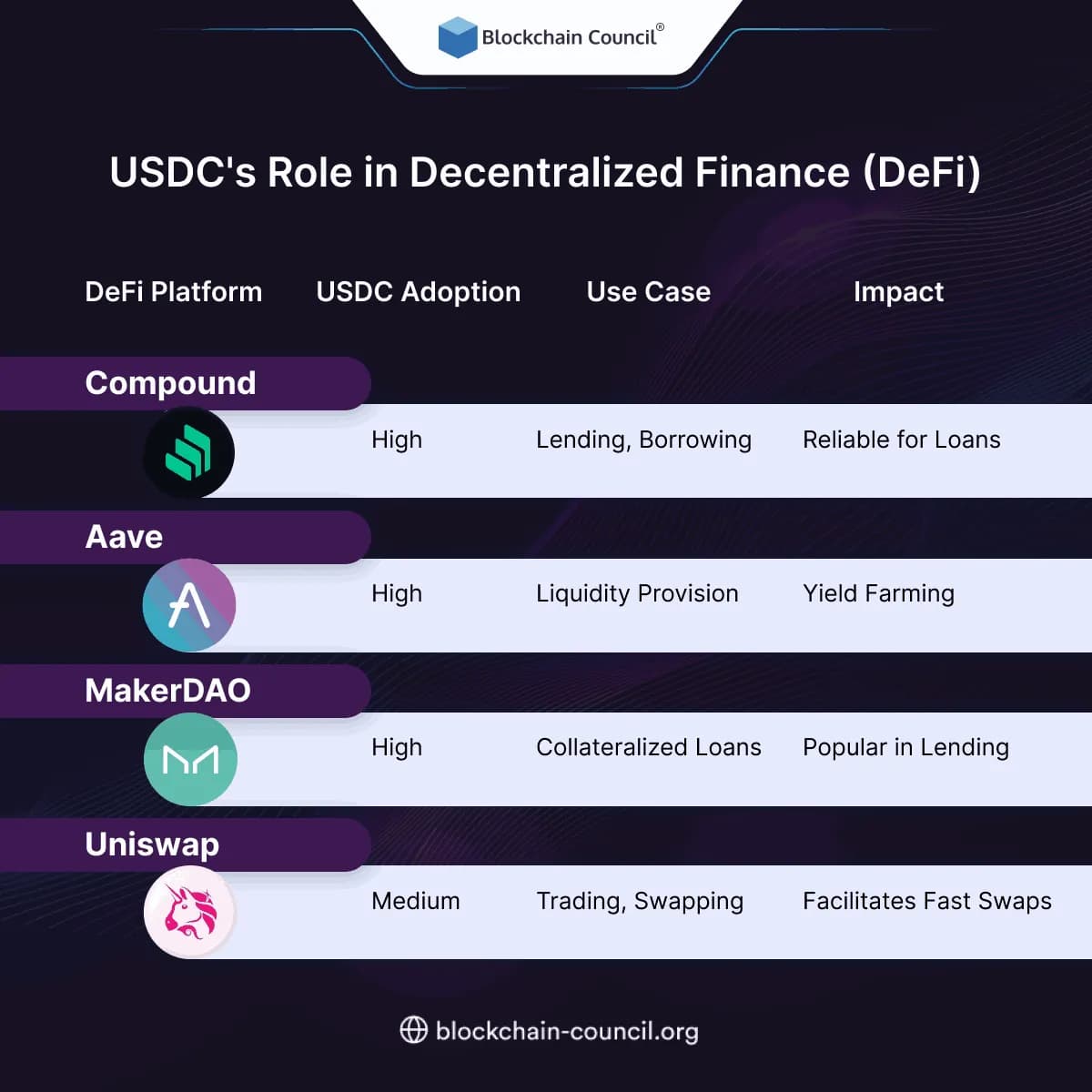
USDC’s utility in DeFi has contributed significantly to its growth and adoption, making it a preferred asset for DeFi users and platforms alike.
For professionals looking to understand the regulatory landscape and its role in stablecoins, the Crypto Certification can provide useful insights into the world of digital currencies and the legal structures surrounding them.
Circle’s Financial Performance
While Circle’s revenue has been growing steadily, the company also faced challenges. In its first quarterly report since going public, Circle reported a 53% year-over-year increase in revenue, amounting to $658 million. Despite this, the company posted a net loss of $482 million due to non-cash charges related to its IPO. These charges, however, are not expected to impact Circle’s long-term financial health.
Strategic Vision and Blockchain Expansion
Looking ahead, Circle has ambitious plans to expand its influence in the blockchain space. The company has announced the launch of Arc, an open Layer-1 blockchain that will provide new opportunities for stablecoin-based financial services. Arc’s public testnet is expected to launch in fall 2025, which could open new doors for USDC adoption in enterprise-grade applications.
The Future of USDC in Cross-Border Payments
USDC is increasingly being used for cross-border payments, allowing businesses to make fast, cost-effective international transactions. The ability to quickly and securely transfer funds across borders has made USDC a preferred option for businesses that need a reliable, low-cost solution.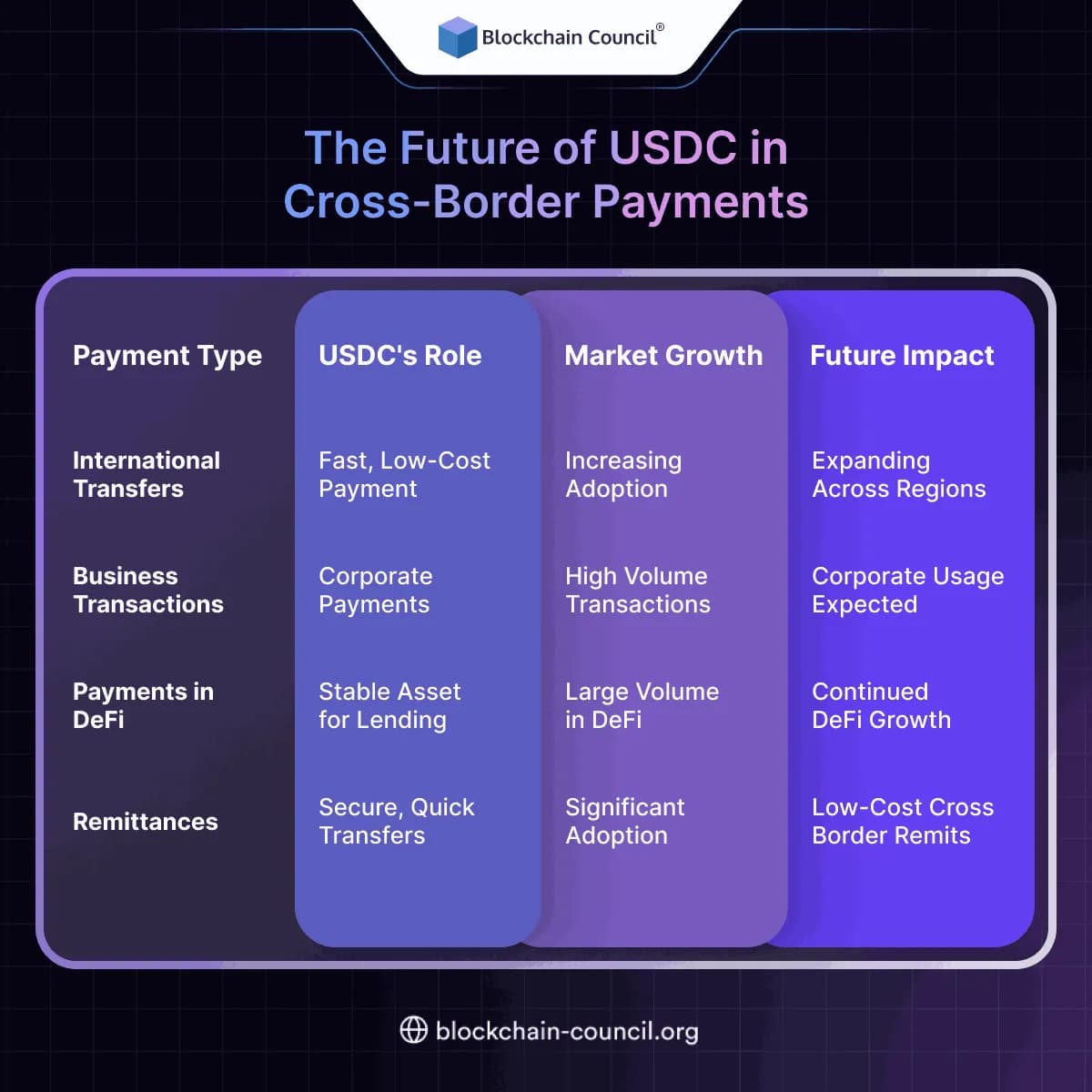
USDC’s role in these markets has shown a marked increase, and Circle’s focus on expanding cross-border payment infrastructure is expected to keep driving its global adoption.
For those looking to stay informed on how regulatory changes affect stablecoins, the Data Science Certification can provide an understanding of how blockchain technology intersects with regulatory frameworks.
USDC vs Other Stablecoins
While USDC has seen immense growth, it still faces competition from other stablecoins like Tether (USDT) and DAI. However, USDC stands apart due to its higher level of regulatory compliance and institutional backing. USDC’s full transparency and its connection to the traditional financial ecosystem make it a preferred choice for many.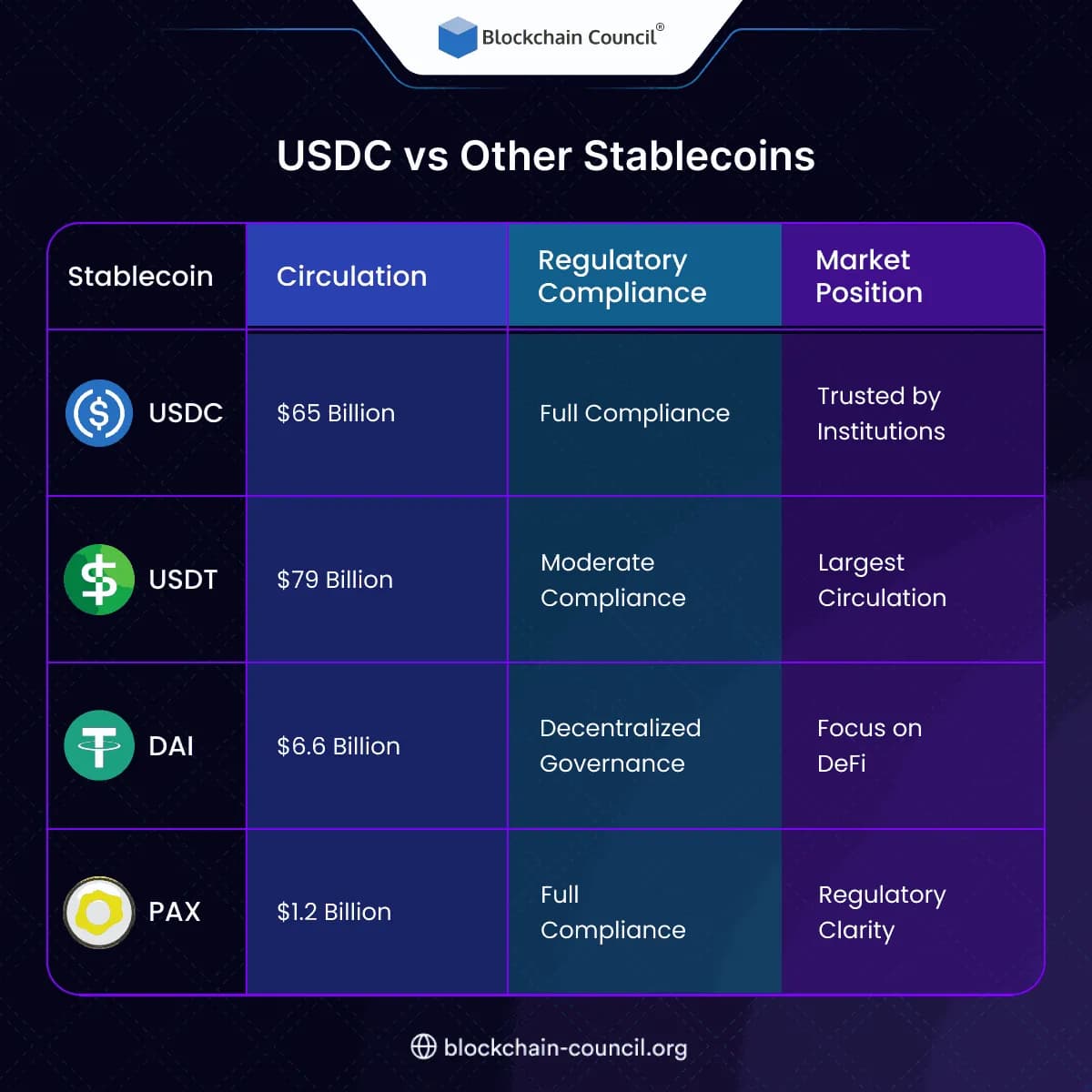
USDC’s regulatory compliance and its strong backing by leading financial institutions give it an edge over competitors, especially in terms of trust and usability in traditional finance.
Looking to the Future: What’s Next for USDC?
Circle is focused on expanding the use of USDC in both DeFi and traditional financial systems. As USDC continues to be integrated into major payment networks and financial platforms, its adoption is expected to grow exponentially. Circle’s efforts to launch the Arc blockchain and integrate USDC into platforms like YouTube Shorts will likely pave the way for even greater use of stablecoins in daily transactions.
The increased adoption of USDC will also make it more prominent in global payments and DeFi applications. As Circle focuses on enhancing USDC’s utility, it will likely become even more ingrained in the global digital economy. For those interested in learning more about USDC, stablecoins, and their role in the future of finance, certifications like the Marketing and Business Certification can provide valuable insights into the role of digital currencies in marketing and business strategies.
Conclusion
Circle’s USDC has reached a significant milestone, surpassing $65 billion in circulation. This growth is driven by increasing institutional adoption, regulatory clarity, and USDC’s expanding role in DeFi and cross-border payments. With the launch of the Arc blockchain and its growing adoption by both businesses and individuals, USDC is poised for continued success.
Related Articles
View All
Cryptocurrency
The Future of Crypto: Regulation, Institutional Adoption & Digital Assets
Explore the Future of Crypto, from regulation and spot ETFs to stablecoin payments, CBDCs, and tokenised assets. A clear, up-to-date guide for beginners and professionals.

Cryptocurrency
Beyond Bitcoin: DeFi, Stablecoins, NFTs & the Expanding Crypto Ecosystem
Go Beyond Bitcoin and explore DeFi, stablecoins, NFTs, DAOs, tokenisation, and Web3. A clear guide to how the expanding crypto ecosystem works and how its parts connect.

Cryptocurrency
Understanding the Crypto Market: Prices, Volatility & What Moves Crypto
Understanding the Crypto Market made simple. Learn how crypto prices are set, what market cap and liquidity mean, why volatility happens, and which factors move prices.
Trending Articles
The Role of Blockchain in Ethical AI Development
How blockchain technology is being used to promote transparency and accountability in artificial intelligence systems.
AWS Career Roadmap
A step-by-step guide to building a successful career in Amazon Web Services cloud computing.

Top 5 DeFi Platforms
Explore the leading decentralized finance platforms and what makes each one unique in the evolving DeFi landscape.