

What Are Smart Contracts and How Do They Work?
 Michael Willson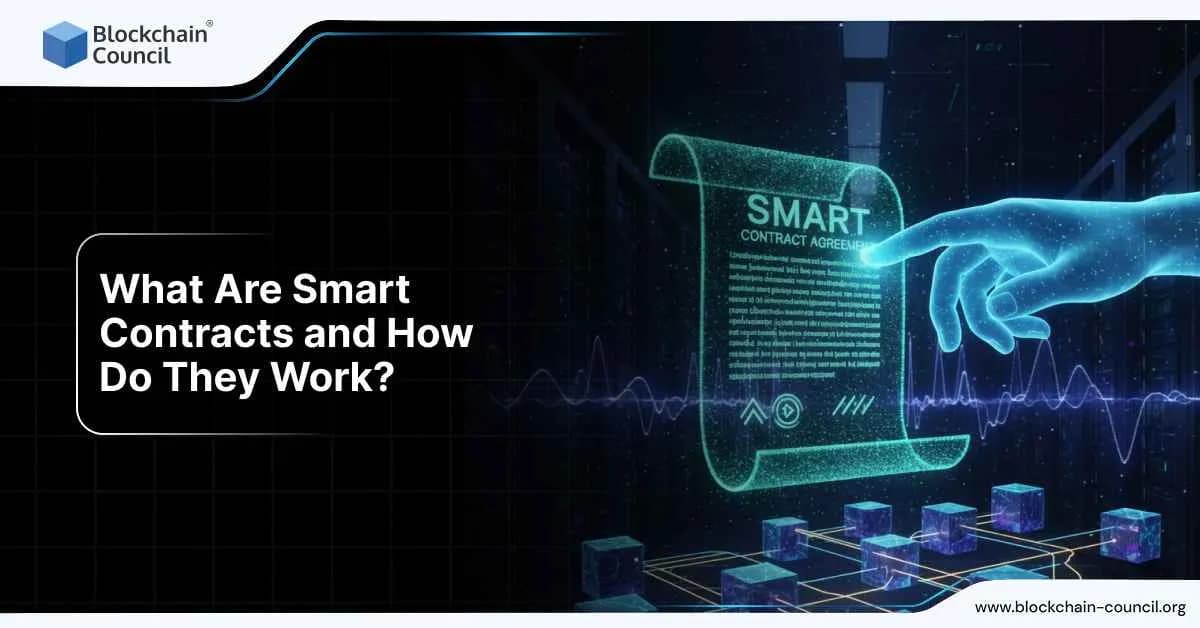
Smart contracts are programs that run on blockchains and automatically carry out actions when conditions are met. Think of them as “digital agreements” that execute themselves without needing banks, brokers, or lawyers. They are reshaping industries from finance to supply chains and are forecast to become a multi-billion-dollar market in the coming decade. For anyone who wants to explore how this technology is built and used, blockchain technology courses are a practical way to start.
Smart Contract
At their core, smart contracts are just code. They use “if/when … then …” logic. For example, if money arrives in an account, then release the asset to the buyer. Unlike a paper contract, no one needs to enforce it manually. The blockchain ensures it happens.

Ethereum made Smart contracts popular by letting developers write them in languages like Solidity. Today, they’re used across multiple platforms, including Solana, Avalanche, and Polkadot. The global smart contracts market was valued at about USD 2.72 billion in 2024 and is expected to grow to USD 24.67 billion by 2034, showing just how rapidly adoption is rising.
How Do Smart Contracts Work?
The process is straightforward but powerful:
Writing the Code - Developers write the terms of the agreement in a programming language.
Deploying the Contract - The code is uploaded to a blockchain, where it becomes part of the ledger.
Triggering Events - A transaction or input triggers the contract.
Automatic Execution - If the set conditions are met, the blockchain executes the contract and records the result.
A key component is the use of oracles. These are data providers that feed external information-like weather data or price feeds-into the blockchain so contracts can respond to real-world events.
Examples of Use Cases
Smart contracts are not limited to one sector. They’re shaping many industries:
Finance (DeFi): Automated lending, borrowing, and token swaps.
Supply Chains: Tracking shipments, paying suppliers when goods arrive.
Insurance: Automatic payouts for parametric policies, such as crop insurance linked to weather.
Real Estate: Handling property transfers and rental agreements without middlemen.
These practical uses explain why businesses are exploring more applications each year. For professionals interested in analytics in this space, a Data Science Certification can provide skills to connect blockchain with big data and machine learning.
Benefits of Smart Contracts
Efficiency: No paperwork or third parties needed.
Accuracy: The rules are coded, leaving little room for human error.
Trust: Once deployed, the blockchain ensures fairness.
Security: Contracts are immutable and cannot be altered without consensus.
Risks and Limitations
Despite their promise, smart contracts are not without challenges:
Code Vulnerabilities: Bugs can cause major losses, as seen in DeFi hacks.
Oracle Issues: If the external data is wrong or manipulated, outcomes can fail.
Legal Uncertainty: Courts are still debating how enforceable smart contracts are as “legal contracts.”
Upgrade Challenges: Because contracts are immutable, fixing bugs is difficult. Some projects use upgradeable designs, but this can create governance risks.
Scalability and Costs: Gas fees and slow transaction speeds remain hurdles, especially on Ethereum.
Current Trends in Smart Contracts
The field is evolving quickly. A few important developments stand out in 2025:
AI-Driven Smart Contracts: Artificial intelligence is being integrated so contracts can adapt to data and predictions.
Cross-Chain Interoperability: Platforms like Cosmos and Polkadot are enabling contracts to work across multiple blockchains.
Privacy Enhancements: Zero-knowledge proofs (ZKPs) and other cryptographic tools are making it possible to hide sensitive details while executing agreements.
Low-Code/No-Code Tools: These are making smart contract creation easier for non-developers.
Legal Focus: Courts and regulators are starting to address how immutable and upgradeable contracts should be treated under law.
Comparison of Smart Contracts Across Key Areas
Area | Explanation |
Definition | Self-executing code that runs on a blockchain when conditions are met |
Execution | Triggered by transactions or external events via oracles |
Languages | Solidity, Vyper, Rust, Move, etc. |
Main Platforms | Ethereum, Solana, Polkadot, Avalanche, Hyperledger |
Benefits | Efficient, transparent, secure, accurate |
Risks | Bugs, oracle manipulation, unclear legal enforceability |
Trends | AI integration, cross-chain systems, zero-knowledge proofs |
Market Growth | USD 2.72B (2024) → USD 24.67B (2034) at 24.67% CAGR |
Use Cases | Finance, supply chains, insurance, real estate |
Regulation | Growing interest from governments and courts |
Why Smart Contracts Matter
The shift toward smart contracts is about more than technology. It’s about reducing friction, lowering costs, and increasing trust in digital systems. They automate tasks that once required lengthy processes and intermediaries.
For professionals aiming to lead in this fast-moving space, learning how to align technology with business is crucial. That’s where the Marketing and Business Certification can help. It focuses on how innovations like smart contracts can drive business growth and customer engagement.
Conclusion
Smart contracts are becoming the backbone of digital transactions. They are fast, efficient, and capable of reshaping entire industries. While risks and legal uncertainties remain, innovation is solving many of these issues through AI, interoperability, and improved security.
By understanding how smart contracts work and where they fit, you’ll be better prepared to use them, build with them, or even create new opportunities around them.
FAQs
1. What are smart contracts?
Smart contracts are self-executing digital agreements stored on a blockchain that automatically execute when conditions are met. They remove the need for intermediaries. This improves efficiency.
2. How do smart contracts work?
They operate using code that runs on blockchain networks like Ethereum. When predefined conditions are fulfilled, the contract executes automatically. This ensures trust.
3. What are benefits of smart contracts?
They provide transparency, automation, and cost savings by eliminating intermediaries. They also reduce errors. This improves reliability.
4. Where are smart contracts used?
They are used in finance, supply chain, real estate, and NFTs. They automate processes. This improves efficiency.
5. Are smart contracts secure?
They are secure due to blockchain technology, but vulnerabilities can exist in code. Audits are important. This ensures safety.
6. Can smart contracts be changed?
Once deployed, they are difficult to modify. Updates require new contracts. This ensures immutability.
7. What programming languages are used?
Languages like Solidity are commonly used for smart contracts. They are designed for blockchain. This supports development.
8. What is Ethereum’s role in smart contracts?
Ethereum is the most popular platform for deploying smart contracts. It provides infrastructure. This supports applications.
9. Are smart contracts legal?
Their legal status varies by country, but they are increasingly recognized. Regulations are evolving. This affects adoption.
10. What is a use case of smart contracts?
Automated payments and decentralized finance applications are common use cases. They reduce manual work. This improves speed.
11. Can smart contracts fail?
Yes, bugs in code can lead to failures or exploits. Testing is important. This reduces risks.
12. What is gas fee in smart contracts?
Gas fees are transaction costs required to execute contracts on blockchain networks. They vary based on demand. This affects cost.
13. How do smart contracts improve trust?
They execute automatically without human intervention. This removes bias. It ensures transparency.
14. What is DeFi in smart contracts?
DeFi uses smart contracts to provide financial services without intermediaries. It enables lending and trading. This transforms finance.
15. Are smart contracts irreversible?
Yes, once executed, they cannot be reversed easily. This ensures reliability. It also requires caution.
16. What is the future of smart contracts?
They will expand into more industries and applications. Adoption will grow. This increases innovation.
17. Can beginners learn smart contracts?
Yes, with basic programming knowledge, beginners can learn. Many resources are available. This improves accessibility.
18. What are smart contract audits?
Audits check code for vulnerabilities and errors. They improve security. This prevents attacks.
19. What is a decentralized application (DApp)?
DApps are applications powered by smart contracts on blockchain. They operate without central control. This improves transparency.
20. Why are smart contracts important?
They automate processes and reduce costs while increasing trust. They transform industries. This makes them essential.
Related Articles
View All
Blockchain
Agile for Blockchain Teams: Managing Sprints, Smart Contracts, and Decentralized Roadmaps
Learn how agile for blockchain teams works when sprints, smart contracts, audits, governance, and decentralized roadmaps are planned around risk.

Blockchain
Blockchain vs Smart Contracts: Key Differences, Benefits, and Real-World Applications
Blockchain vs smart contracts explained: learn how distributed ledgers and self-executing code differ, work together, and power DeFi, NFTs, DAOs, and enterprise workflows.

Blockchain
Blockchain in Detail: Blocks, Nodes, Consensus, Smart Contracts, and Decentralization
A practical guide to blockchain in detail, covering blocks, nodes, consensus, smart contracts, decentralization, use cases, and learning paths.
Trending Articles
The Role of Blockchain in Ethical AI Development
How blockchain technology is being used to promote transparency and accountability in artificial intelligence systems.
AWS Career Roadmap
A step-by-step guide to building a successful career in Amazon Web Services cloud computing.
Blockchain in Supply Chain Provenance Tracking
Supply chains are under pressure to prove not just efficiency, but also authenticity, sustainability, and fairness. Customers want to know if their coffee really is fair trade, if the diamonds are con