
Top AI Tools for Blockchain Development: Code, Security, and Debugging


AI tools for blockchain are becoming essential for building secure smart contracts, optimizing gas costs, and accelerating dApp delivery. As adoption increases across ecosystems like Ethereum, Solana, and enterprise frameworks such as Hyperledger, developers are using AI software for tasks that once required significant manual effort, including code scaffolding, vulnerability scanning, anomaly detection, and runtime debugging.
This guide covers the most widely used AI-driven blockchain development tools and explains where they fit in a modern workflow, from model training to smart contract simulation.

Why AI Tools Matter in Blockchain Development
Blockchain engineering has unique constraints: deterministic execution, adversarial environments, irreversible deployments, and tight performance costs such as gas fees. AI helps teams manage these constraints by improving speed and reducing risk, while keeping developers in control of final decisions.
Smart contract optimization: machine learning can identify patterns that lead to high gas usage and suggest refactors.
Proactive security: AI-assisted scanning and anomaly detection can surface vulnerabilities and suspicious behaviors earlier in the development lifecycle.
Faster dApp delivery: generative AI can scaffold contracts, tests, and front ends from natural language prompts.
Better observability: AI-enhanced monitoring can help diagnose failures and reproduce edge cases.
AI reduces repetitive work like initial auditing passes and debugging, but it does not replace human review, particularly for security-critical deployments.
Top AI Tools for Blockchain Development
1) TensorFlow: Machine Learning for Transaction Analysis and AI dApps
TensorFlow is commonly used to build and deploy ML models that analyze blockchain transaction data, detect anomalies, and support predictive analytics. For teams building AI-enabled dApps, TensorFlow is a practical foundation for training models off-chain and integrating results into on-chain logic through oracles or indexed data pipelines.
Best for: transaction pattern analysis, fraud and anomaly detection, model-driven decisioning for dApps.
Where it fits: analytics pipelines, risk scoring, off-chain ML services integrated with Ethereum and other networks.
2) IBM Watson: NLP and Enterprise Automation for Blockchain Workflows
IBM Watson is used for natural language processing tasks that support blockchain products, such as chatbots for user support, sentiment analysis for community feedback, and categorization of operational data. In enterprise settings, combining AI with blockchain can streamline multi-party processes by adding speed and intelligence to workflow automation.
Best for: support chatbots, text analytics, workflow intelligence in enterprise blockchain programs.
Where it fits: product support, governance tooling, operational analytics for permissioned networks.
3) OpenAI GPT: Code Assistance, Documentation, and Developer Productivity
OpenAI GPT models are widely used to accelerate documentation, generate developer-facing explanations, and assist with code review and refactoring suggestions. Many teams also use GPT-based workflows to generate dApp specifications, test case outlines, and onboarding material for new contributors. With careful prompting and policy controls, GPT can be adapted to a blockchain codebase and internal development standards.
Best for: documentation generation, code explanation, test planning, architecture notes, developer Q and A.
Where it fits: IDE copilots, internal developer portals, CI checks for linting and documentation completeness.
Practical caution: treat generative outputs as drafts. Smart contract code must be reviewed and tested, and all security assumptions must be validated independently.
4) H2O.ai: Predictive Analytics and Anomaly Detection for Network Behavior
H2O.ai supports model building for predictive analytics and anomaly detection, which can be applied to transaction streams and user behavior. In blockchain applications, these models can improve security posture by flagging suspicious activity, predicting load patterns, or identifying abnormal contract interactions that warrant further investigation.
Best for: anomaly detection, predictive risk scoring, operational forecasting.
Where it fits: security analytics, user behavior monitoring, fraud detection pipelines.
5) Microsoft Azure AI: Real-Time Analytics and Security for Blockchain Systems
Microsoft Azure AI is often used to operationalize AI for production environments, particularly where real-time analytics and security monitoring are required. For blockchain systems, Azure AI services can ingest event streams, run detection models, and trigger automated responses for incident triage, while integrating with enterprise identity and compliance controls.
Best for: real-time analytics, scalable ML operations, enterprise security integration.
Where it fits: monitoring dashboards, alerting, SOC workflows, enterprise blockchain deployments.
6) Workik AI Blockchain Code Generator: Smart Contract Generation, Audits, and Gas Optimization
Workik's AI Blockchain Code Generator focuses directly on developer speed for Web3 builds. It is used to generate contracts in languages such as Solidity and Rust, assist with identifying common vulnerabilities like reentrancy, and suggest gas optimizations. It also supports common integration points like Web3.js and infrastructure services used for deployment and connectivity.
Best for: contract scaffolding, vulnerability checks, gas optimization suggestions, integration boilerplate.
Where it fits: early development, proof-of-concept builds, rapid iteration on contract interfaces.
7) Replit AI Blockchain App Builder: Browser-Based Full-Stack dApp Scaffolding
Replit AI and agent-style builders are increasingly used for fast prototyping. A key advantage is the browser-based workflow that can generate full-stack dApps from natural language prompts and support fast iteration through rollback and debugging. For teams experimenting with new ideas, this reduces setup time and simplifies collaboration.
Best for: rapid dApp prototyping, full-stack scaffolding, quick debugging cycles.
Where it fits: hackathons, prototypes, internal demos, early-stage MVP development.
8) ChainGPT: Blockchain-Specific AI for Web3 Tasks
ChainGPT is designed specifically for blockchain tasks rather than general-purpose generation. Developers use it for Web3-focused assistance such as explaining smart contract behavior, supporting research tasks, and producing technical outputs tailored to crypto and decentralized applications.
Best for: blockchain-native Q and A, smart contract explanations, Web3 research support.
Where it fits: developer enablement, technical support, faster understanding of protocols and patterns.
9) Tenderly: AI-Enhanced Monitoring, Simulation, and Debugging
Tenderly is a widely used platform for smart contract observability, including simulation and debugging for EVM-compatible networks. AI-enhanced workflows help teams identify issues faster, reproduce failures, and monitor deployments in real time. This is particularly important because production failures in smart contracts can be costly and difficult to reverse.
Best for: transaction simulation, on-chain debugging, monitoring and alerting.
Where it fits: pre-deployment validation, incident response, ongoing smart contract operations.
How to Choose AI Tools for Blockchain: A Practical Checklist
Most teams do not need every tool. A solid selection depends on your chain, risk profile, and delivery model.
Chain and execution environment: EVM tooling differs from Solana programs and permissioned frameworks like Hyperledger.
Primary goal: speed (code generation), safety (auditing and anomaly detection), or reliability (monitoring and debugging).
Integration points: does the tool fit your CI pipeline, node provider, and observability stack?
Security posture: treat AI outputs as untrusted input, require human reviews, and add automated testing.
Data constraints: enterprise use may require privacy-preserving approaches and controlled model hosting.
Emerging Trend: Federated Learning on Blockchain
A notable direction gaining traction is federated learning on blockchain, where models are trained across distributed data sources without centralizing raw data. Some designs introduce tokenized incentives that reward quality contributions, aiming to improve model accuracy while respecting privacy constraints. This approach is attracting interest for decentralized networks and enterprise collaborations where data sharing involves regulatory or competitive sensitivity.
Recommended Learning Path for Developers
To apply AI tools for blockchain effectively, developers need solid foundations in smart contracts, security, and AI concepts such as model evaluation and prompt engineering. The following Blockchain Council certification paths support role-based upskilling across these disciplines:
Certified Blockchain Developer for smart contract and dApp foundations
Certified Smart Contract Auditor for vulnerability analysis and secure deployment practices
Certified AI Developer or Certified Generative AI Expert for applied ML and generative workflows
Conclusion: Building Safer, Faster Web3 with AI-Assisted Dev Tools
AI tools for blockchain are reshaping how developers design, ship, and maintain decentralized systems. From TensorFlow and H2O.ai for anomaly detection, to GPT and ChainGPT for productivity and protocol understanding, to Tenderly for simulation and debugging, the best results come from combining AI software with disciplined engineering practices. As AI integrations deepen across IDEs, auditing platforms, and cloud infrastructure, teams that standardize AI-assisted workflows now will be better positioned to deliver secure, reliable applications through 2026 and beyond.
Related Articles
View All
Blockchain
Top 20 Blockchain Development Companies
The surge of Blockchain technology has not only paved the way for new developments and business transformation. Rather, it has also opened the gateway for new startups to venture into this domain. We bring the list of some of the best companies in Blockchain from India and abroad.

Blockchain
AI Blockchain Benefits for Enterprises: Security, Automation, and ROI
Explore AI blockchain benefits for enterprises, including stronger security, transparent governance, scalable automation, and improved ROI through fraud reduction and efficiency.

Blockchain
Real-World AI Blockchain Applications: Security, Compliance, and Enterprise Innovation
AI blockchain applications power real-world security, compliance, smart contract auditing, and supply chain transparency, helping enterprises scale trusted blockchain systems.
Trending Articles
The Role of Blockchain in Ethical AI Development
How blockchain technology is being used to promote transparency and accountability in artificial intelligence systems.
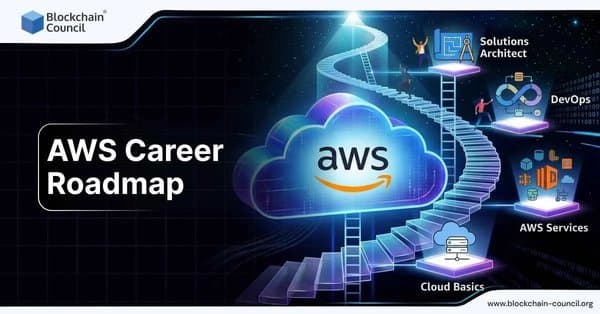
AWS Career Roadmap
A step-by-step guide to building a successful career in Amazon Web Services cloud computing.
Top 5 DeFi Platforms
Explore the leading decentralized finance platforms and what makes each one unique in the evolving DeFi landscape.