

Blockchain Product Manager Job Description: Key Responsibilities and Daily Tasks

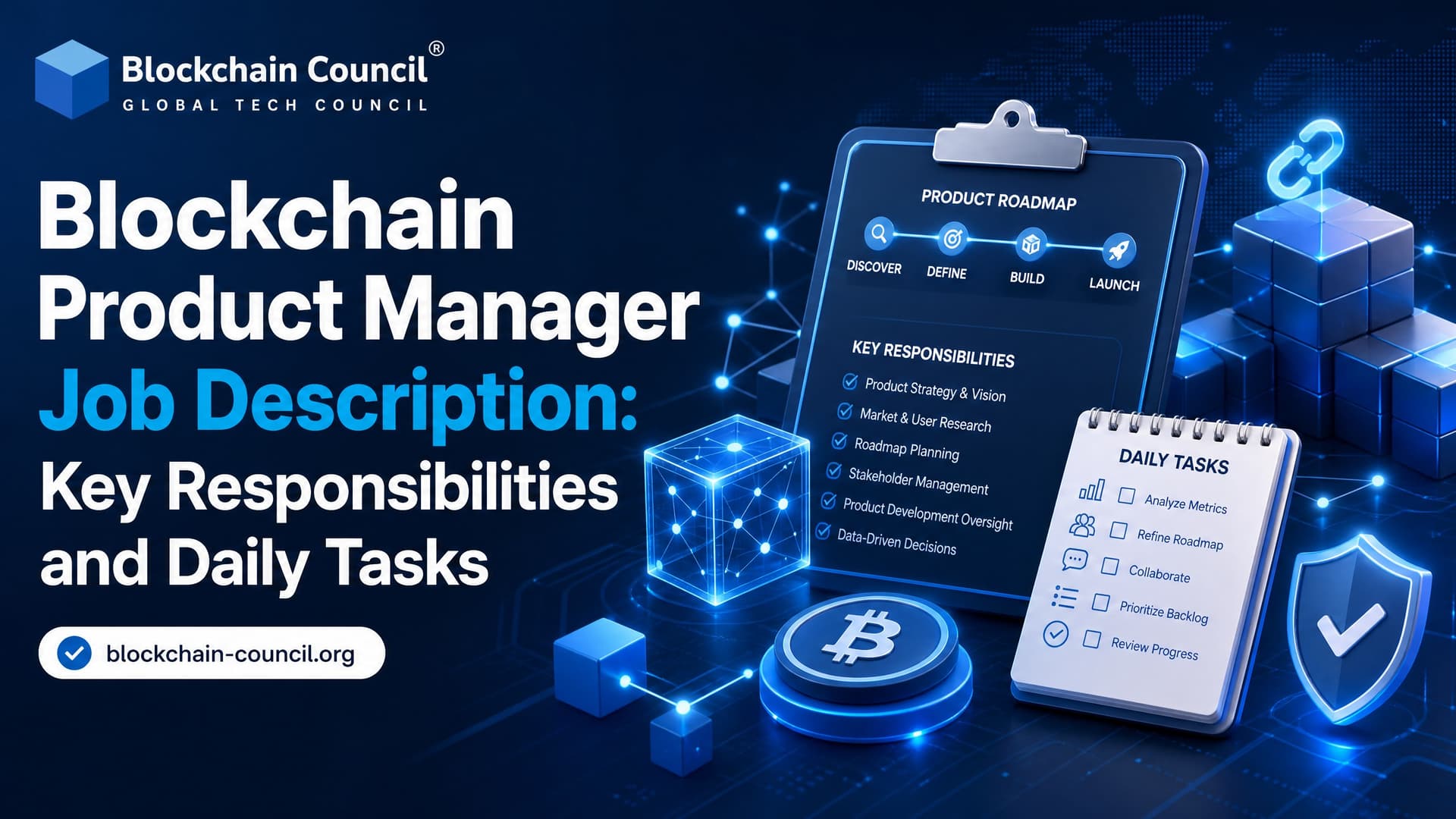
A blockchain product manager job description no longer stops at roadmaps and sprint boards. You are expected to understand wallets, smart contracts, token flows, custody risk, regulatory constraints, and user behavior, then turn all of that into a product people can actually use.
The role sits between product strategy and technical execution. In a crypto startup, that might mean shipping a DeFi rewards feature. At a brokerage, it might mean designing compliant cryptocurrency transfer flows. In a payments company, it might mean connecting stablecoin rails with existing settlement systems. Same title. Very different daily work.

What Is a Blockchain Product Manager?
A blockchain product manager owns the vision, roadmap, requirements, delivery, and performance of a product built on blockchain or distributed ledger technology. The product could be a wallet, an exchange feature, an NFT marketplace, a DeFi protocol, a tokenization platform, a custody service, or an enterprise blockchain application.
The job is not to bolt on a blockchain because it sounds modern. To be blunt, many products should not use one at all. A good blockchain product manager knows when decentralization, tokenization, or smart contracts create real value, and when a normal database would be cheaper, faster, and safer.
You work with engineering, design, marketing, compliance, operations, legal, security, finance, and executive stakeholders. On Web3 teams, you may also deal with community managers, governance contributors, liquidity partners, auditors, and protocol foundations.
Core Responsibilities in a Blockchain Product Manager Job Description
1. Define Product Vision and Strategy
The first responsibility is setting a clear direction. That means deciding which users you serve, what problem you solve, why blockchain is the right tool, and how you will measure success.
A DeFi product manager may build a strategy around yield discovery and risk transparency. A stablecoin product manager may focus on faster settlement, lower payment friction, and compliance checks. A crypto brokerage product manager may prioritize secure deposits, withdrawals, tax reporting, and customer support readiness.
Typical strategy tasks include:
- Writing product vision documents and opportunity assessments
- Defining target personas, such as retail traders, institutions, developers, or enterprises
- Mapping product goals to business outcomes like revenue, retention, trading volume, or total value locked
- Explaining technical trade-offs to non-technical stakeholders
2. Conduct Market and User Research
Blockchain markets move quickly. Product decisions depend on user research, competitor tracking, protocol updates, fee trends, liquidity conditions, and regulation.
You might review exchange flows, wallet onboarding, DeFi APYs, NFT marketplace fee models, or stablecoin adoption patterns. Public job listings from exchanges, brokerages, and payment networks all show the same shift toward market-aware, data-led product management.
Research work often includes:
- User interviews and survey analysis
- Competitor feature reviews
- On-chain analytics using tools such as Dune, Etherscan, Token Terminal, or DefiLlama
- Support ticket analysis to find repeated pain points
- Monitoring regulatory updates on custody, staking, stablecoins, and tokenized assets
One practical detail: beginners underestimate how much UX friction comes from network selection. If a user sends USDC on Polygon while your product only credits Ethereum mainnet deposits, support volume spikes fast. A product manager has to catch that risk before release.
3. Build the Roadmap and Prioritize Features
A blockchain product roadmap turns strategy into milestones. It covers feature sequencing, technical dependencies, compliance reviews, security audits, integrations, and launch windows.
Prioritization is harder than in most SaaS products because the cost of errors is high. A smart contract bug can lock or drain funds. A poorly worded staking feature can create regulatory exposure. A confusing wallet flow can cause irreversible user losses.
Common roadmap responsibilities include:
- Writing product requirement documents, user stories, and acceptance criteria
- Prioritizing features by impact, effort, risk, and technical feasibility
- Coordinating smart contract audits and security reviews
- Planning releases around protocol upgrades, liquidity availability, and market timing
- Maintaining the backlog in tools such as Jira, Linear, Notion, or GitHub Projects
4. Translate Blockchain Complexity into Clear Requirements
A strong blockchain product manager does not need to be the best Solidity engineer in the room. But you need enough technical literacy to ask sharp questions.
You should understand the basics of Ethereum, EIP-1559 gas mechanics, ERC-20 tokens, ERC-721 NFTs, private key security, wallet signatures, bridges, oracles, custody models, and consensus mechanisms such as Proof of Stake.
Here is the kind of detail that matters in real work. When a developer tests an ERC-20 transfer and hits execution reverted: ERC20: transfer amount exceeds balance, the product question is not just whether the code failed. You have to ask whether the UI checked balances before submission, whether the gas estimate was clear, and whether the error message meant anything to a non-technical user.
5. Coordinate Cross-Functional Delivery
Daily execution is a large part of the role. You keep engineering, design, compliance, risk, operations, marketing, and customer support aligned.
In a typical sprint, you run stand-ups, clarify edge cases, review designs, update release notes, check analytics instrumentation, and unblock legal review. For on-chain products, you also confirm network support, contract addresses, wallet behavior, rate limits, monitoring, and rollback plans.
Blockchain releases can be unforgiving. Deploy a smart contract without an upgrade path and the team may be stuck with that design. Ship a bridge integration without clear risk warnings and users will assume it is as safe as a normal transfer. It is not.
6. Manage Risk, Compliance, and Security Requirements
Institutional blockchain product roles put heavy emphasis on risk management. Brokerage crypto roles tend to center on client experience, cryptocurrency transfers, risk, and regulatory considerations. Stablecoin and Web3 roles at payment networks connect blockchain products with settlement systems, which adds compliance and operational risk on top.
You will often work with legal and compliance teams on:
- KYC and AML requirements
- Custody and wallet ownership models
- Staking disclosures and reward mechanics
- Token listing reviews
- Geo-restrictions and jurisdiction rules
- Transaction monitoring and fraud controls
This is where crypto-native product managers sometimes struggle. Shipping fast is useful. Shipping a product that compliance shuts down two weeks later is not.
Typical Daily Tasks of a Blockchain Product Manager
No two days are identical, but the workflow usually falls into discovery, execution, launch, and optimization.
Morning: Metrics, Market Signals, and Blockers
- Check product dashboards for activation, retention, transaction volume, deposits, withdrawals, failed transactions, or total value locked
- Review support tickets for wallet connection errors, gas fee complaints, failed swaps, or delayed credits
- Scan competitor launches and protocol updates
- Join the engineering stand-up and clear blockers
Midday: Requirements and Stakeholder Alignment
- Refine user stories and acceptance criteria
- Review UX flows for deposits, swaps, staking, or wallet connection
- Meet compliance or risk teams to validate product constraints
- Discuss launch messaging with marketing and customer support
Afternoon: Execution and Decision-Making
- Prioritize backlog items based on data and business goals
- Review testnet results or audit feedback
- Approve analytics events for tracking product performance
- Decide whether a feature is ready to ship or needs another sprint
A small example: if MetaMask shows a contract interaction as a generic Set Approval For All request, many users reject it or, worse, approve it without understanding the risk. A product manager should push for better pre-transaction education and safer permission design.
Skills Required for Blockchain Product Manager Roles
Product Management Fundamentals
- Roadmapping and prioritization
- User research and market analysis
- Agile delivery and sprint planning
- Data analysis and experimentation
- Stakeholder communication
- Go-to-market planning
Blockchain and Web3 Knowledge
- Smart contracts and token standards such as ERC-20 and ERC-721
- Wallets, private keys, seed phrases, and transaction signing
- DeFi primitives, including swaps, liquidity pools, lending, and staking
- Gas fees, chain selection, bridges, and oracles
- Custody, tokenization, stablecoins, and settlement flows
Risk and Regulatory Awareness
You do not need to be a lawyer, but you must know when to bring one in. Product managers in crypto should understand why token listings, staking rewards, stablecoin payments, and custody services raise different compliance questions across jurisdictions.
Blockchain Product Manager Salary and Demand
Demand shows up across crypto startups, exchanges, infrastructure companies, DeFi platforms, and traditional financial institutions. Web3 hubs like Singapore regularly list hundreds of blockchain product manager roles at any given time, which signals steady hiring.
Compensation varies by location, company size, and domain. Brokerage crypto product manager listings in the United States often sit in the range of USD 76,000 to 140,000 per year. Crypto startup listings on specialist job boards frequently run higher, around USD 125,000 to 215,000 for experienced product managers.
The higher bands usually require more than generic product experience. Teams pay for people who understand product delivery, on-chain mechanics, security risk, and regulation together.
How to Prepare for a Blockchain Product Manager Role
If you are moving from traditional product management, start by building technical fluency. You do not need to deploy a production protocol, but you should connect a wallet, use a testnet, read a block explorer, compare gas fees, and understand what happens when a transaction fails.
A practical learning path:
- Study blockchain fundamentals, including consensus, wallets, tokens, and smart contracts.
- Use MetaMask, Etherscan, Uniswap, and a major centralized exchange to understand the user flows.
- Write a sample product requirement document for a wallet, staking, or stablecoin payment feature.
- Learn basic Solidity concepts and common smart contract security risks.
- Practice analytics with on-chain data sources and product dashboards.
For structured learning, consider Blockchain Council programs such as Certified Blockchain Expert™, Certified Blockchain Developer™, Certified Smart Contract Developer™, Certified Web3 Expert™, and Certified DeFi Expert™. Any of these gives you formal grounding before you apply for product roles.
Is This Role Right for You?
A blockchain product manager job fits you if you enjoy ambiguity, technical systems, user psychology, and regulated markets. It is a poor fit if you want clean requirements, slow release cycles, and products where mistakes are easy to reverse.
Your next step: pick one product category, such as DeFi, wallets, stablecoins, tokenization, or exchange growth, and write a one-page product brief for a real feature. Include users, risks, metrics, compliance questions, and launch criteria. That exercise will tell you fast whether you think like a blockchain product manager.
Related Articles
View All
Blockchain
Blockchain Product Manager vs Traditional Product Manager: Key Differences Explained
Learn how a blockchain product manager differs from a traditional PM across tokens, wallets, governance, analytics, metrics, risk, and skills.

Blockchain
Blockchain Product Manager Salary, Job Outlook, and Career Opportunities
Blockchain product manager salary ranges, job outlook, skills, and career paths for professionals moving into Web3, DeFi, wallets, and enterprise blockchain.

Blockchain
Blockchain Product Manager vs Traditional Product Manager: Key Differences Explained
Learn how a blockchain product manager differs from a traditional PM across metrics, tokenomics, governance, analytics, UX, security, and career skills.
Trending Articles
AWS Career Roadmap
A step-by-step guide to building a successful career in Amazon Web Services cloud computing.
How Blockchain Secures AI Data
Understand how blockchain technology is being applied to protect the integrity and security of AI training data.
How to Install Claude Code
Learn how to install Claude Code on macOS, Linux, and Windows using the native installer, plus verification, authentication, and troubleshooting tips.