

How Blockchain Intelligence Detects Crypto Fraud and Financial Crime
 Suyash Raizada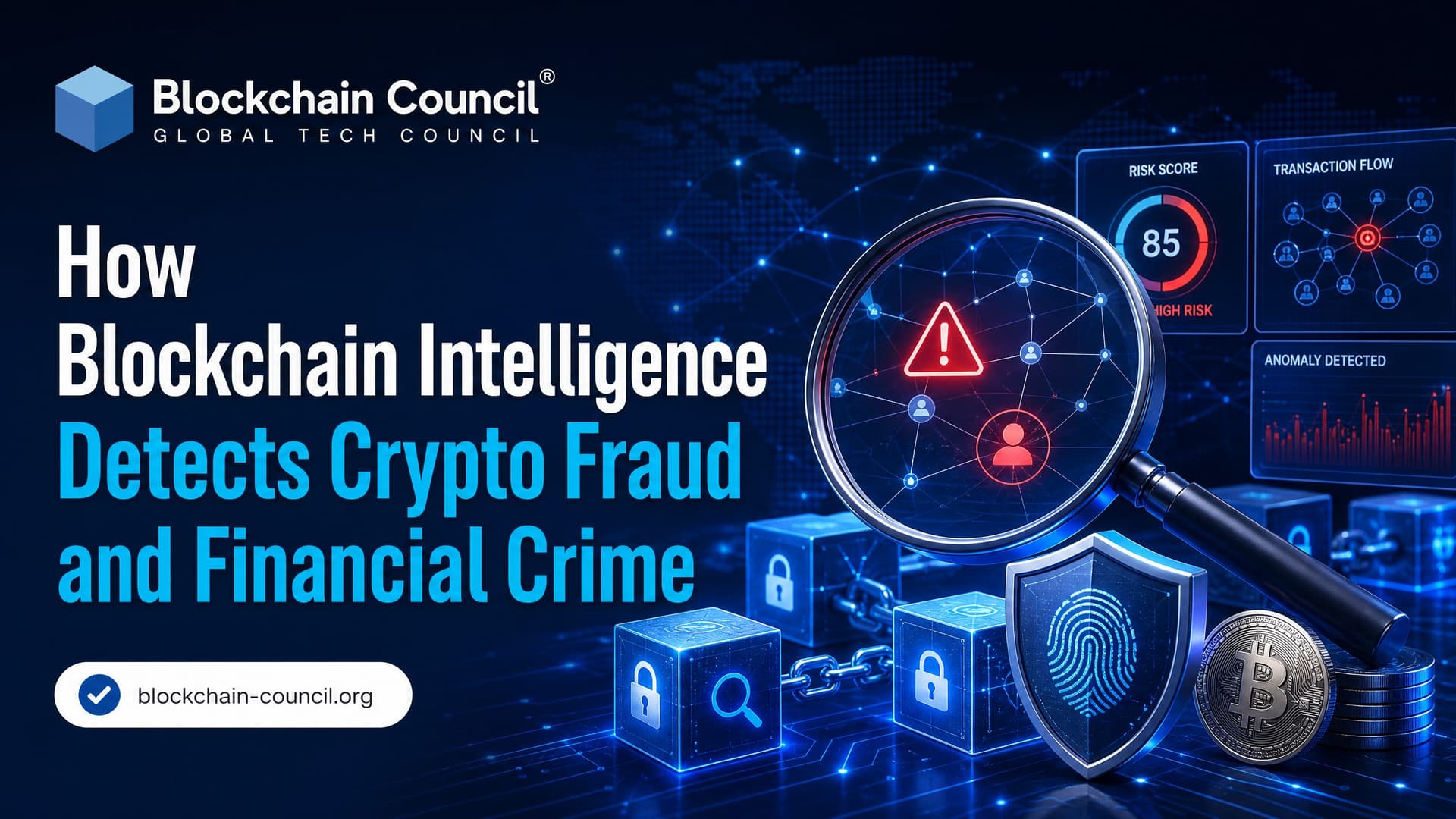
Blockchain intelligence helps investigators and compliance teams trace crypto funds, identify risky wallets, and connect on-chain activity to real-world fraud. It works because most public blockchains are transparent ledgers. Criminals can move fast, but they still leave transaction trails.
The practical value is simple. You can move from a single wallet address to a wider picture of counterparties, exchanges, mixers, bridges, scam clusters, and cash-out points. Law enforcement, regulators, virtual asset service providers, banks, and cybercrime teams all rely on that picture now.

What Is Blockchain Intelligence?
Blockchain intelligence is the collection, enrichment, and analysis of on-chain data, often combined with off-chain information such as exchange records, sanctions lists, phishing reports, device signals, and open-source intelligence.
Specialist platforms such as Chainalysis, TRM Labs, Elliptic, Crystal Intelligence, and Merkle Science parse blockchain ledgers and attach labels to addresses linked to exchanges, darknet markets, ransomware groups, scams, sanctioned entities, mixers, and other high-risk services.
Most blockchain intelligence systems include:
Multi-chain parsing for networks such as Bitcoin, Ethereum, stablecoin rails, and layer-2 ecosystems
Address clustering to group wallets likely controlled by the same entity
Entity attribution using exchange data, court records, victim reports, sanctions data, and investigative research
Risk scoring for wallets, transactions, counterparties, and customers
Transaction graph visualization for tracing funds across many hops
APIs for real-time AML and sanctions screening
Case management for evidence notes, timelines, and investigator collaboration
If you are building a compliance function, this is no longer a nice add-on. For any business handling material crypto flows, blockchain intelligence is becoming core infrastructure.
Professionals looking to build a stronger foundation in blockchain ecosystems and digital asset investigations often begin with a Certified Blockchain Expert program to better understand blockchain architecture, transaction analysis, and enterprise applications.
Why Crypto Fraud Is Traceable
Crypto is often described as anonymous. That is usually wrong. Bitcoin and Ethereum are pseudonymous, not anonymous. Addresses do not show a legal name by default, but every transaction is recorded on a public ledger.
Compare that with a bank investigation. Traditional cases often require subpoenas across several institutions before analysts can reconstruct a payment trail. On a public blockchain, the transaction path is visible immediately. The hard part is interpreting it correctly.
Here is the catch. A visible transaction is not the same as a known suspect. Investigators still need attribution, clustering, subpoenas, exchange cooperation, and careful evidence handling. Blockchain intelligence does not replace investigation. It speeds it up.
Core Techniques Used in Blockchain Intelligence
Address Clustering and Entity Attribution
Address clustering groups addresses that appear to be controlled by the same entity. On Bitcoin, for example, analysts often use the multi-input heuristic: if several addresses sign the same transaction, they may be under common control.
Do not apply that blindly. CoinJoin transactions are designed to break that assumption. I have seen junior analysts mark every participant in a CoinJoin as one actor, which can poison an entire case file. A good platform flags likely CoinJoin behavior and forces the analyst to review the pattern before relying on the cluster.
Attribution then connects a cluster to a known service or actor. That can include a centralized exchange, an OTC broker, a scam site, a sanctioned wallet, a ransomware affiliate, or a darknet marketplace.
Transaction Graph Analysis
Graph analytics show how funds move from victims to perpetrators and through laundering layers. Investigators use these graphs to identify:
Victim payment addresses
Common collection wallets
Peel chains used to split funds into small amounts
Mixers and privacy tools
Cross-chain bridge activity
Exchange deposit addresses where funds may be frozen
A typical scam investigation starts with one victim's transaction hash. From there, analysts trace funds through hops, look for aggregation points, and check whether any destination belongs to a regulated exchange. That exchange may then receive a preservation request or a law enforcement inquiry.
Machine Learning and Anomaly Detection
Machine learning is now a major part of crypto fraud detection. Models can classify wallets and transactions using features such as transaction frequency, wallet age, counterparties, fund flow patterns, gas behavior, network centrality, and exposure to known illicit clusters.
Fraud is a rare-event problem, and that is what makes it hard. Most transactions are normal, while a tiny fraction creates large losses. Train a model poorly and it can look accurate while missing the fraud entirely. A 99 percent accuracy score means little when the dataset is heavily imbalanced.
Better systems combine anomaly detection, graph features, supervised models, and analyst feedback loops. The goal is not to replace human judgment. It is to prioritize the right alerts and cut the noise.
Risk Scoring for AML and Sanctions
Risk scoring assigns a risk level to an address, transaction, or customer based on exposure to illicit activity. That can be direct exposure, such as sending funds to a sanctioned entity, or indirect exposure, such as receiving funds several hops away from a darknet market.
Exchanges and fintechs use these scores during:
Customer onboarding
Deposit monitoring
Withdrawal screening
Enhanced due diligence
Suspicious activity reporting
Sanctions compliance
Be careful with thresholds. Blocking every transaction with distant, low-value exposure can punish legitimate users and overload your compliance team. Ignoring high-risk direct exposure is worse. The mature approach is tiered: block clear sanctions hits, escalate high-risk flows, and review ambiguous cases with context.
How Blockchain Intelligence Detects Common Crypto Crimes
Scams and Investment Fraud
Fake investment platforms, romance scams, phishing sites, and impersonation schemes often funnel money from many victims into a smaller set of wallets. Blockchain intelligence tools can cluster those receiving wallets and detect repeated patterns.
Take a common case. A scam receives USDT from dozens of victims, moves it quickly through fresh addresses, then pushes it to a centralized exchange. Real-time screening can warn users before they send funds to a flagged scam address. It can also alert the exchange when scam proceeds land in a deposit wallet.
Exchange Hacks and DeFi Exploits
After a DeFi exploit or exchange hack, speed matters. Attackers often split funds, swap tokens on decentralized exchanges, bridge assets to another chain, and test small deposits at centralized exchanges.
Cross-chain tracing is now essential. A theft may start on Ethereum, move through a bridge, convert into stablecoins, and end at an exchange on another network. Tools from TRM Labs, Elliptic, and similar providers focus heavily on this multi-chain path analysis because criminals no longer stay on one ledger.
Ransomware and Darknet Markets
Ransomware groups use crypto because it is global and fast. But payment wallets can be watched. Once a victim pays, analysts can trace onward flows to affiliates, infrastructure providers, laundering services, and cash-out points.
Chainalysis and other providers have supported investigations into ransomware, darknet markets, and illicit exchanges by combining clustering, attribution, and transaction tracing. These methods feed into sanctions actions, seizures, and criminal prosecutions.
For professionals focused on protecting digital assets and responding to emerging threats, a Certified Cybersecurity Expert credential can complement blockchain knowledge by strengthening skills in threat detection, incident response, and security governance.
The Role of AI in Blockchain Intelligence
AI helps teams handle scale. Public chains generate huge volumes of transaction data, and manual review does not work for real-time compliance. AI models can flag unusual transaction bursts, new scam wallet behavior, mule activity, and patterns that resemble known laundering typologies.
Still, AI is not magic. To be blunt, explainability matters more than the model's name. If a compliance officer cannot explain why a wallet was scored as high risk, the alert may not hold up in an audit or an investigation. Analytics add real value to a fraud program, but only when they are controlled, tested, and explainable.
As blockchain intelligence increasingly relies on AI, automation, and advanced analytics, a Tech Certification can help professionals broaden their understanding of the technologies supporting modern compliance, investigations, and digital asset ecosystems.
Limits, Risks, and Privacy Concerns
Blockchain intelligence has real limits. Attribution can be wrong. Criminals use mixers, bridges, privacy coins, chain hopping, mule accounts, and stolen identities. Some activity only becomes clear after exchanges or law enforcement provide off-chain records.
Privacy is the other side of this. Linking blockchain addresses to identities can expose lawful users to surveillance when controls are weak. Good programs apply access controls, data minimization, audit logs, and clear legal process. The aim should be targeted financial crime detection, not broad monitoring without cause.
Skills Professionals Need
If you work in compliance, cybersecurity, investigation, or blockchain development, you need more than a surface understanding of wallets and transactions. Learn how UTXO and account-based chains differ. Study ERC-20 transfers, stablecoin flows, EIP-1559 fee mechanics, bridge contracts, mixer typologies, and exchange deposit patterns.
For structured learning, you can explore Blockchain Council paths such as Certified Blockchain Expert™, Certified Cryptocurrency Expert™, Certified Blockchain Developer™, and Certified Blockchain Security Expert™. If your role involves fraud analytics or automated monitoring, pairing blockchain training with Certified Artificial Intelligence (AI) Expert™ helps you understand how detection models are built and evaluated.
What Enterprises Should Do Next
Treat blockchain intelligence as part of a wider financial crime program, not as a standalone dashboard. Start with these steps:
Map your crypto exposure: wallets, customers, assets, chains, custodians, and counterparties.
Screen wallets and transactions, especially deposits, withdrawals, and high-risk customer activity.
Set clear escalation rules: define what gets blocked, reviewed, reported, or allowed.
Train analysts, since graph interpretation errors can create false accusations.
Document decisions, because regulators and courts care about audit trails.
Review model performance: track false positives, false negatives, and typology changes.
Blockchain intelligence turns public ledger data into usable evidence. Used well, it helps detect scams, stop sanctioned transactions, trace stolen funds, and support defensible investigations. Your next step is practical: build a small tracing workflow, study real transaction graphs, and pick a certification path that matches your role in compliance, investigation, development, or security.
Professionals building blockchain products and services can also benefit from a Marketing Certification to better understand product positioning, user adoption, digital outreach, and strategies for communicating complex blockchain solutions to broader audiences.
FAQs
1. What Is Blockchain Intelligence?
Blockchain intelligence is the process of analyzing on-chain data to monitor cryptocurrency transactions, trace digital asset movements, identify suspicious activity, and support fraud detection, compliance, and financial crime investigations.
2. How Does Blockchain Intelligence Help Detect Crypto Fraud?
Blockchain intelligence analyzes transaction patterns, wallet behavior, and fund movements to identify unusual activities that may indicate scams, phishing attacks, money laundering, or other forms of crypto fraud.
3. Why Is Crypto Fraud Detection Important?
Crypto fraud detection helps protect investors, exchanges, businesses, and financial institutions from financial losses, unauthorized transactions, and illegal activities while supporting trust in digital asset ecosystems.
4. What Types of Crypto Fraud Can Blockchain Intelligence Detect?
It can help identify phishing scams, investment fraud, rug pulls, ransomware payments, Ponzi schemes, stolen cryptocurrency transfers, sanctioned wallet activity, and suspicious transaction networks.
5. What Is On-Chain Analysis in Fraud Detection?
On-chain analysis examines blockchain transaction records, wallet interactions, token transfers, and smart contract activity to uncover patterns that may indicate fraudulent or criminal behavior.
6. How Does Wallet Analysis Support Fraud Investigations?
Wallet analysis tracks transaction history, fund flows, asset holdings, and relationships between blockchain addresses, helping investigators identify suspicious behavior and trace digital assets.
7. Can Blockchain Intelligence Trace Cryptocurrency Transactions?
Yes. Public blockchains maintain permanent transaction records that allow investigators to trace the movement of cryptocurrencies between wallets, although identifying the individuals behind wallets often requires additional evidence.
8. What Role Does Blockchain Intelligence Play in Anti-Money Laundering (AML)?
Blockchain intelligence helps financial institutions and crypto businesses monitor transactions, identify high-risk wallets, detect suspicious fund movements, and support AML compliance and regulatory reporting.
9. How Does Blockchain Intelligence Help Identify Money Laundering?
It analyzes transaction flows, mixing patterns, rapid asset transfers, and interactions with known high-risk addresses to detect behaviors commonly associated with money laundering.
10. What Is Blockchain Forensics?
Blockchain forensics is the investigation of blockchain transactions to trace digital assets, analyze wallet activity, identify suspicious networks, and support financial crime investigations.
11. How Can Blockchain Intelligence Detect Ransomware Payments?
Investigators monitor blockchain transactions linked to ransomware wallets, trace the movement of funds, identify related addresses, and analyze payment patterns to support investigations.
12. What Role Does Artificial Intelligence Play in Blockchain Intelligence?
AI helps process large volumes of blockchain data, identify hidden transaction patterns, detect anomalies, automate risk scoring, and improve the speed and accuracy of fraud investigations.
13. How Can Cryptocurrency Exchanges Use Blockchain Intelligence?
Exchanges use blockchain intelligence to screen wallet addresses, monitor transactions, detect suspicious activity, strengthen AML compliance, and reduce exposure to financial crime.
14. Which Tools Are Commonly Used for Blockchain Intelligence?
Popular tools include Chainalysis, TRM Labs, Elliptic, Arkham Intelligence, Nansen, Dune Analytics, Glassnode, CipherTrace, and blockchain explorers like Etherscan.
15. What Challenges Exist in Detecting Crypto Fraud?
Challenges include cross-chain transactions, privacy-enhancing technologies, rapidly evolving fraud tactics, large transaction volumes, global regulations, and linking wallet addresses to real-world identities.
16. Can Blockchain Intelligence Prevent Crypto Fraud?
Blockchain intelligence cannot prevent all fraud, but it can identify suspicious behavior early, improve risk monitoring, support compliance programs, and help organizations respond more effectively to threats.
17. How Can Businesses Use Blockchain Intelligence to Reduce Risk?
Businesses can monitor digital asset transactions, assess wallet risk, screen counterparties, detect unusual payment activity, and strengthen compliance with financial crime regulations.
18. What Skills Are Needed for Blockchain Intelligence and Crypto Investigations?
Professionals benefit from knowledge of blockchain technology, cryptocurrency transactions, AML regulations, data analytics, cybersecurity, blockchain forensics, and financial crime investigation techniques.
19. What Common Mistakes Should Organizations Avoid When Detecting Crypto Fraud?
Avoid relying on a single risk indicator, ignoring cross-chain activity, failing to update compliance rules, overlooking emerging fraud techniques, and assuming wallet addresses alone reveal identity. Effective blockchain intelligence combines on-chain analysis with risk assessment and investigative processes.
20. How Will Blockchain Intelligence Shape the Future of Crypto Fraud Prevention?
Blockchain intelligence will continue to evolve through AI-powered analytics, real-time transaction monitoring, cross-chain investigation capabilities, and advanced risk scoring. As digital asset adoption grows, organizations that invest in blockchain intelligence will be better equipped to detect fraud, combat financial crime, strengthen regulatory compliance, and build greater trust in the cryptocurrency ecosystem.
Related Articles
View All
Blockchain
Blockchain Forensics & Crypto Investigations: How Crypto Crime Is Traced
Learn how Blockchain Forensics & Crypto Investigations trace illicit funds, support compliance, and turn blockchain data into usable evidence.
Blockchain
Top Blockchain Use Cases in Banks and Financial Services
Explore the top blockchain use cases in banks, from payments and trade finance to tokenization, settlement, lending, KYC, and digital asset services.

Blockchain
Blockchain in Financial Services: Payments, Lending, Compliance, and Tokenization
Explore how blockchain in financial services is changing payments, lending, compliance, custody, and tokenization with real use cases and trade-offs.
Trending Articles

Can DeFi 2.0 Bridge the Gap Between Traditional and Decentralized Finance?
The next generation of DeFi protocols aims to connect traditional banking with decentralized finance ecosystems.
Claude AI Tools for Productivity
Discover Claude AI tools for productivity to streamline tasks, manage workflows, and improve efficiency.
How to Install Claude Code
Learn how to install Claude Code on macOS, Linux, and Windows using the native installer, plus verification, authentication, and troubleshooting tips.