

Hot Wallet vs. Cold Wallet: Which Blockchain Wallet Is Right for Your Crypto Strategy?

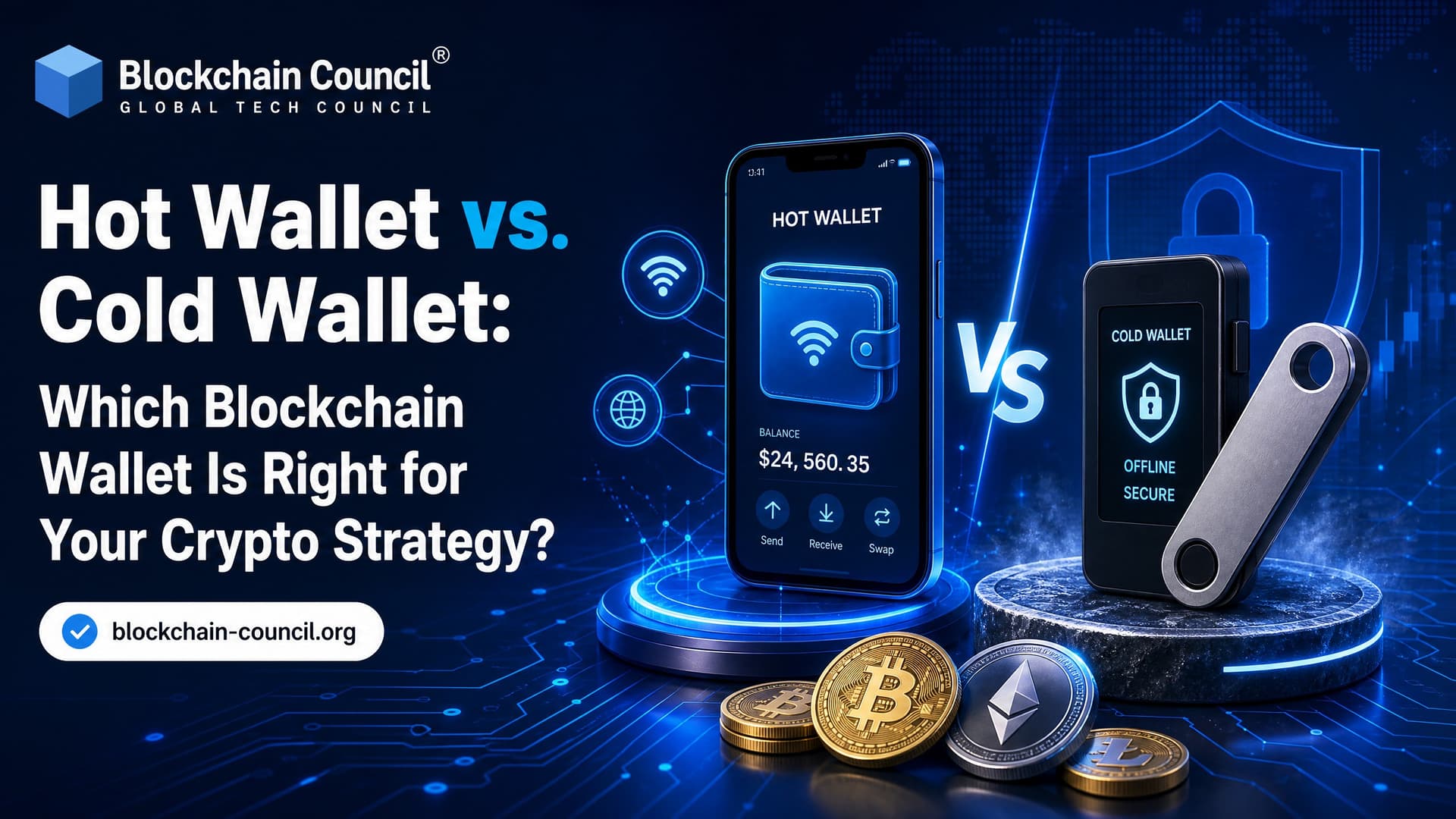
Hot wallet vs cold wallet is not a choice between good and bad security. It is a choice between access and exposure. For most crypto users, developers, and enterprises, the right answer is both: a hot wallet for daily activity and a cold wallet for funds you cannot afford to lose.
That sounds simple. In practice, wallet design shapes how you trade, interact with DeFi, store NFTs, manage treasury funds, and recover from mistakes. A wallet is not just an app. It is the control point for private keys, signing permissions, transaction approvals, and operational risk.

What Is a Hot Wallet?
A hot wallet is a crypto wallet connected to the internet. It may be a mobile app, desktop wallet, browser extension, or web wallet. MetaMask, Trust Wallet, Coinbase Wallet, and Phantom are common examples in consumer and Web3 use.
Hot wallets are built for speed. You can connect to decentralized exchanges, mint NFTs, vote in governance, sign messages, and move assets quickly. That is why traders and DeFi users rely on them.
The trade-off is direct exposure. Since private keys or signing access live on an internet-connected device, the wallet is more vulnerable to phishing, malware, fake browser extensions, malicious dApps, and social engineering.
What Is a Cold Wallet?
A cold wallet keeps private keys offline. The most common form is a hardware wallet from a recognized manufacturer. Cold storage may also involve an offline seed phrase backup stored on paper or, preferably, metal.
With a hardware wallet, the transaction is prepared on an online device but signed inside the hardware device itself. The private key never needs to leave that device. That design cuts the online attack surface sharply.
Cold wallets fit long-term holdings, high-value assets, corporate treasury reserves, and vault-style NFT storage. They are less convenient. That is the point.
Hot Wallet vs Cold Wallet: Core Differences
| Factor | Hot Wallet | Cold Wallet |
|---|---|---|
| Connectivity | Online or frequently connected | Private keys kept offline |
| Best use | Trading, DeFi, NFT minting, payments | Long-term storage and large balances |
| Main risk | Phishing, malware, malicious approvals | Seed loss, physical theft, supply chain risk |
| Convenience | High | Lower |
| Security posture | Good for working balances | Preferred for security-critical storage |
To be blunt, using a hot wallet as your only wallet for a large portfolio is poor risk management. Using only a cold wallet for active DeFi is also clumsy, and it can push you into unsafe habits, like repeatedly connecting a vault wallet to unknown sites.
Where Hot Wallets Make Sense
Use a hot wallet when you need frequent access. It is the right tool for operational liquidity, not lifetime savings.
- Active trading: Moving funds between exchanges, bridges, and DeFi protocols.
- NFT activity: Minting, listing, bidding, and connecting to marketplaces.
- On-chain governance: Voting, delegating, or signing proposals.
- Payments: Sending small amounts or using mobile-first wallet features.
- Development testing: Interacting with testnets, contracts, and dApps during builds.
Keep the balance limited. A practical rule: if a phishing attack would ruin your year, that amount does not belong in a hot wallet.
A Real Approval Mistake That Catches Users
One detail that trips up even experienced users is unlimited token approval. On Ethereum and EVM-compatible chains, an ERC-20 approval can grant a contract permission to spend the maximum uint256 value: 115792089237316195423570985008687907853269984665640564039457584007913129639935. Many wallets shorten this to something like "unlimited approval."
If the contract is malicious, or later exploited, your tokens can be drained without another approval prompt. Before signing, check whether you are approving a specific amount or unlimited spending. Tools like Etherscan's token approval checker and wallet warning screens help, but they do not replace judgment.
Where Cold Wallets Make Sense
Use a cold wallet when protection matters more than convenience. That covers long-term bitcoin or ether holdings, high-value NFTs, protocol treasury assets, and funds reserved for future deployment.
- Long-term investors: Store the majority of holdings offline with a tested backup process.
- Founders and teams: Keep treasury reserves separate from operational wallets.
- DAOs: Use hardware-secured multisig or similar governance controls for treasury management.
- NFT collectors: Keep valuable assets in a vault wallet that does not connect to random mint sites.
Cold storage has its own failure modes. Losing the seed phrase can be final. Entering that seed phrase into a website is worse. No legitimate hardware wallet support agent needs your seed phrase, and no recovery form should ever ask for it.
Warm Wallets: The Enterprise Middle Ground
Institutions often use a third category: warm wallets. These are not typical consumer wallets. They usually sit inside hardened custody infrastructure with policy controls, transaction monitoring, approval workflows, and restricted signing environments.
Exchanges, custodians, and crypto businesses often run a tiered model:
- Hot wallets for immediate withdrawals and daily liquidity.
- Warm wallets for controlled operational movement.
- Cold wallets for the bulk of reserves.
This reflects a basic security principle: do not put all funds behind the same key path or approval process.
Security Threats in 2026: The Human Layer Is the Weak Point
Cryptographic failure is rarely the main issue. User behavior is. Binance, Coinbase, and major security educators consistently frame wallet risk around phishing, device compromise, fake support, and unsafe key storage.
The threats are getting sharper. AI-generated phishing emails, deepfake video calls, and cloned support accounts are now credible risks for crypto holders. A fake founder voice note or a convincing support chat can push someone to sign a malicious transaction in seconds.
For hot wallets, the most common risks include:
- Fake wallet apps downloaded from unofficial links.
- Malicious browser extensions that monitor or alter wallet activity.
- Phishing pages that imitate exchanges, NFT marketplaces, or airdrop claim portals.
- Blind signing of unreadable transactions.
- Compromised laptops or phones with keyloggers or clipboard malware.
For cold wallets, the biggest risks include:
- Buying a tampered device from an unofficial seller.
- Storing the seed phrase in cloud notes, email drafts, screenshots, or password managers without proper controls.
- Weak device PINs combined with poor physical security.
- No inheritance or recovery plan.
How to Build a Practical Wallet Strategy
The strongest crypto strategy separates funds by purpose. You do not need a complicated setup to start, but you do need clear rules.
For Individual Users
- Keep a small working balance in a hot wallet.
- Use a hardware wallet for the majority of long-term holdings.
- Create a separate hot wallet for experimental dApps and new mint sites.
- Revoke unnecessary token approvals regularly.
- Back up your seed phrase offline, ideally on durable media.
For Developers and Power Users
- Use different wallets for testing, production admin tasks, personal DeFi, and long-term storage.
- Never deploy contracts or test approvals from your main vault address.
- Use testnets first, but remember that testnet habits often leak into mainnet behavior.
- Review signing prompts carefully, especially permit signatures and contract approvals.
For Enterprises and DAOs
- Adopt a tiered hot, warm, and cold custody model.
- Use multisig or MPC for treasury movement.
- Define approval thresholds by asset value and transaction type.
- Log all signing activity and review unusual transfers.
- Plan for role changes, emergency pauses, key rotation, and inheritance.
For teams building this capability internally, Blockchain Council programs such as Certified Blockchain Expert™, Certified Blockchain Developer™, and Certified Cryptocurrency Expert™ connect wallet operations with blockchain fundamentals, smart contracts, and crypto asset management.
Hot Wallet vs Cold Wallet: Which One Should You Choose?
Choose a hot wallet if you need speed, mobile access, DeFi interaction, NFT activity, or regular payments. Do not store your full portfolio there.
Choose a cold wallet if you are protecting meaningful value, holding for months or years, managing treasury assets, or reducing exposure to online compromise. Accept the extra steps. They are part of the security model.
Choose both if you want a serious crypto strategy. That is the practical answer for most users and organizations.
Future Wallet Trends to Watch
Wallets are becoming more than key containers. Account abstraction, social recovery, transaction batching, fee abstraction, identity features, and card integrations are changing how people interact with blockchain systems.
These improvements may reduce seed phrase friction, especially for new users. Still, they do not remove the core custody question: where are the keys, who can approve transactions, and what happens when something goes wrong?
AI will affect both sides of wallet security. Defensive tools can flag risky addresses and suspicious transaction patterns. Attackers can produce better phishing campaigns. Expect wallet risk scoring to improve, especially in hot wallet environments where users sign often.
Final Recommendation
Set up a two-layer wallet system this week. Keep spending and dApp activity in a hot wallet. Move long-term or high-value assets to a cold wallet sourced directly from a trusted manufacturer. Then document your backup and recovery process before you need it.
If you are responsible for user funds, treasury assets, or production blockchain systems, go further: study custody architecture, multisig design, wallet security, and smart contract risk through structured training such as Blockchain Council's Certified Blockchain Expert™ or Certified Cryptocurrency Expert™. Your wallet strategy should be designed, tested, and governed, not improvised after a scare.
Related Articles
View All
Blockchain
Crypto Wallet Product Management: Building Secure, User-Friendly Wallet Experiences
A practical guide to crypto wallet product management, covering custody models, secure UX, threat modeling, metrics, compliance, and wallet roadmap decisions.

Blockchain
Go-to-Market Strategy for Blockchain Products in Competitive Web3 Markets
Learn how to build a go-to-market strategy for blockchain products with value-first positioning, token design, community, security, and Web3 metrics.

Blockchain
Crypto Wallet Product Management: Features, Security, and UX Priorities
Crypto wallet product management requires secure key design, clear UX, MPC workflows, AI risk controls, and recovery-first product strategy.
Trending Articles
AWS Career Roadmap
A step-by-step guide to building a successful career in Amazon Web Services cloud computing.
What is AWS? A Beginner's Guide to Cloud Computing
Everything you need to know about Amazon Web Services, cloud computing fundamentals, and career opportunities.
Blockchain in Supply Chain Provenance Tracking
Supply chains are under pressure to prove not just efficiency, but also authenticity, sustainability, and fairness. Customers want to know if their coffee really is fair trade, if the diamonds are con