

Blockchain in Supply Chain Traceability: Real-World Use Cases for Transparency and Anti-Counterfeiting

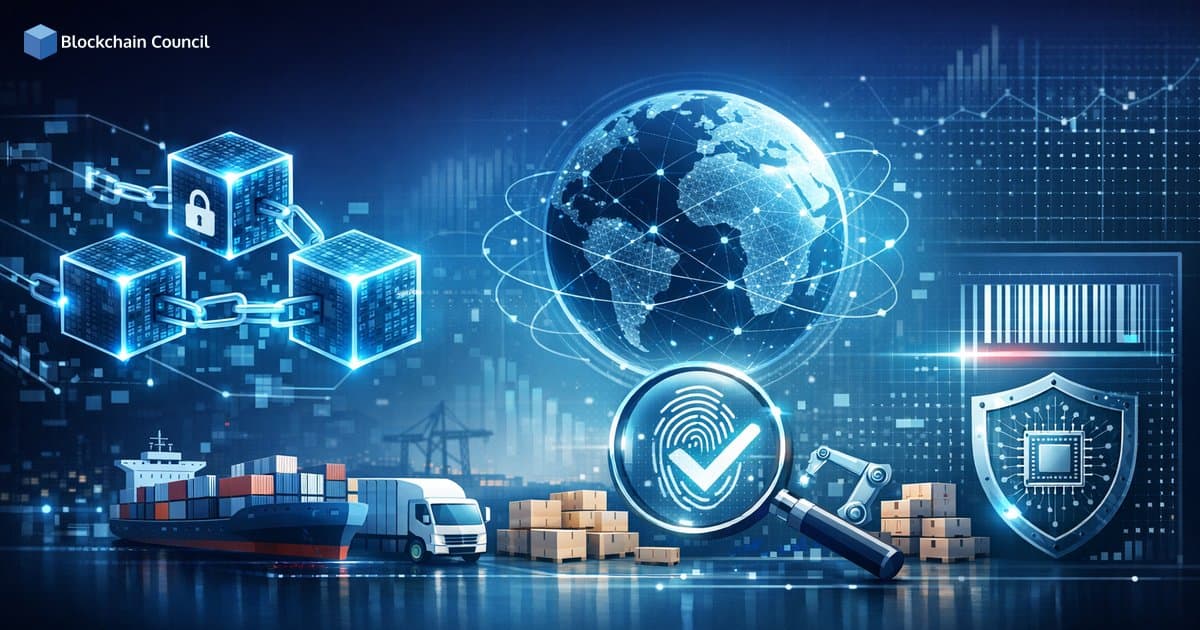
Blockchain in supply chain traceability is moving from pilots to production because organizations need verifiable provenance, faster recalls, and stronger defenses against counterfeits. With regulators demanding end-to-end tracking in pharmaceuticals and food, and with customers expecting proof of ethical sourcing, blockchain has become a practical integrity layer that complements ERP and traditional supply chain systems.
Unlike fragmented databases and paper trails, blockchain creates a shared record of product events across multiple parties. Industry perspectives from the Institute for Supply Management, Deloitte, Sage, and logistics practitioners consistently emphasize three outcomes: improved transparency, auditable histories, and better coordination across complex ecosystems. The result is a growing set of real-world use cases for transparency and anti-counterfeiting in food, pharma, luxury, manufacturing, and logistics.

Why Supply Chain Traceability Is Now a Business Priority
Modern supply chains face pressures that make traceability non-negotiable:
- Counterfeit risk at scale: The OECD reported that trade in counterfeit and pirated goods represented 3.3 percent of global trade in 2019, affecting pharmaceuticals, electronics, automotive parts, and luxury goods.
- Regulatory traceability mandates: The EU Falsified Medicines Directive and the US Drug Supply Chain Security Act require serialization and track-and-trace for medicines, while food safety regulations such as the US Food Safety Modernization Act push rapid traceback and recall readiness.
- ESG and ethical sourcing expectations: Companies must increasingly substantiate claims about labor practices, deforestation, and environmental compliance with credible, auditable evidence.
Traditional systems often store data in silos across shippers, brokers, manufacturers, and retailers. Reconciliation is slow, audit preparation is costly, and trust between parties breaks down when incentives conflict.
What Blockchain Adds to Supply Chain Traceability
Across supply chain management and consulting research, blockchain delivers the most value when multiple organizations must agree on a shared history of events. Key capabilities include:
- Shared visibility for authorized participants: A common ledger reduces information silos and supports near-real-time coordination across procurement, production, and logistics.
- Immutable, auditable event history: Once recorded, changes are tamper-evident, improving auditability for regulated or high-value goods.
- Provenance and certification evidence: Origin data, quality checks, and compliance documents can be linked to product events for faster verification.
- Smart contract automation: Business logic such as approvals, release-to-ship, and conditional payments can be automated to reduce manual errors and cycle time.
The Institute for Supply Management cautions that organizations must plan for scalability, interoperability, privacy, and governance - especially when data crosses organizational boundaries.
Market Adoption Trends and Architecture Choices
Market research indicates rapid growth. Global Market Insights estimated the blockchain-for-supply-chain traceability market exceeded 2.1 billion USD in 2023, while Research Nester placed the figure above 3.55 billion USD by 2025, with both projecting roughly 31 to 32 percent CAGR into the next decade.
Many enterprise deployments favor permissioned blockchain networks - such as Hyperledger Fabric, Corda, or Quorum - because they support role-based access control and privacy requirements. Common architectural patterns include:
- On-chain event proofs with off-chain document storage for scalability, where cryptographic hashes anchor the integrity of large files such as certificates, invoices, and sensor logs.
- IoT integration to automatically record temperature, humidity, and location data, strengthening cold chain verification.
- Digital product identity using QR codes, NFC, or RFID that links a physical item to its digital record, including emerging digital product passport concepts.
- Standards alignment - for example, GS1 identifiers - to improve interoperability across partners and platforms.
Real-World Use Cases for Transparency and Anti-Counterfeiting
1. Food and Agriculture: Farm-to-Fork Transparency and Faster Traceback
Food is a leading area for blockchain traceability because contamination events require immediate action. Carrefour implemented blockchain traceability for selected product lines using IBM Food Trust, allowing customers to scan a QR code and review product journey data including origin, quality checks, and key attributes. Industry pilots on platforms like IBM Food Trust have reported reducing trace time from days to seconds, improving incident response and consumer trust.
In food supply chains, blockchain records typically capture:
- Farm or producer identifiers and harvest data
- Processing and packaging events with lot or batch IDs
- Cold chain checkpoints and handling conditions
- Distribution and store receipt confirmations
2. Pharmaceuticals and Healthcare: Compliance, Serialization, and Counterfeit Prevention
Pharmaceutical traceability is driven by safety and regulation. Track-and-trace frameworks such as the US DSCSA and EU FMD require strong chain-of-custody controls. Blockchain supports compliance by providing an auditable history of ownership changes linked to a unique serial number, making it harder to introduce counterfeit packs without detection.
Academic research supports feasibility in healthcare logistics. A 2022 study published in the Journal of Industrial Information Integration demonstrated a blockchain-based traceability system for COVID-19 PPE, using smart contracts and role-based access to record procurement, production, and distribution events. The approach improves transparency and reduces opportunities for misallocation, phantom shipments, and counterfeit PPE during crisis conditions.
3. Luxury Goods: Authenticity Verification and Gray Market Visibility
Luxury products face persistent counterfeiting and diversion. A manufacturer can assign a digital identity to each item at the point of production and record transfers through authorized distribution channels. Consumers can then verify authenticity via a smartphone scan, while brands gain visibility into suspicious routing or resale patterns that may indicate gray market activity.
Common design choices include:
- Unique item IDs bound to NFC tags or tamper-evident QR labels
- On-chain recording of custody transfers and warranty activations
- Optional integration with AML and KYC controls for higher-risk channels
4. Industrial Components and Manufacturing: Provenance of Critical Parts
Deloitte highlights blockchain value in tracking critical components for sectors like aerospace, automotive, and electronics, where counterfeit or substandard parts create safety, warranty, and compliance risks. A component can be associated with a unique identifier, and events such as manufacturing, inspection, shipment, and assembly integration can be logged on-chain. Smart contracts can enforce that only parts with the required certifications and inspection records proceed to downstream assembly steps.
5. Logistics and Freight: Shared Shipment Events and Fewer Disputes
In logistics, blockchain functions as a shared timeline of shipment events. Benefits include clearer visibility into where delays occur, faster exception management, and fewer disputes because all parties reference the same tamper-evident record. Smart contracts can also trigger payment on delivery confirmation or release funds when predefined conditions are met, reducing manual reconciliation and payment delays.
6. Procurement and Supplier Governance: Ethical Sourcing and Auditable Workflows
The Institute for Supply Management highlights blockchain in procurement as a mechanism for creating verifiable records of sourcing decisions, purchase orders, and supplier performance. Smart contracts can automate approvals and enforce policy, supporting compliance goals such as ethical sourcing requirements and consistent documentation for supplier audits.
Key Benefits Organizations Report in Practice
Across industry sources, the strongest benefits cluster into five areas:
- Transparency and a single source of truth: Fewer information silos and faster cross-party coordination.
- Anti-counterfeiting controls: Tamper-evident histories and verifiable provenance make product substitution significantly more difficult.
- Compliance and audit readiness: Faster evidence collection and clearer chain-of-custody records for regulators and internal auditors.
- Process efficiency: Reduced paperwork, fewer reconciliations, and automated workflows via smart contracts.
- Improved recall execution: Faster identification of affected lots, locations, and downstream customers, limiting exposure and reputational risk.
Challenges and Limitations to Plan For
Blockchain improves data integrity, but implementation success depends on ecosystem design and operational discipline:
- Scalability: Item-level tracking at high volumes often requires off-chain storage with on-chain anchors to remain practical.
- Interoperability: Without shared standards - such as GS1 identifiers and consistent event schemas - cross-network collaboration remains complex and costly.
- Data quality: Blockchain preserves data immutably, including errors. Strong data entry controls, IoT automation, and accountable governance are essential from day one.
- Privacy and confidentiality: Permissioned networks, encryption, and granular access controls are often required to protect pricing, supplier relationships, and sensitive trade data.
- Ecosystem readiness: Benefits emerge when suppliers, carriers, distributors, and retailers all participate. Onboarding and system integration typically represent the hardest implementation challenges.
Future Outlook: Digital Product Passports, ESG Evidence, and Smarter Automation
Market forecasts projecting roughly 31 to 32 percent CAGR through the early 2030s suggest continued growth across food, pharma, luxury, and logistics. Several trends are likely to shape the next phase:
- Digital product passports: Emerging regulations requiring lifecycle data for batteries, textiles, and electronics will increase demand for verifiable product history stored on shared infrastructure.
- ESG-grade traceability: Blockchain records can help organizations substantiate sustainability claims and reduce risk tied to unethical sourcing, aligning with guidance on transparency across value chains.
- AI combined with smart contracts: Blockchain data can feed predictive analytics for supply chain risk, while smart contracts automate responses such as rerouting shipments or tightening acceptance criteria following quality excursions.
- Standardization: Continued alignment around identifiers and event schemas will lower adoption friction, particularly for smaller suppliers joining larger network programs.
Conclusion: Where Blockchain Fits in Supply Chain Traceability
Blockchain in supply chain traceability is most effective when many stakeholders must share a trusted record of provenance, custody, and compliance events. Real-world deployments in food, pharmaceuticals, luxury goods, industrial components, and logistics demonstrate that blockchain can strengthen transparency and anti-counterfeiting while improving auditability and recall speed.
Blockchain is not a standalone fix, however. Successful programs combine permissioned network design, clear governance, high-quality data capture - often via IoT - and interoperability standards. For teams building or evaluating traceability solutions, developing skills in blockchain architecture, smart contracts, identity management, and enterprise integration is increasingly valuable. Relevant learning pathways include Blockchain Council programs such as Certified Blockchain Expert, Certified Smart Contract Developer, and role-aligned training in supply chain and enterprise blockchain architecture.
Related Articles
View All
Blockchain
How Blockchain Supports Secure Voting Systems: Benefits, Risks, and Real-World Use Cases
Explore how blockchain supports secure voting systems through immutability, cryptography, auditability, smart contracts, and its key security limits.

Blockchain
Blockchain in Banks: Use Cases, Benefits, Risks, and the AI Connection
Explore how blockchain in banks is reshaping payments, trade finance, tokenized deposits, KYC, AML, and AI-driven risk workflows.
Blockchain
Top Blockchain Use Cases in Banks and Financial Services
Explore the top blockchain use cases in banks, from payments and trade finance to tokenization, settlement, lending, KYC, and digital asset services.
Trending Articles
The Role of Blockchain in Ethical AI Development
How blockchain technology is being used to promote transparency and accountability in artificial intelligence systems.
AWS Career Roadmap
A step-by-step guide to building a successful career in Amazon Web Services cloud computing.
Claude AI Tools for Productivity
Discover Claude AI tools for productivity to streamline tasks, manage workflows, and improve efficiency.