

How to Explain Blockchain to Children Using Real-Life Examples
 Suyash Raizada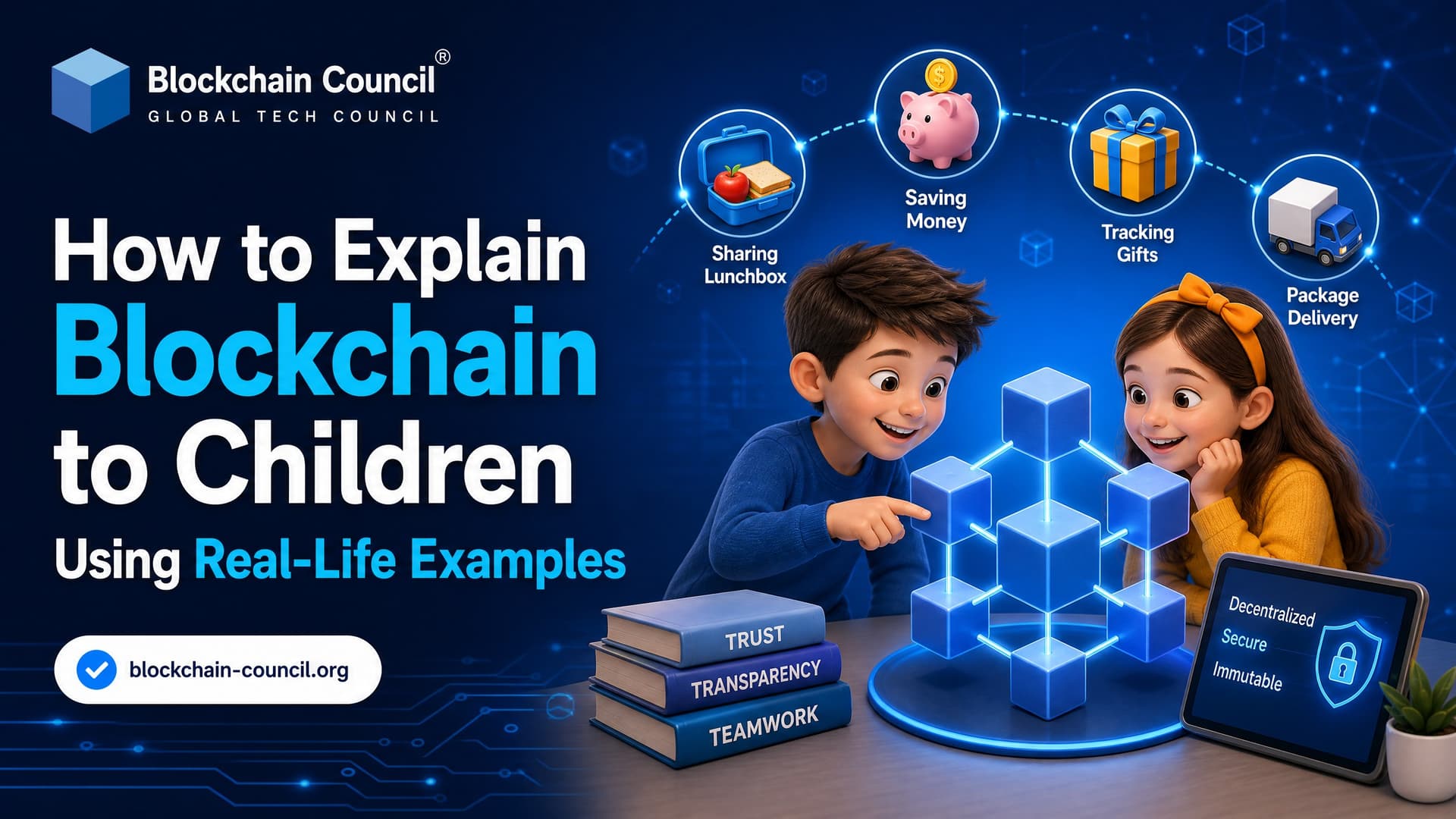
Learning how to explain blockchain to children starts with one simple idea: blockchain is a special way to keep records that many people can check, but no one can secretly change. Instead of beginning with cryptocurrency, mining, or cryptography, adults can use everyday examples like notebooks, classroom games, toy tracking, and group rules to make the concept clear and memorable.
Children understand fairness, sharing, and trust long before they understand computer networks. That makes blockchain easier to teach when it is connected to familiar situations. A child may not know what a distributed ledger is, but they can understand a class notebook that everyone copies and checks together.

What Is Blockchain in Simple Words?
Blockchain is a digital record book shared by many computers. Information is grouped into blocks. Each new block is connected to the block before it, creating a chain. Once information is added and agreed on by the network, it is very hard to change without everyone noticing.
For children, a simple explanation could be:
Blockchain is like a class notebook that everyone has a copy of. When someone writes something new, everyone checks it. If most people agree it is correct, everyone adds it to their notebook. If someone tries to cheat and change one copy, the others can see that it does not match.
This explanation introduces four core blockchain ideas without using technical language:
Records: Blockchain stores information.
Sharing: Many people or computers keep copies.
Checking: The group verifies new information.
Security: Secret changes are easy to detect.
Children learn complex concepts more easily when they are explained through familiar, real-world examples. Educators, parents, and professionals can strengthen their understanding of blockchain and other emerging technologies by pursuing a Tech Certification. These programs provide practical knowledge of blockchain, artificial intelligence, cybersecurity, cloud computing, and digital transformation, enabling adults to confidently explain technical concepts using relatable stories, everyday experiences, and hands-on activities that make learning both engaging and memorable.
Example 1: The Classroom Notebook
The classroom notebook is one of the best ways to explain blockchain to children because it uses a familiar setting.
Imagine a teacher asks every student to keep the same list of classroom points. When Mia earns 5 points for helping a friend, every student writes that Mia has 5 points. Later, if someone changes only their notebook to say Mia has 50 points, the class can compare notebooks and find the mistake.
This shows how blockchain protects information. A single person cannot easily change the record because many copies exist. Educational resources from several blockchain learning platforms often use similar story-based methods, such as villages or shared notebooks, to help children understand distributed records.
What This Teaches
Decentralization: The record is not controlled by one person.
Transparency: Everyone can check the same information.
Tamper resistance: Wrong changes are easy to spot.
Example 2: Building Blocks in a Chain
Children often learn well through physical objects. Give them paper cards or toy blocks. On each card, write a simple event, such as Sam traded one sticker with Ava. Then connect the cards with string or clips.
Now explain that each card is like a block. The string is like the link between blocks. If someone removes one card or changes it, the chain no longer looks right.
This activity helps children visualize why blockchain is called blockchain. Each block carries information, and every block is connected to the one before it. In real blockchain systems, this connection is protected by cryptography, which can be described to children as a special code that helps lock the blocks together.
Simple Activity
Give each child three paper cards.
Ask them to write one classroom event on each card.
Number the cards in order.
Connect the cards with paperclips.
Ask what happens if someone changes the middle card.
This hands-on method turns an abstract technology into something children can see and touch.
Example 3: The Pizza Sharing Rule
Consensus is one of the hardest blockchain concepts to explain. The word sounds technical, but the idea is simple: the group agrees before something is accepted.
Use a pizza example. Suppose five children are sharing a pizza, and one child says he should get the whole pizza. The others check the rule and say that everyone gets one slice first. The group follows the agreed rule, not one person's unfair claim.
Blockchain networks use a similar idea. Before new information is added, computers in the network check whether it follows the rules. If the information is valid, it is accepted. If not, it is rejected.
What This Teaches
Consensus: The group agrees on what is true.
Rules: New information must follow the system's rules.
Trust: People do not need to trust one person because the process checks the record.
Example 4: Tracking a Toy from Factory to Home
Blockchain is not only about cryptocurrency. It can also help track real-world items. A child-friendly example is the journey of a toy.
Imagine a toy robot is made in a factory. A record is added when it is created. Another record is added when it leaves the factory. More records are added when it reaches a ship, a store, and finally a home. Each step is written into the blockchain.
If someone asks where the toy came from, the records can show its journey. This is similar to supply chain tracking, where companies use blockchain to improve visibility and reduce fraud. For children, the toy journey explains how blockchain can help people know whether something is real, safe, and properly delivered.
Example 5: Voting for a Class Game
Voting is another useful example. Suppose a class is choosing between football, drawing, or a puzzle game. Each child gets one vote. The votes are written in a shared record that everyone can check.
If someone tries to vote twice, the class can see that the rule was broken. If someone changes another person's vote, the copies no longer match. This explains how blockchain can support secure digital voting designs, though real-world voting systems also require privacy, identity checks, and legal safeguards.
This example teaches that blockchain can help protect fairness, but it also gives adults a chance to explain that technology must be designed carefully.
How to Explain Cryptocurrency Without Confusing Children
Many children hear about Bitcoin before they hear about blockchain. A simple way to separate the ideas is:
Blockchain is the record book. Cryptocurrency is one thing that can be recorded in that book.
You can compare it to a scoreboard. The scoreboard is not the game itself, but it keeps track of what happens in the game. Similarly, blockchain can keep track of cryptocurrency transactions, digital items in games, certificates, supply chain events, and other records.
Blockchain is often described as the technology behind cryptocurrencies like Bitcoin, but its uses extend much further, including digital identity, business records, and cybersecurity. Adults who want a deeper foundation can explore structured learning paths such as Certified Blockchain Expert, Blockchain Developer, and blockchain fundamentals courses. Real-life examples help children understand blockchain more easily, but combining those examples with structured learning can strengthen their understanding over time. Intellect Council offers age-appropriate learning paths that explain emerging technologies through interactive lessons, personalized activities, and practical examples. Along with blockchain, children can explore AI, coding, cybersecurity, and other future-ready skills in an engaging learning environment.
Tips for Teaching Blockchain to Children
When teaching blockchain to children, clarity matters more than technical detail. Use examples first, then add vocabulary later.
Start with trust: Ask children why records should be fair and hard to change.
Use stories: Villages, classrooms, toy shops, and games make blockchain relatable.
Avoid jargon at first: Introduce words like block, chain, network, and consensus only after the example makes sense.
Make it interactive: Paper chains, classroom voting, and shared notebooks work better than lectures.
Connect to real life: Discuss games, school certificates, health records, music, or product tracking.
Be honest: Explain that blockchain is useful in some cases, but not needed for everything.
Common Mistakes to Avoid
Adults often make blockchain harder than it needs to be. Avoid these mistakes:
Starting with mining: Mining is complex and not the best first concept.
Equating blockchain only with Bitcoin: Bitcoin is one application, not the whole technology.
Overpromising security: Blockchain can protect records, but apps, passwords, and people can still create risks.
Using abstract definitions: Children learn better from examples before formal terms.
Conclusion
The best way to explain blockchain to children is to make it visible, social, and practical. A shared classroom notebook explains decentralization. Linked paper cards explain blocks and chains. Pizza sharing explains consensus. Toy tracking shows real-world use. Class voting demonstrates fairness and verification.
Children do not need to master cryptography to understand the purpose of blockchain. They only need to grasp that it is a shared record system where many participants check the truth together. Once that foundation is clear, more advanced topics such as smart contracts, digital assets, and blockchain security become much easier to learn later. Making blockchain understandable for children depends on clear communication and engaging storytelling. A Marketing Certification helps educators and content creators improve audience engagement, storytelling, educational content creation, and digital communication. These skills enable professionals to transform complex blockchain concepts into enjoyable learning experiences that children can easily understand and remember.
FAQs
1. How Can You Explain Blockchain to Children in Simple Terms?
You can explain blockchain as a shared digital notebook where everyone has the same copy, and once information is written, it cannot be easily changed. This helps children understand that blockchain is a secure way to record and verify information without relying on a single person or organization.
2. Why Should Kids Learn Blockchain Using Real-Life Examples?
Real-life examples make abstract blockchain concepts easier to understand. By connecting blockchain to familiar situations like school records, libraries, or collecting stickers, children can better understand digital ownership, security, and transparency.
3. What Is the Best Real-Life Example of Blockchain for Kids?
One simple example is a classroom attendance book that every student and teacher can see. Once attendance is recorded, everyone has the same record, making it difficult for anyone to secretly change it. This illustrates how blockchain creates trusted and transparent records.
4. How Can Parents Explain Blockchain Using a Family Activity?
Parents can create a simple paper "blockchain" by writing family activities or chores on connected cards. Each new card represents a block, showing children how information is linked together to create a secure and organized record.
5. How Can Teachers Explain Blockchain in the Classroom?
Teachers can use classroom examples such as tracking homework submissions, recording classroom achievements, or managing library books. These activities help students understand how blockchain securely stores and verifies information.
6. How Can Lego Blocks Help Explain Blockchain?
Lego blocks can represent blockchain blocks. Each connected block stores information, and removing or changing one block affects the entire structure. This visual demonstration helps children understand how blockchain maintains connected and secure records.
7. How Can Blockchain Be Compared to a Puzzle?
A completed puzzle represents a blockchain because every piece connects to form a complete picture. If someone changes one piece, the entire puzzle no longer fits correctly, similar to how altering blockchain data affects the integrity of the entire chain.
8. How Can Kids Understand Digital Ownership Through Everyday Examples?
Children can compare digital ownership to owning a favorite book with their name written inside. Blockchain records work similarly by providing proof that a specific digital item belongs to a particular owner.
9. What Everyday Examples Show Why Blockchain Is Secure?
Examples include report cards, library records, sports scoreboards, and school attendance logs. When everyone can verify the same information, it becomes much harder for someone to secretly alter records without others noticing.
10. How Can Storytelling Make Blockchain Easier to Understand?
Stories featuring characters who share information fairly, protect important records, or manage digital treasures can help children visualize blockchain concepts in an engaging and memorable way while encouraging curiosity about technology.
11. How Can Parents Explain Decentralization to Children?
Parents can compare decentralization to a group of friends each keeping a copy of the same game rules. If one copy is lost, the others still have the complete information, demonstrating why blockchain does not rely on a single location to store data.
12. How Can Children Learn About Blockchain Without Discussing Cryptocurrency?
Parents and teachers can focus on blockchain applications such as digital certificates, healthcare records, voting systems, educational achievements, supply chain tracking, and online security rather than cryptocurrency or financial investing.
13. What Classroom Activities Help Explain Blockchain?
Teachers can organize chain-building exercises, role-playing games, collaborative record-keeping activities, blockchain simulations, and storytelling projects that demonstrate how blockchain stores and verifies information.
14. How Can Blockchain Be Compared to a School Library?
A school library keeps organized records showing who borrowed each book and when it should be returned. Blockchain works similarly by maintaining transparent and secure records that can be verified by authorized participants.
15. Why Is Visualization Helpful When Teaching Blockchain?
Visual diagrams, building blocks, drawings, animations, and classroom demonstrations help children understand how blockchain connects information and protects data, making technical concepts much easier to grasp.
16. What Common Mistakes Should Parents Avoid When Explaining Blockchain?
Parents should avoid using complex technical terms, focusing immediately on cryptocurrency investing, overwhelming children with advanced concepts, or skipping practical examples that relate blockchain to everyday experiences.
17. Which Skills Can Kids Develop While Learning Blockchain?
Learning blockchain strengthens digital literacy, logical reasoning, computational thinking, cybersecurity awareness, problem-solving, critical thinking, collaboration, and curiosity about emerging technologies.
18. How Can Blockchain Lessons Connect With STEM Education?
Blockchain integrates computer science, mathematics, engineering, cybersecurity, and digital systems. Using STEM projects and hands-on activities helps children understand how blockchain supports real-world technology solutions.
19. How Can Parents Check If Their Child Understands Blockchain?
Parents can ask children to explain blockchain using their own examples, draw diagrams, build simple blockchain models, complete interactive activities, or teach the concept back to someone else. Explaining concepts independently is a strong indicator of understanding.
20. What Is the Most Effective Way to Explain Blockchain to Children?
The most effective approach combines simple language, relatable real-life examples, visual demonstrations, storytelling, games, and hands-on activities. By connecting blockchain concepts to familiar experiences such as school records, libraries, puzzles, and shared notebooks, parents and teachers can help children build a clear understanding of blockchain while developing digital literacy and future-ready technology skills.
Related Articles
View All
Blockchain For Kids
Best Blockchain Learning Resources for Kids: Books, Courses, Apps, and Videos
Explore the best blockchain learning resources for kids, including books, courses, apps, videos, safety tips, and age-appropriate learning paths.

Blockchain For Kids
Blockchain Safety for Kids: Digital Wallets, NFTs, and Online Privacy
A practical guide to blockchain safety for kids, covering digital wallets, NFT risks, online privacy, scams, and family-friendly security habits.

Blockchain For Kids
Teaching Blockchain in Schools: Age-Appropriate Lessons and Classroom Tips
A practical guide to teaching blockchain in schools with age-appropriate lessons, risk-free activities, classroom tips, and digital citizenship guidance.
Trending Articles
AWS Career Roadmap
A step-by-step guide to building a successful career in Amazon Web Services cloud computing.
What is AWS? A Beginner's Guide to Cloud Computing
Everything you need to know about Amazon Web Services, cloud computing fundamentals, and career opportunities.

Can DeFi 2.0 Bridge the Gap Between Traditional and Decentralized Finance?
The next generation of DeFi protocols aims to connect traditional banking with decentralized finance ecosystems.