

Times Square New York City and AI

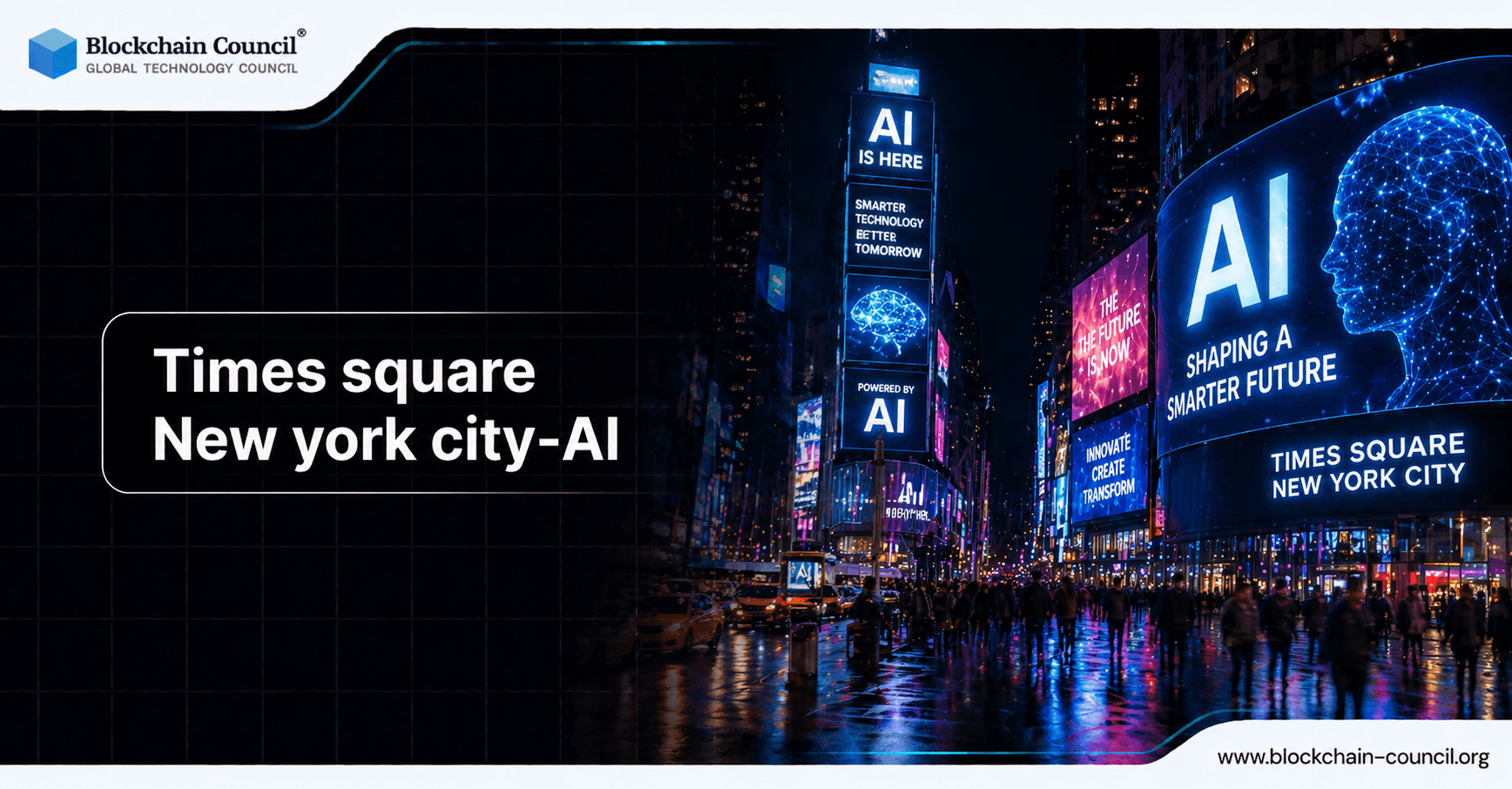
Times Square in New York City has always been a symbol of energy, technology, and global culture. Known for its massive digital billboards, constant foot traffic, and 24/7 activity, it represents the intersection of commerce, entertainment, and innovation.
In recent years, artificial intelligence has begun to reshape how Times Square operates. From advertising and crowd management to security and data analytics, AI is quietly transforming one of the busiest urban spaces in the world.

This article explores how AI is being used in Times Square, the latest developments, real-world applications, and what the future holds for smart urban environments.
The Evolution of Times Square as a Digital Hub
Times Square has always embraced technology. The transition from static billboards to digital displays marked a major shift in how brands engage with audiences.
Today, the area is filled with high-resolution LED screens, interactive displays, and real-time content. AI is now enhancing these systems by making them smarter, more responsive, and more personalized.
Instead of simply displaying advertisements, digital systems can now adapt based on data, behavior, and context.
AI in Digital Advertising
One of the most visible uses of AI in Times Square is in advertising.
AI-driven systems analyze data such as:
Foot traffic patterns
Time of day
Weather conditions
Audience demographics
This information allows advertisers to display targeted content that is more relevant to viewers.
For example, a clothing brand may show winter wear during colder temperatures or switch to lighter clothing ads when the weather changes.
Real-world example: A global brand used AI to adjust billboard content in real time, resulting in higher engagement and improved campaign performance.
AI is turning static advertising into dynamic, data-driven communication.
Real-Time Content Personalization
AI enables real-time personalization of content in Times Square.
Advanced systems can detect crowd density and adjust messaging accordingly. During peak hours, advertisements may focus on broad appeal, while quieter times allow for more targeted messaging.
This level of personalization was not possible with traditional advertising methods.
It creates a more engaging experience for viewers while maximizing value for advertisers.
AI and Crowd Management
Times Square attracts millions of visitors each year, making crowd management a critical challenge.
AI-powered systems use cameras and sensors to monitor crowd movement. These systems analyze data in real time to detect congestion and predict potential issues.
Authorities can use this information to manage traffic, improve safety, and enhance the overall experience.
For example, during major events such as New Year’s Eve, AI systems help coordinate crowd flow and emergency response.
AI in Security and Surveillance
Security is a major concern in high-traffic areas like Times Square.
AI is used to enhance surveillance systems by identifying unusual behavior, detecting potential threats, and improving response times.
Facial recognition, object detection, and pattern analysis are some of the technologies involved.
While these systems improve safety, they also raise concerns about privacy and data usage.
Balancing security with individual rights remains an ongoing challenge.
Smart Infrastructure and Urban Analytics
AI is also being used to improve infrastructure in Times Square.
Smart systems analyze data from sensors to optimize lighting, energy usage, and maintenance.
For example, AI can adjust street lighting based on foot traffic or detect equipment failures before they become major issues.
Urban analytics provide insights that help city planners make better decisions.
This contributes to a more efficient and sustainable environment.
AI in Tourism and Visitor Experience
AI is enhancing the experience for visitors in Times Square.
Chatbots and virtual assistants provide information about attractions, events, and services. Mobile apps use AI to recommend activities based on user preferences.
For instance, a tourist can receive personalized suggestions for restaurants, shows, and shopping options.
This improves convenience and satisfaction.
Real-World Example: AI-Powered Campaign in Times Square
A major entertainment company launched an AI-driven campaign in Times Square.
The system analyzed audience reactions in real time and adjusted content accordingly. If a particular message generated more engagement, it was displayed more frequently.
This adaptive approach increased campaign effectiveness and demonstrated the potential of AI in advertising.
Ethical and Privacy Considerations
The use of AI in public spaces raises important ethical questions.
Data collection and surveillance must be managed carefully. Transparency is essential to maintain public trust.
Authorities and organizations need to ensure that AI systems are used responsibly and do not infringe on individual rights.
Regulation and governance will play a key role in addressing these concerns.
The Role of Skills and Education
As AI becomes more integrated into urban environments, professionals need to develop relevant skills.
The AI Expert Certification provides a comprehensive understanding of AI technologies and their applications.
For those working with advanced AI systems, the Claude AI Certification offers insights into modern AI models and real-world use cases.
Developers can enhance their expertise through the AI Powered Coding Expert Course, which focuses on integrating AI into applications.
Additionally, professionals in marketing and business can benefit from the AI Powered Digital Marketing Course, which explores how AI-driven strategies are applied in high-impact environments like Times Square.
Future of AI in Times Square
The future of AI in Times Square is likely to include several developments.
More advanced personalization in advertising
Greater integration of augmented reality
Enhanced crowd management systems
Improved sustainability through smart infrastructure
These advancements will continue to transform Times Square into a fully intelligent urban environment.
AI and the Concept of Smart Cities
Times Square serves as a model for smart city development.
AI technologies used in this area can be applied to other cities around the world. From traffic management to energy optimization, the potential is vast.
Smart cities aim to improve quality of life through technology, and Times Square is a prime example of this vision in action.
Challenges and Limitations
Despite its benefits, AI in Times Square faces challenges.
High implementation costs can limit adoption. Technical issues may affect system performance. Public concerns about privacy must be addressed.
These challenges require careful planning and ongoing improvement.
Conclusion
Artificial intelligence is transforming Times Square in ways that go far beyond digital billboards. It is enhancing advertising, improving safety, optimizing infrastructure, and creating a more engaging experience for visitors.
While challenges remain, the integration of AI into one of the world’s most iconic locations demonstrates the potential of technology to reshape urban environments.
As AI continues to evolve, Times Square will likely remain at the forefront of innovation, serving as a model for cities around the world.
Frequently Asked Questions (FAQs)
1. How is AI used in Times Square?
AI is used for advertising, crowd management, and security. It analyzes data to improve efficiency. Systems operate in real time. AI enhances experiences. It is widely applied.
2. What is AI-driven advertising?
AI-driven advertising uses data to display targeted content. It adapts to audience behavior. Campaigns become more effective. Personalization improves engagement. It is a major trend.
3. How does AI manage crowds?
AI uses sensors and cameras to monitor movement. It analyzes patterns and predicts congestion. Authorities can respond quickly. Safety improves. Crowd management becomes efficient.
4. Is AI used for security in Times Square?
Yes, AI enhances surveillance and threat detection. It identifies unusual behavior. Response times improve. Security systems are more effective. Safety is increased.
5. What are smart city technologies?
Smart city technologies use AI and data to improve urban living. They optimize infrastructure and services. Efficiency increases. Sustainability improves. Cities become smarter.
6. How does AI improve tourism?
AI provides personalized recommendations and information. Visitors receive tailored suggestions. Convenience improves. Experiences are enhanced. Tourism benefits.
7. What are the risks of AI in public spaces?
Risks include privacy concerns and data misuse. Surveillance can be intrusive. Proper regulation is needed. Transparency is important. Risks must be managed.
8. How does AI analyze data in Times Square?
AI processes data from sensors and cameras. It identifies patterns and trends. Insights are generated. Decision-making improves. Data is essential.
9. What is real-time personalization?
Real-time personalization adjusts content based on current conditions. AI analyzes data instantly. Messaging changes dynamically. Engagement increases. It is effective.
10. Can AI replace human roles in Times Square?
AI supports human roles but does not replace them entirely. It automates tasks. Humans handle complex decisions. Collaboration is important. Balance is needed.
11. What industries benefit from AI in Times Square?
Industries such as advertising, tourism, and retail benefit. AI improves efficiency and engagement. Applications are diverse. Growth is significant. Adoption continues.
12. How does AI improve infrastructure?
AI monitors systems and predicts issues. Maintenance becomes proactive. Efficiency improves. Costs are reduced. Infrastructure is optimized.
13. What is the future of AI in cities?
AI will become more integrated into urban systems. Smart cities will expand. Technology will improve. Quality of life will increase. Innovation will continue.
14. How is AI regulated in public areas?
Regulation varies by region. Policies focus on privacy and safety. Guidelines are evolving. Compliance is required. Governance is important.
15. What is augmented reality in Times Square?
Augmented reality enhances digital experiences. It overlays information on the real world. AI supports these systems. Engagement increases. It is growing.
16. How does AI affect businesses in Times Square?
AI improves marketing and operations. Businesses can target customers better. Efficiency increases. Revenue may grow. Competition rises.
17. What technologies support AI in Times Square?
Technologies include sensors, cameras, and data analytics. AI models process information. Integration is key. Systems work together. Technology is advanced.
18. Can small businesses use AI in advertising?
Yes, AI tools are becoming accessible. Small businesses can benefit. Costs are decreasing. Adoption is increasing. Opportunities exist.
19. How does AI improve energy efficiency?
AI optimizes energy usage based on data. Systems adjust automatically. Waste is reduced. Sustainability improves. Efficiency increases.
20. Why is Times Square important for AI development?
Times Square is a high-traffic, technology-driven environment. It provides real-world testing opportunities. Innovations can be demonstrated. It is a global stage. AI applications thrive.
Related Articles
View All
AI & ML
OpenAI Launches GPT-6.1 Terra: What’s New?
OpenAI has launched GPT-6.1 Terra, a faster and cheaper mid-tier model with stronger computer use, better image understanding and fewer errors. See what is new, what it costs, and who can use it.
AI & ML
Meta Launches Muse Wonder: Its New AI Model Explained
Meta has launched Muse Wonder and Muse Wonder Full, new AI models built for personal and professional agents. Learn the features, pricing, access options and how they compare with rivals.

AI & ML
NVIDIA’s New AI Models: Nemotron 3.5 Lightning, Cosmos 3 and the Future of Agentic AI
Explore NVIDIA Nemotron 3.5 Lightning and Cosmos 3, how they support agentic and Physical AI, and what these models reveal about NVIDIA’s broader vision for autonomous intelligent systems.
Trending Articles

Top 5 DeFi Platforms
Explore the leading decentralized finance platforms and what makes each one unique in the evolving DeFi landscape.
What is AWS? A Beginner's Guide to Cloud Computing
Everything you need to know about Amazon Web Services, cloud computing fundamentals, and career opportunities.
Claude AI Tools for Productivity
Discover Claude AI tools for productivity to streamline tasks, manage workflows, and improve efficiency.