
Securing MCP Integrations


Securing MCP integrations is rapidly becoming a core requirement for teams deploying tool-using AI. The Model Context Protocol (MCP) standardizes how applications pass context, retrieve data, and invoke tools through large language models (LLMs). That standardization accelerates development, but it also concentrates risk: a single weak link in authentication, authorization, or prompt handling can turn an agent into an exfiltration pipeline.
This guide covers practical controls for authentication, authorization, and prompt-injection defenses in MCP-based systems, including real attack paths and a layered blueprint applicable across MCP servers, tool registries, and LLM runtimes.

Why MCP Changes the Security Model for Tool-Using AI
MCP integrations differ from traditional API integrations because the LLM makes decisions based on mixed-trust inputs:
User prompts (untrusted by default)
Retrieved data (often untrusted, even when sourced from internal systems)
Tool descriptions and metadata (a distinct supply chain attack surface)
System instructions and policies (trusted, but frequently targeted for bypass)
Security analyses of agentic systems consistently identify three dominant patterns: direct prompt injection, indirect prompt injection embedded in external content, and tool poisoning that exploits an LLM's tendency to trust tool instructions and descriptions. Research also confirms that guardrails can be circumvented using invisible characters and adversarial prompt tactics, reinforcing the need for multi-layer defenses rather than relying on a single filter.
Threat Landscape: Common MCP Attack Paths
1) Prompt Injection (Direct and Indirect)
Indirect prompt injection is especially relevant to MCP because tools routinely fetch webpages, tickets, documents, emails, and code. Attackers can embed malicious instructions inside that content, causing the model to:
Reveal secrets from memory or context
Call tools in unsafe sequences
Exfiltrate data through outbound channels
A common pattern observed in tool-using AI deployments involves over-privileged database access: crafted inputs lead the agent to query and return data that row-level security should have restricted, because the integration trusted the agent's tool calls without adequate permission scoping or output controls.
2) Tool Poisoning and Tool Metadata Abuse
Tool poisoning occurs when a tool's description, schema, examples, or other metadata is altered to include malicious instructions. Because LLMs rely on these descriptions to decide how to use tools, poisoned metadata can direct an agent toward unauthorized file access, unsanctioned network calls, or deceptive data handling.
3) Sampling Feature Exploits and Guardrail Bypass
Security researchers have identified vulnerabilities where sampling and assistant workflows can be manipulated to bypass intended policies. Combined with adversarial evasion techniques such as character injection, an attacker can cause the model to ignore safety constraints or misclassify malicious instructions as benign.
4) Token Replay and Identity Misuse
When MCP servers accept bearer tokens without strong audience and scope enforcement, tokens can be replayed or used outside their intended context. This becomes critical when an agent can invoke multiple tools across systems that were not designed to share the same authorization boundary.
Authentication for MCP: Implementing OAuth 2.1 Correctly
For securing MCP integrations, authentication should be standardized and auditable. OAuth 2.1 is widely recommended for token-based access with strong controls, particularly when paired with a mature identity provider such as Keycloak in enterprise deployments.
OAuth 2.1 Hardening Checklist
Use short-lived access tokens to reduce replay impact.
Enforce audience restrictions so tokens minted for one MCP server or tool cannot be reused elsewhere.
Validate scopes on every tool call, not just at session start.
Require explicit consent and authorization screens for high-risk actions, especially in agentic workflows.
Bind tokens to client context where possible and log token usage for anomaly detection.
Authentication is necessary but not sufficient. Most high-impact MCP failures occur after the model is authenticated, when it is permitted to do too much.
Authorization: Least Privilege for Tools, Data, and Actions
Authorization is where many tool-using AI systems fail. A model with broad database or filesystem permissions can be manipulated into abusing them. Effective authorization for MCP should be designed as if all prompts are hostile and every tool represents a potential supply chain risk.
Core Principles to Apply
Least-privilege scopes: define tool-specific scopes such as db.read.customer_support rather than db.read.all.
Resource-level enforcement: apply row-level and column-level policies at the data layer; do not rely on the agent to enforce them independently.
Context isolation: separate untrusted retrieved text from system policy text so the model handles them with different levels of trust.
Runtime revocation: maintain the ability to revoke a tool permission or token mid-session if anomalies are detected.
Human-in-the-loop approvals: require user confirmation for irreversible or high-risk operations such as payments, deletions, and external data sharing.
Sandboxing and Containment
Tools should be treated as untrusted code paths. Common practices include:
Containerize tools with locked-down filesystem and network egress policies.
Deny-by-default outbound access and permit only required domains or endpoints.
Rate limiting and quotas per user, per tool, and per time window to limit blast radius.
Prompt-Injection Defenses: Building Multiple Layers
Prompt injection is not a single vulnerability; it is a family of techniques that exploit how models follow instructions. The most resilient strategy applies layered controls across input handling, context construction, tool execution, and output.
Layer 1: Input Validation and Request Sanitization
Before an LLM processes any text, apply standard security hygiene:
Normalize and sanitize inputs, including detection for invisible or control characters.
Block known malicious patterns relevant to your domain, such as credential requests, exfiltration phrases, and tool override attempts.
Constrain allowable formats using schemas for tool inputs and extracted entities.
Layer 2: Context Isolation, Delimiters, and Datamarking
When passing retrieved content to an LLM, clearly separate it from policies and instructions:
Delimiters: wrap untrusted content in strict, consistent boundaries.
Datamarking: label content as untrusted retrieved text versus system policy so downstream logic can enforce stricter handling rules.
Spotlighting techniques: structure prompts so system instructions remain dominant and retrieved text is treated as reference material only.
These controls help mitigate indirect injection where malicious instructions are embedded in webpages, tickets, or tool outputs.
Layer 3: Prompt Shields and ML-Based Detection
Leading platform guidance recommends prompt shields that use machine learning and natural language processing to classify, filter, and route risky inputs. Because attack techniques evolve continuously, these shields require ongoing updates and performance measurement to remain effective.
Layer 4: Tool-Call Gating and Policy Enforcement
Even when a malicious instruction reaches the model, gating tool execution can still prevent harm:
Policy-as-code checks before executing a tool call, covering scopes, resource constraints, and allowed parameters.
Human approval workflows for sensitive actions to counter silent exfiltration and destructive operations.
Step-up authentication when risk increases, for example when a new destination is detected, a bulk export is requested, or a privilege escalation is attempted.
Layer 5: Outbound Content Analysis and Response Filtering
Exfiltration frequently occurs in the response. Apply output controls to detect secrets, regulated data, and suspicious payloads:
DLP-style filtering for API keys, tokens, and PII patterns.
Outbound destination controls for tools that can post messages, create tickets, or upload files.
Redaction and safe summaries in place of raw data output wherever feasible.
Tool Supply Chain Governance: Registries, Signatures, and Version Locking
Because tool metadata can be poisoned, governance must extend beyond the codebase itself:
Tool registries with approval workflows and strict ownership controls.
Cryptographic signatures for tool packages and metadata to detect unauthorized changes.
Version locking so an approved tool cannot silently change behavior after approval.
Continuous audits of tool descriptions, schemas, and example prompts.
These measures reduce the risk of supply chain compromise, where a previously trusted tool is modified to introduce exfiltration logic or malicious instructions.
Detection and Monitoring: Scanners and SIEM Integration
MCP deployments benefit from specialized scanning and real-time monitoring. Tools such as MCPTox and MindGuard are designed to identify attack patterns including tool poisoning, indirect injection, and adversarial evasion. Both can be integrated with SIEM systems to support anomaly detection and incident response workflows.
What to Log for Incident Response
Tool call traces: tool name, parameters, decision rationale where available, and outcomes.
Auth context: token scopes, audience, user identity, and session risk level.
Prompt assembly artifacts: what content was retrieved, what was marked untrusted, and which policies were applied.
Blocked actions: which controls triggered and the reason for each.
Handle sensitive data in logs carefully. Apply retention limits and redaction so that security visibility does not create a secondary data leak path.
Implementation Blueprint for Securing MCP Integrations
Threat model your agent: identify which tools can read secrets, write data, or communicate externally.
Adopt OAuth 2.1: enforce scopes, audience checks, and short-lived tokens.
Design least-privilege scopes: map every tool operation to its minimal required permissions.
Isolate untrusted context: apply delimiters, datamarking, and structured prompting.
Deploy prompt shields: combine detection with continuous tuning against new evasion tactics.
Gate tool execution: enforce policy checks, sandboxing, and human approvals for high-risk actions.
Secure the tool supply chain: implement registry governance, cryptographic signatures, and version locking.
Monitor continuously: integrate scanners with SIEM and define playbooks for rapid revocation.
Conclusion
Securing MCP integrations requires treating the LLM as a powerful orchestrator operating in a hostile environment. The most effective programs combine strong authentication with OAuth 2.1, strict authorization through least-privilege design and sandboxing, and robust prompt-injection defenses that include context isolation, prompt shields, tool-call gating, and output filtering. As MCP adoption grows and adversaries refine evasion tactics, continuous auditing, supply chain governance, and real-time monitoring will determine whether tool-using AI functions as a secure productivity layer or becomes a new breach pathway.
For teams building secure AI systems, establishing internal competency across AI security fundamentals, secure agent design, and integrity controls is a practical starting point. Blockchain Council certifications such as Certified Artificial Intelligence (AI) Expert, Certified Cybersecurity Expert, and Certified Web3 Security Professional provide structured learning paths for professionals seeking to deepen expertise in secure AI integration patterns.
Related Articles
View All
AI & ML
What Is MCP in AI?
Learn what MCP in AI is, how the Model Context Protocol works, and why it matters for real-time data access, tool use, automation, and governance.

AI & ML
MCP vs Function Calling vs Plugins
Compare MCP vs function calling vs plugins for LLM tool integration. Learn tradeoffs in portability, security, scalability, and when hybrid patterns work best.

AI & ML
How to Build an MCP Server
Learn how to build an MCP server in TypeScript: define tools with Zod, expose resources, add HTTP transport with sessions, and integrate LLM clients securely.
Trending Articles
The Role of Blockchain in Ethical AI Development
How blockchain technology is being used to promote transparency and accountability in artificial intelligence systems.
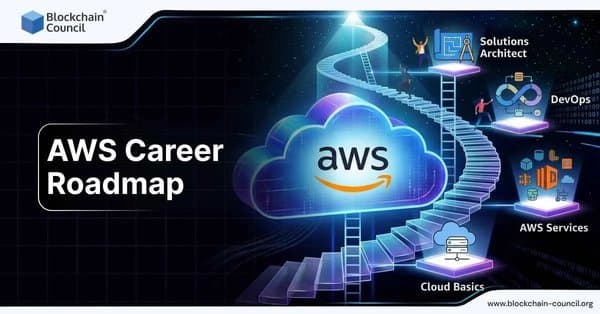
AWS Career Roadmap
A step-by-step guide to building a successful career in Amazon Web Services cloud computing.
Top 5 DeFi Platforms
Explore the leading decentralized finance platforms and what makes each one unique in the evolving DeFi landscape.