

Introducing Workspace Agents in ChatGPT

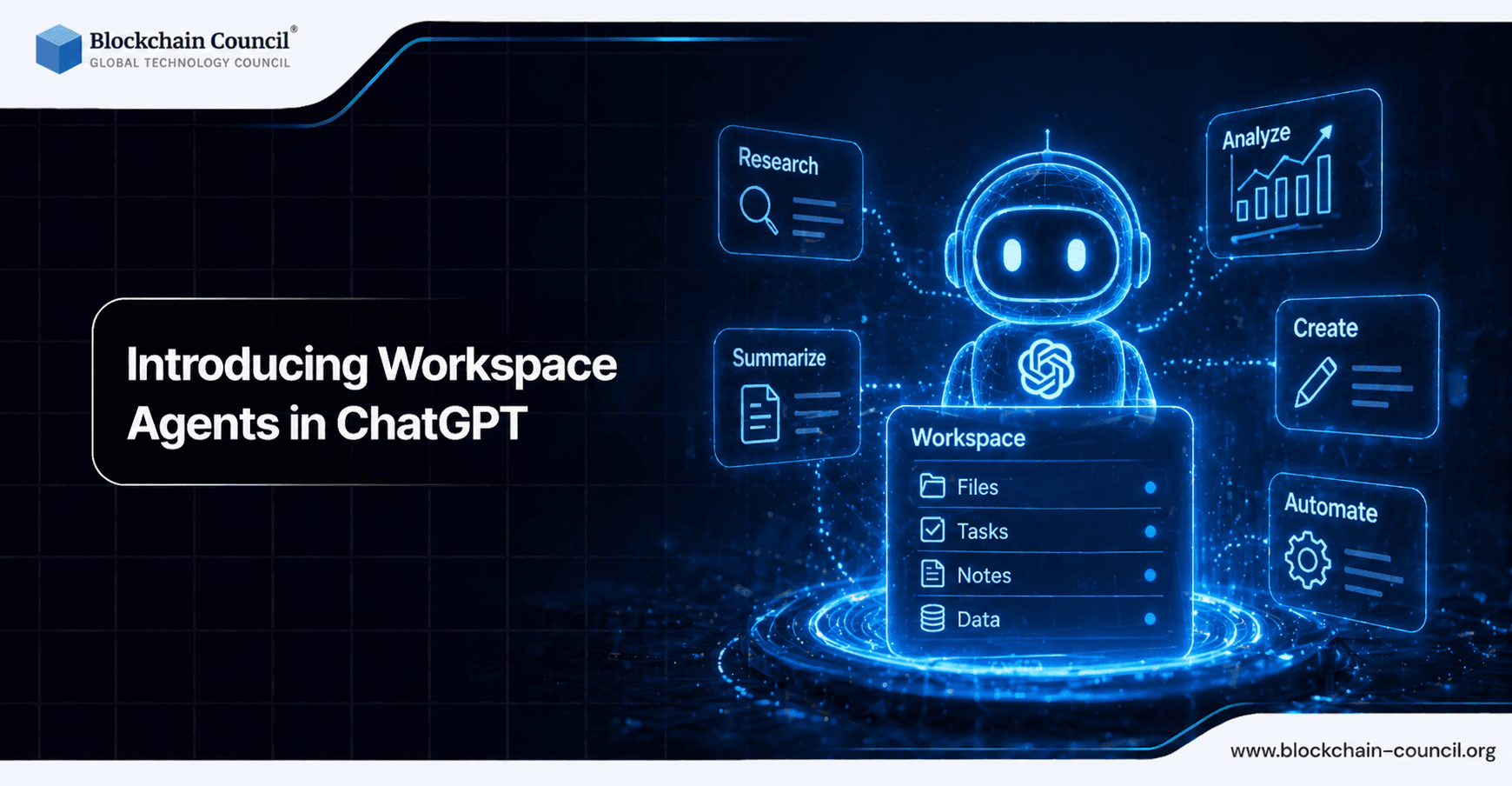
Artificial intelligence is evolving rapidly. Therefore, the tools built on top of it are evolving too. One of the most significant recent developments is the introduction of workspace agents in ChatGPT. These agents are changing how professionals manage tasks, automate workflows, and interact with digital environments. Furthermore, they represent a fundamental shift in what AI assistants can actually do inside a working environment.
Consequently, understanding this technology is no longer optional. It is essential for marketers, entrepreneurs, freelancers, and professionals who want to stay competitive. This article explains what workspace agents are, how they function, and why they matter.

What Are Workspace Agents in ChatGPT?
Workspace agents in ChatGPT are AI-powered autonomous systems that can perform tasks within a digital workspace on a user's behalf. Unlike traditional chatbot interactions, these agents do not just answer questions. Instead, they take action. They can navigate files, manage calendar entries, draft and send messages, execute code, and coordinate multi-step workflows.
Moreover, these agents use real-time information and connected tools to complete objectives. Therefore, they function more like a capable digital assistant than a simple question-and-answer tool. They understand context, follow instructions, and adapt to changing conditions within a task.
Key Features of Workspace Agents
1. Autonomous Task Execution
Workspace agents can complete multi-step tasks without waiting for constant input. For instance, a user can instruct an agent to research a topic, summarize findings, and organize them into a document. The agent handles every step independently.
2. Tool Integration
These agents connect with productivity tools such as document editors, email clients, calendar applications, and data platforms. As a result, they operate across different systems within a single workflow.
3. Context Awareness
Unlike simple command-based tools, workspace agents in ChatGPT maintain context across tasks. Therefore, they can reference earlier instructions, remember preferences, and adjust responses based on prior actions.
4. Real-Time Decision Making
Additionally, these agents make decisions in real time. When they encounter obstacles or ambiguous instructions, they resolve them intelligently rather than stopping and waiting for human input.
5. Collaborative Operation
Furthermore, multiple agents can work together. One agent may gather data while another formats it and a third delivers a report. This collaborative structure allows complex workflows to run efficiently.
How Workspace Agents in ChatGPT Work
Understanding the mechanics behind workspace agents helps professionals use them more effectively. First, a user sets an objective. The agent then breaks down that objective into individual steps. Next, it uses connected tools and data sources to execute each step. Finally, it delivers the completed outcome.
Moreover, the agent can recognize when a task requires a different approach and adjust accordingly. For example, if a document is locked or a data source is unavailable, the agent finds an alternative path. This flexibility makes it far more powerful than traditional automation tools.
Additionally, these agents use memory systems to store preferences and past interactions. Therefore, over time, they become more efficient and personalized in how they handle recurring tasks.
Why Workspace Agents Matter for Modern Professionals
The impact of workspace agents in ChatGPT extends across multiple professional fields. Therefore, it is important to examine this impact clearly.
For Security-Focused Professionals
As workspace agents gain access to sensitive business systems, security becomes a top priority. Therefore, organizations need professionals who understand AI risk management. Earning an AI Security Certification provides the knowledge needed to deploy these agents safely and responsibly.
For Developers and Technical Users
Developers can use agents to automate code testing, documentation, and deployment tasks. Furthermore, those interested in formal recognition of their AI skills can pursue a Python certification to validate their technical capabilities in building and working with AI-driven systems.
For Marketing Professionals
Marketers can use workspace agents to automate campaign research, content scheduling, and performance analysis. Consequently, more time becomes available for strategy and creativity. Professionals looking to deepen their expertise in this area can explore an AI powered marketing course to understand how AI tools integrate with modern marketing workflows.
For Entrepreneurs and Freelancers
Entrepreneurs and freelancers benefit by automating repetitive tasks such as invoicing, client communication, and project tracking. As a result, they can scale their operations without hiring additional staff.
Real-World Applications of Workspace Agents
Workspace agents in ChatGPT are already being applied across a wide range of professional scenarios. Below are some of the most common use cases:
• Content Creation: Agents draft, edit, and publish content based on briefs and brand guidelines.
• Data Analysis: They pull data from multiple sources, identify patterns, and generate reports.
• Customer Support: Agents handle first-level support queries, escalate issues, and log resolutions.
• Project Management: They track milestones, send reminders, and update task boards automatically.
• Research Automation: Agents gather and summarize research from multiple online sources.
Challenges and Considerations
Despite their benefits, workspace agents come with important challenges that professionals must address. First, data privacy is a significant concern. Because these agents access files and communication systems, organizations must ensure proper access controls are in place.
Moreover, the risk of over-automation is real. Therefore, professionals should maintain oversight over critical decisions and avoid delegating tasks that require human judgment. Additionally, agents can make errors in complex or ambiguous situations. Consequently, reviewing outputs regularly is a sound practice.
Furthermore, professionals who want to lead AI implementation within their organizations should consider earning an AI Expert Certification. This type of credential validates the ability to design, manage, and audit AI systems responsibly.
The Future of Workspace Agents in ChatGPT
The trajectory of workspace agents in ChatGPT points toward even greater autonomy and capability. In the near future, these agents will likely handle full business processes with minimal human intervention. Additionally, they will integrate with physical devices and Internet of Things systems, expanding their reach beyond digital environments.
Furthermore, advances in multimodal AI will allow agents to process images, audio, and video alongside text. Consequently, they will be able to participate in richer and more complex workflows. For professionals who start learning about these tools now, the competitive advantage will be substantial.
Conclusion
The introduction of workspace agents in ChatGPT marks a defining moment in the evolution of artificial intelligence. These agents do not merely assist — they act, adapt, and deliver outcomes. Therefore, professionals across every industry must take the time to understand and adopt this technology.
From automating marketing workflows to securing enterprise AI deployments, the applications are vast and growing. Consequently, investing in knowledge and certification today will position any professional to lead with confidence in an AI-driven world.
Frequently Asked Questions (FAQs)
1. What are workspace agents in ChatGPT?
Workspace agents in ChatGPT are autonomous AI systems that perform tasks within a digital workspace. They go beyond answering questions by taking direct action on files, calendars, emails, and other tools.
2. How do workspace agents differ from regular ChatGPT?
Regular ChatGPT responds to prompts with text. Workspace agents, however, execute multi-step tasks, integrate with tools, and operate autonomously to complete objectives on your behalf.
3. Can workspace agents access external tools?
Yes. Workspace agents connect with third-party tools such as document editors, email platforms, databases, and project management software to perform tasks across different systems.
4. Are workspace agents safe to use with sensitive data?
Safety depends on proper configuration and access controls. Therefore, organizations should implement strict permission settings and monitor agent activity when handling sensitive information.
5. Do workspace agents require coding knowledge to use?
Not necessarily. Many workspace agents are designed for non-technical users. However, technical professionals can extend their functionality significantly with coding skills.
6. How do workspace agents improve productivity?
They automate repetitive and time-consuming tasks. As a result, professionals can redirect their time toward higher-value work that requires creativity and strategic thinking.
7. Can multiple workspace agents work together?
Yes. Multiple agents can collaborate on a single workflow, each handling a specific component. This parallel operation allows complex tasks to be completed more efficiently.
8. What industries benefit most from workspace agents?
Marketing, technology, finance, healthcare, education, and customer service are among the industries that benefit most from workspace agents. However, their application extends to virtually every sector.
9. How do workspace agents handle errors or ambiguous instructions?
Well-designed workspace agents use decision-making frameworks to resolve ambiguity. They may ask for clarification, choose the most logical path, or flag the issue for human review.
10. Are workspace agents the same as AI bots?
Not exactly. Traditional bots follow fixed rules. Workspace agents, on the other hand, are adaptive and context-aware, making them significantly more capable and flexible.
11. Can workspace agents learn from past interactions?
Yes. Many workspace agents use memory systems to retain context from prior sessions. Therefore, they improve over time by learning user preferences and recurring task patterns.
12. How do I get started with workspace agents in ChatGPT?
Start by exploring the available agent tools within your ChatGPT plan. Additionally, familiarize yourself with the connected tools your workplace uses so you can integrate them effectively.
13. What is the difference between a workspace agent and an AI assistant?
An AI assistant primarily responds to queries. A workspace agent, however, acts autonomously to complete tasks. The distinction lies in the degree of independence and tool access.
14. Can workspace agents send emails or messages automatically?
Yes. When given proper permissions, workspace agents can draft and send emails, post messages, and update communication threads as part of a larger workflow.
15. Are there privacy regulations that apply to workspace agents?
Yes. Regulations such as data protection laws apply when agents access personal or business data. Therefore, organizations must ensure compliance before deploying these systems broadly.
16. How do workspace agents handle conflicting instructions?
They typically prioritize the most recent or explicit instruction. Moreover, advanced agents flag conflicts and request clarification to avoid making incorrect decisions.
17. Can small businesses benefit from workspace agents?
Absolutely. Small businesses can use workspace agents to reduce operational overhead, automate client communication, and manage projects more efficiently with limited staff.
18. Do workspace agents replace human workers?
They do not replace humans. Instead, they handle routine and repetitive tasks so that human professionals can focus on work that requires judgment, empathy, and creativity.
19. How often are workspace agents updated?
Updates depend on the platform. Generally, AI providers release improvements regularly to enhance performance, add new integrations, and address security vulnerabilities.
20. What skills should professionals develop to work with workspace agents?
Professionals should develop skills in AI prompt engineering, workflow design, and data management. Furthermore, gaining formal certifications in AI and related fields builds credibility and practical expertise.
Related Articles
View All
AI & ML
AI Agents & Agentic AI: When AI Starts Thinking, Planning & Acting
Discover AI Agents & Agentic AI in simple terms. Learn how agents perceive, reason, plan, use tools, and remember, how they differ from chatbots, and where they are used today.
AI & ML
System One Models for AI Agents
Explore how System One Models can support AI agents with fast, structured decisions, calibrated confidence, routing, verification, and reliable workflow automation.
AI & ML
Jev vs AI Agents
Compare Jev with AI agents and learn how Jev’s structured decision-making differs from autonomous systems that plan, use tools, and complete multi-step tasks.
Trending Articles
The Role of Blockchain in Ethical AI Development
How blockchain technology is being used to promote transparency and accountability in artificial intelligence systems.
AWS Career Roadmap
A step-by-step guide to building a successful career in Amazon Web Services cloud computing.

Top 5 DeFi Platforms
Explore the leading decentralized finance platforms and what makes each one unique in the evolving DeFi landscape.