

Googlebook Is Google’s New AI-Powered Laptop Platform Built on Android
 Suyash Raizada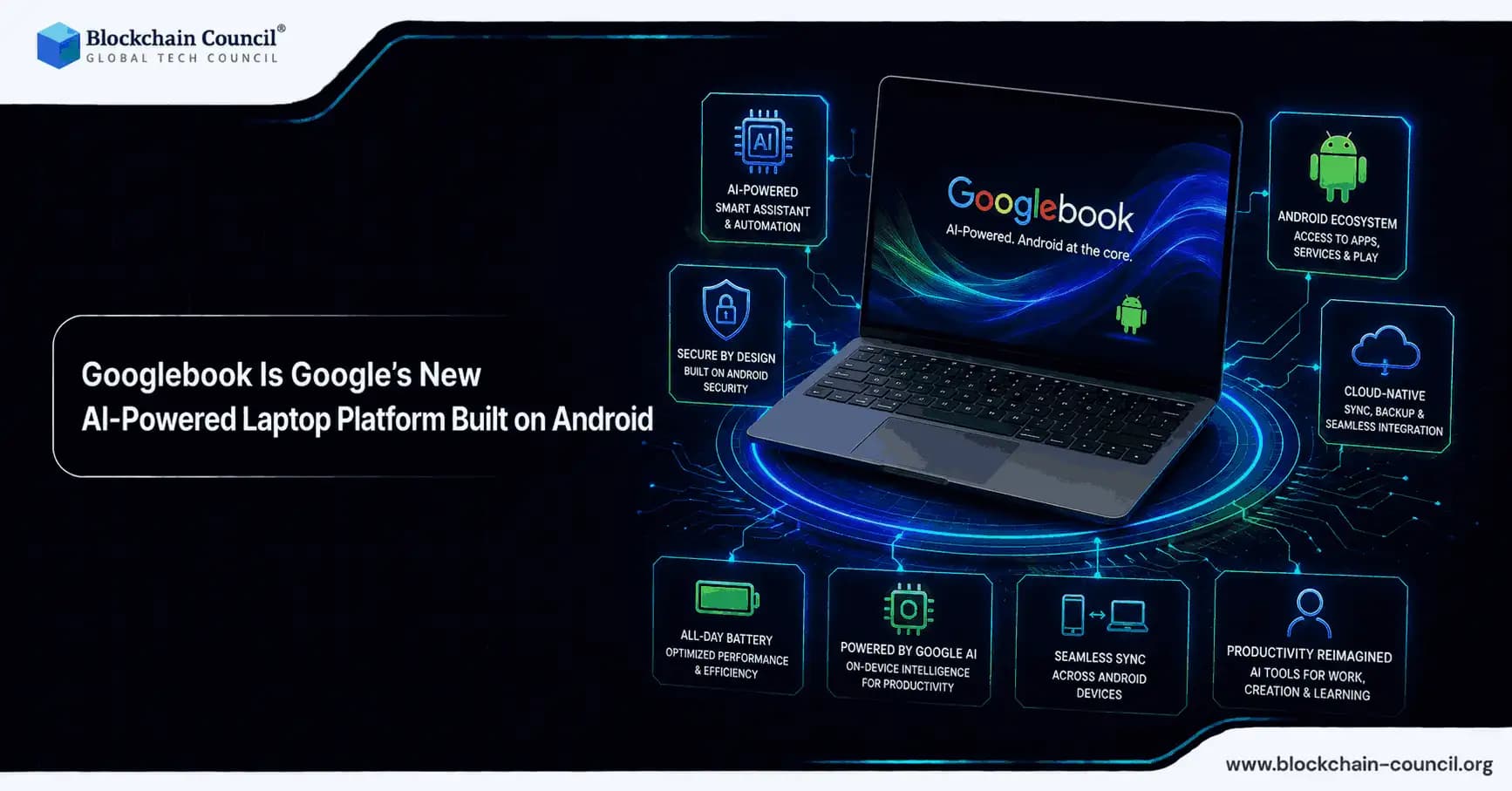
Google has spent years experimenting with the future of computing. From Chromebooks to Android tablets and AI-powered assistants, the company has repeatedly tried to redefine how people interact with devices. Now, rumors and industry discussions around “Googlebook” suggest Google may be preparing a new AI-powered laptop platform built around Android and Gemini AI integration.
The idea of Googlebook has sparked massive curiosity in the tech industry because it appears to combine the flexibility of Android, the productivity of laptops, and the intelligence of generative AI into one ecosystem. Humans, naturally, looked at perfectly functional laptops and decided they needed machines that also summarize emails, generate code, and probably judge their browser tab addiction silently in the background. Progress marches on.

What Is a Googlebook?
Googlebook is the unofficial name being used in technology discussions for Google’s rumored next-generation AI-focused laptop platform. While Google has not formally announced a product called “Googlebook,” recent developments strongly indicate the company is building a more unified Android-based computing environment for laptops.
The platform is expected to combine:
Android operating system capabilities
Google Gemini AI integration
AI-powered productivity tools
Advanced cloud connectivity
Cross-device synchronization
Enhanced app compatibility
Native AI assistance across workflows
The concept represents a shift away from traditional operating systems toward AI-first computing experiences.
Instead of users manually navigating software, AI systems could automate tasks, assist in decision-making, optimize workflows, and personalize device behavior in real time.
Why Google Is Moving Toward AI-Powered Computing
Artificial intelligence is becoming the center of modern computing. Companies like Microsoft, Apple, and Google are racing to integrate AI directly into operating systems rather than limiting it to standalone apps.
Google has several reasons for pursuing an AI-powered laptop platform.
Competition With Microsoft Copilot PCs
Microsoft has aggressively integrated Copilot AI into Windows devices. AI PCs are now a major market category, and Google cannot afford to stay behind.
An Android-powered laptop platform with Gemini AI could become Google’s answer to Windows AI PCs.
Expanding Gemini AI Ecosystem
Google’s Gemini AI models are rapidly evolving. The company wants Gemini to become deeply integrated into:
Search
Gmail
Google Docs
Android
Workspace
Coding tools
Smart devices
A dedicated AI laptop platform would strengthen Gemini’s ecosystem dramatically.
Professionals interested in mastering these evolving technologies are increasingly pursuing programs like the AI expert certification to understand practical AI implementation in modern businesses.
Android’s Growing Desktop Potential
Android has matured significantly over the years. Modern Android systems already support:
Split-screen multitasking
Keyboard and mouse functionality
Desktop modes
External displays
Advanced app ecosystems
Google appears to be evolving Android into a true laptop operating system.
How Googlebook Could Work
Although official details remain limited, industry analysts expect Googlebook to function as a hybrid between Android tablets, Chromebooks, and AI PCs.
Android as the Core Operating System
Reports suggest Google may unify ChromeOS and Android into a single ecosystem. This would simplify development while improving compatibility.
Users could benefit from:
Millions of Android apps
Seamless mobile-to-laptop integration
Faster updates
Better touch support
Improved battery optimization
Unlike traditional laptops that rely heavily on manual workflows, Googlebook may focus on AI-assisted interactions.
Gemini AI Could Become the Main Interface
One of the biggest expected features is deep Gemini integration.
Rather than opening separate applications for tasks, users might interact directly with Gemini AI through voice or text commands.
For example:
“Summarize today’s emails.”
“Create a presentation from these notes.”
“Generate Python code for data analysis.”
“Organize my research documents.”
“Translate this meeting transcript.”
The system would automate workflows across apps.
Developers and AI professionals looking to specialize in Google’s AI ecosystem are already exploring the google gemini expert certification to stay ahead of enterprise adoption trends.
Because apparently typing manually into twenty tabs was not inefficient enough for humanity. Now the laptop itself joins the meeting and starts contributing ideas.
AI-Powered Productivity Features
Googlebook could introduce several advanced AI productivity tools.
Smart Writing Assistance
Gemini AI may help users:
Draft emails
Rewrite documents
Summarize articles
Generate reports
Create meeting notes
This would improve efficiency for students, businesses, and content creators.
Intelligent Search
Traditional search functions may evolve into conversational AI experiences.
Instead of searching folders manually, users could ask:
“Find the spreadsheet I edited last Tuesday.”
“Show all documents related to marketing campaigns.”
“Locate client invoices from March.”
AI would understand context rather than relying solely on filenames.
AI Meeting Tools
Googlebook could integrate advanced AI meeting capabilities such as:
Real-time transcription
Automatic summaries
Action-item generation
Language translation
Speaker recognition
These features are becoming essential in remote work environments.
Could Googlebook Replace Chromebooks?
This is one of the most debated questions.
Chromebooks have been successful in education and lightweight productivity markets. However, ChromeOS still has limitations compared to Windows and macOS.
Googlebook may represent an evolution beyond Chromebooks rather than a direct replacement.
Possible differences include:
Chromebook | Googlebook |
Browser-focused | AI-first platform |
ChromeOS | Android-based OS |
Limited offline AI | Native Gemini AI |
Traditional apps | AI-enhanced workflows |
Basic productivity | Intelligent automation |
If Google successfully merges Android and ChromeOS, users may get the best aspects of both platforms.
AI and the Future of Software Development
One major area where Googlebook could shine is software development.
AI-assisted coding is transforming programming rapidly. Developers now use AI for:
Code generation
Debugging
Documentation
Testing
Automation
Google has already integrated Gemini into Android Studio and cloud development environments.
A future Googlebook device may provide native AI coding assistance directly inside the operating system.
This trend has increased demand for specialized learning programs such as the AI Powered coding expert Course, which helps developers understand AI-driven programming workflows and automation systems.
Because software engineers apparently decided sleeping was optional once AI began writing half the boilerplate code for them. Civilization remains deeply strange.
Agentic AI Could Play a Major Role
Another emerging trend connected to Googlebook is Agentic AI.
Agentic AI systems can independently perform multi-step tasks with minimal user intervention.
For example, a future Googlebook device could:
Read incoming emails
Schedule meetings automatically
Create summaries
Generate reports
Notify users about deadlines
Instead of simply responding to prompts, AI agents actively complete workflows.
This technology is becoming critical across industries, leading professionals to pursue credentials like the Agentic AI expert certification to understand autonomous AI systems and enterprise deployment strategies.
How Googlebook Could Impact Businesses
Businesses are increasingly investing in AI-powered productivity tools. Googlebook could become highly attractive for enterprise users.
Enhanced Collaboration
Integration with Google Workspace would likely provide seamless collaboration across:
Gmail
Google Docs
Google Meet
Google Sheets
Google Drive
AI-generated summaries and smart collaboration tools could improve team productivity.
Reduced IT Complexity
Android-based systems are easier to manage compared to traditional desktop operating systems.
Googlebook may provide:
Simplified device management
Cloud-based updates
Better security controls
Lower maintenance costs
Improved Employee Productivity
AI automation may reduce repetitive tasks significantly.
Employees could spend more time on strategic work while AI handles:
Scheduling
Documentation
Data organization
Routine communication
AI-Powered Digital Marketing and Googlebook
Digital marketing is another field likely to benefit from AI-first laptops.
Modern marketers increasingly depend on AI tools for:
Content creation
SEO analysis
Campaign automation
Audience targeting
Social media optimization
Googlebook could integrate Gemini-powered marketing assistants directly into workflows.
Professionals aiming to adapt to these changes are enrolling in programs such as the AI powered digital marketing course to develop advanced AI-driven marketing skills.
Marketing itself has become an endless machine where algorithms analyze other algorithms while humans pretend they still fully understand what the dashboards mean. Beautiful chaos.
Security and Privacy Concerns
AI-powered operating systems also raise serious privacy concerns.
Since Googlebook would likely process large amounts of user data, critics worry about:
Data collection
AI surveillance
Cloud dependency
User profiling
Security vulnerabilities
Google will need strong safeguards to gain public trust.
Potential security features may include:
On-device AI processing
Encrypted storage
AI permission management
Enterprise-grade security layers
Privacy dashboards
Balancing convenience and privacy will be critical for long-term adoption.
Hardware Expectations for Googlebook
Although no official hardware specifications exist, analysts predict Googlebook devices could include:
AI-Optimized Processors
AI laptops increasingly rely on NPUs (Neural Processing Units) for efficient AI processing.
Googlebook devices may use:
Tensor chips
Qualcomm Snapdragon processors
ARM-based architectures
Long Battery Life
Android’s optimization may deliver superior battery performance compared to traditional laptops.
Touch and Stylus Support
Given Android’s mobile origins, touch-first interfaces are likely.
Lightweight Designs
Google may target portability and cloud-focused productivity.
Will Developers Embrace Googlebook?
Developer adoption will be essential.
Google already has a strong Android developer ecosystem, but desktop software expectations differ significantly from mobile apps.
To succeed, Googlebook must provide:
Better desktop multitasking
High-performance app support
Strong developer tools
Linux compatibility
AI development frameworks
Google’s ability to attract developers could determine whether Googlebook becomes mainstream or joins the cemetery of ambitious tech experiments beside Google Glass and approximately forty-seven messaging apps nobody asked for.
Potential Challenges Facing Googlebook
Despite excitement, Googlebook faces major challenges.
App Compatibility
Desktop users expect powerful professional software.
Google must ensure compatibility with:
Productivity suites
Creative tools
Enterprise applications
Development software
Consumer Trust
Users may hesitate to adopt another Google platform without long-term support guarantees.
Google’s reputation for shutting down products remains a concern.
Competition
Googlebook would compete against:
Windows AI PCs
Apple MacBooks
Chromebooks
Linux laptops
The market is extremely competitive.
The Future of AI-Powered Operating Systems
Googlebook represents a broader shift happening across the tech industry.
Future operating systems will likely become:
AI-driven
Context-aware
Predictive
Conversational
Personalized
Instead of launching apps manually, users may simply describe goals while AI completes tasks autonomously.
This transformation could redefine how humans interact with computers over the next decade.
Conclusion
Googlebook may become one of Google’s most ambitious projects yet. By combining Android, Gemini AI, cloud services, and intelligent automation, Google appears to be building a next-generation AI laptop platform designed for the future of productivity.
Although official confirmation remains limited, industry trends strongly suggest Google is moving toward a unified AI-powered ecosystem that merges mobile flexibility with desktop productivity.
If successful, Googlebook could reshape how users work, communicate, code, market products, and interact with software entirely. Businesses, developers, and professionals will need to adapt quickly as AI-first computing becomes mainstream.
The rise of AI-powered platforms also highlights the growing importance of AI education and certification programs. Whether through AI development, digital marketing, coding automation, or agentic systems, professionals who understand these technologies will likely have a major advantage in the evolving digital economy.
Computers started as giant machines requiring entire rooms. Now humans are building laptops that can summarize meetings they were physically present in but emotionally absent from. Technological evolution truly is a masterpiece of contradictions.
FAQs
1. What is Googlebook?
Googlebook is a rumored AI-powered laptop platform believed to be developed by Google using Android and Gemini AI technologies. It is expected to combine mobile flexibility, desktop productivity, and advanced artificial intelligence features into one ecosystem.
2. Is Googlebook officially announced by Google?
As of now, Google has not officially announced a product named Googlebook. However, industry leaks, Android developments, and AI integration strategies strongly indicate Google is working toward a more advanced AI-focused laptop experience.
3. Will Googlebook replace Chromebooks?
Googlebook may not completely replace Chromebooks immediately, but it could evolve beyond them by offering deeper AI integration, better multitasking, and more advanced productivity features.
4. What operating system will Googlebook use?
Most reports suggest Googlebook could use a unified Android-based operating system that combines Android and ChromeOS capabilities into a single platform.
5. How will Gemini AI work on Googlebook?
Gemini AI is expected to function as a built-in assistant capable of summarizing documents, generating content, automating workflows, assisting with coding, and managing tasks across applications.
6. Why is Google focusing on AI-powered laptops?
Google wants to compete with Microsoft’s AI PCs and strengthen its Gemini ecosystem. AI-powered laptops also represent the future of productivity and intelligent computing.
7. Can Googlebook run Android apps?
Yes, one of the biggest expected advantages is full Android app compatibility, giving users access to millions of applications directly on the laptop platform.
8. Will Googlebook support AI coding tools?
Googlebook is expected to include AI-powered coding assistance through Gemini integration, helping developers generate, debug, and optimize code more efficiently.
9. What are the benefits of AI-powered laptops?
AI-powered laptops can improve productivity through automation, smart search, content generation, workflow optimization, and intelligent assistance across tasks.
10. How could Googlebook help businesses?
Businesses may benefit from reduced IT management costs, improved collaboration, AI-assisted workflows, and better integration with Google Workspace tools.
11. What is Agentic AI in relation to Googlebook?
Agentic AI refers to autonomous systems that can perform multi-step tasks independently. Googlebook may use agentic AI to automate scheduling, communication, reporting, and other workflows.
12. Will Googlebook work offline?
Some AI features may work offline using on-device processing, while advanced capabilities could require cloud connectivity for larger AI models and data synchronization.
13. Could Googlebook compete with Apple MacBooks?
Yes, Googlebook may compete with MacBooks by offering AI-first computing experiences, better cloud integration, and Android ecosystem compatibility.
14. What hardware features might Googlebook include?
Expected features include AI-optimized processors, touchscreens, stylus support, lightweight designs, and long battery life for mobile productivity.
15. Is Googlebook good for students?
Students may benefit significantly from AI-assisted note-taking, document summarization, smart research tools, and collaboration features integrated into the platform.
16. What privacy concerns exist with AI-powered laptops?
Privacy concerns include data collection, cloud dependency, AI monitoring, and user profiling. Google will need strong security measures to address these issues.
17. How can professionals prepare for AI-powered computing?
Professionals can prepare by learning AI technologies, automation systems, prompt engineering, and AI-integrated workflows through specialized certifications and courses.
18. Why are AI certifications becoming important?
AI certifications help professionals validate their skills in emerging technologies, improve career opportunities, and stay competitive in rapidly evolving industries.
19. What industries could benefit most from Googlebook?
Industries such as software development, digital marketing, education, healthcare, finance, and enterprise collaboration may benefit heavily from AI-powered productivity systems.
20. What is the future of AI-powered operating systems?
The future of operating systems will likely involve conversational interfaces, predictive automation, intelligent personalization, and autonomous AI agents capable of handling complex workflows with minimal user input.
Related Articles
View All
AI & ML
OpenAI Launches GPT-6.1 Terra: What’s New?
OpenAI has launched GPT-6.1 Terra, a faster and cheaper mid-tier model with stronger computer use, better image understanding and fewer errors. See what is new, what it costs, and who can use it.

AI & ML
Built to Catch AI Cheating: Rethinking Pre-Employment Assessments with HireValid
Explore how HireValid is rethinking pre-employment assessments with AI-resistant test design, integrity signals, candidate evidence, and human review to address AI-assisted cheating.

AI & ML
Meta Launches Muse Wonder: Its New AI Model Explained
Meta has launched Muse Wonder and Muse Wonder Full, new AI models built for personal and professional agents. Learn the features, pricing, access options and how they compare with rivals.
Trending Articles
AWS Career Roadmap
A step-by-step guide to building a successful career in Amazon Web Services cloud computing.

Top 5 DeFi Platforms
Explore the leading decentralized finance platforms and what makes each one unique in the evolving DeFi landscape.
How Blockchain Secures AI Data
Understand how blockchain technology is being applied to protect the integrity and security of AI training data.