

The Future of Meta AI: Trends, Innovations, and What to Expect Next

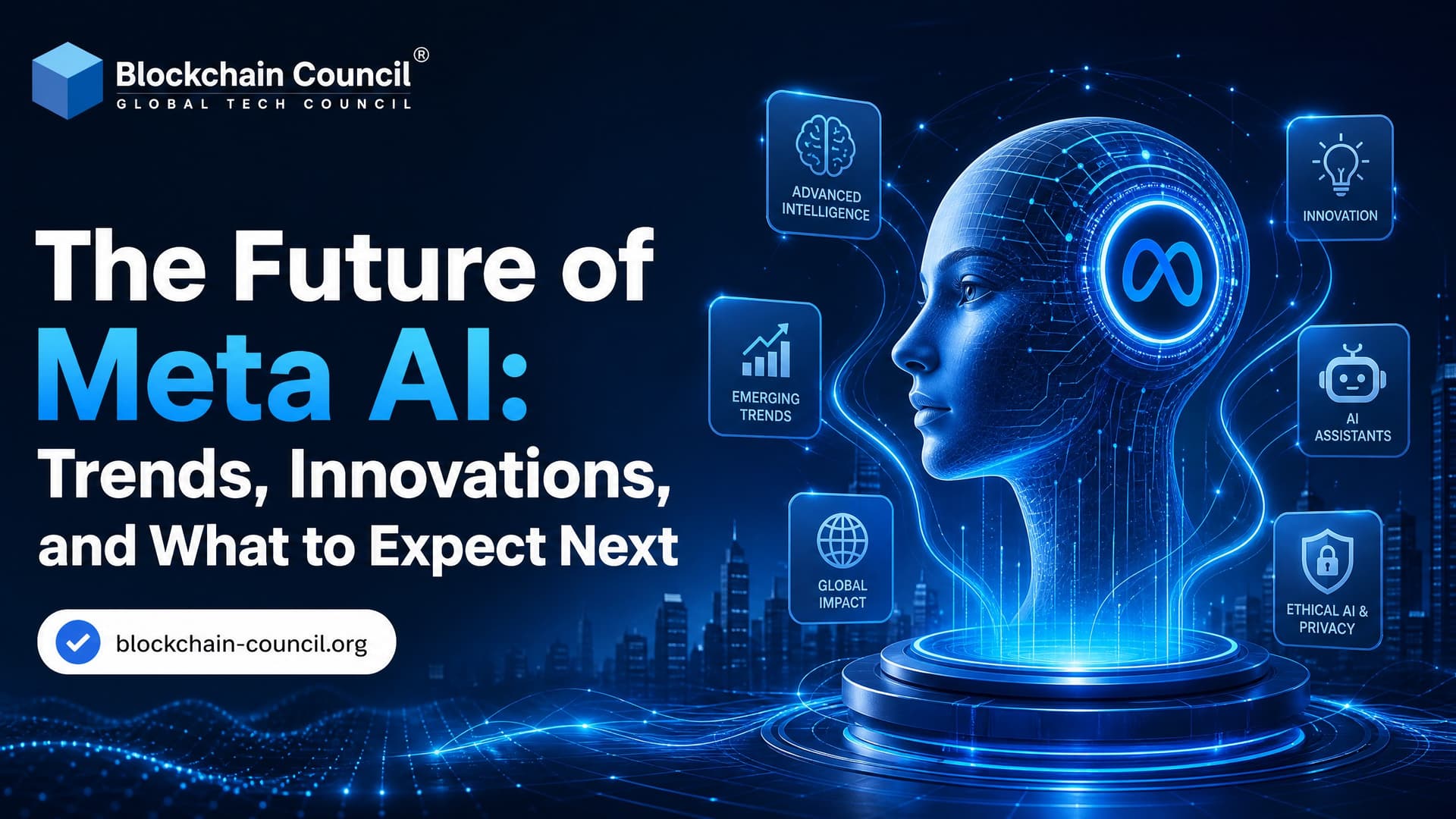
The future of Meta AI is no longer a side story about better filters or smarter feeds. Meta is turning AI into the operating layer for Facebook, Instagram, WhatsApp, ads, creators, open models, and wearable devices like the Ray-Ban Meta smart glasses. That is a serious strategic shift. It will affect developers, marketers, enterprises, and AI professionals over the next several years.
The short version: expect more Llama models, more AI inside messaging and ads, more multimodal tools, and a bigger push toward AI-native devices. Also expect cost pressure, regulation, and hard technical limits. Not every AI feature will be useful. Some will be noise. The changes that stick will come where Meta can combine distribution, data, compute, and product habit.

Where Meta AI Stands Today
Meta has framed AI and the metaverse as its two largest long-term bets. The difference is timing. AI already improves advertising, recommendations, and engagement, while the metaverse remains expensive and slower to monetize. That is why investor attention has shifted heavily toward AI since 2023.
Meta's AI work sits on three foundations:
- Research through FAIR, Meta's long-running AI research group.
- Infrastructure, including large-scale data centers and custom compute for training and serving models.
- Products, including the Meta AI assistant, AI Studio, Advantage+, and AI features across the social apps.
The Llama model family is central to all of this. Meta reported that Llama and Llama 2 passed 100 million downloads by 2023, making them some of the most widely adopted open foundation models. Llama 3, released in 2024, pushed Meta further into the front rank of model providers and became the base for many of its newer AI products.
If you have deployed Llama locally, you know the small details matter. An 8B parameter model can feel quick on a consumer GPU when quantized to 4-bit, but the same workflow turns painful if your context length, tokenizer settings, or CUDA build do not match the runtime. I have watched teams blame the model when the real issue was a mismatched PyTorch CUDA version. That kind of practical literacy is now part of the job.
Key Trends Shaping the Future of Meta AI
1. Meta AI Becomes the Interface, Not Just a Feature
Meta has said AI will become a primary way people interact with machines. You can already see it in the Meta AI assistant, which is being woven into Facebook, Instagram, WhatsApp, and other surfaces.
For users, this means search, recommendations, writing help, image generation, shopping support, and content creation may happen through conversation rather than menus. For enterprises, the bigger opportunity is business messaging. Zuckerberg has pointed to AI agents for customer support and commerce across WhatsApp and Messenger as a major future revenue stream.
This is not science fiction. A retailer can answer product questions, push order updates, and guide a buyer through a purchase inside a messaging thread. The hard part is not the chatbot demo. The hard part is accuracy, escalation, data privacy, and integration with inventory, CRM, and payment systems.
2. Open Models Stay a Strategic Weapon
Meta's decision to support open foundation models is one of its clearest points of difference from many closed-model competitors. Developers can build with Llama models, fine-tune them, run them privately, and adapt them for domain tasks.
That matters for enterprises that do not want sensitive data routed through a third-party API. It also matters for developers building AI agents, internal search tools, coding assistants, and domain-specific copilots.
Open does not mean free of responsibility. You still need governance, evaluation, security testing, and licensing review. If your team is moving from prototypes to production, structured AI foundations such as Blockchain Council's Certified Artificial Intelligence (AI) Expert™ and Certified Generative AI Expert™ can fill the gaps fast.
3. Multimodal AI Moves Into Glasses and Mixed Reality
Ray-Ban Meta smart glasses show where Meta wants AI to go next: out of the text box and into the physical world. The glasses use cameras and microphones so Meta AI can combine vision and language understanding. In practice, the assistant can interpret what you are looking at and respond conversationally.
This is an early form of embodied, multimodal AI. It is not human-level intelligence. Not close. But it is a real step toward systems that understand images, speech, context, and intent together.
Smaller, more efficient models that run with lower cost and latency fit this direction well. Smart glasses cannot depend on slow cloud calls for every interaction. Latency kills the experience. So does battery drain.
4. Advertising Gets More Predictive
Meta's biggest near-term AI payoff is advertising. Advantage+ and the company's ranking systems use AI to optimize ad placement, creative combinations, and delivery. These systems became more valuable after Apple's App Tracking Transparency changes weakened off-platform tracking signals.
Meta reported Q1 2024 revenue of 36.46 billion dollars, up 27 percent year over year. Ad impressions across the apps rose 20 percent year over year, while average price per ad increased 6 percent. Those numbers point to a recovery in ad efficiency, with AI doing a large share of the work inside ranking and prediction.
For marketers, the lesson is blunt: platform AI now decides distribution. Creative testing, clean conversion signals, product feeds, and campaign structure matter more than manual micro-targeting. Slicing audiences into tiny segments is often the wrong move now.
How Meta AI Will Affect Developers
Developers should watch three areas closely.
- Llama-based application stacks: Expect more teams to use Llama for internal assistants, retrieval-augmented generation, summarization, and code tools.
- Agentic workflows: Meta's business messaging strategy will raise demand for agents that can call tools, query databases, and complete tasks under guardrails.
- Multimodal development: Vision, audio, and language will converge in consumer apps, especially on wearables and mixed reality devices.
If you build with Llama, do not skip evaluation. A model that sounds confident in a demo can fail on domain edge cases. Test with real prompts from users, log hallucinations, and measure retrieval quality. For production RAG systems, chunk size and embedding choice often change answer quality more than the model upgrade everyone is chasing.
If you want a structured way to build those skills, pair hands-on practice with Blockchain Council programs such as Certified Prompt Engineer™, Certified Chatbot Expert™, and Certified Generative AI Expert™.
What Enterprises Should Expect Next
Treat the future of Meta AI as both a platform opportunity and a governance challenge.
- Customer service: AI agents in WhatsApp and Messenger can cut response time, but they need human fallback and audit trails.
- Commerce: Conversational shopping will grow, especially in markets where WhatsApp is already a default business channel.
- Content operations: AI Studio and generative tools can speed up ideation, editing, and localization.
- Advertising: AI-optimized campaigns reward better first-party data and stronger creative assets.
- Private model deployment: Open Llama models give enterprises more control over data and customization.
The wrong approach is to launch an AI bot because a competitor has one. Start with a high-volume, measurable workflow. Refund status. Appointment scheduling. Product FAQ. Lead qualification. Then track containment rate, escalation quality, customer satisfaction, and error cost.
Risks and Open Questions
Meta's AI strategy is ambitious, but not risk-free.
- Capital intensity: A large share of Meta's roughly 70 billion dollars in capital expenditure over two years has gone to AI infrastructure and research. That spending must produce durable revenue.
- Technical uncertainty: Meta itself has said new architectures and fundamental breakthroughs are likely needed for progress toward human-level AI.
- Competition: OpenAI, Google, Anthropic, Microsoft, Amazon, and open-source communities are all moving fast.
- Trust and safety: AI-generated content, synthetic media, misinformation, privacy, and model bias will stay serious issues.
- Device adoption: Smart glasses are promising, but mainstream use depends on comfort, privacy norms, battery life, and price.
To be blunt, embodied AI is still overhyped in the short term. The research direction is valid, but the consumer product path will be uneven. Simple, useful tasks will win first: identify an object, translate a sign, summarize a scene, capture a memory, guide a repair.
The Bigger AI Market Context
Meta is not making this bet alone. AI and machine learning integration now shows up as a top trend across the large majority of industries, and personalization and customer experience improvements appear in most of them. Generative AI market projections running into the hundreds of billions of dollars by 2030 help explain why Meta is spending so aggressively.
The future of Meta AI fits that broader pattern. AI will personalize feeds, rank ads, support creators, power business conversations, and run on devices. The company holds a rare combination of consumer reach, open model distribution, research depth, and monetization infrastructure.
What You Should Do Next
If you are a developer, build a small Llama-based assistant with retrieval and evaluation before you chase agents. If you are a marketer, learn how Meta's AI campaign systems make ranking decisions, then shift your effort toward creative testing and signal quality. If you are an enterprise leader, pick one measurable messaging workflow and pilot it with clear guardrails.
For a structured path, start with Blockchain Council's Certified Artificial Intelligence (AI) Expert™ if you need broad AI fluency, choose Certified Generative AI Expert™ if your work centers on LLMs and content systems, or take Certified Chatbot Expert™ if you are building conversational agents for customers. Then build something real. The future of Meta AI will reward people who can turn models into working products, not just talk about them.
Related Articles
View All
AI & ML
Recursive Self-Improvement and the Future of AI
Recursive self-improvement is shifting from AGI theory to bounded AI engineering loops involving agents, evaluation, code, prompts, and governance.

AI & ML
The Future of AI-Powered Programming: What Developers Should Know About Kimi K2.7 Code
Kimi K2.7 Code shows how AI-powered programming is shifting from autocomplete to long-context, tool-using coding agents for real software workflows.

AI & ML
Meta AI Career Opportunities: Skills for Generative AI and Machine Learning Roles
Explore Meta AI career opportunities, required generative AI and machine learning skills, salary ranges, role types, and a practical learning path.
Trending Articles
AWS Career Roadmap
A step-by-step guide to building a successful career in Amazon Web Services cloud computing.
How Blockchain Secures AI Data
Understand how blockchain technology is being applied to protect the integrity and security of AI training data.
Claude AI Tools for Productivity
Discover Claude AI tools for productivity to streamline tasks, manage workflows, and improve efficiency.