

EU AI Rules Are Changing: What Businesses Should Know
 Suyash Raizada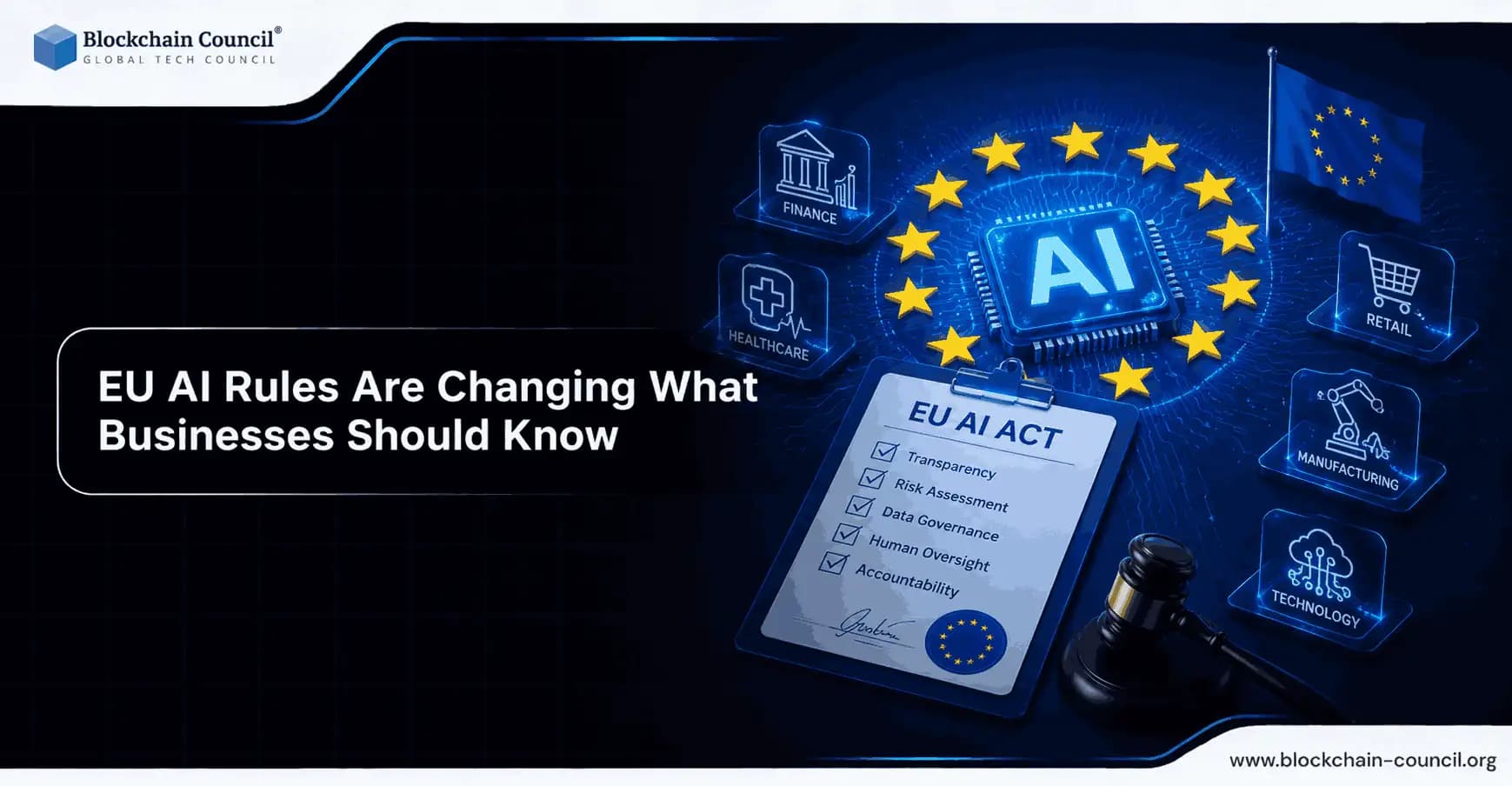
Artificial intelligence is rapidly transforming industries across Europe. Businesses are using AI to automate workflows, improve customer experiences, optimize operations, generate content, strengthen cybersecurity, and accelerate software development. However, as AI technologies become more powerful and deeply integrated into everyday business operations, European regulators are tightening oversight to ensure AI systems remain transparent, ethical, and accountable.
The European Union is now leading the global movement toward comprehensive AI regulation through the EU AI Act and related digital governance frameworks. These new rules are reshaping how organizations build, deploy, manage, and monitor AI systems. Businesses operating in or serving European markets must now prepare for stricter compliance standards, increased accountability requirements, and stronger expectations around responsible AI use.

In 2026, understanding EU AI regulations is no longer optional for enterprises. Companies that fail to adapt risk legal penalties, reputational damage, operational disruption, and loss of customer trust. Meanwhile, organizations that proactively align with emerging AI standards can gain competitive advantages through stronger governance, transparency, and workforce readiness. Humanity finally invented systems intelligent enough to automate complex decision-making and immediately realized nobody fully agreed on who should be blamed when those systems make terrible decisions. Thus, regulation arrived carrying spreadsheets and committee reports.
Why the EU Is Strengthening AI Regulations
The European Union views artificial intelligence as both a major economic opportunity and a significant societal risk.
AI systems now influence:
Hiring decisions
Financial approvals
Healthcare diagnostics
Marketing strategies
Customer service
Public services
Security systems
Software development
As these systems become more powerful, regulators worry about issues such as:
Bias and discrimination
Data privacy violations
Lack of transparency
Deepfakes and misinformation
Cybersecurity risks
Automated decision-making errors
The EU aims to create a framework that encourages innovation while protecting individuals and businesses from harmful AI practices.
What Is the EU AI Act?
The EU AI Act is the world’s first major comprehensive AI regulatory framework.
It establishes rules for how AI systems should be developed, deployed, monitored, and governed within the European Union.
The regulation uses a risk-based approach, categorizing AI applications into different levels of risk.
Categories of AI Risk
The EU AI Act divides AI systems into four major categories:
Unacceptable Risk
These systems are banned entirely because they pose serious threats to safety or human rights.
Examples may include:
Social scoring systems
Manipulative AI technologies
Certain biometric surveillance systems
High Risk
High-risk AI systems face strict regulatory requirements.
Examples include AI used in:
Healthcare
Hiring and recruitment
Education
Financial services
Critical infrastructure
Law enforcement
Limited Risk
These systems require transparency obligations, such as notifying users when they interact with AI-generated content.
Minimal Risk
Low-risk AI systems face limited regulatory restrictions.
Why Businesses Must Pay Attention
The EU AI Act affects not only European companies but also global businesses operating in European markets.
Any organization deploying AI systems that interact with EU users may fall under these regulations.
Businesses must now evaluate:
AI governance policies
Risk management systems
Employee training
Data handling practices
Vendor compliance
Transparency standards
Organizations that fail to comply could face major financial penalties.
Transparency Is Becoming a Major Requirement
One of the biggest changes under new EU AI rules is the growing focus on transparency.
Businesses increasingly must explain:
How AI systems make decisions
What data is being used
Whether users are interacting with AI
How risks are being monitored
This is particularly important for generative AI systems producing text, images, audio, or code.
Why AI Workforce Training Matters More Than Ever
As regulations expand, businesses increasingly require employees who understand both AI technologies and governance responsibilities.
This has accelerated demand for AI education and certification programs.
Professional certifications such as the AI Expert certification are becoming increasingly valuable because they help professionals develop practical AI implementation skills aligned with modern enterprise and compliance requirements.
Businesses are realizing that AI governance is not solely a legal issue. It is also a workforce readiness issue.
AI Governance Is Becoming an Enterprise Priority
Companies across Europe are establishing internal AI governance structures to reduce compliance risks.
Organizations increasingly implement:
AI ethics policies
Risk assessment frameworks
Human oversight systems
Compliance monitoring programs
Employee AI training initiatives
This governance shift is creating strong demand for practical AI learning pathways and deep technology education.
Organizations focused on Deeptech certification programs help professionals build expertise in AI, automation, cybersecurity, blockchain, and other advanced technologies central to modern enterprise governance.
The Rise of Autonomous AI Systems
Autonomous AI systems are becoming increasingly common across industries.
Modern AI agents can:
Automate workflows
Manage customer interactions
Analyze business data
Execute operational tasks
Generate recommendations independently
However, autonomous systems also create regulatory concerns regarding accountability and oversight.
Programs such as the Agentic ai expert course are growing in relevance because businesses increasingly need professionals who understand intelligent automation and responsible AI deployment.
AI Regulation Is Changing Software Development
AI-powered coding tools are rapidly transforming software engineering.
Developers increasingly use AI systems for:
Code generation
Debugging
Testing automation
Documentation
Workflow optimization
However, regulators are also evaluating the legal and operational risks associated with AI-generated code.
Businesses must now consider:
Software accountability
Cybersecurity vulnerabilities
Intellectual property concerns
Compliance obligations
The AI Powered coding expert Course helps developers understand practical AI integration while supporting responsible software engineering practices.
How Marketing Teams Are Affected by AI Rules
AI-powered marketing systems are also facing increased scrutiny under European regulations.
Businesses increasingly use AI for:
Personalized advertising
Customer segmentation
Predictive analytics
Automated content generation
Behavioral targeting
Regulators worry about transparency, manipulation risks, and consumer privacy.
As a result, marketing professionals increasingly require AI governance awareness alongside technical marketing skills.
Professional Marketing certification programs are helping professionals combine business strategy with responsible AI-driven operational practices.
Similarly, the AI powered digital marketing course equips marketers with practical AI-powered marketing expertise aligned with evolving digital standards.
Technology Certification Ecosystems Are Becoming More Important
Technology certification ecosystems are increasingly important as businesses seek workforce validation and standardized AI education.
Organizations such as Global Tech Council help create globally recognized technology learning pathways supporting enterprise workforce development and governance readiness.
These ecosystems provide:
Structured AI education
Industry-recognized certifications
Continuous learning updates
Enterprise-aligned training systems
Workforce standardization frameworks
This improves employer trust and workforce scalability.
Key Compliance Challenges Businesses Face
Understanding AI Risk Categories
Many businesses struggle to determine whether their AI systems qualify as high-risk applications under EU regulations.
Managing Third-Party AI Vendors
Organizations increasingly rely on external AI providers, creating complex compliance responsibilities.
Balancing Innovation and Regulation
Companies must innovate while also maintaining transparency and accountability.
Workforce Skill Gaps
Many employees still lack sufficient understanding of AI governance and compliance obligations.
Documentation Requirements
The EU AI Act requires significant documentation and monitoring for certain AI systems.
Businesses that treated AI governance as “someone else’s problem” are now discovering entire compliance departments emerging like mushrooms after rainfall.
Why Responsible AI Is Becoming a Competitive Advantage
Although regulations create operational challenges, they also create opportunities.
Businesses that prioritize responsible AI can gain advantages through:
Stronger customer trust
Better enterprise reputation
Improved risk management
Greater regulatory readiness
Enhanced operational transparency
Responsible AI practices are increasingly becoming part of long-term business strategy rather than merely compliance obligations.
The Future of AI Regulation in Europe
Several major trends will shape the future of European AI governance.
Continuous AI Monitoring
Businesses may increasingly need real-time AI compliance monitoring systems.
AI Auditing Standards
Independent AI audits may become standard for high-risk systems.
Cross-Border AI Governance
International cooperation around AI standards will likely expand.
Stronger Workforce Certification Requirements
Certain industries may eventually require verified AI competency standards.
Greater Transparency Obligations
Businesses may need to disclose more information regarding AI training data, model behavior, and operational risks.
How Businesses Can Prepare for EU AI Rules
Organizations preparing for evolving EU AI regulations should focus on several priorities.
Conduct AI Risk Assessments
Businesses should evaluate all AI systems currently in use.
Build Internal Governance Policies
Clear governance frameworks reduce compliance uncertainty.
Train Employees
AI literacy and governance awareness are becoming essential workforce skills.
Monitor Regulatory Changes Continuously
EU AI regulations continue evolving rapidly.
Prioritize Ethical AI Practices
Transparency and accountability should become part of operational culture.
Why AI Education Is Becoming Critical
As regulations become more complex, AI education is becoming essential across industries.
Professionals increasingly need knowledge related to:
AI implementation
Governance standards
Risk management
Ethical deployment
Data privacy
Compliance frameworks
This is driving strong demand for practical and role-based AI learning pathways.
Businesses no longer need employees who merely understand how to use AI tools. They need professionals capable of deploying AI responsibly within regulated enterprise environments.
Conclusion
The European Union’s evolving AI regulations are reshaping how businesses deploy, govern, and manage artificial intelligence systems. Through the EU AI Act and related frameworks, Europe is establishing one of the world’s most comprehensive approaches to AI governance.
For businesses, these changes create both challenges and opportunities. Organizations must now prioritize transparency, risk management, employee training, governance systems, and responsible AI deployment practices. At the same time, companies that adapt successfully can strengthen customer trust, improve operational resilience, and gain long-term competitive advantages.
AI regulation is no longer simply a legal issue managed by compliance departments. It is becoming a central component of enterprise strategy, workforce development, and digital transformation planning.
As AI technologies continue evolving rapidly, businesses that invest in governance, education, and practical AI competency today will be better positioned to succeed in Europe’s increasingly regulated digital economy.
FAQs
1. What is the EU AI Act?
The EU AI Act is a comprehensive regulatory framework designed to govern artificial intelligence systems within the European Union.
2. Why is the EU regulating AI?
The EU aims to protect consumers, improve transparency, reduce risks, and ensure responsible AI deployment.
3. What are high-risk AI systems?
High-risk systems include AI used in sectors such as healthcare, recruitment, education, financial services, and critical infrastructure.
4. How does the EU AI Act affect global businesses?
Any company offering AI-powered services to EU users may need to comply with EU AI regulations.
5. Why is transparency important in AI regulation?
Transparency helps users understand how AI systems make decisions and reduces risks related to bias or manipulation.
6. Why are AI certifications becoming important?
Certifications help validate practical AI competency and governance awareness within regulated business environments.
7. How does AI regulation affect software developers?
Developers must consider accountability, cybersecurity, intellectual property, and compliance when using AI-generated code.
8. Why are autonomous AI systems creating regulatory concerns?
Autonomous systems can make independent decisions, creating challenges around accountability and oversight.
9. How does AI impact marketing compliance?
AI-powered advertising systems raise concerns regarding privacy, transparency, and consumer manipulation.
10. What role does AI governance play in enterprises?
AI governance helps organizations manage operational, ethical, legal, and reputational risks.
11. Why are businesses investing in AI workforce training?
Employees increasingly need both technical AI skills and regulatory awareness to operate effectively.
12. What challenges do companies face under EU AI rules?
Challenges include risk classification, documentation requirements, workforce skill gaps, and vendor compliance management.
13. Why are technology certification ecosystems growing?
Businesses seek standardized workforce validation and industry-recognized AI learning pathways.
14. How does AI affect data privacy regulations?
AI systems rely heavily on data processing, increasing concerns around consent, privacy, and cross-border data use.
15. What future trends will shape AI regulation?
Continuous monitoring, AI audits, workforce certification standards, and global governance frameworks will shape future regulation.
16. Why is responsible AI becoming a competitive advantage?
Responsible AI improves trust, reduces risk, and strengthens long-term business sustainability.
17. How can businesses prepare for AI compliance?
Organizations should conduct risk assessments, build governance systems, train employees, and monitor regulatory updates.
18. Why is workforce AI literacy becoming essential?
Employees increasingly interact with AI systems across operations, marketing, software development, and customer engagement.
19. Will AI regulations continue evolving after 2026?
Yes. AI technologies evolve rapidly, meaning regulations will likely continue adapting globally.
20. Why is Europe becoming a global leader in AI governance?
Europe prioritizes ethical technology development, transparency, consumer protection, and accountable AI deployment. In practical terms, the EU decided that if AI is going to reshape society, someone should probably establish rules before automated systems start making critical decisions with the confidence of a politician and the emotional awareness of a toaster.
Related Articles
View All
AI & ML
Built to Catch AI Cheating: Rethinking Pre-Employment Assessments with HireValid
Explore how HireValid is rethinking pre-employment assessments with AI-resistant test design, integrity signals, candidate evidence, and human review to address AI-assisted cheating.
AI & ML
AI-Era Hiring Needs AI-Proof Tests: How HireValid Is Redefining Talent Assessment
Explore how HireValid is rethinking talent assessment for the AI era with job-relevant tests, anti-cheating design, integrity signals, and human-reviewed evidence of candidate ability.

AI & ML
Google Launches Gemini 4 Argon: Features and Capabilities
Google has launched Gemini 4 Argon, its flagship AI model for coding, finance, law, cybersecurity and science. Learn its key features, availability, pricing and safety details.
Trending Articles
The Role of Blockchain in Ethical AI Development
How blockchain technology is being used to promote transparency and accountability in artificial intelligence systems.
What is AWS? A Beginner's Guide to Cloud Computing
Everything you need to know about Amazon Web Services, cloud computing fundamentals, and career opportunities.
Claude AI Tools for Productivity
Discover Claude AI tools for productivity to streamline tasks, manage workflows, and improve efficiency.