

AI Readiness Assessment Framework: A Step-by-Step Guide for Consultants


AI readiness assessment framework engagements have changed significantly over the last few years. As generative AI moved into mainstream enterprise use, many organizations shifted from experimentation to scaling without consistent governance, data discipline, or security controls. Research highlights the gap: over 75 percent of workers already use generative AI, yet only about 23 percent of organizations have a formal AI strategy. Employees also use AI tools roughly three times more than leaders expect, a common driver of shadow AI and unmanaged risk.
This guide provides a consultant-focused, step-by-step method to evaluate an organization, score maturity, and deliver a roadmap that supports responsible scaling across strategy, data, governance, security, skills, and operations.

Why AI Readiness Assessments Matter Now
Modern AI readiness is less about whether an organization can build a model and more about whether it can deploy and scale AI responsibly. Leading frameworks from Microsoft, RSM, and UNDP consistently converge on the same core domains:
Strategy and vision tied to business outcomes
Data foundations, including governance, privacy, and quality
Infrastructure and security, including AI-specific threats like prompt injection and data leakage
Organization, culture, and skills to reduce adoption friction
Governance, risk, and ethics aligned to regulations and responsible AI principles
Model lifecycle and operations such as MLOps, monitoring, and vendor controls
Consultants who assess these domains consistently can move clients from fragmented pilots to measurable value and controlled risk.
Step 1: Define Scope, Objectives, and Stakeholders
A strong assessment starts with alignment on why and what. Common drivers include scaling generative AI pilots, preparing for regulatory scrutiny, or building an enterprise AI roadmap.
Scope Checklist
Coverage: enterprise-wide or a specific function, business unit, or geography
AI types: predictive ML, generative AI, third-party SaaS AI features, internally built models
Data boundaries: customer data, employee data, regulated data, cross-border transfers
Stakeholder Map
Executive sponsors: CEO, COO, CFO, board committee sponsors
Business owners: use case leaders and product owners
Technology and data: CIO/CTO, CDO, enterprise architects, data engineering leaders
Risk functions: CISO, legal, compliance, privacy, enterprise risk
People functions: HR, L and D, change management leads
Public sector additions: policy, procurement, civil society and citizen representation, where applicable
Deliverables to Agree Upfront
Readiness scorecard and maturity levels by domain
Evidence-backed gap analysis
Prioritized roadmap with dependencies and sequencing
Draft operating model and governance recommendations
Step 2: Choose or Tailor an AI Readiness Assessment Framework
Most consultants build a composite model using proven references, then tailor it by industry and risk profile. Microsoft emphasizes seven pillars including Business Strategy, Governance and Security, Data Foundations, Organization and Culture, Infrastructure, and Model Management. RSM similarly centers strategy, data, organization, infrastructure, governance and compliance, and model management. UNDP frames readiness for states through government as enabler and user, with AI ethics as a cross-cutting theme aligned with UNESCO-style principles.
Recommended Core Domains (Portable Across Sectors)
Strategy and Value Alignment
Data and Analytics Foundations
Infrastructure and Security
Organization, Skills, and Culture
Governance, Risk, and Ethics
Model Lifecycle and Operations
Sector and Ecosystem Context
Define a Simple Maturity Model
A 5-level model is usually sufficient for decision-making:
Ad hoc: inconsistent, undocumented, tool-by-tool adoption
Emerging: early policies and pilots, limited cross-functional ownership
Defined: repeatable processes, clear ownership, basic controls
Integrated: embedded into workflows, measured outcomes, strong governance
Optimized: continuous improvement, automation, auditability, portfolio visibility
Step 3: Design Assessment Instruments (Multi-Method)
High-quality AI readiness work triangulates evidence rather than relying on interviews alone.
Quantitative Survey
Use Likert-style scoring mapped to maturity levels
Capture practices (documented policies), capabilities (model registry), and outcomes (process coverage, KPI attainment)
Qualitative Interviews and Workshops
Run semi-structured interviews across business, IT, data, security, legal, HR, and operations
Test for misalignment between leadership perception and day-to-day AI usage to uncover shadow AI
Documentation and System Review
AI strategy and transformation plans
Data governance policies, catalogs, classifications, retention schedules
Security architecture, IAM, incident response, vendor risk artifacts
AI portfolio, steering committee minutes, Center of Excellence charter if present
Optional Technical Inventory
Model and dataset inventory, including third-party generative AI tools used by employees
Cloud services, MLOps stack, logging, monitoring, and DLP controls
Data flows for RAG and content generation pipelines
Step 4: Assess Each Readiness Domain with Evidence-Based Criteria
1) Strategy and Value Alignment
Given that only about 23 percent of organizations have a formal AI strategy, this domain frequently becomes the top priority in assessments.
Is there a documented AI strategy linked to measurable business outcomes?
Is there a funded portfolio of use cases with KPIs and owners?
Is the organization clear on where generative AI is allowed, discouraged, or prohibited?
2) Data Foundations
Most frameworks treat data as the primary limiting factor. Strong data curation and governance are essential for accurate, relevant, and accessible AI inputs.
Cataloging, lineage, stewardship, and quality management
Privacy controls and consent management where required
Standardized access patterns (APIs, governed datasets) for AI teams
3) Infrastructure and Security
Readiness includes both capacity and protection. AI introduces new attack surfaces such as prompt injection, data leakage through tools, and model theft risks.
Compute, storage, and network capacity for training, fine-tuning, and inference
Integration readiness into existing workflows and applications
Security baseline: IAM, encryption, monitoring, incident response
AI-specific controls: DLP for prompts, approved tool lists, secure RAG patterns
4) Organization, Skills, and Culture
Workforce adoption is typically the hardest barrier to address. When over 75 percent of workers already use generative AI, training and policy cannot be treated as optional.
AI literacy for all staff and role-based technical training
Defined roles: AI product owner, ML engineer, model risk lead, prompt engineering guidance
Change management capacity and communications to reduce uncontrolled tool usage
AI Center of Excellence mandate, if appropriate for scale
5) Governance, Risk, and Ethics
Responsible AI governance is now a core readiness pillar across enterprise and public-sector frameworks, including ethics grounded in human-centered and rights-based principles.
Governance structure: steering committee, decision rights, accountability
Policies: acceptable use, human oversight, data handling, transparency, record-keeping
Compliance: privacy laws (such as GDPR where applicable), sector rules, procurement standards
Audit and monitoring: bias checks, performance reviews, security reviews, incident reporting
6) Model Lifecycle and Operations
Many organizations deploy models without robust operational controls. Mature readiness requires end-to-end MLOps and model management.
Development standards: documentation, testing, validation
Model registry, versioning, approvals, and rollback procedures
Production monitoring: drift, stability, bias, safety issues
Third-party model due diligence and contractual controls
7) Sector and Ecosystem Context
Requirements should be tailored by domain. For the public sector, assess government as both enabler and user, plus inclusion and stakeholder participation. For education, include student data privacy, academic integrity, and faculty capacity.
Step 5: Score Maturity, Benchmark, and Identify Gaps
Convert survey responses and evidence into domain scores, then visualize results with a radar chart. Benchmarking is often comparative rather than absolute. Many consultants map client results to composite expectations drawn from Microsoft enterprise pillars, RSM operational controls, and UNDP public-sector ethics and enablement guidance.
Common gap patterns:
Strong tooling, weak governance: modern cloud stack but no AI policy or oversight body
High employee usage, low visibility: shadow AI driven by leaders underestimating actual usage
Strong strategy, weak execution: clear vision but insufficient skills and operating model
Step 6: Build a Prioritized AI Readiness Roadmap
Prioritize initiatives by strategic impact, risk reduction, feasibility, and dependencies. In practice, governance and data foundations typically need to precede broad generative AI rollouts.
Typical Roadmap Workstreams
Governance and policy: steering committee, AI risk process, acceptable use, procurement standards
Data foundations: catalog, quality controls, access governance, privacy-by-design patterns
Security uplift: IAM hardening, DLP for AI, secure RAG reference architecture
Skills and culture: role-based training and adoption playbooks
MLOps and model management: registry, monitoring, release processes, auditability
Use case portfolio: phased pilots with clear KPIs and reusable templates
Consultants and client teams often pair readiness roadmaps with structured learning to build internal capability. Relevant training pathways include programs such as Certified Artificial Intelligence Expert (CAIE), Certified Generative AI Expert, Certified Machine Learning Expert, and Certified Data Science Professional. For governance and risk-heavy environments, AI governance and cybersecurity-aligned credentials provide additional depth.
Step 7: Communicate Results and Operationalize Continuous Improvement
Readiness assessments fail when they end as a report. Package results for both executives and operators.
Executive narrative: tie readiness gaps directly to business outcomes, regulatory exposure, and security risk
Operational playbooks: domain-specific actions for data governance, responsible AI, and model lifecycle
Measurement: define metrics for adoption, value, risk, and control effectiveness
Reassessment cadence: repeat annually or at major platform and policy milestones
Conclusion: A Repeatable AI Readiness Assessment Framework for Responsible Scale
An effective AI readiness assessment framework helps consultants address the core enterprise gap: widespread AI use and experimentation alongside limited strategy, governance, and operational maturity. Using a blended, evidence-based approach across strategy, data, infrastructure, skills, governance, and model operations, consultants can produce a maturity scorecard that leaders trust and teams can execute against.
As regulations tighten and AI security risks grow, the best readiness assessments become recurring programs rather than one-off diagnostics. Consultants who standardize their method, tailor it by sector, and embed continuous measurement will be best positioned to help organizations scale AI safely, ethically, and with measurable value.
Related Articles
View All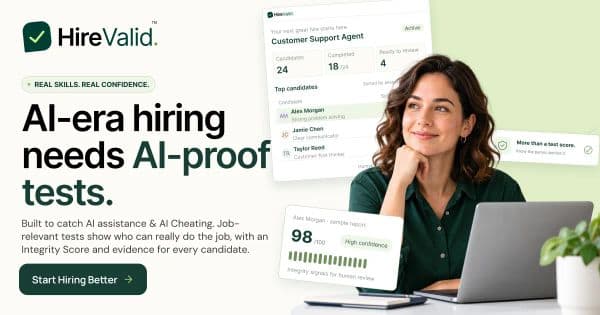
AI & ML
AI-Era Hiring Needs AI-Proof Tests: How HireValid Is Redefining Talent Assessment
Explore how HireValid is rethinking talent assessment for the AI era with job-relevant tests, anti-cheating design, integrity signals, and human-reviewed evidence of candidate ability.
AI & ML
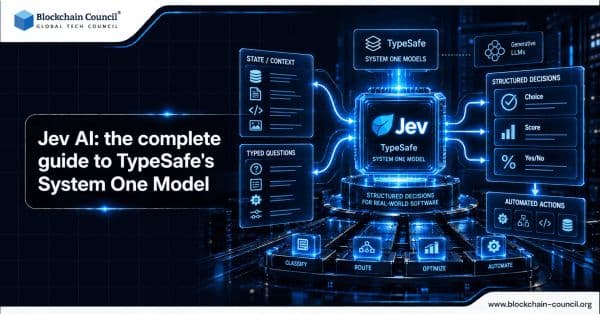
Jev AI: the complete guide to TypeSafe's System One Model
Explore Jev AI in this complete guide, including TypeSafe’s System One architecture, RLCD training, parallel sampling, typed decisions, calibrated confidence, performance, and automation use cases.
AI & ML
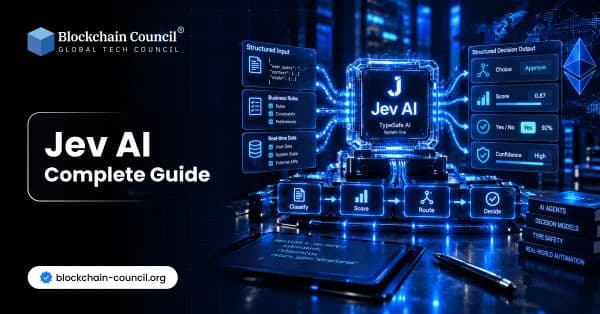
Jev AI: Complete Guide
Explore Jev AI in this complete guide, including how TypeSafe AI’s System One model works, its features, use cases, benefits, limitations, and role in software automation.
Trending Articles

Top 5 DeFi Platforms
Explore the leading decentralized finance platforms and what makes each one unique in the evolving DeFi landscape.
How Blockchain Secures AI Data
Understand how blockchain technology is being applied to protect the integrity and security of AI training data.
Blockchain in Supply Chain Provenance Tracking
Supply chains are under pressure to prove not just efficiency, but also authenticity, sustainability, and fairness. Customers want to know if their coffee really is fair trade, if the diamonds are con