

From PoC to Production: How AI Consultants Operationalize Models with MLOps and Monitoring

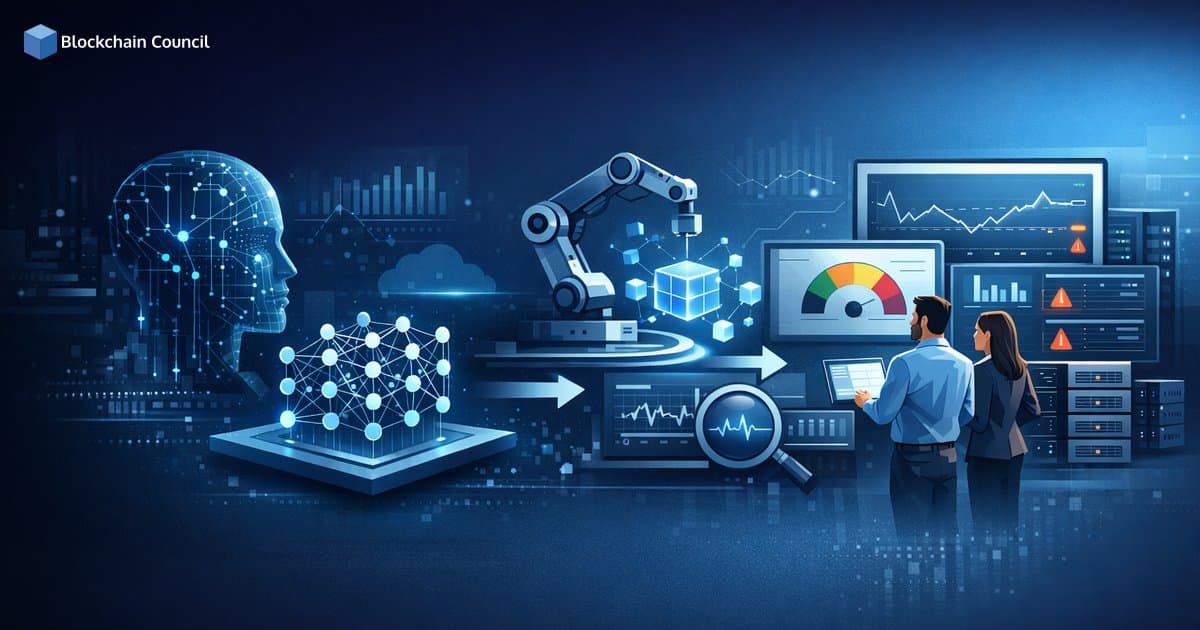
From PoC to production is where many promising AI initiatives stall. A proof of concept can demonstrate that a model works in a controlled environment, but production demands reliability, governance, security, and measurable business impact. Industry research highlights the scale of the challenge: New Relic reports that only about 15 percent of companies deploy AI across their full operations, and that roughly 75 percent of machine learning models in production are never actually used, often due to gaps in monitoring, management, and governance. This is why AI consultants increasingly treat MLOps and monitoring as the foundation for turning prototypes into operational systems.
Why the PoC-to-Production Gap Persists
AI PoCs typically optimize for speed and feasibility. Production optimizes for repeatability, safety, and value delivery. The disconnect surfaces in several recurring failure modes documented across MLOps practitioners and platform vendors:

Absence of MLOps practices: One-off notebooks and scripts without CI/CD, testing, reproducible pipelines, or clear ownership.
Incomplete data engineering: PoC data is often manually curated and does not reflect production latency, freshness, schema changes, or missing values.
Missing monitoring and feedback loops: Teams deploy a model but do not track drift, performance degradation, or business KPI movement.
Security and compliance gaps: Access control, privacy, auditability, and explainability are addressed late, triggering rework or deployment blocks.
Organizational misalignment: AI is treated as a project rather than a product lifecycle that requires ongoing budget, operations, and change management.
AI consultants reduce these risks by operationalizing the full lifecycle, not just the model artifact. In practice, moving from PoC to production becomes a systems engineering and governance exercise as much as a data science one.
The Consultant-Led Lifecycle: A Practical Path From PoC to Production
While implementations vary, many consulting teams follow a phased lifecycle aligned with widely adopted MLOps guidance from major cloud providers and practitioner ecosystems.
1) Problem Framing and PoC Design
Consultants begin by translating the business objective into measurable metrics and constraints:
Define business success criteria such as revenue uplift, cost reduction, SLA improvements, and risk reduction.
Specify constraints: batch vs. online processing, latency targets, integration touchpoints, explainability requirements, and regulatory boundaries.
Establish early what "production-ready" means for the use case, including model risk thresholds and acceptance criteria.
2) Data Discovery and PoC Implementation
PoCs commonly use notebooks and lightweight experiment tracking tools such as MLflow or Weights and Biases to validate feasibility. Consultants keep scope intentionally small, but they also look ahead by identifying what will break in production:
Where will production data come from, and what is its expected quality and freshness?
Which features require real-time computation?
What labels are delayed, and how will evaluation work over time?
3) Production Architecture Design
This phase bridges the PoC and the target system. Consultants define the production architecture and select an operational stack based on requirements:
Serving pattern: batch scoring, real-time APIs, or a hybrid approach.
Orchestration and deployment using Kubernetes and Docker, Airflow, Kubeflow, or pipeline frameworks such as ZenML.
Feature management via a feature store such as Feast, or a versioned feature layer.
Observability through metrics collection and dashboards using tools such as Prometheus and New Relic, combined with alerting workflows.
Security design covering IAM with role-based access control, network boundaries, secrets management, and data governance alignment.
4) Industrialization and MLOps Setup
Industrialization typically means rebuilding PoC logic into production-grade pipelines:
Data ingestion and validation with automated checks for schema, missingness, and outliers.
Feature computation and serving that is consistent between training and inference.
Training, evaluation, and packaging as reproducible steps with versioned artifacts.
Deployment workflows including blue-green deployments, canary releases, and A/B tests.
Consultants bring DevOps-style automation into ML through CI pipelines covering unit tests, static analysis, and data tests, as well as CD pipelines handling staging deploys, smoke tests, automated checks, and approval gates.
5) Production Deployment and Integration
Delivering production impact requires integrating models into business systems such as CRM, ERP, POS platforms, and customer-facing applications. Consultants also design for resilience:
Fallback logic using rules-based systems or last-known-good models when the primary model or feature service is unavailable.
Load testing and latency tuning for online inference.
Acceptance testing with business stakeholders to validate outcomes and usability.
6) Monitoring, Observability, and Continual Improvement
Monitoring is what separates a deployed model from one that remains trusted and actively used. Practitioner guidance emphasizes that monitoring must cover more than accuracy alone. Consultants implement multiple layers of observability:
System metrics: latency, throughput, error rates, CPU/GPU/memory usage, and dependency health.
Input data monitoring (data drift): feature distribution shifts, schema changes, missing values, and drift indicators such as Population Stability Index (PSI).
Output monitoring: prediction distributions, confidence scores, calibration changes, and segmented analysis by region or customer type.
Performance with labels (concept drift): accuracy, F1, AUC, MAE/MAPE, often computed with delayed labels using backfill jobs.
Business KPI monitoring: conversion rate, churn, fraud losses, stockouts, or SLA adherence.
Shifts in predictions are frequently caused by changes in input data rather than the model itself. This is why consultants prioritize input observability and dedicated dashboards alongside model performance metrics.
7) Governance, Compliance, and Scaling
As organizations expand beyond a single use case, governance becomes a scaling enabler rather than overhead:
Model registry and versioning: track artifacts, approvals, and promotion paths from development to staging to production.
Audit trails and lineage: document data sources, code versions, configurations, and evaluation results.
Policy-driven promotion: define thresholds and review steps, particularly in regulated sectors such as finance and healthcare.
MLOps Patterns AI Consultants Use to Scale Reliably
Standardized, Reusable Pipelines
In multi-model environments, bespoke scripts do not scale. A common scenario in retail involves a single forecasting model expanding into hundreds of customer-specific models. Consultants respond by building a single configurable pipeline capable of handling different schemas, data sources, and per-customer isolation while enforcing consistent logging and governance across the fleet.
Environment Separation and Controlled Promotion
Consultants typically recommend separate development, staging, and production environments with distinct IAM policies and configurations. Infrastructure-as-code tools such as Terraform and deployment templates such as Helm reduce configuration drift between environments and improve change control.
Governed Lifecycle Workflows with Fast Rollback
Operational maturity includes automated validation and the ability to recover quickly:
Automated evaluation that publishes metrics as part of each pipeline run.
Canary or A/B tests for candidate models before full promotion.
Defined rollback procedures to a prior model version when degradation is detected.
Monitoring in Production: What Good Looks Like
Effective monitoring combines automation with human oversight. Dashboards are valuable because practitioners can detect anomalies visually that may not stand out in tabular data. Consultants commonly implement:
Dashboards for feature drift, prediction drift, and confidence trends over time.
Drill-down views for segmented analysis and root cause investigation.
Human-in-the-loop review for low-confidence cases, fairness audits, and periodic compliance checks.
Feature stores support drift detection by maintaining versioned baselines from training data, which detectors can compare against live inputs. When drift is detected, retraining may be triggered, but consultants also validate whether changes reflect expected seasonality or represent genuinely harmful distribution shifts.
Deployment and Retraining Strategies Consultants Choose
Different use cases require different retraining patterns. Consultants generally select among four approaches:
On-demand: retrain and deploy following manual review and approval.
Time-based: retrain on a fixed schedule, suitable when patterns are stable and label delays are predictable.
Performance-based: trigger retraining when monitored metrics fall below defined thresholds.
Input drift-based: trigger retraining when feature distributions diverge significantly, even before labels become available.
Serving mode selection follows operational requirements: batch inference for throughput and simplicity, online inference for low-latency decisions, or a hybrid model where batch precomputes results and real-time handles last-mile updates.
Real-World Examples: Scaling Beyond the First Model
Retail Demand Forecasting at Fleet Scale
Retail forecasting often expands from a single model to many store-specific or customer-specific models. The scalable approach centers on configurable pipelines, environment separation, model tagging with performance metadata, and consistent monitoring to manage drift across a large model fleet.
Quick-Service Restaurant AI Expansion
A quick-service restaurant chain scaling AI use cases such as menu optimization and demand forecasting illustrates the value of a unified data platform, automated training and deployment pipelines, and monitoring of both model metrics and business KPIs across locations. The central theme is operational consistency: managing many concurrent models requires standardized governance and observability from the start.
Future Outlook: Governance, Convergence, and Foundation Model Operations
Stronger regulatory pressure is expected to increase demand for auditability, explainability, and risk assessment embedded directly into MLOps workflows. At the same time, the tooling landscape is converging across MLOps, data observability, and AIOps, creating more unified visibility from data ingestion through to business outcomes.
Foundation models introduce additional operational requirements such as prompt versioning, retrieval-augmented generation pipelines, and monitoring for hallucinations, toxicity, and privacy leakage. These are additive requirements, not replacements for classical MLOps practices such as versioning, drift monitoring, and controlled deployments.
Conclusion: Operational Excellence Turns AI Into Business Value
From PoC to production, the biggest differentiator is not a marginally better model. It is an operating model that makes AI repeatable, observable, and governable. Industry research reinforces this point: organizations that skip monitoring, deployment discipline, and lifecycle ownership frequently end up with models that are technically deployed but neither trusted nor used.
AI consultants operationalize models by building standardized pipelines, separating environments, implementing CI/CD for ML, and establishing comprehensive monitoring that covers infrastructure, data drift, prediction behavior, performance with labels, and business KPIs. For teams looking to formalize these capabilities, structured upskilling through certification programs in AI, Machine Learning, MLOps, and AI governance provides a practical foundation for building and sustaining production-grade AI systems.
Related Articles
View All
AI & ML
NVIDIA’s New AI Models: Nemotron 3.5 Lightning, Cosmos 3 and the Future of Agentic AI
Explore NVIDIA Nemotron 3.5 Lightning and Cosmos 3, how they support agentic and Physical AI, and what these models reveal about NVIDIA’s broader vision for autonomous intelligent systems.
AI & ML
System One Models for Software
Explore how System One Models can be used in software to make fast, structured, probabilistic decisions for automation, routing, scoring, verification, and real-time applications.
AI & ML
System One Models for AI Agents
Explore how System One Models can support AI agents with fast, structured decisions, calibrated confidence, routing, verification, and reliable workflow automation.
Trending Articles
How Blockchain Secures AI Data
Understand how blockchain technology is being applied to protect the integrity and security of AI training data.
Claude AI Tools for Productivity
Discover Claude AI tools for productivity to streamline tasks, manage workflows, and improve efficiency.
Blockchain in Supply Chain Provenance Tracking
Supply chains are under pressure to prove not just efficiency, but also authenticity, sustainability, and fairness. Customers want to know if their coffee really is fair trade, if the diamonds are con