

The AI Consultant's Toolkit: Best LLMs, MLOps Platforms, and Automation Tools for Client Delivery

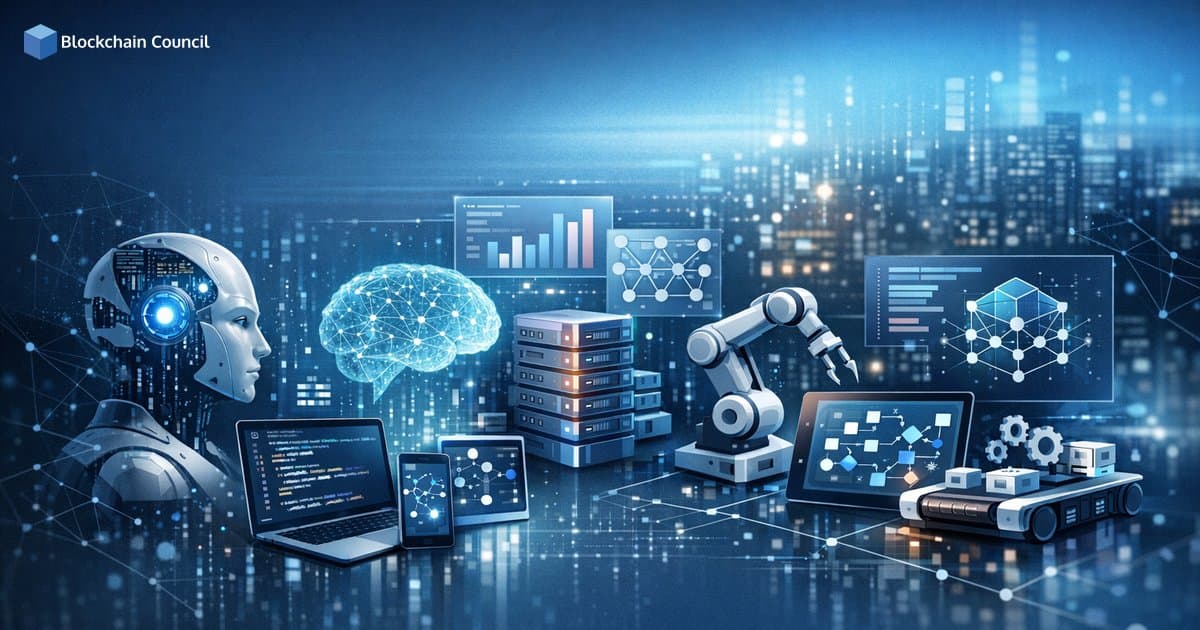
The AI Consultant's Toolkit has become a practical requirement, not a nice-to-have. Enterprise adoption of generative AI is accelerating, with McKinsey reporting that 72% of organizations using AI have adopted generative AI, and 55% use it in at least one business function, up sharply from 2023. BCG research indicates that only about 10% of companies reach true AI at scale, which keeps demand high for consultants who can move from pilots to production with governance, evaluation, and workflow integration.
This article breaks down The AI Consultant's Toolkit into three delivery layers: LLMs for reasoning and content generation, MLOps and AI platforms for operationalization, and automation tools that embed AI into client workflows. The goal is not tool sprawl, but repeatable client delivery.

Why The AI Consultant's Toolkit Is Now a Delivery Capability
Modern consulting is shifting toward asset-based consulting, where reusable accelerators, templates, and platforms augment human consultants for research, modeling, and performance tracking. Clients increasingly expect:
Speed: faster discovery, faster prototypes, faster iteration
Traceability: sources, evaluations, and auditable decisions
Security: private deployments or enterprise controls for sensitive data
Integration: AI inside email, docs, CRMs, ticketing, and knowledge systems
That is why The AI Consultant's Toolkit should be designed like a product stack: clear components, clear responsibilities, and a defined handover path.
Layer 1: Best LLMs for AI Consultants
Most consultants benefit from using at least two complementary LLMs plus a research tool with citations. Practitioner guidance consistently favors mastering a small set of tools deeply rather than chasing every new model release.
1) OpenAI GPT Family (GPT-4.1, GPT-4.1 Mini, o3)
OpenAI's GPT-4.1 and GPT-4.1 Mini are strong general-purpose models for reasoning, drafting, and multimodal workflows. The o3 series emphasizes deliberate reasoning, trading speed and cost for higher-quality step-by-step problem solving. For delivery work, OpenAI's Assistants API is particularly useful because it supports function calling, persistent threads, file retrieval, and code execution.
Best consulting use cases:
Drafting proposals, statements of work, and executive narratives
Summarizing discovery calls and converting notes into structured requirements
Creating first-pass financial models, sensitivity scenarios, and narrative logic
Generating code for prototypes, internal tooling, and dashboards
2) Anthropic Claude 3 (Opus, Sonnet, Haiku)
Claude 3 models are frequently selected for long-context document work and structured reasoning. Anthropic supports context windows exceeding 200k tokens, which is relevant for consultants analyzing lengthy policy manuals, process documentation, contracts, and multi-document program materials.
Best consulting use cases:
Deep analysis of 100+ page documents and cross-document synthesis
Transforming unstructured documentation into RACI matrices, process maps, and requirement lists
Complex structured outputs such as taxonomies, control frameworks, and operating model artifacts
3) Google Gemini, NotebookLM, and Workspace Integrations
Gemini models are a strong fit when clients operate inside Google Workspace. Gemini in Docs, Sheets, Slides, and Gmail embeds AI directly into daily work. NotebookLM functions well as a project-document copilot, letting teams upload PDFs and notes, then query and summarize that source material and generate explainer-style outputs.
Best consulting use cases:
Rapid Q&A over client-provided PDFs and discovery documentation
In-workflow drafting of emails, meeting summaries, and slide starters
Client enablement, because the tool sits in systems they already use
4) Research and Retrieval Tools (Perplexity, AlphaSense, Signal AI)
Strategy and diligence work often requires verifiable sourcing. Perplexity is widely used for real-time research with citations. AlphaSense is a common choice among consulting and investment banking teams for mining earnings transcripts, filings, research, and news using NLP and AI. Signal AI focuses on media monitoring and decision augmentation from news, regulatory, and ESG sources.
Best consulting use cases:
Market and competitor research with traceable sources
Earnings transcript mining for thematic and KPI extraction
Ongoing regulatory and reputation monitoring for risk functions
5) Open-Source and Self-Hosted LLMs (Llama 3, Mistral, Phi-3)
For regulated industries and data-sensitive environments, consultants increasingly propose open-source models deployed on private cloud or on-premises infrastructure. Meta Llama 3 is a popular general-purpose option, Mistral models are often considered in European deployments, and smaller models like Microsoft Phi-3 can support cost-sensitive or edge scenarios.
When to recommend self-hosted LLMs:
Strict data residency and confidentiality requirements
High-volume narrow tasks where cost control matters
Need for deep customization, fine-tuning, or controlled inference environments
Layer 2: MLOps and AI Platforms for Client Delivery
Reaching production outcomes requires an operational layer covering model hosting, evaluation, governance, monitoring, and repeatable pipelines. This is also where asset-based consulting becomes tangible, by packaging reusable patterns such as RAG templates, evaluation harnesses, and deployment reference architectures.
Enterprise AI Platforms: Bedrock, Vertex AI, Azure AI Studio, watsonx
Amazon Bedrock: unified access to multiple foundation models with managed infrastructure, guardrails, and RAG support. Common for domain assistants and knowledge agents.
Google Vertex AI: end-to-end platform for training, tuning, evaluation, and deployment, with integrated Gemini support and agent-builder capabilities. A strong fit for organizations standardized on Google Cloud.
Microsoft Azure AI Studio (and Azure OpenAI): frequently chosen in regulated sectors because it supports enterprise controls, network boundaries, safety filters, and deep integration with Microsoft ecosystems.
IBM watsonx: combines model development, data management for AI workloads, and governance tooling. Useful when clients prioritize governance, documentation, and risk management alongside deployment.
Consultant tip: align platform choice to the client's cloud and identity stack first. Platform fit is often a bigger determinant of success than model preference.
Classic MLOps: Weights & Biases, MLflow, Kubeflow, SageMaker
For predictive ML and generative AI evaluation, established MLOps tools remain central:
Weights & Biases for experiment tracking, evaluation visualization, and generative AI testing workflows
MLflow for model tracking, registries, and cross-cloud deployment patterns
Kubeflow and SageMaker for pipeline orchestration and scalable deployments
Where consultants add value: defining evaluation criteria that match business outcomes, not just technical metrics. This includes prompt and retrieval A/B tests, regression tests for critical workflows, and structured monitoring plans.
RAG Infrastructure: Vector Databases and Enterprise Search
Many client deliverables are document-query assistants. Retrieval-augmented generation relies on secure indexing and search over embeddings. Common choices include Pinecone, Weaviate, Milvus, and Chroma, alongside cloud-native options such as Azure AI Search and OpenSearch vector search.
High-value RAG use cases:
Policy and procedure copilots for internal teams
Contract Q&A over contract repositories and playbooks
Support assistants grounded in manuals, tickets, and knowledge articles
Layer 3: Automation Tools to Embed AI into Client Workflows
Client value is realized when AI is integrated into the tools where work happens. This layer covers orchestration, integration, and front-end experiences.
Workflow Automation: Zapier, n8n, Make, Gumloop
Zapier: broad app coverage for no-code automations across CRMs, email, spreadsheets, and AI APIs.
n8n: open-source and self-hostable workflows with advanced logic, often preferred when data control is a priority.
Make: granular control and commonly adopted where GDPR considerations influence tool selection.
Gumloop: lower-friction agentic workflows for non-engineers and rapid experimentation.
Delivery pattern: route inputs (forms, emails, tickets) into an LLM step, enrich with retrieval, then write results back into the system of record (CRM, service desk, knowledge base).
Low-Code Apps and Front Ends: Lovable, Bolt, Retool, Appsmith, Power Apps
Consultants frequently need lightweight interfaces: an intake form, a review queue, a dashboard, or a simple internal app that exposes AI results safely. Tools such as Retool, Appsmith, and Power Apps can accelerate delivery and reduce engineering overhead, particularly for internal client teams.
Productivity and Collaboration Layer: Sheets, Notion, Airtable, Monday
Many engagements still run on spreadsheets and collaborative documents. Google Sheets can cover a large portion of early-stage consulting needs, from data cleaning to basic modeling. Notion is commonly used for knowledge bases, prompt libraries, and reusable SOPs. Airtable and Monday add structured project tracking and CRM-style views.
Consulting-Specific Delivery Tools: Slides, BI, and Meetings
Auxi and think-cell: accelerate PowerPoint formatting, charting, and layout-heavy work.
Tableau AI: enables natural-language querying and explanations inside dashboards.
Otter.ai: meeting capture, transcription, and summaries for workshops and stakeholder interviews.
A Practical Blueprint: Building Your Minimal Viable Toolkit
To avoid tool sprawl, build The AI Consultant's Toolkit as a minimal stack you can reuse across clients, then expand only when a repeated delivery need arises.
LLMs: select two complementary models (for example, GPT-4.1 and Claude 3) plus a research tool like Perplexity for source-backed work.
Client platform alignment: choose one primary enterprise platform per client stack (Vertex AI, Azure AI Studio, Bedrock, or watsonx).
Evaluation and tracking: standardize on MLflow or Weights & Biases for experiment tracking and generative AI evaluation.
RAG baseline: define a secure ingestion pipeline, chunking strategy, vector store, and access controls.
Automation: select one workflow engine (n8n or Zapier) and one front-end approach (Retool or Power Apps) for internal-facing deliverables.
For professionals formalizing these skills, structured learning paths such as a Certified AI Consultant program, a Generative AI certification, or an MLOps certification provide concrete milestones. For Web3 and data integrity use cases, credentials such as Certified Blockchain Expert can also support consultants working on provenance, auditability, and enterprise trust models.
Conclusion: Deliver Outcomes, Not Demos
The AI Consultant's Toolkit is ultimately about reliable client delivery: selecting the right LLMs, operationalizing through enterprise platforms and MLOps, and embedding workflows through automation and front ends. With generative AI adoption rising across business functions and only a small share of organizations reaching AI at scale, the opportunity for consultants is clear - provide repeatable architectures, measurable evaluation, and governance-aware implementations that survive beyond the pilot stage.
Standardizing a minimal toolkit, mastering it deeply, and packaging reusable assets positions consultants to deliver faster, safer, and more scalable outcomes across industries.
Related Articles
View All
AI & ML
Jev for Software Automation
Explore how Jev supports software automation with fast, typed, probabilistic decisions for routing, scoring, classification, verification, branching, and workflow control.
AI & ML
System One AI for Automation
Explore how System One AI can support automation with fast, structured, probabilistic decisions for routing, scoring, verification, workflow control, and real-time software tasks.
AI & ML
System One Models vs LLMs
Compare System One Models with large language models, including differences in outputs, speed, confidence, architecture, automation, and how each approach fits into software workflows.
Trending Articles
The Role of Blockchain in Ethical AI Development
How blockchain technology is being used to promote transparency and accountability in artificial intelligence systems.

Can DeFi 2.0 Bridge the Gap Between Traditional and Decentralized Finance?
The next generation of DeFi protocols aims to connect traditional banking with decentralized finance ecosystems.
How to Install Claude Code
Learn how to install Claude Code on macOS, Linux, and Windows using the native installer, plus verification, authentication, and troubleshooting tips.