Is Artificial Intelligence the New Hedge Fund Manager?

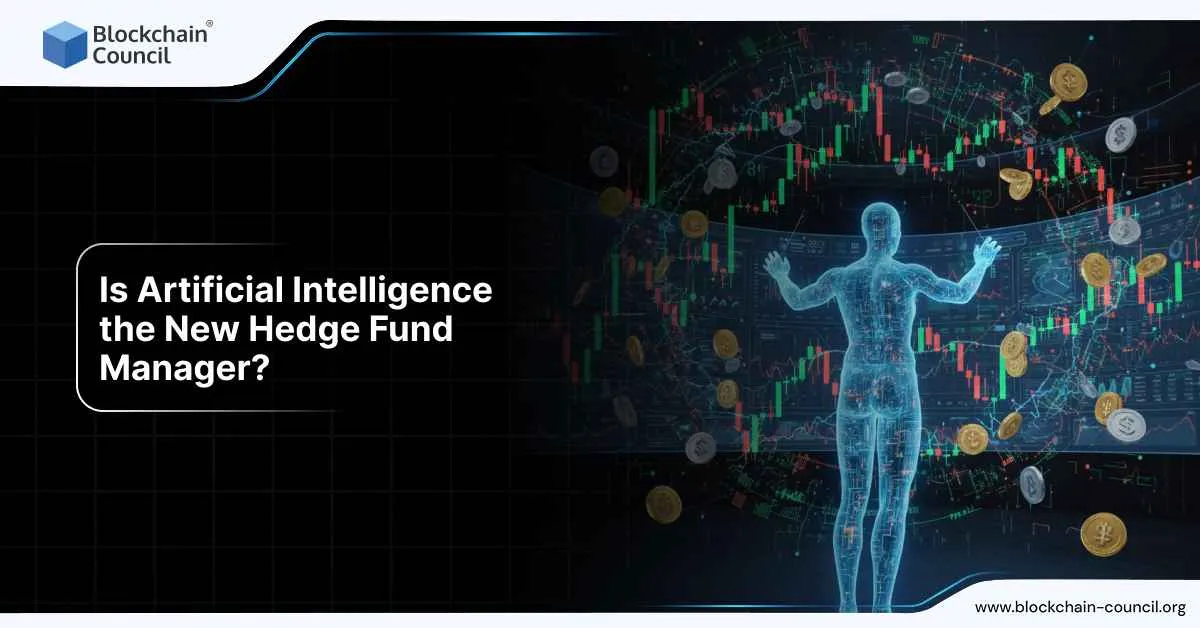
The hedge fund world has always thrived on an edge—whether through exclusive data, brilliant analysis, or lightning-fast execution. But in recent years, a new competitor has emerged, one that doesn’t sleep, doesn’t panic, and can process information at a scale no human analyst could match. The big question many in finance are asking today is simple: is artificial intelligence the new hedge fund manager? The answer isn’t straightforward, but the trend is clear. AI is no longer a back-office assistant. It is shaping trade ideas, optimizing portfolios, and, in some cases, outperforming human professionals. For those wanting to keep pace with this shift, building skills through an AI certification is a crucial step to remain relevant in this rapidly changing investment landscape.
AI in Hedge Fund Management
Market Prediction and Forecasting
AI models analyze massive datasets from financial markets, news, and alternative sources to identify patterns and predict asset price movements more accurately than traditional methods.

Portfolio Optimization
Machine learning systems adjust investment strategies in real time, balancing risk and return by reallocating assets as conditions change.
Algorithmic Trading
AI executes trades at high speed, spotting short-term opportunities and minimizing human error. Adaptive algorithms refine strategies continuously.
Risk Management
AI tools assess market volatility, credit risks, and geopolitical events, providing hedge funds with early warnings and stress-testing scenarios.
Sentiment Analysis
Natural language processing scans news, earnings calls, and social media to gauge investor sentiment, helping funds anticipate market shifts.
Fraud Detection and Compliance
AI systems monitor transactions to detect unusual activity, ensuring regulatory compliance and reducing exposure to fraud.
Competitive Advantage
By processing data faster and more comprehensively than humans, AI gives hedge funds an edge in identifying opportunities and avoiding risks.
How Hedge Funds Are Using AI Already
Contrary to what some imagine, hedge funds didn’t suddenly hand the keys over to machines. Instead, AI is being adopted layer by layer across the investment process. At the research stage, generative AI scans thousands of earnings transcripts, filings, and news articles in seconds. It can detect sentiment shifts or hidden signals buried in financial language. On the trading desk, machine learning models crunch on-chain data, social media chatter, and technical patterns to suggest positions.
Operations are also being transformed. AI automates compliance reporting, summarizes risk disclosures, and tracks internal communications to ensure no rules are broken. This saves time and reduces costs, a key advantage at a time when hedge fund margins have tightened. According to McKinsey, the economics of asset management are being reshaped as firms increasingly embed AI agents into everything from client servicing to portfolio construction.
Performance Numbers Speak Loudly
Skeptics often ask if AI is just hype. Recent studies suggest otherwise. A 2025 Stanford analysis showed that an “AI analyst” trained on public data outperformed 93% of mutual fund managers across a 30-year dataset, generating returns nearly 600% higher than traditional benchmarks. Another paper from SSRN found that hedge funds adopting generative AI achieved 3–5% higher annualized returns compared to peers relying only on conventional quant models.
Real-world examples back this up. Point72’s new AI-focused fund, Turion, reportedly gained around 14% within just a few months of launch, quickly drawing nearly $1.5 billion in assets. Firms like Numerai crowdsource AI models from thousands of data scientists worldwide, aggregating predictions into a unified trading strategy. Rebellion Research and DeepSeek in China are also pushing forward with machine learning-driven funds. These stories are building a compelling case: AI isn’t just a tool, it’s already competing head-to-head with human fund managers.
Why AI Fits Hedge Funds So Well
There are several reasons why hedge funds have embraced AI faster than traditional asset managers.
- Data intensity: Hedge funds thrive on finding patterns in messy, unstructured data—exactly where AI excels. From satellite images of retail parking lots to global sentiment on Twitter/X, AI can parse signals at scale.
- Need for speed: Markets move quickly. AI’s ability to scan, predict, and execute in milliseconds provides an undeniable edge.
- Risk appetite: Hedge funds are more willing than pension funds or insurers to experiment with new tools if there’s even a slight chance of outperformance.
In a sense, hedge funds and AI were made for each other: both thrive in uncertainty, adapt quickly, and are willing to chase opportunities others shy away from.
What AI Does Better Than Humans
AI doesn’t tire. It doesn’t get greedy. And it doesn’t panic-sell at the first sign of red candles. But beyond emotional control, there are hard advantages:
- Scalability: A single AI model can analyze thousands of securities or alternative datasets simultaneously, something impossible for even a large analyst team.
- Pattern detection: AI uncovers non-linear relationships—connections between events and prices that humans might never notice.
- Continuous learning: With reinforcement learning and retraining, models adapt far faster than human analysts tied to quarterly reviews.
These strengths explain why funds using AI see higher research productivity and often more consistent returns.
Where Humans Still Matter
Despite the headlines, AI isn’t firing portfolio managers en masse. There are areas where human judgment remains irreplaceable. Market regimes shift quickly, and a model trained on yesterday’s environment may struggle tomorrow. Black swan events—geopolitical crises, sudden regulatory bans, pandemics—are notoriously difficult for models to predict. Human managers can bring context, experience, and ethical reasoning to decisions where algorithms fall short.
Moreover, AI models often operate as black boxes. Clients want explanations, not just predictions. If an AI recommends a billion-dollar short position, allocators will demand clarity on why. Human managers act as interpreters, translating machine insights into strategies that clients can understand and trust.
The Transparency Challenge
The lack of explainability is one of the largest barriers to AI fully taking over hedge funds. Regulators are also cautious. An opaque model that triggers market volatility could invite scrutiny or sanctions. Transparency is becoming as important as accuracy. Hedge funds adopting AI must balance speed with accountability.
This is where blockchain technology offers a complementary solution. By using transparent ledgers to audit model decisions or trade logs, funds can show regulators and clients that their AI isn’t a lawless black box. For professionals aiming to master this integration, blockchain technology courses provide the knowledge to align AI predictions with verifiable audit trails.
Education as the Competitive Edge
The rise of AI in hedge funds isn’t just about replacing humans—it’s about reskilling them. Analysts and portfolio managers who understand both finance and data science will be in highest demand. Earning a Data Science Certification gives professionals the ability to analyze datasets, detect bias, and validate models.
For those on the business leadership side, the Marketing and Business Certification is valuable. Hedge funds aren’t only about performance; they are also about client relationships, branding, and investor trust. Leaders who understand how AI reshapes communication and product strategy will be better equipped to win allocations.
Specialized programs such as the agentic ai certification are becoming essential too, teaching professionals how to oversee autonomous systems responsibly. And broader tech certifications prepare managers for the wider digital ecosystem where AI, blockchain, and cloud computing converge. Exploring technology in a structured way ensures that hedge fund professionals aren’t just reacting to change but actively driving it.
Why This Question Matters Now
The timing of this debate is not accidental. Hedge fund performance across the industry has been uneven in recent years, with many struggling to justify fees in an age of passive investing. AI promises not only better returns but also more efficient operations. Funds that embrace it could widen the gap over laggards.
At the same time, allocators are starting to ask pointed questions. Investors want to know: does the fund have an AI strategy? How is it governed? What safeguards are in place? The ability to answer these questions confidently will soon be as important as the quarterly return report.
The Problem of Overfitting
One of the oldest problems in quantitative finance is overfitting—when a model performs brilliantly on past data but fails miserably in live trading. AI is particularly vulnerable to this. Because machine learning models can detect extremely complex patterns, they sometimes latch onto noise instead of genuine signals.
For example, an AI model might notice that Bitcoin’s price tended to rise on certain weekdays during the training period. While that correlation might exist in the data, it may have no causal link to market dynamics. Once the regime changes, the model’s predictions fail. In hedge funds, this can translate to real losses if the strategy is scaled without sufficient validation.
The solution isn’t simple. Cross-validation, stress testing, and retraining help, but they can’t eliminate the risk entirely. Even the most advanced models are essentially extrapolating from the past. Hedge fund managers must therefore maintain skepticism and not treat AI outputs as infallible truths.
Market Regime Shifts
Financial markets are not static. They go through phases—bull markets, bear markets, high-volatility cycles, low-volatility stretches, liquidity crises, and macro-driven periods. Human traders often adapt their strategies when they sense a regime change. AI models, however, can struggle if the new environment looks nothing like the training data.
Consider the global financial crisis of 2008. Models trained on the relatively calm 2000–2007 data period would have been blindsided by the sudden collapse in liquidity and extreme correlations across asset classes. A similar challenge exists today as geopolitical shocks, interest rate hikes, or sudden crypto regulations can change market behavior overnight. Without built-in flexibility, AI models risk being caught flat-footed.
The Black-Box Dilemma
Another major concern is the opacity of AI models. Hedge funds often rely on complex architectures such as deep neural networks. These models can output highly accurate predictions but provide little insight into how the predictions were made.
For investors, this lack of explainability is a problem. Allocators demand accountability. If a model recommends shorting a major stock or increasing leverage, stakeholders want to know the reasoning. Without transparency, clients may lose trust. Regulators, too, are wary of black-box models that could destabilize markets.
Efforts are underway to improve explainability. Researchers are developing tools to show which features influenced a model’s decision most. Some funds are combining AI with simpler, more interpretable statistical models to strike a balance. Still, the dilemma remains: the most powerful AI models are often the least explainable.
Volatility and Amplification Risks
AI doesn’t just predict markets; it participates in them. This creates feedback loops. If multiple hedge funds use similar AI systems, they may all act on the same signals simultaneously. This herd behavior can amplify price movements, increasing volatility rather than smoothing it.
For example, if several funds’ models predict that a stock is about to fall, they may all short it at once. The selling pressure then drives the stock down, making the prediction self-fulfilling. While profitable for early movers, it destabilizes markets and creates risks for latecomers.
In the crypto world, these effects are even more pronounced due to thinner liquidity. A coordinated AI-driven sell-off could trigger cascading liquidations, wiping out retail investors. Regulators will likely pay closer attention to this dynamic as AI adoption grows.
Regulatory Uncertainty
The financial industry is heavily regulated, and AI introduces new challenges for oversight bodies. Existing frameworks were not designed for autonomous systems making investment decisions. Questions arise:
- Who is liable if an AI model triggers losses due to a coding error?
- Should funds disclose when AI is responsible for trade ideas or execution?
- How can regulators audit AI models without revealing proprietary strategies?
In Europe, the AI Act is pushing for greater transparency and accountability in high-risk AI applications, which could include financial systems. In the U.S., the Securities and Exchange Commission has signaled interest in monitoring how funds use AI, particularly for compliance and trading. Global coordination remains limited, meaning funds face a patchwork of rules across jurisdictions.
Talent and Infrastructure Gaps
While hedge funds are racing to adopt AI, not all have the infrastructure or talent to do it effectively. Building high-performing AI systems requires large datasets, computing power, and skilled professionals who understand both machine learning and financial markets.
Smaller funds may struggle to compete with giants that can afford cutting-edge GPUs, proprietary data feeds, and top-tier data scientists. This could widen the gap between elite funds and mid-tier players. At the same time, attracting talent is competitive. Data scientists may prefer the tech sector, where projects are more open-ended and culturally appealing, leaving hedge funds scrambling for skilled hires.
Data Quality Issues
AI’s performance depends heavily on the data it ingests. In finance, data comes in many forms: market prices, economic indicators, corporate filings, alternative datasets such as satellite imagery, and even social media sentiment. But not all data is reliable. Inaccuracies, delays, or intentional manipulation can poison models.
Crypto markets are especially vulnerable. Bots flood social platforms with spam or coordinated campaigns, skewing sentiment analysis. Wash trading can distort volume metrics. Without careful filtering, AI models may act on misleading signals. Hedge funds must therefore invest heavily in data cleaning and validation processes.
Ethical and Social Questions
Beyond technical risks, there are broader ethical concerns. If AI-driven hedge funds gain an overwhelming advantage, markets could become less fair for retail investors. The democratization of finance might stall as sophisticated algorithms outpace human participants.
There’s also the question of responsibility. If an AI-driven strategy contributes to a market crash, who is accountable? The fund managers? The developers? The regulators? Without clear frameworks, these ethical dilemmas could damage trust in both AI and hedge funds.
Collaboration, Not Replacement
Given these limitations, the more realistic near-term future is collaboration between humans and AI, rather than outright replacement. Humans bring context, ethical reasoning, and judgment. AI brings speed, scale, and pattern recognition. Together, they form a stronger team than either could alone.
In practice, this means portfolio managers overseeing AI-driven research, validating signals, and deciding which to act upon. Risk managers using AI dashboards but retaining authority over exposure limits. Compliance officers leveraging AI summaries but still making final judgments. This hybrid model preserves accountability while harnessing AI’s strengths.
Preparing for the Hybrid Era
For professionals, the rise of AI hedge fund management doesn’t mean obsolescence. It means adaptation. Analysts must understand how to question AI models, spot overfitting, and interpret signals. Portfolio managers must learn to communicate AI-driven strategies to clients in clear, trustworthy language.
This is why certifications and structured learning matter more than ever. By pursuing programs that blend finance and technology, professionals position themselves at the intersection where the future is being built. Knowing how AI fits into risk management, compliance, and investor relations is just as critical as understanding its predictive power.
AI in Hedge Funds by 2040
Scenario 1: Fully Automated
- AI runs research, trading, risk, and compliance
- Investors use AI dashboards for insights
- Low costs, high speed, algorithms dominate
Scenario 2: Human-AI Hybrid
- Humans set strategy, AI handles data and execution
- Combines machine efficiency with human judgment
- Builds investor trust with human oversight
Scenario 3: Regulated Middle Ground
- Rules cap AI autonomy in trading and strategy
- Human sign-off required for key decisions
- Slower innovation, but safer and more stable
By 2040, the hedge fund industry could look dramatically different depending on how AI evolves and how regulators, investors, and markets respond.
Scenario 1: The Fully Automated Fund
In this vision, hedge funds operate with minimal human involvement. AI systems handle research, portfolio construction, execution, risk management, and compliance. Investors interact with AI-driven dashboards that explain strategies, expected risks, and performance attribution. Costs drop significantly, and performance relies almost entirely on the sophistication of algorithms.
This scenario is not impossible. Advances in explainable AI, blockchain-based audit trails, and global regulatory frameworks could provide enough trust to allow near-autonomous funds. Such funds might dominate in liquid markets where data is abundant and patterns can be modeled with high precision.
Scenario 2: The Human-AI Hybrid
A more balanced future sees AI taking the role of a co-pilot rather than a pilot. Here, portfolio managers still make high-level calls, especially in areas requiring judgment, ethics, or narrative interpretation. AI handles the heavy lifting of data analysis, signal generation, and execution but defers to humans for oversight.
This model is attractive because it combines the speed and scale of machines with the intuition and accountability of humans. It also aligns with investor comfort levels, as clients may always prefer to know a human is ultimately in charge of their money.
Scenario 3: The Regulated Middle Ground
Another possibility is that regulation slows AI’s expansion into hedge funds. Governments may fear systemic risks and impose strict limits on autonomy. For instance, rules might require human sign-off on all trades above a certain size or ban black-box models from managing client capital directly. In this world, AI still plays an important role, but its autonomy is capped.
While this might reduce performance advantages, it could help stabilize markets and protect against unintended consequences. Many investors might even prefer this cautious approach.
New Skills Hedge Fund Professionals Will Need
Regardless of which scenario unfolds, professionals in the hedge fund industry will need to adapt. The next generation of fund managers won’t just need financial acumen—they’ll need fluency in data science, AI ethics, and digital infrastructure.
- Model literacy: Understanding how AI models are built, trained, and validated. This helps managers challenge outputs instead of blindly trusting them.
- Data governance: Ensuring the quality, integrity, and compliance of datasets feeding into AI systems.
- Explainability communication: Translating complex AI-driven decisions into narratives that clients, regulators, and boards can understand.
- Ethical reasoning: Evaluating the social consequences of AI strategies, such as whether they exacerbate volatility or disadvantage retail investors.
Formal education plays a crucial role here. Structured programs like the Data Science Certification help professionals analyze datasets rigorously. The Marketing and Business Certification equips leaders to communicate AI-driven strategies to clients and build trust. For those working on cutting-edge automation, the agentic ai certification prepares professionals to manage autonomous decision-making systems responsibly. Broader tech certifications ensure hedge fund staff stay current across AI, blockchain, and emerging digital tools.
The Role of Blockchain in Auditable AI Funds
One of the biggest hurdles to AI-run hedge funds is trust. Investors want assurance that models act fairly and within agreed parameters. Blockchain technology could provide the missing link. By recording all AI decisions, trade rationales, and transaction logs on tamper-proof ledgers, funds can provide transparency without revealing proprietary algorithms.
This creates a powerful synergy: AI for intelligence, blockchain for accountability. Learning through blockchain technology courses will help future fund managers understand how to combine these systems for maximum trust. Together, they could redefine compliance and reporting in asset management.
Why Technology Ecosystem Matters
AI doesn’t work in isolation. Its success as a hedge fund manager depends on the broader technology ecosystem. Cloud computing provides the scale for training models. High-speed data pipelines supply the raw inputs. Cybersecurity protects algorithms from manipulation. Quantum computing could even open new frontiers in optimization.
Professionals who grasp this ecosystem will not only manage AI-driven funds effectively but also anticipate disruptions before they occur.
The Democratization Question
A key ethical issue is whether AI-driven hedge fund management will widen inequality. Large funds with resources to hire top data scientists and access proprietary datasets already have an advantage. If they dominate further through AI, smaller funds and retail investors could be left behind.
Some argue that democratization of AI tools—open platforms, affordable dashboards, and public datasets—will help level the playing field. But education remains the real equalizer. Certifications and training programs empower individuals from diverse backgrounds to engage with AI meaningfully. In the long run, democratization may depend less on the tools themselves and more on who has the knowledge to use them.
How Clients May Respond
Investors are not passive in this shift. Their comfort levels will influence how fast AI moves into hedge fund management. Some allocators already view AI adoption as a positive signal, equating it with innovation and efficiency. Others remain cautious, worrying about opacity and systemic risks.
Funds will need to communicate clearly how AI fits into their strategies. This is where professionals with both technical literacy and business communication skills stand out. Being able to explain AI-driven insights without jargon will be essential for winning client trust.
Long-Term Risks That Can’t Be Ignored
Even in the most optimistic scenarios, certain risks remain:
- Model fragility: A sudden market shock could still break even the best-trained models.
- Systemic concentration: If too many funds rely on similar AI models, market behavior could become dangerously correlated.
- Cybersecurity threats: Adversaries could attempt to manipulate AI systems by poisoning datasets or hacking model infrastructure.
- Overreliance: The more humans trust AI, the more vulnerable they become when models fail unexpectedly.
These risks suggest that while AI will play a growing role, hedge funds must design robust safeguards, mixing technical defenses with human oversight.
Conclusion: The Hedge Fund Manager of the Future
So, is artificial intelligence the new hedge fund manager? The honest answer is: not yet, but it is rapidly moving in that direction. AI is already beating human analysts in speed, scale, and sometimes performance. But limitations around trust, regulation, ethics, and data quality mean humans still play a critical role.
The most likely outcome is not a world where machines fully replace managers but one where collaboration defines success. AI will handle the heavy lifting—scanning, predicting, and executing—while humans provide judgment, context, and accountability.
For professionals, the path forward is clear: reskill and prepare. Programs such as AI certification, Data Science Certification, Marketing and Business Certification, agentic ai certification, tech certifications, and blockchain technology courses provide practical pathways. Exploring technology in depth ensures hedge fund professionals are ready for the hybrid era where AI is both partner and challenger.
The hedge fund manager of the future will not be purely human or purely artificial. It will be a blend—a fusion of human insight and machine precision. Those who adapt to this reality will not just survive in the industry—they will lead it.