

AI FAQs for Beginners: Machine Learning vs Deep Learning vs Generative AI Explained

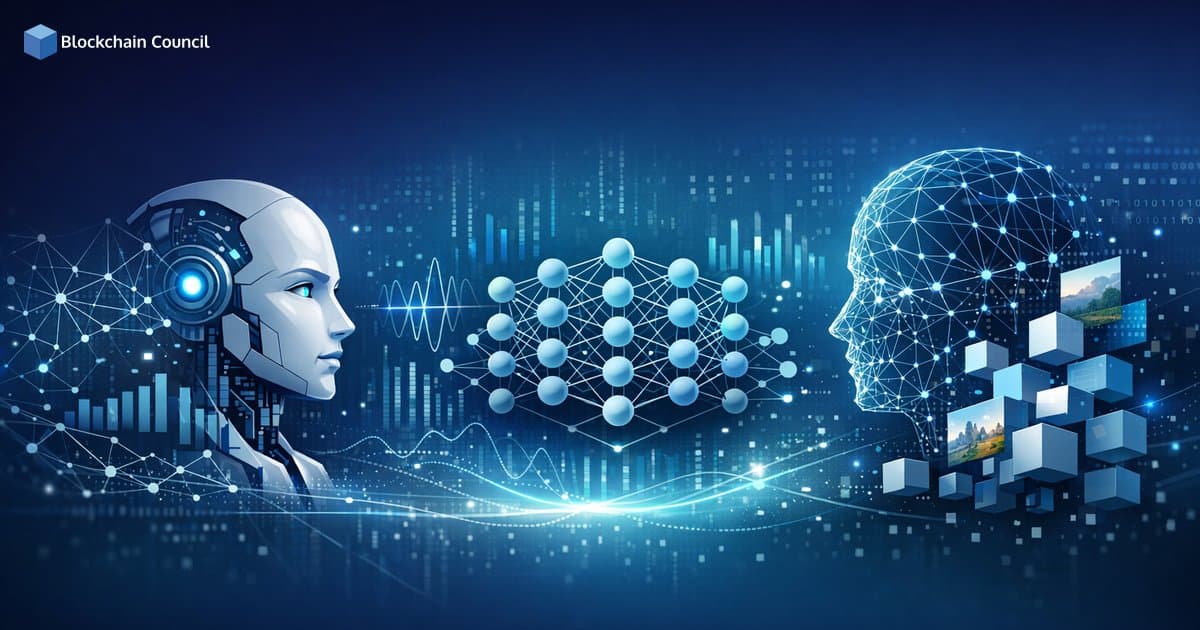
AI FAQs for beginners often start with the same confusion: are machine learning, deep learning, and generative AI the same thing? They are related, but they are not interchangeable. Understanding how they fit together helps you choose the right approach for a problem, communicate clearly with technical teams, and plan an effective learning path.
How are AI, Machine Learning, Deep Learning, and Generative AI related?
These fields form a nested hierarchy. Think of it as categories within categories:

- Artificial Intelligence (AI) is the broad goal of building systems that perform tasks associated with human intelligence, such as perception, reasoning, decision-making, and learning.
- Machine Learning (ML) is a subset of AI where systems learn patterns from data and improve over time without being explicitly programmed for every scenario.
- Deep Learning (DL) is a subset of ML that uses multi-layer neural networks to learn complex patterns, especially from unstructured data like images, audio, and text.
- Generative AI (GenAI) is a branch of AI largely built on deep learning that generates new content - text, images, audio, video, or code - based on patterns learned from training data.
Simple summary: AI contains ML, ML contains DL, and most GenAI systems are built on DL architectures.
Machine Learning FAQs
What is machine learning in simple terms?
Machine learning is a way for computers to learn from examples rather than following fixed, hand-written rules. You provide data, the algorithm learns patterns, and the result is a model that can make predictions or decisions on new inputs.
What are the main types of machine learning?
ML is typically grouped into four categories:
- Supervised learning: learns from labeled data (input plus known output). Example: classifying email as spam or not spam.
- Unsupervised learning: finds patterns in unlabeled data. Example: grouping customers into segments based on behavior.
- Semi-supervised learning: combines a small labeled dataset with a larger unlabeled one, useful when labeling data is expensive or time-consuming.
- Reinforcement learning: an agent learns which actions to take by interacting with an environment and maximizing cumulative rewards, common in robotics and game-playing systems.
How is machine learning different from traditional programming?
Traditional programming is rule-based. You write explicit instructions that map inputs to outputs.
- Traditional programming: input + rules = output
- Machine learning: input data + learning algorithm = model, then model + new input = output
ML replaces many hand-coded routines with a training process that extracts patterns directly from examples.
Where is machine learning used in the real world?
ML is applied wherever prediction, classification, ranking, or pattern detection is needed, including:
- Email filtering: spam detection and inbox prioritization
- Recommendations: products, videos, or music tailored to individual behavior
- Fraud detection: flagging suspicious transactions in real time
- Predictive maintenance: anticipating equipment failures before they occur
- Healthcare analytics: readmission risk scoring and clinical decision support
- Demand forecasting: inventory and supply chain planning
Deep Learning FAQs
What is deep learning?
Deep learning is a machine learning approach that uses artificial neural networks with many layers to automatically learn complex patterns from raw data. It is particularly well suited to unstructured inputs like images, audio, and text, where manually designing features would be impractical.
How are deep learning models structured?
Neural networks consist of three core components:
- Input layer: receives raw data such as pixels, words, audio waveforms, or sensor readings.
- Hidden layers: multiple intermediate layers that transform the data into progressively more abstract representations.
- Output layer: produces a prediction or other final result.
A network with more than three layers is generally considered "deep," which is where the term originates.
Deep learning vs machine learning: what is the practical difference?
- Data needs: ML can perform well with smaller, structured datasets. DL typically benefits from large volumes of data, particularly for unstructured problems.
- Feature engineering: Traditional ML often requires human-designed input features. DL learns those features automatically through layered representations.
- Compute requirements: Many ML models train efficiently on standard CPUs. DL training is substantially faster with GPUs or TPUs.
- Strengths: DL tends to excel on high-dimensional, complex tasks such as computer vision and natural language understanding.
What are common deep learning applications?
- Computer vision: object detection, medical imaging analysis, and quality inspection
- Speech and audio: speech recognition, transcription, and voice biometrics
- Natural language processing: machine translation, sentiment analysis, and the foundations of large language models
- Autonomous systems: robotics, drones, and self-driving vehicle research
Generative AI FAQs
What is generative AI?
Generative AI refers to models that create new content - text, images, audio, video, or code - by learning the underlying patterns and distributions in training data. Outputs can be difficult to distinguish from human-created content, and deep learning architectures are the foundation of most generative systems available today.
GenAI is often contrasted with discriminative AI, which focuses on predicting labels or values - for example, classifying a message as spam or not spam rather than generating a new message.
What types of generative AI models should beginners know?
- Large Language Models (LLMs): generate and transform text and code, powering chatbots, summarizers, and AI coding assistants.
- Diffusion models: generate high-quality images and video by progressively removing noise from a random starting point.
- Generative Adversarial Networks (GANs): produce realistic synthetic images and data through a competitive training process between two networks.
- Variational Autoencoders (VAEs): generate images and learn compact data representations useful for downstream tasks.
What can generative AI do in practice?
- Text: conversational support, document drafting, summarization, and knowledge assistants
- Code: generating boilerplate, writing tests, explaining functions, and suggesting refactors
- Images and design: concept art, product mockups, and creative variations
- Audio and video: voice synthesis, editing assistance, and media generation
Enterprise deployments increasingly use Retrieval-Augmented Generation (RAG), which combines an LLM with private documents to improve factual accuracy and adapt the model to internal workflows without full retraining.
How is generative AI different from ML and DL?
- Objective: classic ML and DL typically predict labels or numeric values. GenAI models learn data distributions and generate new samples from them.
- Outputs: ML produces predictions and scores. GenAI produces new content.
- Risk profile: GenAI introduces additional risks beyond standard ML concerns like bias and errors. These include hallucinations, misinformation, intellectual property exposure, deepfakes, and content authenticity challenges.
Beginner-friendly examples: ML vs DL vs GenAI in real products
Email and productivity
- ML: classify spam vs not spam.
- DL: deeper language understanding for prioritization and advanced classification.
- GenAI: draft replies and summarize long threads.
Online shopping
- ML: recommendation engines and demand forecasting.
- DL: visual search by image and deep embeddings for personalization.
- GenAI: generate product descriptions, create marketing variants, and produce synthetic imagery for testing.
Healthcare
- ML: risk scoring using structured health records.
- DL: detect anomalies in X-rays and MRI scans.
- GenAI: synthetic data generation and clinical note summarization, with human review required for safety-critical use.
Which should you learn first?
For most beginners, a structured learning path looks like this:
- AI basics: core concepts, data literacy, and evaluation metrics.
- Machine learning foundations: supervised and unsupervised learning, model validation, and common algorithms.
- Deep learning: neural network architecture, training dynamics, and practical tooling.
- Generative AI: LLM concepts, prompt engineering, RAG fundamentals, and responsible deployment practices.
Structured certification programmes - such as the Blockchain Council's Certified AI Expert, Certified Machine Learning Specialist, and Certified Generative AI Expert - provide a logical progression through these layers, alongside MLOps and data-focused coursework for production readiness.
What is changing in AI, and what should beginners watch?
- Foundation models: a growing shift toward large pre-trained models that are adapted to specific tasks through fine-tuning or prompting rather than training from scratch.
- Efficiency: increasing focus on techniques like quantization, pruning, and knowledge distillation to reduce inference cost and latency.
- Multimodal AI: systems that process and generate across text, images, and audio within a single model.
- Agentic workflows: models that plan and execute multi-step tasks autonomously across tools and external systems.
- Governance: growing attention to data quality, model security, output monitoring, and human-in-the-loop oversight frameworks.
On the career side, machine learning engineering roles in the United States carry a median total compensation around USD 158,000 as of late 2025, and the World Economic Forum projects AI and machine learning specialist roles will grow by over 80 percent between 2025 and 2030. Foundational technical skills combined with deployment and governance knowledge represent the most durable combination for long-term career value.
Conclusion: the simplest way to remember the difference
If you take one thing from these AI FAQs for beginners, use this mental model:
- AI is the broad goal: build machines that perform intelligent tasks.
- Machine learning is a primary method: learn patterns from data to predict or decide.
- Deep learning is a powerful ML subset: neural networks that automatically learn complex features from raw, unstructured data.
- Generative AI is a content-creating class of models: produce new text, images, audio, video, or code from learned distributions.
Once you understand which layer you are working in, the next decisions become clearer - the right data, the right compute, the right evaluation approach, and the right governance practices. That clarity is what separates experimenting with AI from deploying it responsibly in production systems.
Related Articles
View All
AI & ML
AI Explained: From Machine Learning to Generative AI
AI Explained in simple terms. Learn the differences between AI, machine learning, and deep learning, how neural networks and LLMs work, and how generative and multimodal AI create content.
AI & ML
Jev vs Machine Learning Models
Compare Jev with traditional machine learning models, including differences in architecture, outputs, training, decision-making, automation, and real-time software use.
AI & ML
Jev AI Explained for Beginners
Jev AI is TypeSafe AI’s System One Model designed for fast, structured decision-making. Learn how Jev works, what makes it different from traditional LLMs, and where it can be used.
Trending Articles
AWS Career Roadmap
A step-by-step guide to building a successful career in Amazon Web Services cloud computing.
What is AWS? A Beginner's Guide to Cloud Computing
Everything you need to know about Amazon Web Services, cloud computing fundamentals, and career opportunities.

Can DeFi 2.0 Bridge the Gap Between Traditional and Decentralized Finance?
The next generation of DeFi protocols aims to connect traditional banking with decentralized finance ecosystems.