

How Does Agentic AI Ensure Data Privacy and Security?

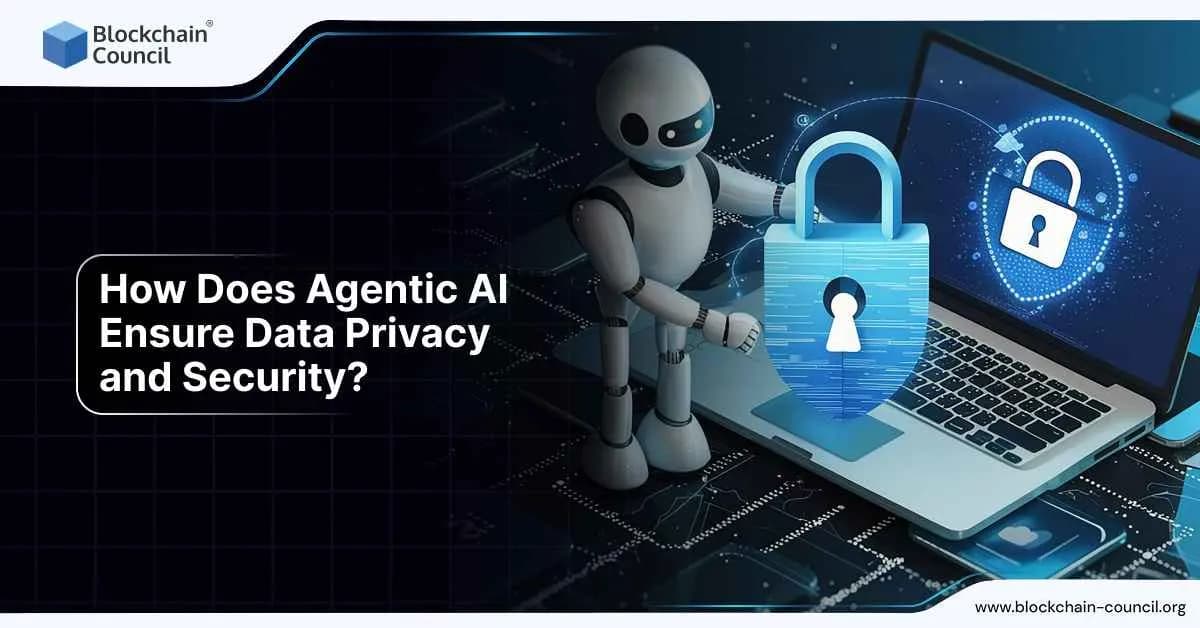
Agentic AI systems are designed to act independently, but with that autonomy comes new risks for sensitive data. They don’t just answer questions—they store state, connect to external tools, and make decisions that may touch regulated information. Protecting this flow of data requires clear frameworks, strict controls, and modern cryptography. For professionals building expertise in this area, an AI certification is a practical way to understand how to align intelligent agents with security principles.
Identity and Access Controls
Every agent acts as a digital identity, which means it must be managed like a privileged user. Identity-first strategies now include decentralized identifiers (DIDs) and verifiable credentials, giving each agent unique and traceable credentials. Role-based and attribute-based access controls ensure agents can only access what they need. For those seeking structured learning across applied AI areas, AI certs provide detailed training to help professionals handle security in agentic systems.

Encryption and Confidential Computing
Data protection does not end at storage or transit. Confidential computing environments create secure enclaves where agents can process information without exposure to outsiders—even cloud operators cannot peek inside. This protects “data in use,” which has historically been a blind spot. Developers who want to work more closely with these emerging environments may choose the agentic AI certification to gain hands-on knowledge of autonomous workflows and their protections.
Core Mechanisms Securing Agentic AI
| Security Layer | How It Works |
| Identity | Agents verified via DIDs and verifiable credentials |
| Access Control | Fine-grained RBAC and ABAC limit permissions |
| Encryption | Data encrypted at rest, in transit, and in use via TEEs |
| Threat Modeling | Frameworks map out possible risks before deployment |
| Monitoring | Runtime logging and telemetry track all agent actions |
| Privacy Tools | PrivacyChecker and PrivacyLens reduce leakage in workflows |
| Protocols | Aegis Protocol adds post-quantum security and policy proofs |
| Governance | TRiSM frameworks ensure explainability and accountability |
| Compliance | Aligns with GDPR, CCPA, HIPAA through audit trails |
| Zero Trust | Continuous validation of agent sessions and behaviors |
Privacy by Design
Researchers have introduced methods like PrivacyChecker and PrivacyLens-Live, which reduced leakage in agent workflows from over 30% to under 10% while keeping performance stable. This shows that privacy-preserving measures can be built into the agent lifecycle rather than bolted on afterward. For developers working at the protocol layer, blockchain technology courses offer insights into building verifiable and tamper-resistant data trails.
Governance and Transparency
Agentic AI also raises the need for explainability. Frameworks like TRiSM (Trust, Risk, Security Management) highlight that organizations should log every agent decision, monitor risks in real time, and align outputs with regulatory demands. This combination of governance and technical safeguards helps create systems that are both powerful and trustworthy. Leaders who want to connect governance with organizational growth can explore the Marketing and Business Certification for a broader strategy view.
Advanced Protocols for Security
The Aegis Protocol introduces non-spoofable identities, post-quantum secure communication channels, and verifiable policy compliance through zero-knowledge proofs. Combined with zero-trust identity frameworks, these systems form layered defenses that secure interactions between agents, humans, and applications. For professionals aiming to strengthen their analytical capabilities in this space, the Data Science Certification builds the skills to evaluate and manage the large data flows that power agentic systems.
Preparing for the Future
Balancing autonomy with control is the next challenge. Oversight must remain in place for sensitive cases, and organizations need staff with the right skills to manage agents responsibly. The Global Tech Council provides training across emerging technology areas, helping professionals prepare for environments where AI agents will handle data across multiple sectors.
Conclusion
Agentic AI enhances data privacy and security by applying identity-first controls, encrypted processing, runtime monitoring, and verifiable protocols. It reduces leakage with specialized tools, aligns with regulations through governance frameworks, and introduces new cryptographic protections against future threats. While risks remain, the direction is clear: agentic AI can operate safely if managed with discipline. For individuals and businesses alike, building the right knowledge now will be essential to ensuring that autonomous systems remain both powerful and trustworthy.
Related Articles
View All
AI & ML
NVIDIA’s New AI Models: Nemotron 3.5 Lightning, Cosmos 3 and the Future of Agentic AI
Explore NVIDIA Nemotron 3.5 Lightning and Cosmos 3, how they support agentic and Physical AI, and what these models reveal about NVIDIA’s broader vision for autonomous intelligent systems.
AI & ML
OpenAI Dots vs Grok Bot vs Muse
Compare OpenAI Dots, Grok Bot, and Meta Muse to understand how these always-on AI agents differ in persistent work, computer use, connected apps, automation, and personal or business workflows.
AI & ML
What Is OpenAI Dots?
Learn what OpenAI Dots are, how these always-on AI agents work, and how they use GPT-6 Astra, cloud computers, connected apps, and persistent context to handle ongoing tasks.
Trending Articles
AWS Career Roadmap
A step-by-step guide to building a successful career in Amazon Web Services cloud computing.
How Blockchain Secures AI Data
Understand how blockchain technology is being applied to protect the integrity and security of AI training data.

Can DeFi 2.0 Bridge the Gap Between Traditional and Decentralized Finance?
The next generation of DeFi protocols aims to connect traditional banking with decentralized finance ecosystems.