

Open-Source Frameworks for Agentic AI: LangGraph vs AutoGen vs CrewAI vs Semantic Kernel

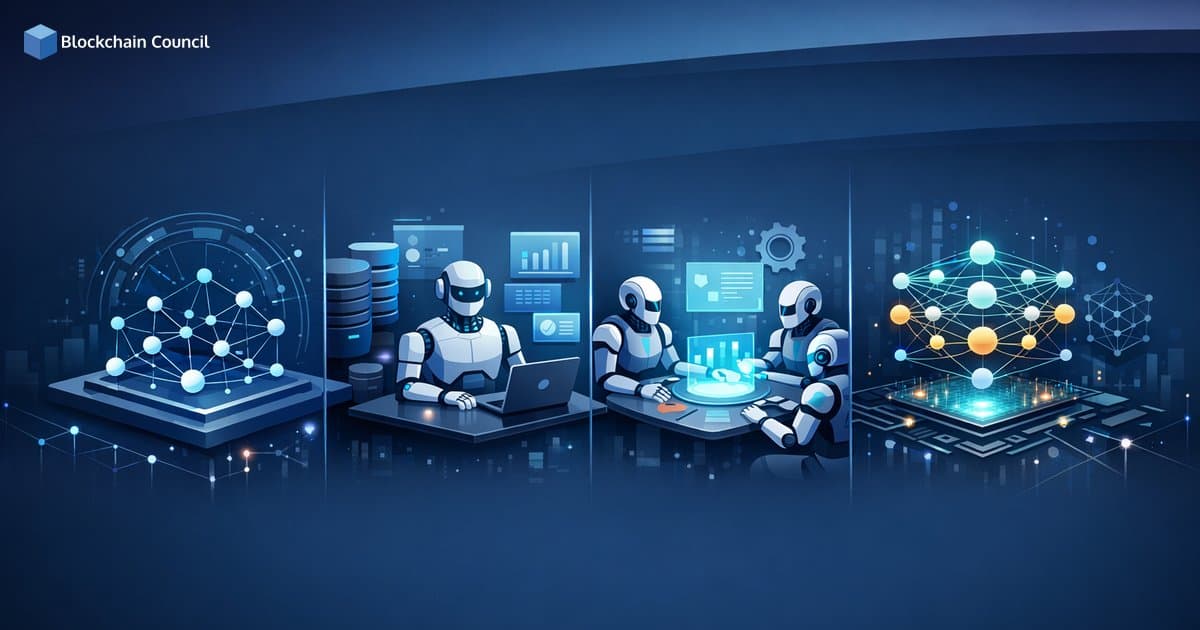
Open-source frameworks for agentic AI have quickly become a distinct layer in the modern AI stack. Instead of a single prompt producing a single answer, agentic systems coordinate multi-step reasoning, tool use, memory, state management, and sometimes multiple collaborating agents. Among the most widely adopted open-source options are LangGraph, AutoGen, CrewAI, and Semantic Kernel, each optimized for a different style of orchestration.
This guide compares these frameworks across architecture, language support, production readiness, and best-fit use cases, so you can choose a foundation that matches your team, stack, and reliability requirements.

What Are Open-Source Frameworks for Agentic AI?
Open-source frameworks for agentic AI provide building blocks to design systems that:
Plan and execute multiple steps toward a goal rather than responding once.
Call tools and APIs such as search engines, databases, internal services, or code execution environments.
Maintain state across steps, including intermediate results and decisions.
Coordinate multiple agents with specialized responsibilities, which is optional but increasingly common.
Add governance through human approval steps, retries, and observability hooks.
Ecosystem comparisons consistently place LangGraph, AutoGen, and CrewAI among the leading open-source agent frameworks. Semantic Kernel is often categorized separately as a broader AI orchestration and plugin SDK that can implement agent-like behavior through planners and skills, though the practical boundary between these categories continues to narrow.
LangGraph vs AutoGen vs CrewAI vs Semantic Kernel: Core Paradigms
All four frameworks can power agentic applications, but their core abstractions differ significantly.
LangGraph: Graph-Structured, Stateful Workflows
LangGraph, built by the LangChain team, focuses on graph-based orchestration where nodes are standard code and edges define control flow. This emphasis on explicit state, branching, retries, and human-in-the-loop steps makes it a frequent choice for teams building inspectable and reliable production workflows.
LangGraph supports Python and JavaScript and integrates closely with LangChain tools and ecosystem primitives. It is commonly selected for complex RAG pipelines, multi-tool flows, and approval-driven processes where deterministic control is a priority.
AutoGen: Multi-Agent Conversation Patterns
AutoGen originated from Microsoft Research and popularized a multi-agent conversation approach. Agents communicate with each other and with tools to solve tasks collaboratively. It is frequently cited as a baseline for multi-agent patterns in both prototypes and research-oriented setups, and it supports Python and .NET.
AutoGen is particularly useful when you want to explore coordination patterns such as assistant agents, user proxy agents, and task-specific agents that negotiate and iterate toward a solution.
CrewAI: Role-Based "Team of Agents" Orchestration
CrewAI is designed around a central idea: represent a workflow as a crew of specialized roles such as researcher, writer, reviewer, planner, or coder that collaborate on tasks. Backed by DeepLearning.AI, CrewAI has strong adoption in educational and practitioner communities and integrates well with LangChain tools.
It is a Python-first framework that works best when the workflow maps naturally to human job roles, particularly for content pipelines, research assistants, and developer tooling.
Semantic Kernel: Enterprise Orchestration with Skills, Plugins, and Planners
Semantic Kernel, backed by Microsoft, functions as an AI orchestration SDK that composes prompts, functions, and connectors into reusable capabilities called skills. It can express agent-like behavior through planners that decide which skills to invoke. Its center of gravity is enterprise integration, particularly for .NET and C# teams operating within Azure-aligned deployments.
Semantic Kernel is frequently compared to orchestration layers like LangChain rather than to dedicated multi-agent frameworks, although it can support agentic workflows in practice.
Quick Comparison: Which Framework Fits Which Job?
Use this as an initial filter before evaluating deeper requirements like observability, governance, and deployment constraints.
LangGraph: best for stateful, branching workflows and production reliability, especially if you already use LangChain.
AutoGen: best for multi-agent conversation patterns, research prototypes, and Microsoft-aligned Python or .NET teams.
CrewAI: best for role-based "AI team" workflows, particularly content, research, and coding pipelines in Python.
Semantic Kernel: best for enterprise orchestration, plugins and skills, and tight Microsoft stack integration with a clear path to planners and agents.
Language Support and Ecosystem Alignment
Language support often determines time-to-adoption more than any feature list:
LangGraph: Python and JavaScript, with strong LangChain ecosystem compatibility.
AutoGen: Python and .NET, reflecting broad Microsoft ecosystem support.
CrewAI: Python-first, commonly paired with LangChain tools.
Semantic Kernel: strong .NET and C# support plus additional language bindings, optimized for enterprise integration patterns.
If your organization is already standardized on Azure identity, Microsoft APIs, and .NET services, Semantic Kernel and AutoGen typically reduce integration friction. If your team works primarily in Python and already uses LangChain tooling, LangGraph or CrewAI will usually feel more natural.
Production Readiness: Control Flow, State, and Observability
Agentic AI fails in predictable ways: tool errors, partial outputs, non-deterministic loops, and difficult-to-debug behavior. This is why many technical comparisons emphasize control flow and observability as key differentiators when evaluating these frameworks.
When Reliability Matters Most: LangGraph
LangGraph's graph abstraction makes it straightforward to define:
Explicit branching for different scenarios such as missing data, low-confidence outputs, or policy violations.
State transitions that capture intermediate artifacts for auditability.
Retries and fallbacks that reduce brittleness in tool calls.
Human approval nodes for regulated or high-impact decisions.
This makes LangGraph a strong fit for production RAG, data processing, and workflows that resemble an application pipeline more than an open-ended conversation.
When Collaboration Patterns Matter Most: AutoGen and CrewAI
AutoGen and CrewAI are often chosen because the mental model of multiple cooperating agents maps naturally to tasks like research plus synthesis, or planning plus coding plus review. This can accelerate early prototyping significantly.
In practice, teams typically add more structure over time, for example by limiting turn counts, adding evaluation steps, and building guardrails around tool use. If you anticipate needing deep state machines and complex branching from the start, LangGraph may serve you better.
When Governance and Enterprise Integration Matter: Semantic Kernel
Semantic Kernel's strength is less about agent personalities and more about building governed, maintainable capabilities:
Reusable skills that wrap internal APIs.
Connectors and plugins aligned with enterprise systems.
Planners that select which skills to invoke to achieve a defined goal.
For many enterprises, the primary constraint is not agent creativity but integration, security, and maintainability across large application portfolios.
Real-World Patterns: What Teams Build with Each Framework
LangGraph Use Cases
Complex RAG workflows: retrieve, re-rank, summarize, ground answers, and cite sources.
LLM-assisted ETL: classify documents, extract entities, and store structured results.
Human-in-the-loop review: require approvals before sensitive actions are taken.
Multi-tool orchestration: combine search, internal APIs, and code execution with robust control flow.
AutoGen Use Cases
Collaborative debugging and scripting: user proxy and coding assistant agent loops.
Research and synthesis: one agent gathers information while another composes structured outputs.
Multi-agent simulations: role-based negotiations and environment interactions for experimentation.
CrewAI Use Cases
Content pipelines: researcher, writer, editor, and compliance checker roles working sequentially.
Product documentation: market research, requirements gathering, and spec-writing as separate agents.
Developer assistance crews: planner, coder, and reviewer agents for refactors and feature implementation.
Semantic Kernel Use Cases
Enterprise copilots: connecting LLMs to CRM, ERP, ticketing, and knowledge bases via skills.
Workflow augmentation in .NET applications: summaries, drafts, and report generation embedded in existing services.
Tool selection with planners: agents that decide which skills to invoke based on the task at hand.
How to Choose: A Practical Decision Checklist
When evaluating open-source frameworks for agentic AI for a real product, prioritize the constraints that are hardest to change later.
What is your primary abstraction?
Workflow graphs and state machines: choose LangGraph.
Conversational multi-agent collaboration: choose AutoGen.
Role-based teams and task delegation: choose CrewAI.
Skills, plugins, and enterprise orchestration: choose Semantic Kernel.
Which language and platform do you deploy on?
Python and JavaScript: LangGraph.
Python and .NET: AutoGen.
Python-first teams: CrewAI.
.NET and Azure-heavy enterprises: Semantic Kernel.
How important is determinism and observability?
If critical: lean toward LangGraph or Semantic Kernel, depending on your stack and integration requirements.
Do you need multi-agent behavior or primarily multi-step orchestration?
Multi-agent first: AutoGen or CrewAI.
Workflow first with agents as an option: LangGraph or Semantic Kernel.
Future Direction: Convergence Between Orchestration and Agents
A growing convergence is visible across all four frameworks: orchestration tools are adding more planning and agent-like behavior, while agent frameworks are adding more workflow structure. Several trends are shaping this direction:
Production readiness is shifting attention toward state management, retries, evaluation, and monitoring.
Enterprise governance is making security and integration as important as prompt design.
Interoperability is increasing, with larger systems combining multiple libraries under a shared orchestration layer.
Skills and Learning Path for Professionals
Choosing a framework is only one part of building agentic systems. Teams also need solid foundations in prompt engineering, tool design, RAG, evaluation, and secure deployment. For structured learning and internal upskilling, Blockchain Council offers relevant programs including AI certifications, prompt engineering training, generative AI certifications, and security-focused tracks that cover governance and safe tool use in production environments.
Conclusion
Across the current landscape of open-source frameworks for agentic AI, there is no universally superior option - only the best fit for a given context. LangGraph stands out for graph-based control, state management, and production workflow reliability. AutoGen remains a key reference for multi-agent conversation patterns, particularly in Microsoft-aligned environments. CrewAI offers an intuitive role-based model that accelerates content, research, and coding workflows. Semantic Kernel excels as an enterprise orchestration layer where skills, plugins, and Microsoft service integration are primary requirements.
Starting by matching your stack and operational needs - state management, observability, governance - to the right paradigm means you can move faster from prototype to production without rewriting your agent architecture down the road.
Related Articles
View All
Agentic AI
Human-in-the-Loop AI Agents: Why Oversight Matters in Agentic Workflows
Human-in-the-loop AI agents add approval gates, escalation, audit trails, and human judgment to agentic workflows where errors carry real business risk.
Agentic AI
Agentic AI in Crypto: Use Cases, Benefits, and Key Risks
Agentic AI in crypto lets autonomous agents hold wallets, trade, manage DeFi positions, and support DAOs, but security and regulation remain critical.

Agentic AI
How Businesses Can Prepare for Agentic AI-Powered Payment Automation
Learn how businesses can prepare for agentic AI-powered payment automation with modern AP systems, stronger data, clear controls, and safe pilots.
Trending Articles

Top 5 DeFi Platforms
Explore the leading decentralized finance platforms and what makes each one unique in the evolving DeFi landscape.
What is AWS? A Beginner's Guide to Cloud Computing
Everything you need to know about Amazon Web Services, cloud computing fundamentals, and career opportunities.

Can DeFi 2.0 Bridge the Gap Between Traditional and Decentralized Finance?
The next generation of DeFi protocols aims to connect traditional banking with decentralized finance ecosystems.