

Building AI Agents with Gemini Spark: Architecture, Tool Use, and Best Practices

Building AI agents with Gemini Spark is quickly becoming a practical design goal for developers who want continuous, context-aware automation across apps, data, and workflows. While a fully public, developer-facing Gemini Spark SDK has not been broadly documented, public reporting positions Gemini Spark as an always-on agent that runs in the background, connects to apps, and adapts to user behavior over time. In parallel, Google has already shipped many of the building blocks developers can use today: Gemini models for reasoning, the Gemini Enterprise Agent Platform (formerly Vertex AI) for managed agent deployment and governance, Agent Builder for tool-grounded conversational agents, and local-first tooling like Gemini CLI, the Agent Development Kit (ADK), and Model Context Protocol (MCP) servers for tool integration.
This article translates that ecosystem into a developer-oriented reference covering a Gemini Spark-style architecture, concrete tool use patterns, and best practices for reliability, safety, and scale.

What Is Gemini Spark (and What Is Confirmed vs. Emerging)?
Public coverage describes Gemini Spark as a Google agent concept designed to be always-on, with persistent access to user applications and the ability to learn from user behavior to automate tasks continuously. Technical details are still emerging, so treat Gemini Spark as an agent product direction and implement Spark-like capabilities today using the Gemini ecosystem components that are already documented:
Gemini models (Gemini 1.5, Gemini 2.0, and Gemini 2.5 families) for reasoning, multimodal understanding, and tool calling.
Gemini Enterprise Agent Platform for enterprise deployment, governance, audit, and managed connectors.
Agent Builder for playbooks, datastores, grounded responses, and tool definitions.
Gemini CLI + ADK + MCP for local development and structured tool integration.
A2A (agent-to-agent) patterns for multi-agent orchestration, often paired with streaming and analytics stacks like Apache Spark.
Reference Architecture for Building AI Agents with Gemini Spark
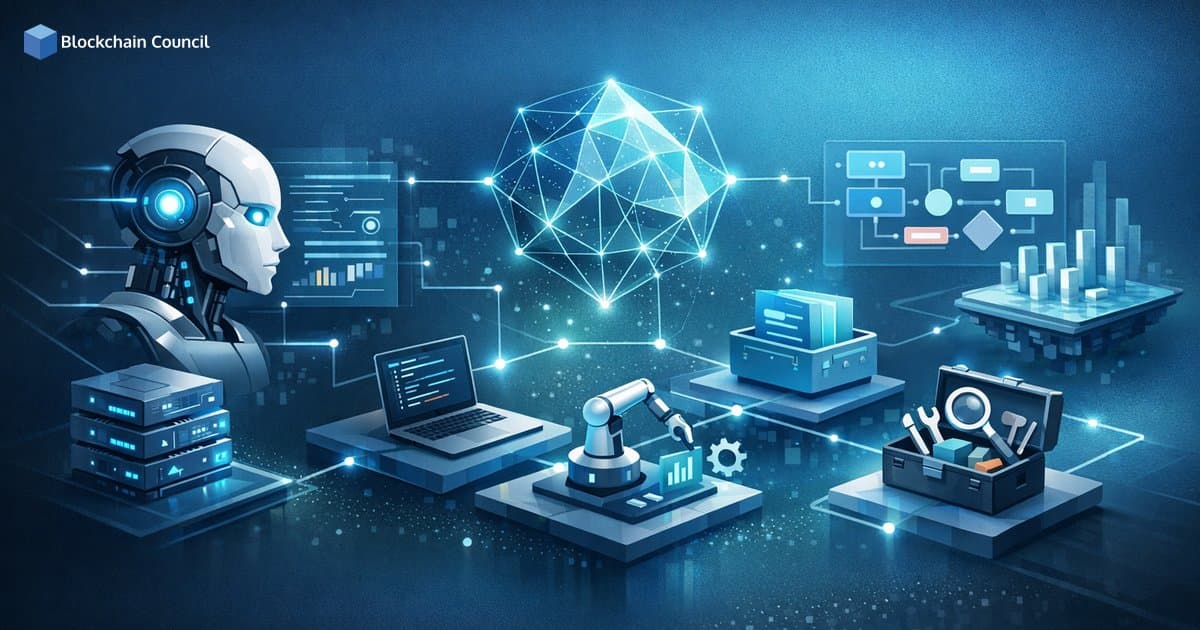
A Spark-style agent is best understood as an orchestration system, not just a single prompt. The following reference architecture reflects patterns from Agent Builder codelabs, Gemini agentic workflow guidance, and MCP-based tool integration demos.
1) Core Reasoning Layer (Gemini Models)
The agent's reasoning core is a Gemini model. For agentic, multi-step work, several practices improve reliability:
Use model-native parameters such as thinking_level instead of prompting for step-by-step chain-of-thought.
Keep temperature at 1.0 for complex agent tasks to reduce repetitive loops and degraded output quality.
Plan multimodal usage carefully to control cost and latency - for example, using medium image resolution for most document understanding tasks.
Newer Gemini releases introduced Thought Signatures for stateful tool use. In practice, your orchestrator must capture the thoughtSignature returned by the model and pass it back on subsequent calls, particularly for function calling, or requests may fail.
2) Agent Orchestration Layer (Single Agent or Multi-Agent)
Always-on automation benefits from specialization. A typical approach uses a primary routing agent that delegates work to specialized sub-agents. Multi-agent coordination can be implemented with an internal message bus or standardized approaches like A2A, which focuses on agent discovery, orchestration, and collaboration.
Example sub-agents in a Spark-style system:
Context agent: builds and refreshes user context, preferences, and recent activity.
Tool agent: executes tool calls through MCP or function endpoints with least privilege.
Knowledge agent: answers questions using grounded datastores.
Risk and policy agent: applies governance rules, approval steps, and redaction.
3) Tool Integration Layer (MCP and Function Calling)
Tools are where agents produce real value. Two patterns dominate in the Gemini ecosystem:
Agent Builder tools and datastores for grounding and retrieval-based answers.
MCP servers that expose external systems (git, databases, internal APIs, image generation, ticketing) through a standardized structured interface.
In Gemini CLI demonstrations, MCP servers allow the model to perform concrete operations such as initializing a repository, committing changes, pushing upstream, and generating images via an external model endpoint. The key benefit is decoupling: the agent issues structured tool calls without embedding implementation details in prompts.
4) Memory and Data Layer (Grounding + Long-Term State)
Gemini Spark is described as learning from behavior, which implies persistent memory. Implementing this responsibly requires a layered approach:
Short-term context: conversation state, current task state, and recent events.
Grounded knowledge: Agent Builder datastores and enterprise knowledge bases.
Long-term memory: user preference store, embeddings or vector store, and behavior logs, governed by consent and retention policies.
For high-risk domains, rely on retrieval and grounding rather than injecting raw memory into prompts. Agent Builder supports hallucination controls via datastore grounding configuration, including strict settings such as "Very Low."
5) Runtime and Infrastructure (Always-On Operations)
Always-on does not necessarily mean a single process runs indefinitely. Most production systems implement always-on behavior using event-driven compute:
Stateless services: Cloud Run or Cloud Functions for request-driven execution.
Eventing and scheduling: Pub/Sub, Cloud Tasks, cron jobs, and event buses to trigger agent runs.
Observability: centralized logging, tracing, tool-call audit logs, and failure analytics.
For heavy analytics and real-time streams, pair agent orchestration with scalable compute like Apache Spark. Community patterns also highlight Spark alongside accelerator-backed infrastructure (GPUs, TPUs) for data-intensive tasks, while the Gemini model focuses on decisions and orchestration.
Tool Use Patterns You Can Implement Today
Pattern A: Grounded Tools in Agent Builder (Datastore-Driven Reliability)
Agent Builder offers a reliable template for high-precision responses. A representative pattern from Google's codelab defines a datastore tool and references it explicitly in instructions. The approach works as follows:
Create a tool such as Alternative Location backed by a datastore.
In agent instructions, specify when to use it - for example: use the tool if the user asks about a location that does not exist in the primary system.
Set strict grounding (such as "Very Low") where fabricated answers are unacceptable.
This pattern is particularly relevant for Spark-style agents that operate continuously and cannot afford silent hallucinations when taking actions or advising users.
Pattern B: MCP Tools in Gemini CLI and Beyond (Structured Integration)
MCP standardizes how models call tools, making it easier to compose many small capabilities safely. Best practice is to build MCP servers with narrow, well-defined responsibilities:
One MCP server per domain: git operations, image generation, CRM actions, database reads, and so on.
Versioned schemas: stable request and response types for long-lived agents.
Clear error returns: actionable errors that the agent can handle through retry, escalation, or user prompting.
A Spark-style agent can continuously monitor event sources and invoke MCP tools for actions like creating tickets, updating documentation, running CI checks, or generating assets.
Best Practices for Developers Building AI Agents with Gemini Spark
1) Design Prompts as Policies, Not Scripts
Avoid manual chain-of-thought prompting; use thinking_level where available.
Write explicit tool selection rules: define when to use which tool and what to do when a tool fails.
Keep a persistent rulebook: ADK-style files such as gemini.md can store coding standards, safety rules, and explicit constraints.
2) Handle Thought Signatures Correctly (Agentic Workflows)
When using Gemini models for tool calling with Thought Signatures enabled, implement strict API handling:
Capture the thoughtSignature in the model response.
Pass it back on the next model call in the sequence, particularly for function calling.
Log signature handling failures as a distinct error class, since omission can trigger API errors.
3) Grounding and Hallucination Controls Are Mandatory for Production
Use grounding datastores for knowledge-based answers and tighten settings for sensitive topics.
Constrain tool permissions with least privilege and environment separation across dev, staging, and production.
Require approvals for irreversible actions such as deployments, payments, and account changes.
4) Build Testability Into the Agent Lifecycle
Agent output should be treated like production code. Use CI pipelines to validate behaviors:
Automated tests for tool-call sequences and error handling.
Policy tests for restricted actions and data leakage checks.
Build and deploy gates using systems like Cloud Build and staged rollouts.
5) Observability and Governance for Always-On Agents
Always-on agents require stronger monitoring than standard chatbots. Implement:
Tool-call audit logs with sanitized parameters and results.
Latency and failure dashboards to detect loops, timeouts, and tool degradation.
Access control integration with IAM, data classification, and per-agent permissions.
Consent and transparency controls if the agent learns from behavior, including the ability to inspect, delete, or correct stored preferences.
Real-World Implementation Examples
Travel Assistant (Agent Builder + Cloud Run)
Google's Agent Builder codelab demonstrates an end-to-end pattern for deploying a conversational agent with tools and grounding, then integrating it into a web app via Cloud Run. This is a strong starting point for building AI agents with Gemini Spark-like behavior, particularly for support, internal helpdesk, and knowledge assistant use cases.
DevOps Automation (Gemini CLI + ADK + MCP)
In Gemini CLI demos, an agent manages a website project end-to-end: repository operations via a git MCP server, asset generation via an image model MCP server, and CI configuration via a build pipeline. This pattern generalizes well to platform engineering and developer productivity agents.
Data-Intensive Multi-Agent Systems (A2A + MCP + Apache Spark)
For streaming logs, anomaly detection, and large-scale personalization, use Apache Spark for heavy data processing and Gemini agents for interpretation and action selection. A2A-style orchestration coordinates specialized agents, while MCP standardizes access to tools and systems.
Developer Learning Path
Operationalizing these patterns requires skills across agent design, tool integration, and security. Relevant learning paths on Blockchain Council include certifications such as Certified Artificial Intelligence (AI) Expert and Certified Prompt Engineer, alongside role-aligned tracks in cybersecurity and cloud that support governance, IAM, and secure deployment for agentic systems.
Conclusion
Building AI agents with Gemini Spark is best approached as building an always-on, tool-driven system that blends Gemini model reasoning with grounded knowledge, structured tool access, and rigorous governance. Even before Gemini Spark is fully specified for developers, the practical stack is already available: current Gemini models with agentic features like Thought Signatures, the Gemini Enterprise Agent Platform with Agent Builder for grounded tool use, and Gemini CLI with ADK and MCP for modular integrations. The teams that succeed will treat agents as production software - applying explicit tool contracts, least-privilege access, strong observability, automated testing, and clear consent-driven memory management. That foundation will transfer directly to Gemini Spark as its developer surface matures.
Related Articles
View All
Agentic AI
AI Agent Platforms Explained: Architecture, Tooling, and Deployment Best Practices for Enterprise Automation
AI agent platforms power enterprise automation by orchestrating LLMs, tools, and workflows with memory, governance, and observability for reliable, secure deployments.

Agentic AI
The AI Agents MoLTbook Explained: A Practical Framework for Multi-Objective Learning, Tool Use, and Safe Autonomy
MoLTbook is an AI-only social network where autonomous agents post, vote, and use tools. Learn how it reveals multi-objective learning, autonomous workflows, and safe autonomy risks.

Agentic AI
AI Agents for Enterprise Operations: Use Cases, Benefits, and Challenges
AI agents for enterprise operations automate cross-system workflows in IT, finance, HR, supply chain, and support, but governance is critical.
Trending Articles

Can DeFi 2.0 Bridge the Gap Between Traditional and Decentralized Finance?
The next generation of DeFi protocols aims to connect traditional banking with decentralized finance ecosystems.
Claude AI Tools for Productivity
Discover Claude AI tools for productivity to streamline tasks, manage workflows, and improve efficiency.
How to Install Claude Code
Learn how to install Claude Code on macOS, Linux, and Windows using the native installer, plus verification, authentication, and troubleshooting tips.