

How to Build an Agentic AI Workflow: Tools, Architecture, and Best Practices

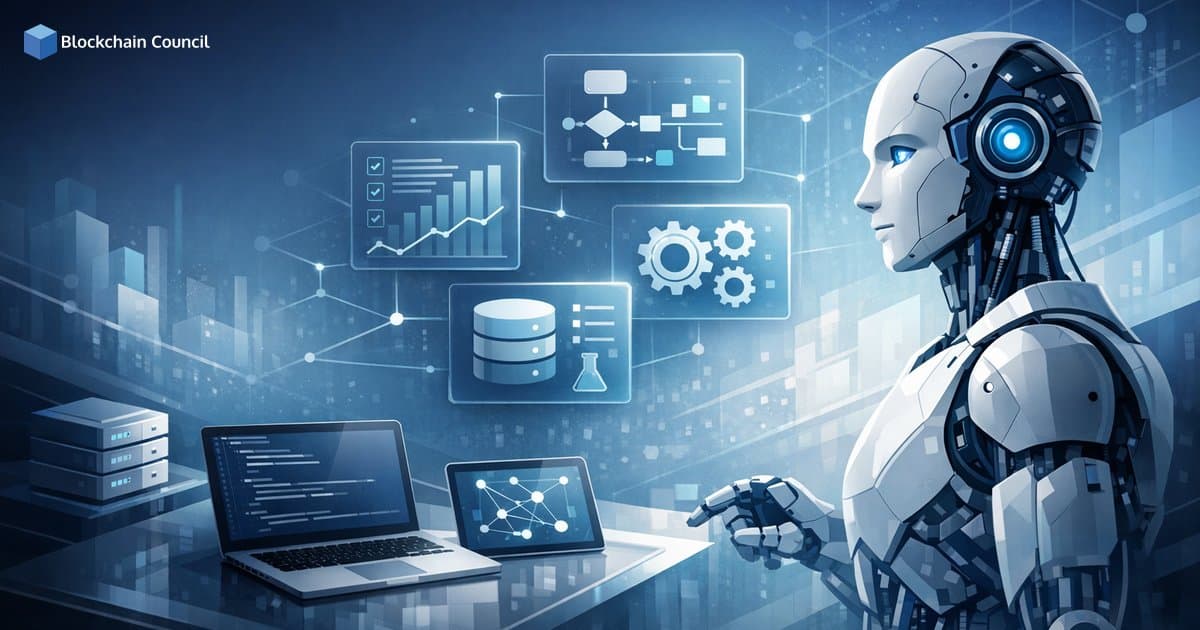
Agentic AI workflow design is rapidly becoming a core competency for teams that want AI systems to do more than generate text. In an agentic setup, one or more agents can plan, use tools, maintain state, and execute multi-step tasks toward a goal with minimal human intervention - all within explicit guardrails. This shift from single-turn responses to goal-directed execution is powerful, but it introduces new reliability, governance, and operational risks that must be addressed from day one.
This guide explains how to build an agentic AI workflow for enterprise and technical readers, covering architecture patterns, tool design, orchestration, and production best practices drawn from current engineering and vendor guidance.

What is an Agentic AI Workflow?
An agentic AI workflow is a system where AI agents take initiative to plan, decide, and execute tasks using tools, memory, and policies. Unlike a chatbot that answers questions, an agentic workflow is built to complete processes: research, then draft, then validate, then route for approval - or triage an alert, enrich context, and propose remediation.
Most practical definitions converge on these characteristics:
Goal-directed behavior rather than single-turn outputs
Tool use across APIs, databases, code execution, RPA, and SaaS applications
Multi-step planning and execution with branching and retries
Feedback loops such as reflection, verification, and correction
Deterministic orchestration around non-deterministic model reasoning
Adoption is accelerating, but maturity is uneven. Industry estimates suggest that over 40 percent of agentic AI projects fail due to governance and ROI issues, which underscores that success depends as much on operating model and controls as on model quality.
Core Architecture: The Building Blocks
A production-grade agentic AI workflow is best understood as a set of separable components that can be owned, tested, secured, and scaled independently.
1) Orchestration and Workflow Engine
The orchestrator is the backbone. It controls sequencing, branching, retries, timeouts, and failure handling. Enterprise reliability comes from keeping workflow logic explicit and deterministic, while treating LLM steps as bounded components inside the workflow rather than open-ended reasoning engines.
2) Agents
Agents encapsulate roles such as Planner, Researcher, Validator, or Reviewer. In production, narrower agents are typically safer and easier to test than general-purpose agents. A widely accepted engineering guideline is to prefer single-responsibility agents, and often even single-tool, single-responsibility agents when tool access is involved.
3) Tools and External Systems
Tools are how agents create real outcomes. Examples include:
Internal APIs (pricing, inventory, risk, identity)
Databases and data warehouses
Vector search over documents, tickets, logs, and policies
Code execution services
RPA bots and SaaS integrations (CRM, ITSM, email)
Treating tools as a distinct layer with strong access control, careful interface design, and rigorous testing helps avoid hung calls, unnecessary API costs, and workflow derailment.
4) Memory and State
Most systems require multiple memory types:
Short-term state: current task context and intermediate results
Long-term memory: durable context via databases or vector stores
Episodic task memory: structured decisions, evidence, and outputs stored for audit and replay
5) Policies, Guardrails, and Governance
Because agentic systems take real actions, safety is a first-order design constraint. Common controls include system prompts and role policies, output validation, content filters, action gating, and human-in-the-loop approvals for high-impact steps such as financial actions, customer communications, and configuration changes.
6) Monitoring and Analytics
Agentic workflows require observability similar to distributed systems: logs, metrics, traces, and evaluation harnesses. Quality and safety metrics should be tracked alongside cost and latency.
Architecture Patterns to Choose From
Different workflows demand different agentic patterns. The following are widely referenced across current technical and enterprise literature.
Hierarchical (Leader-Worker) Architecture
A leader agent decomposes tasks, delegates to specialist agents, then aggregates results. This works well for sequential workflows with clear accountability - such as document generation, approval chains, and structured investigations. Watch for bottlenecks or single points of failure at the leader level.
Router Workflows
A router agent or orchestrator directs each request to the appropriate specialist agent or sub-workflow based on intent. Router workflows represent a practical maturity step between linear flows and high-autonomy agents.
Multi-Agent Collaboration
Peer agents with different roles collaborate and critique each other, sometimes coordinated by an orchestrator. This pattern is effective for complex outputs such as reports, code reviews, or incident response - particularly when explicit review and verification stages are included.
Plan-Act and Plan-Act-Reflect
A planning stage creates a structured plan, execution carries it out, and a reflection stage verifies outcomes and revises the plan if needed. This pattern is well-suited to quality-critical work where the cost of errors is high.
ReAct (Reason + Act)
ReAct interleaves reasoning and tool calls. It is useful when requirements are incomplete or the environment is uncertain, but it should be bounded by orchestration limits such as maximum steps, tool budgets, and validation gates.
Deterministic Workflows vs. Free-Form Agents
Most enterprise use cases benefit from explicit agentic workflows that keep non-LLM logic simple and deterministic, rather than relying on a general agent to invent the process dynamically. This approach reduces risk and simplifies compliance review.
Tools and Infrastructure: What to Use and How to Design It
Model Context Protocol (MCP) and Standardized Tool Interfaces
MCP is emerging as a standardized way to expose tools and data sources to agents through consistent interfaces. A tool-first design with explicit tool definitions improves determinism and makes debugging significantly easier. Standardized protocols like MCP also help enforce secure and consistent data exchange between agents and external systems.
Function Calling and Pure-Function Semantics
Where possible, design tools as deterministic functions with minimal side effects. Pure-function tool invocation improves predictability, testability, and replayability. For side-effecting actions such as sending email or updating a CRM record, add extra safeguards including parameter validation, dry-run modes, and human approvals.
Framework Selection Criteria
Framework choice matters, but patterns and operational practices matter more. Evaluate frameworks for modularity, ecosystem support, and operational constraints including latency, security, and resource usage. The OpenAI Agents SDK, combined with MCP-based tool integration, is one well-documented example for multi-agent orchestration. Enterprise platforms like Akka emphasize orchestration, agents, memory, and streaming for real-time and event-driven workloads. Select based on your team's existing stack and the specific demands of your target workflow.
Best Practices for Building an Agentic AI Workflow
1) Start Workflow-First and Tool-First
Begin with a workflow diagram and a tool inventory, then introduce agents only where they add value. Explicitly decide which steps require an LLM and which should remain deterministic code. This reduces cost and increases reliability.
2) Keep It Simple
Minimize the number of agents, tools, and possible branches. Fewer paths means less non-determinism, easier debugging, and simpler compliance review.
3) Use Single-Responsibility Agents
Single-purpose agents reduce tool-selection noise and make prompts easier to maintain. They also align well with standard software testing practices, where smaller units with clearer contracts are easier to validate.
4) Separate Concerns Cleanly
Orchestration logic: branching, retries, timeouts
Tool servers: MCP backends or service adapters
Prompts and policies: externalized templates and configurations
This separation enables independent evolution of each layer and supports safer deployments.
5) Externalize Prompt Management
Store prompts in version-controlled configuration or a dedicated prompt management system, not as hard-coded strings. This supports audit trails, safer iteration, and A/B testing across environments.
6) Apply Governance: Zero-Trust Security and HITL Gates
Governance is a central requirement, not an afterthought. Apply:
Least privilege for every tool
Policy-based access control at the tool layer
Data minimization and redaction before sending context to models
Audit logs of agent decisions and tool calls
Human approvals for irreversible or high-risk actions
7) Test Like a Production System
Thorough testing of tool and function calls is essential to prevent hung calls and runaway costs. A practical testing stack includes:
Unit tests for tools and adapters
Integration tests for full workflows
Offline evaluation on historical data
Shadow mode runs before full rollout
Failure injection for tool outages and partial data
8) Control Cost and Latency Deliberately
Keep LLM calls to the minimum required. Use smaller models for routine steps and reserve larger models for ambiguous reasoning. Cache stable intermediate results and summarize long contexts to keep token usage bounded.
Real-World Use Cases That Map Well to Agentic Workflows
Document workflows: Drafting, review, redlining, and approval routing for document-centric processes.
Enterprise automation: Approval chains, ticket routing, escalation, and CRM updates.
Data pipelines: Agent steps for generating or validating transformation logic while keeping execution deterministic.
Security operations: Alert triage, investigation enrichment, and remediation proposals with human approval gates.
Platform-level systems: Orchestration combined with memory and streaming for real-time, event-driven agentic automation.
Implementation Checklist: Build an Agentic AI Workflow in 10 Steps
Define goals and constraints: success metrics, boundaries, risk level, data sources.
Map the workflow: steps, decision points, failure modes, and where LLMs are genuinely needed.
Design tools: stable interfaces, pure functions where possible, clear schemas.
Choose a pattern: linear, router, hierarchical, multi-agent, Plan-Act-Reflect, or ReAct.
Define agents: narrow responsibilities, explicit prompts, clear termination conditions.
Implement orchestration: retries, timeouts, idempotency, step budgets.
Apply governance: least privilege, redaction, policy checks, audit logging.
Insert HITL checkpoints: approvals for irreversible actions and high-impact outputs.
Evaluate and test: offline datasets, shadow runs, scenario tests.
Deploy and monitor: containerized rollout, environment-specific configs, cost and quality dashboards.
Conclusion
Building a reliable agentic AI workflow requires treating AI agents as components inside a deterministic, observable, and governed system. Tool-first design, single-responsibility agents, explicit orchestration, and zero-trust controls consistently represent the most durable best practices in current engineering guidance. Starting with a constrained workflow, measuring success end-to-end, and gradually increasing autonomy with strong testing and human checkpoints gives agentic systems a clear path from experimentation to production without sacrificing safety or accountability.
For teams formalizing these skills, structured training in AI and machine learning, prompt engineering, AI security, and blockchain-based auditability can complement the architectural disciplines covered here and support a more rigorous approach to enterprise AI deployment.
Related Articles
View All
Agentic AI
Agentic AI Tools and Architecture FAQs: LLM Agents, RAG, Memory, Planning, and Multi-Agent Systems Explained
Learn agentic AI tools and architecture: LLM agents, RAG, memory, planning, and multi-agent systems, plus enterprise layers, controls, and real use cases.

Agentic AI
AI Agent Platforms Explained: Architecture, Tooling, and Deployment Best Practices for Enterprise Automation
AI agent platforms power enterprise automation by orchestrating LLMs, tools, and workflows with memory, governance, and observability for reliable, secure deployments.

Agentic AI
AI Agent Security Best Practices for Enterprise Environments
Learn AI agent security best practices for enterprise environments, including identity, least privilege, monitoring, red teaming, and governance.
Trending Articles
The Role of Blockchain in Ethical AI Development
How blockchain technology is being used to promote transparency and accountability in artificial intelligence systems.
AWS Career Roadmap
A step-by-step guide to building a successful career in Amazon Web Services cloud computing.

Top 5 DeFi Platforms
Explore the leading decentralized finance platforms and what makes each one unique in the evolving DeFi landscape.