

Agentic AI in Healthcare Operations: Scheduling, Documentation, and Claims Automation

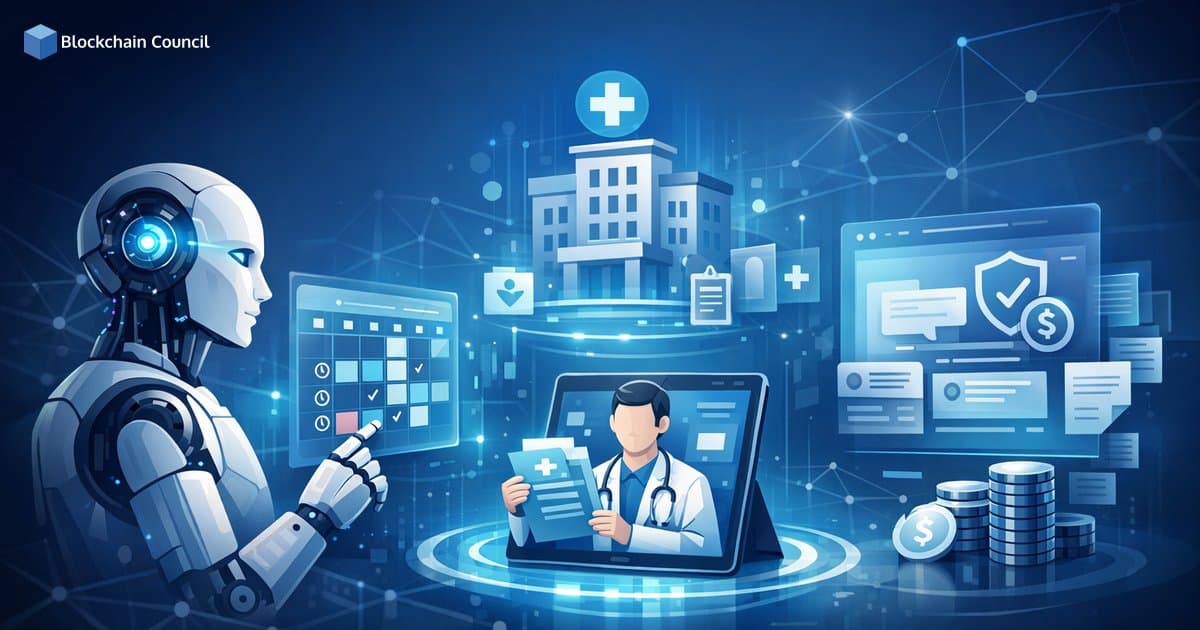
Agentic AI in healthcare operations is moving from concept to early production in administrative workflows such as scheduling, documentation, prior authorization, claims, and revenue cycle management (RCM). The strongest near-term value appears in work that is repetitive, rules-heavy, and data-intensive, where AI agents can take goal-driven actions across multiple steps instead of running a single scripted task. The most credible evidence today supports task automation and decision support rather than fully autonomous, end-to-end clinical decision-making, with consistent emphasis on human oversight, high-quality training data, and strong guardrails.
What is Agentic AI in Healthcare Operations?
Agentic AI refers to systems that can pursue an objective by planning, taking actions, checking outcomes, and iterating. In healthcare operations, that means an AI agent can:

Interpret context across multiple data sources, including EHR notes, scanned documents, emails, call transcripts, and payer portals.
Orchestrate multi-step workflows such as gathering missing information, validating requirements, and routing exceptions.
Escalate to humans when confidence is low, policies are ambiguous, or patient and financial risk increases.
This is materially different from traditional automation that follows fixed rules in a single application. Agentic systems are designed to coordinate tasks end-to-end within defined boundaries, while still operating under governance and compliance controls.
Why Scheduling, Documentation, and Claims Are the Best Near-Term Targets
Healthcare operations are a strong fit for agentic AI because many workflows are high-volume and measurable. Teams can track improvements in metrics such as wait times, slot utilization, first-pass claim acceptance, denial rates, turnaround time, and staff workload. The most well-supported near-term value lies in reducing administrative burden rather than replacing clinicians.
Agentic AI also addresses a persistent operational reality: healthcare data is fragmented. Even a straightforward workflow like prior authorization can require data from the EHR, imaging systems, lab systems, referral notes, and payer policy documentation. Agents that can search, assemble, validate, and route work are well aligned to this environment.
Use Case 1: Agentic AI for Scheduling and Patient Access
Scheduling is shifting from single-function tools to goal-driven agents that can coordinate calendars, resources, and patient communications across multiple steps. Instead of only booking an appointment, an agent can manage the full access workflow, including reminders, pre-registration prompts, and rescheduling based on constraints.
What an Agentic Scheduling Workflow Can Do
Coordinate constraints across provider availability, room and equipment capacity, appointment duration, and patient urgency.
Predict no-show risk and proactively recommend confirmation steps or alternative slots.
Automate reminders and follow-ups while escalating sensitive cases to staff.
Optimize utilization by offering earlier openings, handling cancellations, and maintaining waitlists.
Some industry commentary suggests that AI-driven scheduling can reduce wait times by up to 30%. That figure appears primarily in vendor-oriented materials rather than peer-reviewed studies, so it is best treated as directional. Even without a definitive universal benchmark, the operational logic is sound: reducing manual handoffs and improving slot utilization typically improves access and staff efficiency.
Operational Guardrails That Matter
Role-based permissions to prevent unintended changes to templates and provider schedules.
Audit trails for every scheduling change and patient message.
Human approval thresholds for double-booking, high-acuity scheduling, or policy exceptions.
Use Case 2: Agentic AI for Documentation and Data Structuring
Documentation workflows are a natural fit because healthcare information arrives in mixed formats and must be interpreted in context. Organizations are using AI agents to extract, validate, and structure information from EHR fields, scanned PDFs, faxes, emails, and other sources to reduce manual data entry and support clinical and administrative documentation.
Where Documentation Agents Create Value
Document intake and classification such as identifying referrals, prior auth requests, denial letters, or clinical attachments.
Data extraction and normalization for patient demographics, diagnoses, procedure codes, orders, and supporting evidence.
Consistency checks that flag missing fields, mismatched identifiers, or incomplete attachments before work moves downstream.
Routing and worklist creation so the right team sees the right packet with the right context.
Because documentation sits upstream of scheduling, billing, and claims, improvements here often compound. Cleaner inputs reduce rework later, especially in claims pre-validation and prior authorization submissions.
Use Case 3: Agentic AI for Claims Automation and Revenue Cycle Management
Claims and RCM represent some of the most advanced agentic AI use cases described in industry sources. The workflows are rules-heavy, involve repeated interactions, and produce measurable outcomes. Agentic systems are being applied to eligibility verification, coding support, claim submission, denial management, appeals drafting, and payment posting. A common pattern is pre-validation that catches issues before submission and routes exceptions to humans.
Claims Pre-Validation and Error Prevention
An agent can validate a claim against coding standards, payer rules, and documentation requirements in real time. If documentation is incomplete, the agent can attempt to locate missing evidence, request it, or route the claim to a specialized work queue. This approach targets preventable denials by shifting quality checks earlier in the workflow.
Denial Management and Appeals Drafting
Denial management involves multiple steps: identifying the cause, gathering evidence, referencing relevant policy language, and drafting an appeal. Agents can support this process by compiling supporting clinical documentation and generating an initial appeal draft based on denial reason and payer requirements. The strongest deployment pattern keeps humans responsible for final submission and judgment calls, while the agent accelerates evidence gathering and drafting.
Exception Handling Across Unstructured Inputs
Claims operations often involve unstructured artifacts such as emails, call transcripts, handwritten notes, and scanned reports. Agentic systems can review these inputs, extract key details, and triage the claim to the next best action. This is where goal-driven behavior is most valuable: the agent is not only reading data, it is deciding how to move work forward within policy constraints.
Prior Authorization: A High-Value Orchestration Problem
Prior authorization is a recurring priority because it requires multi-step evidence gathering, policy checks, and payer interaction. It also reflects how operations teams work in practice: collect documentation, check requirements, submit, respond to information requests, and iterate.
Multi-agent orchestration patterns place specialized agents working in coordination, where one agent gathers clinical evidence, another checks payer policy requirements, and a third assembles and submits the final package. This approach can reduce cycle time while maintaining human supervision for edge cases.
Implementation Constraints and Risk Controls
Agentic AI in healthcare operations is not a plug-and-play layer. The primary constraints are data quality, integration complexity, and compliance. Performance depends on high-quality, real-world training data, and systems must know when to bring humans into the loop.
Key Risks to Plan For
Data quality issues that create downstream rework, incorrect routing, or preventable denials.
Integration complexity with legacy EHR, billing, clearinghouse, and payer systems.
Privacy and compliance requirements, including HIPAA-aligned access controls, encryption, logging, and governance.
Over-automation risk if agents act beyond approved boundaries or fail to escalate uncertain cases.
Practical Guardrails for Safe Adoption
Human-in-the-loop escalation for low-confidence outputs, high-value claims, unusual medical necessity scenarios, and policy ambiguities.
Policy-aware prompting and rule layers so agents do not invent requirements or misapply payer rules.
Auditability with end-to-end logs of what the agent saw, what it did, and why it chose a given action.
Phased deployment starting with assistive automation, then expanding to partial autonomy for low-risk, high-volume lanes.
How to Get Started: A Roadmap for Operations Leaders
A successful program typically begins with a narrow, measurable workflow, then scales across adjacent processes once governance and integration patterns are proven.
Pick a workflow with clear ROI: denial worklists, claims pre-validation, prior auth document gathering, or multi-step scheduling workflows.
Define success metrics: first-pass acceptance rate, denial rate, average handling time, turnaround time, backlog size, and exception rates.
Design for exceptions: explicitly map when the agent must stop and escalate to staff.
Build a data readiness plan: normalize identifiers, reduce duplicate records, and standardize document intake.
For teams building internal capability, upskilling through recognized certifications in AI, prompt engineering, data science, and cybersecurity can support governance, privacy, and secure deployment of agentic systems in healthcare environments.
Future Outlook: Hybrid Operations, Not Fully Autonomous Administration
In the short term, the most plausible trajectory is broader deployment of assistive agents in scheduling, inbox management, document extraction, denial worklists, and prior authorization support. In the medium term, organizations are likely to adopt coordinated agent teams that handle larger portions of RCM and patient access, with humans supervising exceptions and policy judgment.
A near-term expectation of fully autonomous healthcare administration without oversight is not well supported by available evidence. A more realistic destination is a hybrid operating model where agents manage routine actions, validate requirements, and assemble work packets, while humans retain accountability for exceptions, clinical nuance, and final decisions that carry patient or financial risk.
Conclusion
Agentic AI in healthcare operations is becoming a practical tool for improving scheduling efficiency, reducing documentation burden, and accelerating claims and prior authorization workflows. The strongest near-term wins are in repetitive, rules-heavy processes where agents can orchestrate multiple steps, validate completeness, and route exceptions to humans. Organizations that invest in data quality, integration, auditability, and human-in-the-loop guardrails are best positioned to capture measurable ROI while maintaining compliance and operational safety.
Related Articles
View All
Agentic AI
How Businesses Can Prepare for Agentic AI-Powered Payment Automation
Learn how businesses can prepare for agentic AI-powered payment automation with modern AP systems, stronger data, clear controls, and safe pilots.

Agentic AI
Agentic AI Compliance in Finance: KYC, AML, and Reporting Automation
Agentic AI compliance in finance can automate KYC, AML alert triage, and regulatory reporting, but success depends on data, controls, and auditability.
Agentic AI
Agentic AI for Accounts Payable and Receivable Automation
Learn how agentic AI automates AP and AR workflows, improves cash visibility, reduces exceptions, and strengthens finance controls.
Trending Articles
AWS Career Roadmap
A step-by-step guide to building a successful career in Amazon Web Services cloud computing.
Claude AI Tools for Productivity
Discover Claude AI tools for productivity to streamline tasks, manage workflows, and improve efficiency.
How to Create Claude Skills?
Claude Skills are one of the most important features Anthropic has introduced for users who want automation that is structured, consistent and reusable. Instead of giving Claude long instructions ever