

Tokenomics in Web3: Designing Sustainable Utility Tokens Without Creating a Securities Risk

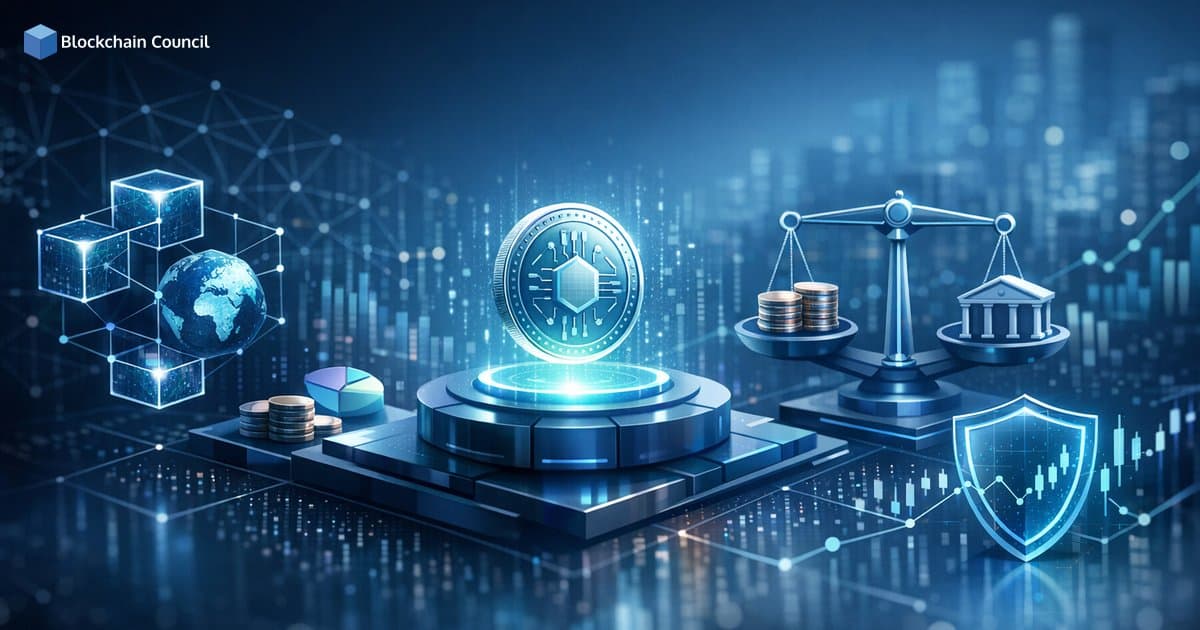
Tokenomics in Web3 has evolved from a whitepaper section into a multidisciplinary practice that spans product design, financial modeling, governance, and regulatory strategy. In 2026, teams are expected to prove that a token has verifiable utility, sustainable supply-demand dynamics, and a compliance-aware distribution approach. Simply calling an asset a "utility token" is not enough, particularly as regulators continue to evaluate whether buyers are led to expect profits from others' efforts under the Howey framework applied by the U.S. Securities and Exchange Commission.
This article explains how to design sustainable utility tokens and reduce securities risk by focusing on real in-protocol functions, transparent emissions and vesting, credible demand drivers, and disciplined public communications.

Why Tokenomics in Web3 Is Now a Core Product and Compliance Function
Modern tokenomics is not only about supply and price. It is about whether a token meaningfully improves how a protocol operates and whether the ecosystem can survive stress scenarios such as low adoption, liquidity shocks, or large unlock events. Practitioner guidance increasingly emphasizes stress-testing token velocity, circulating supply, fee capture, and incentive efficiency before launch, not after market feedback forces a redesign.
Regulation is also shaping design choices. In the United States, securities analysis commonly centers on Howey factors such as expectation of profits and reliance on managerial efforts. In the European Union, MiCA introduces clearer disclosure and conduct requirements across crypto-asset issuance and services, increasing the need for structured documentation and compliance planning even for projects that consider their tokens purely functional assets.
What Makes a Utility Token Sustainable
A sustainable utility token typically combines five elements: concrete utility, balanced supply management, non-speculative demand drivers, strong financial modeling, and a regulatory-aware structure.
1) Clear, Necessary In-Protocol Function
The first question is direct: does the product work equally well without the token? If yes, the token is often economically weak and harder to defend as utility-driven. Strong utility patterns include:
- Fees: the token is required to pay for execution, storage, or messaging.
- Access: the token gates scarce resources, premium features, or service tiers.
- Staking and security: the token is bonded to protect the network or to participate in validation and service provision.
- Collateral: the token is used in risk-managed collateral frameworks.
- Governance: holders vote on parameters that affect protocol operation, risk, and treasury policy.
- Usage-linked incentives: rewards tied to real activity such as productive liquidity, verified work, or service quality.
2) Balanced Token Supply Design
Many token failures are supply failures. Common issues include high inflation without sinks, large early unlocks, and opaque allocation. Better patterns include:
- Controlled emissions: a defined maximum supply or a clearly modeled issuance path.
- Vesting and cliffs: long vesting periods for teams and early stakeholders to reduce short-term sell pressure.
- Transparent unlock schedules: published schedules that users can independently verify.
- Emission reductions: for inflationary models, issuance declines over time and is tied to measurable growth or security needs.
3) Demand Drivers Beyond Speculation
Sustainable tokens create recurring demand because users must hold or spend them to perform valuable actions. Strong designs also include token sinks that counterbalance emissions, such as:
- Fee burns or fee routing mechanisms tied to usage
- Staking lockups that reduce circulating supply while contributing to security
- Collateral lockups for protocol functions
- Access requirements for scarce services
4) Credible Financial Modeling and Stress Tests
Tokenomics in Web3 should be treated as a financial system design problem. Teams increasingly use scenario-based projections and sensitivity analysis to test whether the economy survives:
- Low adoption and low transaction volume
- High token velocity, where users immediately sell rewards
- Liquidity declines and widening spreads
- Major unlock events or the end of incentive programs
Operationally, projects should monitor metrics including circulating supply, token velocity, fee capture, and the percentage of rewards going to productive participants versus mercenary capital.
5) Regulatory-Aware Structure
Regulatory risk is often created by a combination of design choices and messaging. Designs that depend on ongoing managerial efforts to create token value, paired with investment-style communications, tend to face higher scrutiny. A compliance-aware approach typically includes legal review of token distribution, incentive programs, marketing language, governance realities, and disclosures.
Securities Risk Basics: What Regulators Tend to Evaluate
In the United States, regulators and courts often evaluate digital assets using the Howey framework: whether there is an investment of money in a common enterprise with an expectation of profits derived from the efforts of others. This is a facts-and-circumstances analysis, and no token structure guarantees a non-security classification.
Risk tends to increase when projects:
- Sell tokens to fund development before meaningful utility exists
- Market the token as an appreciating asset or emphasize "returns"
- Centralize control so that the team is clearly responsible for value creation
- Retain strong discretionary control over supply, unlocks, or treasury actions that markets interpret as value support
- Encourage passive holding rather than active participation and use
Outside the United States, frameworks such as the EU's MiCA increase compliance expectations around issuance, disclosure, and conduct. Projects operating globally should treat jurisdictional planning as part of token design, not as a post-launch consideration.
Design Principles for Sustainable Utility Tokens With Lower Securities Risk
The goal is not zero risk. The goal is a defensible design where utility is real, token economics are sustainable, and communications do not create an expectation of profit based on managerial efforts.
1) Start With Utility That Is Measurable Onchain
Prefer token roles that are observable and necessary, such as paying protocol fees, staking for security, or collateralizing risk. If you claim utility, define the exact user actions that require the token and publish onchain metrics that prove usage after launch - for example, the percentage of transactions paying fees in the token, staking participation rate, or token lockup ratio.
2) Avoid Investment-Style Marketing and Profit Framing
Public statements can become part of a risk analysis. Avoid language that implies profit, appreciation, or passive income. Instead, communicate:
- What the token does in the protocol
- Who needs it and why
- How participants can use it to access services or contribute to network operation
- What governance can and cannot do
3) Make Distribution and Incentives Match the Utility Story
Distribution mechanics should support usage rather than speculation. Designs that over-reward early capital and under-reward real contributors often produce rapid sell pressure and reduced long-term utility. Consider:
- Progressive decentralization: distribution that broadens control over time through real participation.
- Usage-based emissions: incentives tied to verifiable actions, not just token holding.
- Reasonable unlock pacing: avoid cliffs that can overwhelm organic demand.
4) Engineer Token Sinks and Earned Demand
Many token economies fail because rewards create supply without any structural reason to hold or spend the token. Durable demand is typically built through:
- Fee mechanisms linked to actual network usage
- Staking requirements that reduce circulating supply while enabling protocol functions
- Collateral requirements for critical roles such as market makers, service providers, and validators
- Access to scarce capacity such as priority execution, bandwidth, or premium features
5) Publish Transparent Tokenomics and Treasury Policy
Transparency reduces uncertainty and improves governance quality. At minimum, publish:
- Total supply and emission schedule
- Allocation by category, including team, community, treasury, and ecosystem incentives
- Vesting terms and unlock schedules
- Treasury management policy and reporting cadence
- Governance scope, quorum, and upgrade controls
Examples: What Real Utility Looks Like in Practice
Ethereum: Utility Tied to Execution and Security
ETH is widely cited because it has clear protocol utility: it pays for gas, supports staking, and underpins network security and execution. Its usefulness derives from demand to use the network, not from narratives about appreciation alone. Ethereum also illustrates how utility and governance can coexist within a large ecosystem of applications and infrastructure.
Uniswap and Compound: Governance Tokens Require Careful Framing
Governance-focused tokens such as UNI and COMP demonstrate that governance can be meaningful, but governance alone does not always guarantee durable demand. From a securities-risk perspective, governance tokens require careful communication so they are not promoted as proxies for profits or fee rights unless the structure clearly supports such claims and has been reviewed by legal counsel.
Aave and MakerDAO/Sky: Utility Linked to Risk Management
AAVE and MKR are frequently discussed for linking governance to protocol safety and risk management. This highlights an important point: governance can be more defensible when it is clearly tied to operational responsibilities - risk parameters, security, collateral frameworks - rather than vague value-capture narratives.
Practical Tokenomics Checklist Before Launch
- Utility: What exact user action requires the token, and why is a token preferable to credits or points?
- Demand: What creates persistent demand, and what are the token sinks?
- Supply: What prevents oversupply, inflation spirals, or unlock shocks?
- Vesting: What are the team and investor vesting terms, and are unlocks publicly disclosed?
- Stress tests: What happens in low-adoption scenarios or during liquidity declines?
- Governance: Who controls upgrades and treasury actions, and how does decentralization progress?
- Communications: What language will be used publicly, and what claims are prohibited?
- Legal review: What legal analysis supports the issuance and distribution model across target jurisdictions?
Learning Paths for Teams Building Token Economies
Designing tokenomics in Web3 requires cross-functional skills across smart contracts, mechanism design, treasury operations, and compliance. For structured upskilling, consider certification paths such as Blockchain Council's Certified Blockchain Expert, Certified Smart Contract Developer, and Certified DeFi Expert programs, which help teams align engineering decisions with token design and onchain execution.
Conclusion: Sustainable Tokenomics Is Utility-First and Compliance-Aware
Tokenomics in Web3 is increasingly judged by whether it produces measurable utility, resilient supply-demand dynamics, and credible governance. The strongest utility tokens are not built around appreciation narratives. They are built around functional necessity, transparent issuance, responsible incentives, and communications that focus on participation rather than passive profit expectations.
If you are designing a token, treat tokenomics as both a product system and a compliance surface area from day one. Build utility that can be proven onchain, model pessimistic scenarios, and involve securities counsel early. That combination represents the most practical path toward sustainable utility tokens while reducing securities risk.
Related Articles
View All
Web3
Soulbound Tokens and Web3 Identity: Reputation, Credentials, and Trust
Soulbound Tokens bring non-transferable credentials, reputation, and identity attestations to Web3, with major promise and serious privacy trade-offs.
Web3
Web3 Identity for DeFi: Reduce Fraud Without Exposing Users
Web3 identity for DeFi can reduce fraud with zk-KYC, verifiable credentials, and onchain reputation while limiting unnecessary user data exposure.

Web3
Verifiable Credentials in Web3: Trust Without Central Authorities
Verifiable Credentials in Web3 use cryptography, DIDs, selective disclosure, and governance to prove identity claims without relying on one central authority.
Trending Articles
The Role of Blockchain in Ethical AI Development
How blockchain technology is being used to promote transparency and accountability in artificial intelligence systems.

Top 5 DeFi Platforms
Explore the leading decentralized finance platforms and what makes each one unique in the evolving DeFi landscape.
How Blockchain Secures AI Data
Understand how blockchain technology is being applied to protect the integrity and security of AI training data.