

Personalized Payment Experiences in Web3 Using Artificial Intelligence

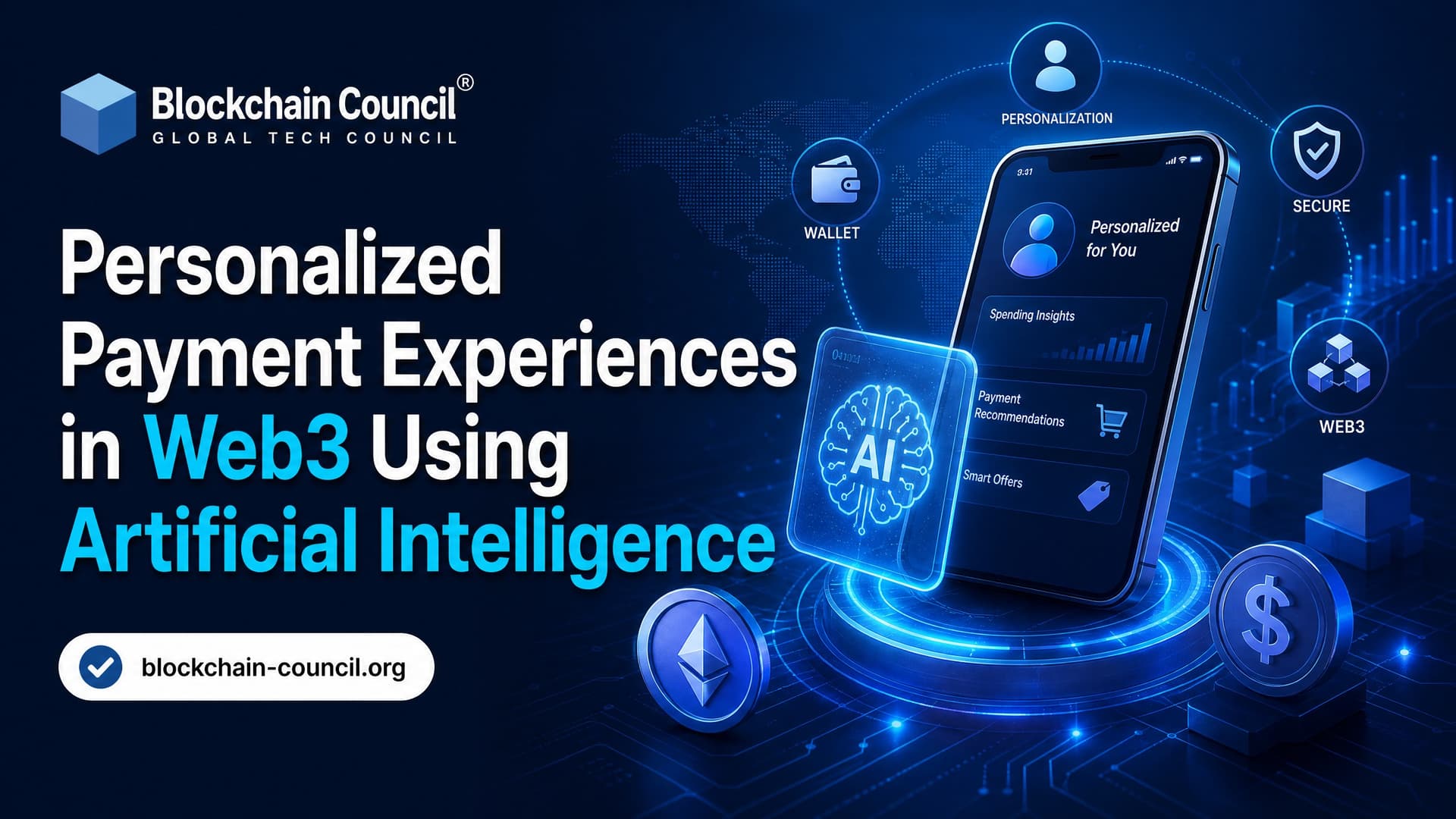
Personalized payment experiences in Web3 are becoming practical because AI can choose payment routes, security checks, spending limits, and user prompts based on real behavior rather than static rules. That matters for crypto wallets, stablecoin checkouts, payment processors, and AI agents that need to move value without asking a human to approve every tiny action.
The shift is not just cosmetic. A personalized Web3 payment flow can decide whether you should pay with USDC on a low-cost network, receive a step-up authentication prompt, sponsor gas for a first-time user, or block a transaction that looks like wallet-draining behavior. The best systems feel simple to the user. Underneath, they combine blockchain infrastructure, machine learning, risk analytics, and careful policy design.

What Personalized Payments Mean in Web3
Web3 payments are blockchain-based transfers of value, usually through cryptocurrencies, stablecoins, tokenized assets, or smart contracts. Personalization adds an AI decision layer that adapts the payment journey to a user, business, or autonomous agent.
In practice, that can include:
Recommending a payment method based on previous behavior and current network fees
Changing transaction limits for a trusted user versus a new wallet address
Routing stablecoin payments through the cheapest acceptable rail
Triggering stronger authentication only when the risk score justifies it
Letting an AI agent pay for APIs, subscriptions, or digital services within a user-defined budget
Traditional payment companies already use AI to personalize checkout layouts and payment method ordering. Stripe, for example, has described using AI to tailor checkout experiences to users and merchant goals. The same thinking is now moving into Web3, where the payment choice is not just card versus bank transfer. It may be ETH on Ethereum mainnet chain ID 1, USDC on a layer 2, a wallet-to-wallet transfer, or a smart contract call with EIP-1559 fee settings.
Why AI Fits Web3 Payments
Blockchain payments produce a lot of machine-readable data. Wallet age, transaction graph patterns, token approvals, contract interactions, bridge usage, and address reputation can all inform payment decisions. AI is useful here because fixed rules break quickly.
Take a rule like "block any wallet that moved funds through a bridge." Too blunt. A model can do better. It can look at transaction sequence, counterparties, velocity, token type, and known risk clusters before deciding whether to approve, warn, delay, or reject.
Where AI Adds Value
Fraud detection: AI can flag unusual transaction behavior in real time, especially when funds move across many wallets in short order.
Dynamic routing: Models can compare cost, speed, liquidity, and risk before selecting a rail.
Checkout personalization: The interface can show the most relevant wallet, token, or stablecoin first.
Compliance screening: AI-assisted blockchain analytics can prioritize high-risk cases for human review.
Agent spending controls: AI agents can transact within clear limits, with logs that humans can audit later.
To be blunt, AI should not be allowed to sign anything it wants. The winning designs pair AI recommendations with hard policy boundaries, smart contract constraints, and human approval for sensitive actions.
AI Crypto Wallets Are Moving Personalization to the User Layer
Crypto wallets are no longer just key managers. AI-enabled wallets are starting to act like personal payment assistants. BitGo has discussed AI wallet features such as anomaly detection, scheduled transactions, and policy tuning. Cobo has described AI wallets for autonomous trading, smart security, and agent-driven operations. White-label wallet providers such as Antier also position intelligent transaction processing and predictive analytics as standard wallet features.
This matters because the wallet sits closest to the user. It can personalize decisions before a transaction reaches a dApp or payment processor.
A practical wallet might:
Warn you before approving an unlimited ERC-20 allowance to an unknown contract
Suggest a smaller test transaction for a new address
Choose a stablecoin balance that avoids unnecessary swapping
Delay a high-value transfer if your behavior does not match your normal pattern
Explain why a transaction failed instead of showing a generic error
Anyone who has tested token payments knows the details matter. In OpenZeppelin Contracts 4.x, a failed ERC-20 transfer may revert with ERC20: transfer amount exceeds balance. Wallets often surface an even less helpful message, such as cannot estimate gas; transaction may fail or may require manual gas limit. A good AI payment assistant can translate that into plain language: you do not have enough token balance, or the contract call will likely revert before execution. Small improvement. Big reduction in support tickets.
Stablecoins and AI Agents: The New Payment Pairing
Stablecoins are a natural fit for agentic payments because they are programmable, available around the clock, and easier to price than volatile assets. IBM and various industry commentators have pointed to stablecoins as a likely settlement layer for AI agents that need to buy digital services, pay for API calls, or manage subscriptions.
Agent payment infrastructure is already forming. Crossmint offers infrastructure that gives AI agents wallets, virtual cards, and stablecoin balances. Coinbase has introduced payment-related work around its Model Context Protocol ecosystem. Google has discussed the Agent Payments Protocol, known as AP2, for agent-to-agent payment interactions. These efforts point in the same direction: AI agents will need controlled access to money.
What Personalization Looks Like for AI Agents
For humans, personalization often means convenience. For agents, it means policy.
Spend no more than 50 USDC per day
Use only approved vendors
Prefer stablecoin payments, but allow card fallback
Require human approval for new counterparties
Keep an auditable log of every payment decision
Gasless payments will also matter. If an agent has to manage native gas tokens on every network, the user experience gets messy fast. Sponsored transaction designs, account abstraction, and paymaster-style patterns can hide that complexity, but they create new risk too. Someone is paying the gas. Someone is deciding which transactions deserve sponsorship.
Personalized Web3 Checkout and Payment UX
Web3 payment UX has a simple problem: users should not need to understand every network, fee market, address format, token contract, and signature request before paying. Yet they often do.
AI can reduce the load by adapting the interface. If a user usually pays with USDC and has sufficient balance, show that first. If Ethereum mainnet gas is high, suggest a lower-cost network when the merchant supports it. If a signature grants broad token permissions, explain the risk before the user clicks.
Payment companies already use AI to reorder checkout options and reduce failed transactions. Web3 can apply the same method, but with extra care. A credit card payment can often be reversed. A blockchain transfer usually cannot. That changes the design standard.
Security, AML, and Risk-Based Personalization
Personalized payment experiences in Web3 depend on risk scoring. Low-risk users should not face constant friction. High-risk patterns should trigger stronger controls.
Blockchain analytics firms such as Chainalysis, TRM Labs, and Scorechain use transaction graph analysis to detect suspicious activity. Deloitte and Hawk have discussed how AI can improve efficiency in crypto crime detection, especially where many sequential transactions create gray areas for rules-based systems. IBM has also written about AI tools that monitor blockchain transactions for unusual behavior, including rapid fund movement.
This enables controls such as:
Lower friction for wallets with clean history and normal behavior
Extra checks for new wallets sending large amounts
Warnings for addresses connected to scams or sanctioned entities
Jurisdiction-specific tax or compliance prompts
Manual review when AI confidence is low
TRM Labs has also warned that AI can make crypto fraud faster and more convincing. That is the uncomfortable part. The same technology that improves fraud detection can help attackers write better phishing messages, generate fake support chats, or automate scam campaigns. AI in payments must augment human judgment, not replace it blindly.
Architecture: How These Systems Usually Work
A typical AI-personalized Web3 payment stack has several layers:
Wallet and identity layer: Wallet address, device signals, authentication method, optional decentralized identity data.
Data layer: On-chain history, merchant rules, payment success rates, risk feeds, and user preferences.
AI decision layer: Models for recommendation, fraud scoring, routing, limit setting, and support responses.
Policy layer: Hard constraints such as spending caps, blocked jurisdictions, approved tokens, and human approval thresholds.
Execution layer: Smart contracts, stablecoin transfers, account abstraction wallets, bridges, or payment processor APIs.
Audit layer: Logs, explanations, model decisions, transaction hashes, and compliance records.
Do not skip the policy layer. Models drift. Data can be poisoned. A hard spending cap in a smart contract or wallet policy is far safer than a model prompt that says "please do not overspend."
Enterprise Use Cases Worth Building Now
Enterprises should focus on use cases where personalization reduces measurable friction or risk. Good candidates include:
Stablecoin supplier payments: AI selects route and timing based on fees, liquidity, and compliance status.
Creator and freelancer payouts: The system recommends currency and network based on recipient history.
Crypto checkout: Payment options are ordered by user preference, balance, and success probability.
AI agent budgets: Agents receive wallet access with strict spend limits and merchant allowlists.
Compliance triage: AI prioritizes risky transaction clusters for analyst review.
The wrong use case is full autonomy for high-value transfers. If an AI agent can empty a treasury wallet because a prompt was manipulated, the design has failed.
Skills Professionals Need
This field sits across several disciplines. You need blockchain fundamentals, AI literacy, payment operations, UX thinking, and security awareness. Developers should understand ERC-20 transfers, wallet signatures, smart contract approvals, stablecoin settlement, and basic model evaluation. Product leaders should understand where personalization improves conversion and where it creates compliance exposure.
For structured learning, consider Blockchain Council programs such as Certified Web3 Expert™, Certified Blockchain Expert™, Certified Blockchain Developer™, and Certified Artificial Intelligence (AI) Expert™. These work well as a learning path if you are moving a team from basic blockchain concepts toward AI-assisted payment products.
The Road Ahead for Personalized Payment Experiences in Web3
Personalization will become the default in Web3 payments. Static checkout flows and one-size-fits-all wallet warnings will not survive once users expect intelligent routing, contextual safety prompts, and agent-managed payments.
The strongest systems are conservative where money can be lost and adaptive where user experience can improve. Use AI for recommendations, risk scoring, support, and routing. Use smart contracts, wallet policies, and human review for boundaries. That balance is where Web3 payments become usable without becoming reckless.
If you are building in this area, start small. Create a stablecoin checkout that recommends the best supported network, explains gas and approval risks in plain language, and applies higher friction only to suspicious transactions. Then expand into agentic payments once your policy controls and audit logs are ready.
Related Articles
View All
Web3
AI Payment Bots and Autonomous Wallets: Web3 Commerce Moves to Agentic Payments
AI payment bots and autonomous wallets are enabling agentic Web3 commerce through stablecoins, scoped permissions, and programmable wallet infrastructure.

Web3
The Future of Web3 Identity: Trends Shaping Decentralized Authentication
Web3 identity is shifting authentication from passwords to DIDs, verifiable credentials, passkeys, and portable trust across apps and enterprises.

Web3
How to Build a Web3 Identity Solution: Key Technologies and Architecture
Learn how to build a Web3 identity solution using DIDs, verifiable credentials, wallets, SIWE, zero-knowledge proofs, and privacy-first architecture.
Trending Articles
AWS Career Roadmap
A step-by-step guide to building a successful career in Amazon Web Services cloud computing.
Claude AI Tools for Productivity
Discover Claude AI tools for productivity to streamline tasks, manage workflows, and improve efficiency.
Blockchain in Supply Chain Provenance Tracking
Supply chains are under pressure to prove not just efficiency, but also authenticity, sustainability, and fairness. Customers want to know if their coffee really is fair trade, if the diamonds are con