

Olympiad for Class 2: Subject-Wise Preparation Plan and Practice Resources
 Suyash Raizada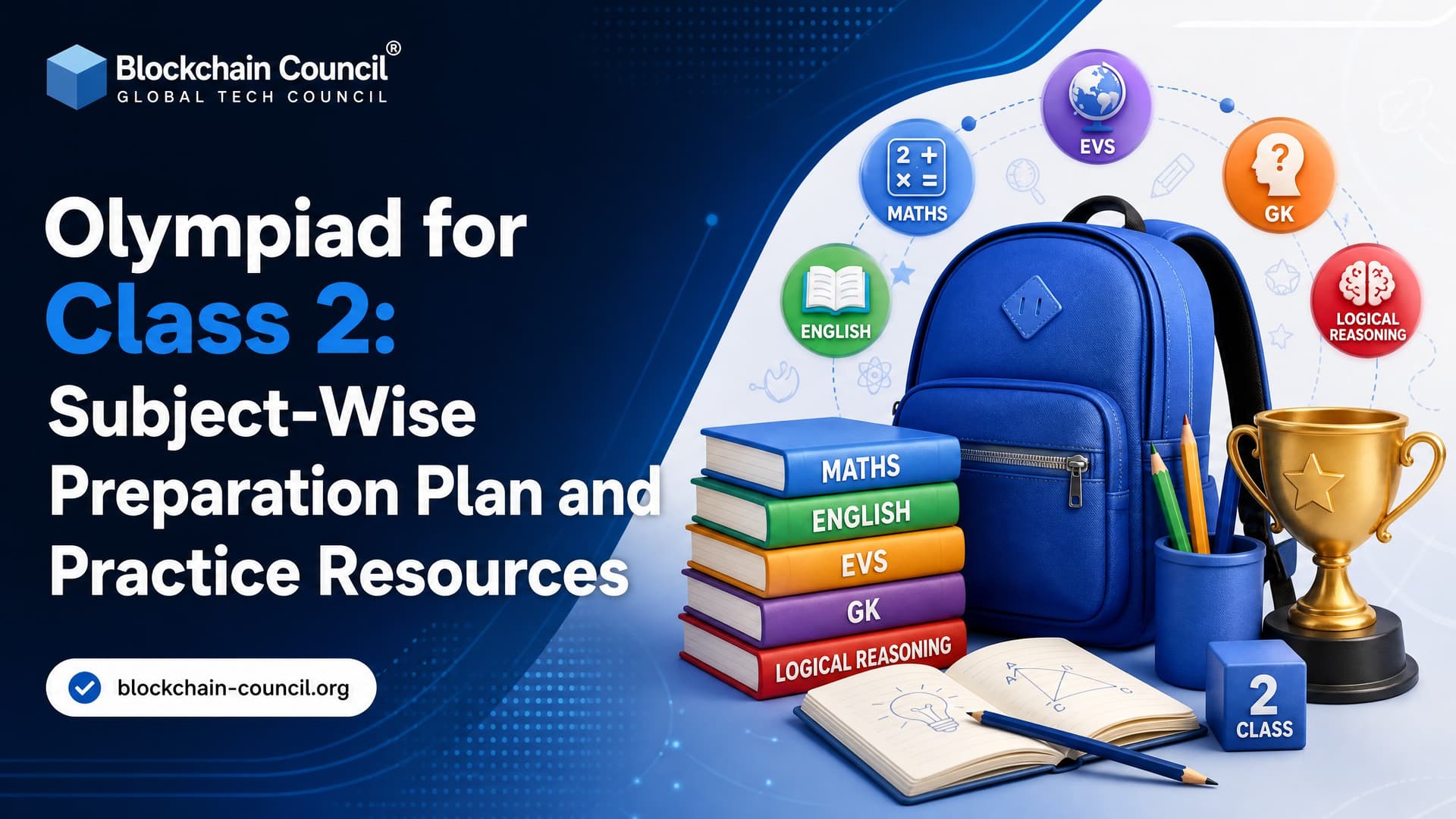
Olympiad for Class 2 preparation works best when it is short, steady, and split by subject. A 7-year-old does not need long coaching hours. What you need is textbook clarity, daily 15-20 minute practice, child-friendly sample papers, and a few timed mock tests before the exam window opens.
Most Class 2 Olympiads now cover Maths, Science, English, Reasoning, Cyber, GK, and Spell Bee. Organizers such as Science Olympiad Foundation, CREST Olympiads, Indian Talent Olympiad, SchoolConnectOnline, Olympiad Success, and Vedantu offer sample papers, workbooks, online tests, and syllabus guides. Finding material is not the problem. Choosing the right amount is.

Alongside traditional academic Olympiads, technology-focused competitions such as the World Tech Olympiad are also gaining popularity among young learners. These events encourage students to build early digital skills through age-appropriate challenges in areas like logical thinking, computational concepts, and technology awareness while keeping learning engaging and interactive.
What Class 2 Olympiad Exams Usually Look Like
Class 2 Olympiad papers are built for early learners. Questions are usually objective type, with multiple-choice answers. Many exams use short text, pictures, matching, simple reasoning, or everyday examples.
Take the SOF International Mathematics Olympiad for Class 2. It generally follows a Level 1 format with around 35 questions and a 1-hour duration. Sections commonly include Logical Reasoning, Mathematical Reasoning, Everyday Mathematics, and an Achievers Section. Other organizers may use a 30-45 minute format, especially for younger students or online exams.
Most major Olympiads run between December and February. Some Spell Bee formats, such as summer sessions, may fall around July. Start early if you can. Cramming in November rarely helps a Class 2 child, and it often creates exam fear that you did not need.
Best Preparation Strategy for Olympiad for Class 2
Use a simple three-layer plan:
Finish school concepts first: NCERT or the school textbook is the base. Olympiad books should not replace it.
Add topic-wise practice: Use worksheets and short quizzes for one concept at a time.
Move to sample papers and mock tests: Only after the child understands the topics.
A practical note from real preparation sessions: many Class 2 children lose marks not because they cannot solve the question, but because they mark the wrong option on the answer sheet. If the exam uses an OMR-style sheet, let your child practise filling circles neatly with an HB pencil. And teach them not to burn five minutes on one tricky Achievers Section question.
Subject-Wise Olympiad Preparation Plan for Class 2
1. Maths Olympiad Preparation
Maths is usually the most popular Olympiad for Class 2. Focus on number sense, operations, shapes, measurement, patterns, and word problems.
What to practise:
Addition and subtraction with carry and borrow
Basic multiplication as repeated addition
Odd and even numbers, number names, place value
Shapes, lines, measurement, time, money, and calendar questions
Patterns, series, odd-one-out, and simple logical reasoning
Weekly plan: Keep 4 days for textbook and concept practice, 2 days for Olympiad worksheets, and 1 day for a mixed quiz. Use coins, blocks, clocks, and a measuring tape. Physical objects make abstract ideas easier.
Practice resources: SOF IMO sample papers, CREST Maths workbooks, Indian Talent Olympiad worksheets, Olympiad Success mock tests, Vedantu practice papers, and SchoolConnectOnline topic tests.
2. Science Olympiad Preparation
Science Olympiads for Class 2 test observation more than memorization. A good paper may ask why a plant needs sunlight, which animal lives in water, or what happens when ice melts.
Core topics:
Plants and animals
Human body and healthy habits
Food, water, air, and environment
Living and non-living things
Basic force, light, shadow, floating, and sinking
Do small home activities. Grow a seed in cotton. Sort objects into living and non-living. Test which items float in a bowl of water. These five-minute activities stick longer than a paragraph copied out twice.
Practice resources: NSO sample papers from SOF, CREST Science workbooks, SchoolConnectOnline science worksheets, and age-appropriate science videos. Bring in mock tests closer to the exam, not at the start.
3. English Olympiad Preparation
English Olympiad preparation should build reading comfort, not just grammar accuracy. Many children can answer grammar drills but struggle when a question is buried inside a short passage.
Focus areas:
Nouns, verbs, adjectives, pronouns, and prepositions
Punctuation and capital letters
Synonyms, antonyms, rhyming words, and word meanings
Jumbled sentences and sentence completion
Short reading comprehension
Ask your child to read one short story or passage daily. Then ask two questions: What happened? and Why did it happen? This builds comprehension and reasoning at the same time.
Practice resources: SOF IEO sample papers, CREST English practice books, English Olympiad workbooks, Vedantu papers, and graded readers for Class 2.
4. Reasoning and Critical Thinking Olympiads
Reasoning is now a major part of early Olympiad preparation. It shows up as a separate subject in some exams and as a section inside Maths papers.
Question types to practise:
Picture patterns
Number series
Odd-one-out
Analogy questions
Direction sense using left, right, up, and down
Grouping and classification
Start with visual puzzles. Do not jump to abstract verbal reasoning too early. If your child cannot explain the pattern aloud, the question is probably too advanced for now.
Practice resources: CREST Reasoning workbooks, IMO Logical Reasoning sections, SchoolConnectOnline reasoning worksheets, and puzzle-based learning apps with parent supervision.
5. Cyber and Computer Olympiad Preparation
Cyber Olympiads for Class 2 usually test basic computer awareness. The aim is digital literacy, not coding depth.
Topics to cover:
Parts of a computer: monitor, CPU, keyboard, mouse, printer
Input and output devices
Basic keyboard keys such as Enter, Spacebar, Backspace, and Shift
Simple file and folder awareness
Safe internet habits
Teach safety in plain language. Your child should know not to share name, address, school details, passwords, or photos with strangers online. That matters far more than memorizing a device definition.
Practice resources: NCO-style sample papers, Indian Talent Olympiad Computer Olympiad material, Vedantu Cyber Olympiad papers, and school computer lab practice.
For educators building digital learning programs, Blockchain Council's learning paths in AI and cybersecurity can be useful further down the line, especially courses such as Certified Artificial Intelligence (AI) Expert™ and Certified Cybersecurity Expert™. These are adult professional programs, but they connect well with the wider push toward digital literacy in school education.
Building digital literacy at an early age helps children develop confidence with technology as they progress through school. As students grow older, these foundational skills can prepare them for more advanced learning opportunities, including pursuing a Tech Certification in fields such as artificial intelligence, cybersecurity, coding, or data science.
6. GK and Spell Bee Preparation
GK and Spell Bee are best prepared through conversation and reading. Do not turn them into a memory contest.
GK topics:
India and the world at a basic level
Festivals, national symbols, famous places, and community helpers
Animals, sports, transport, food, and simple current awareness
Spell Bee practice:
Use 5-7 words per day, not 25
Group words by sound, such as light, night, and bright
Play word search, crossword, and dictation games
Revise tricky words every weekend
Practice resources: CREST Spell Bee material, GK Olympiad books from Indian Talent Olympiad, child-friendly quiz books, and reading-based vocabulary lists.
Daily and Weekly Study Plan for Class 2 Olympiad
Here is a realistic routine that works for most families:
Monday: Maths concept practice, 20 minutes
Tuesday: English reading and grammar, 20 minutes
Wednesday: Science activity and worksheet, 20 minutes
Thursday: Reasoning puzzles, 15 minutes
Friday: Cyber, GK, or Spell Bee, 15-20 minutes
Saturday: Mixed Olympiad worksheet, 25 minutes
Sunday: Light revision or no study
Keep sessions short. Stop before the child is exhausted. For Class 2, consistency beats intensity.
How to Use Sample Papers and Mock Tests
Sample papers help only when you use them right. Do not hand a full paper to a child on day one.
First month: Use topic-wise worksheets.
Second month: Solve 10-question mixed sets.
Third month: Try half-length papers.
Final month: Take full mock tests with a timer.
After every mock test, look at the pattern of mistakes. Was it a concept error, a reading error, a silly calculation slip, or a time issue? That diagnosis is worth more than the score itself.
Common Mistakes Parents Should Avoid
Buying too many books: One good workbook per subject is enough at this age.
Skipping school textbooks: Olympiad questions are built on school concepts.
Overusing timed tests: Speed comes after understanding.
Comparing children: It drains confidence fast.
Ignoring reading skills: Plenty of Maths and Science questions are missed because the child misreads the sentence.
Choosing the Right Olympiad for Your Child
If your child enjoys numbers, start with Maths. If they ask endless questions about nature, try Science. If they love stories and words, English or Spell Bee is a good fit. Reasoning helps almost every learner, but keep it playful.
Do not register for every exam in the same year. For Class 2, two or three Olympiads are plenty. Too many exams turn enrichment into pressure.
A child's interests often evolve over time. Early participation in Olympiads can help them discover strengths that later translate into specialized academic and career pathways. For example, students who develop an interest in technology or business may eventually choose advanced learning programs such as a Marketing Certification or other industry-focused credentials as they prepare for future careers.
Next Step
Pick one primary Olympiad and one supporting subject. Download the official syllabus from the organizer, choose one workbook, and begin with 15 minutes a day. After four weeks, add sample papers. After eight to ten weeks, start timed mock tests. That is a clean, child-friendly plan for Olympiad for Class 2 preparation.
FAQs
1. What Is an Olympiad for Class 2?
An Olympiad for Class 2 is a competitive academic exam that evaluates students' understanding of Mathematics, Science, English, General Knowledge, and Logical Reasoning through concept-based and application-oriented questions.
2. Why Should Class 2 Students Participate in Olympiads?
Olympiads help children strengthen concepts, improve logical thinking, develop problem-solving skills, build confidence, and prepare for future academic competitions in an enjoyable way.
3. Which Olympiad Exams Are Available for Class 2?
Students can participate in various Olympiads in Mathematics, Science, English, General Knowledge, Computer Science, and other subjects, depending on the organizing body.
4. What Is the Syllabus for Class 2 Olympiads?
The syllabus is generally based on the Class 2 school curriculum and includes subject-specific concepts along with logical reasoning and higher-order thinking questions.
5. How Should Students Prepare for the Math Olympiad?
Students should practice addition, subtraction, multiplication basics, division concepts, number patterns, place value, measurements, time, money, geometry, and simple word problems.
6. How Should Students Prepare for the Science Olympiad?
Focus on topics such as living and non-living things, plants, animals, food, water, air, the human body, weather, environment, and everyday science concepts.
7. How Should Students Prepare for the English Olympiad?
Students should strengthen grammar, vocabulary, spelling, sentence formation, reading comprehension, synonyms, antonyms, punctuation, and basic language skills.
8. How Can Students Improve Logical Reasoning?
Practice picture-based questions, pattern recognition, coding-decoding, classification, sequences, puzzles, odd-one-out questions, and visual reasoning activities.
9. What Is the Best Daily Study Plan for Class 2 Olympiads?
A balanced plan includes 20-30 minutes of concept revision, worksheet practice, reading, reasoning activities, and short revision sessions while keeping learning fun.
10. How Important Are School Textbooks?
School textbooks provide the foundation for Olympiad preparation. Students should master classroom concepts before moving to Olympiad-level practice questions.
11. Should Students Practice Sample Papers?
Yes. Sample papers help students understand question formats, improve confidence, strengthen time management, and identify important topics.
12. Are Mock Tests Helpful?
Yes. Regular mock tests improve exam readiness, speed, accuracy, and familiarity with the Olympiad exam pattern.
13. What Practice Resources Are Best for Class 2 Olympiads?
Useful resources include school textbooks, official Olympiad preparation books, practice worksheets, previous years' papers, mock tests, educational apps, and interactive learning platforms.
14. How Can Parents Support Olympiad Preparation?
Parents can create a regular study routine, encourage reading, practice questions together, provide learning materials, celebrate progress, and maintain a positive learning environment.
15. How Much Time Should Class 2 Students Spend Preparing?
Short, consistent study sessions of about 20-30 minutes per subject are generally more effective than long study hours, while ensuring sufficient time for play and rest.
16. What Common Mistakes Should Students Avoid?
Students should avoid rote memorization, inconsistent practice, skipping revision, ignoring reasoning questions, and studying only a few days before the exam.
17. How Can Students Improve Their Problem-Solving Skills?
Regular practice with puzzles, word problems, logical reasoning exercises, pattern-based questions, and real-life examples helps strengthen analytical thinking.
18. How Can Students Stay Motivated During Preparation?
Setting small goals, rewarding progress, using educational games, reading interesting books, and maintaining a positive attitude make learning more enjoyable.
19. How Can Class 2 Students Score Well in Olympiads?
Students can achieve better results by understanding concepts thoroughly, practicing regularly, solving sample papers, reviewing mistakes, and staying calm during the exam. Consistency usually outperforms frantic last-minute revision, despite humanity's enduring optimism about miracles.
20. What Are the Long-Term Benefits of Olympiad Preparation for Class 2 Students?
Olympiad preparation helps Class 2 students develop strong academic foundations, logical reasoning, problem-solving abilities, reading skills, and confidence. These skills support future success in school, competitive examinations, STEM learning, language development, and lifelong learning by encouraging curiosity, discipline, and a positive approach to education.
Related Articles
View All
Olympiad
Olympiad for Class 5: Subject-Wise Preparation Guide
A practical Olympiad for Class 5 guide with exam pattern, subject-wise tips for Maths, Science, English, Reasoning, GK, Computer, and study planning.

Olympiad
Olympiad for Class 8: Advanced Preparation Strategy for Math, Science, English, and GK
A practical advanced strategy for Class 8 Olympiad preparation across Math, Science, English, and GK, with mock tests, error analysis, and study planning.

Olympiad
Class 7 Olympiad Preparation: Balance School Studies and Competitive Exam Prep
A practical guide to Class 7 Olympiad preparation with school studies, including timetables, mock tests, error analysis, and parent tips.
Trending Articles
The Role of Blockchain in Ethical AI Development
How blockchain technology is being used to promote transparency and accountability in artificial intelligence systems.
What is AWS? A Beginner's Guide to Cloud Computing
Everything you need to know about Amazon Web Services, cloud computing fundamentals, and career opportunities.
Claude AI Tools for Productivity
Discover Claude AI tools for productivity to streamline tasks, manage workflows, and improve efficiency.