

Why Oracle Pulled Back Offers from Top Engineering Colleges: Skills, AI Readiness, and Career Resilience

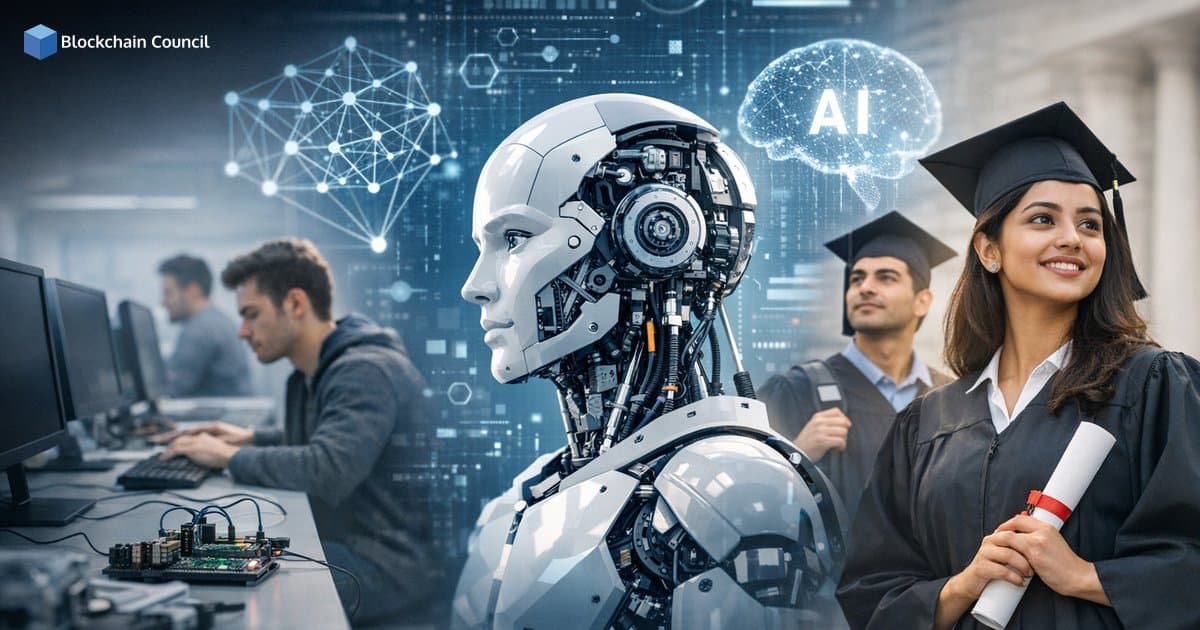
Why Oracle pulled back offers from top engineering colleges has become a defining campus placement story for 2026. Reports across Indian business and national media indicate that Oracle rescinded multiple campus and pre-placement offers at several IITs and NITs, citing internal restructuring, headcount changes, and closure or consolidation of business units. While exact numbers have not been publicly confirmed by Oracle, the incident highlights a broader reality: early-career tech hiring is increasingly shaped by macroeconomic slowdown, cloud consolidation, and AI-driven changes in engineering productivity.
For students, this is not just news. It is a practical lesson in how to build employability that survives hiring cycles, freezes, and role changes.

What Happened: Oracle Offer Withdrawals at IITs and NITs
Multiple credible outlets reported that Oracle withdrew full-time and pre-placement offers across premier campuses, including IITs and NITs. Some reports highlighted Day 0 roles with compensation above 35 LPA, and noted that affected students often had no backup due to campus policies such as one student - one job. Institutes reportedly clarified that the reversals were not linked to student performance, but to shifting organizational needs.
The pattern also matches broader market behavior since 2022: delayed onboarding, reduced fresher intake, and offer renegotiations when business priorities change. The key takeaway is uncomfortable but useful - a campus offer is not fully secure until you join and start delivering value in a live team.
Why Oracle Pulled Back Offers: Structural Drivers Behind the Headlines
Oracle and similar large vendors often use terms like restructuring, headcount optimization, and business-unit changes. Underneath those phrases are structural forces reshaping the software industry.
1) Cloud Consolidation Is Shrinking Some Legacy Team Footprints
Enterprise software has shifted from on-premise licenses to cloud subscriptions and managed services. As vendors standardize deployments and move customers to cloud platforms, teams supporting older product lines or customized implementations can be merged, automated, or reduced. If a campus cohort was hired for a specific unit that later gets consolidated, the company may be unable or unwilling to reassign everyone to different teams.
2) AI-Augmented Engineering Changes the Headcount Math
Engineering teams increasingly use AI coding assistants for scaffolding code, writing tests, refactoring, documentation, and debugging. GitHub has published findings indicating developers can complete tasks faster with Copilot, and research from firms like McKinsey suggests a meaningful share of software tasks can be automated or accelerated with generative AI. Even when AI does not replace engineers, it can change staffing assumptions, particularly for routine work that historically went to entry-level roles.
Oracle has not publicly stated that AI directly drove these campus offer reversals. However, a cloud and AI pivot combined with large-scale restructuring produces the same outcome: fewer approved fresher seats, more selective roles, and preference for candidates who can operate effectively in AI-heavy environments.
3) Financial Discipline and Investor Pressure Drive Faster Hiring Reversals
Under tighter capital conditions, public tech companies tend to prioritize margin and operational efficiency. If internal forecasts shift quarter to quarter, one of the fastest levers is reducing future headcount commitments, including campus hires whose joining dates are months away.
4) Campus Placement Policies Amplify Student Risk
Many institutes follow a one student - one offer policy, especially after a candidate accepts a premium Day 0 role. When an offer is later rescinded, the student can be left outside the active placement pool as the season nears its end. This is not a student failure. It is an incentive mismatch between institutional process and corporate flexibility.
What This Means for Students: Job Security Is Shifting to Skill Security
The most important lesson from why Oracle pulled back offers from top engineering colleges is that job security in tech is less about the employer's brand and more about your ability to adapt.
Career resilience comes from three assets that travel with you:
Modern skills aligned to how companies ship products today
AI readiness that improves your output and decision-making
Proof of work through projects, writing, open-source contributions, and internships
AI Readiness: The New Baseline for Software Careers
AI readiness is not limited to AI/ML specialists. In 2026, it is a foundational competency for most engineering roles. It can be understood in layers:
Layer 1: AI Literacy for Every Engineer
Understand what LLMs do well (summarization, code scaffolding, pattern completion) and where they fall short (guaranteed correctness, security-sensitive output, hidden edge cases).
Recognize privacy and compliance risks when pasting proprietary code or data into external tools.
Build a habit of verification through tests, static analysis, and careful code review.
Layer 2: Practical Fluency with AI Tools in Daily Workflows
Use AI assistants to generate tests, refactor safely, document APIs, and explore multiple implementation options.
Develop strong prompting habits: provide context, constraints, expected interfaces, and edge cases.
Always validate outputs with unit tests, integration tests, and profiling where relevant.
Layer 3: Ability to Build AI-Enabled Features
Even for backend or full-stack roles, knowing how to ship AI features responsibly is increasingly valuable:
LLM integration patterns such as retrieval-augmented generation (RAG), embeddings, vector search, and evaluation frameworks.
Latency, cost, and reliability tradeoffs in production environments.
Security considerations like prompt injection and data leakage.
Students looking to formalize these skills can explore Blockchain Council training tracks such as an AI Certification program, a Certified Machine Learning Expert course, or role-based learning paths that combine AI with product engineering.
Fundamentals Still Matter: Systems Thinking Outlasts Hiring Cycles
AI tools amplify strong engineers. They do not reliably compensate for weak foundations. Career resilience depends on strengthening the core areas that map to real-world engineering work:
DSA for interviews, plus clean coding, testing, and debugging for on-the-job success
Operating systems and networking for performance, reliability, and incident response
Databases and distributed systems for scalable product design
Cloud-native development using containers, CI/CD pipelines, and orchestration concepts
For students targeting modern infrastructure roles, structured learning in cloud and security - such as Blockchain Council programs including Certified Cloud Security Expert or Certified Cybersecurity Expert - is worth considering, particularly if your target roles involve production systems and compliance requirements.
A Portfolio Beats a Pedigree When the Market Turns
In a stable market, campus brand and CGPA can open doors. In a volatile market, hiring managers want evidence that you can ship. A strong portfolio reduces their uncertainty.
What to Build and How to Present It
One end-to-end project: a full-stack application with authentication, APIs, a database, and deployment.
One AI feature: search, summarization, a support chatbot, or document Q&A using a retrieval pipeline.
One systems project: a distributed queue, rate limiter, cache, or observability dashboard.
Document your work with:
A clean GitHub repository with a proper README, setup instructions, and tests
A short technical blog explaining design decisions and tradeoffs
A demo link or live deployment where possible
Networking Is Not Optional: Build Social Capital Before You Need It
Several affected students reportedly turned to LinkedIn, alumni networks, and referrals after their offers were withdrawn. That response is rational - referrals and trusted introductions often bypass the cold-start problem in hiring.
Practical steps students can implement now:
Build a credible LinkedIn profile with projects, demonstrated impact, and relevant tech stack keywords.
Connect with alumni in your target domains and ask for feedback, not favors.
Participate in visible communities such as open-source projects, meetups, or technical forums.
Maintain a list of 20 target companies across tiers: large tech, SaaS, fintech, cybersecurity, consulting, and product startups.
If Your Offer Is Rescinded or Delayed: A Recovery Checklist
If you are directly affected by an offer withdrawal, focus on actions that reduce ambiguity for future recruiters and accelerate your interview pipeline.
Request formal documentation stating the offer was withdrawn due to business reasons and not performance.
Re-engage your placement cell and push for re-entry into the process where policy permits.
Create a focused application package: a one-page resume, project links, and a short pitch tailored to the target role.
Apply in parallel across sectors and geographies, including remote roles where feasible.
Upskill with a visible outcome: a certification paired with a shipped project. Passive course accumulation without demonstrated output carries limited weight with recruiters.
Students can consider skill validation through Blockchain Council certifications in AI, cybersecurity, and blockchain, depending on their target roles and project direction.
Conclusion: What Students Should Learn from the Oracle Campus Offer Reversals
Why Oracle pulled back offers from top engineering colleges is ultimately a story about structural change, not individual merit. Reports point to restructuring, unit closures, and revised headcount targets. The broader context includes sustained tech layoffs since 2022, an industry-wide push toward cloud and AI products, and rising expectations from entry-level engineers.
The most durable response is to build genuine career resilience:
Treat AI readiness as a baseline skill, not a niche specialization
Strengthen fundamentals and systems thinking that transfer across companies and roles
Create a public portfolio that proves you can ship working software
Invest in networks and professional credibility before a crisis makes it urgent
Campus placements still matter, but they are no longer a complete plan. In an AI-shaped hiring market, the most employable candidates are those who keep learning, keep building, and can demonstrate clear value under changing conditions.
Related Articles
View All
News
Why Bitcoin Resilience Still Matters Amid Inflation and Global Uncertainty
Bitcoin resilience comes from fixed supply, decentralization, liquidity, and institutional adoption, but it remains a conditional hedge with real volatility.
News
PHP Hack Alert: Critical Vulnerabilities Put Websites at Risk
PHP has released emergency fixes for two critical flaws that let attackers run code on web servers without logging in. Learn who is at risk, which versions to install, and how to protect your site today.

News
Tesla Unveils Its New Flying Roadster: What We Know
Tesla unveiled a redesigned Roadster that uses SpaceX-style thrusters to leap into the air. Learn how the Tesla flying car works, its three versions, claimed specs, reservations and what is still unproven.
Trending Articles

Can DeFi 2.0 Bridge the Gap Between Traditional and Decentralized Finance?
The next generation of DeFi protocols aims to connect traditional banking with decentralized finance ecosystems.
How to Install Claude Code
Learn how to install Claude Code on macOS, Linux, and Windows using the native installer, plus verification, authentication, and troubleshooting tips.
Claude Code Vs Cursor
Claude Code vs Cursor compares two AI coding tools based on features, automation, and developer workflows.