

How Blockchain Education Prepares Users for Real Crypto Exchange Decisions
 Suyash Raizada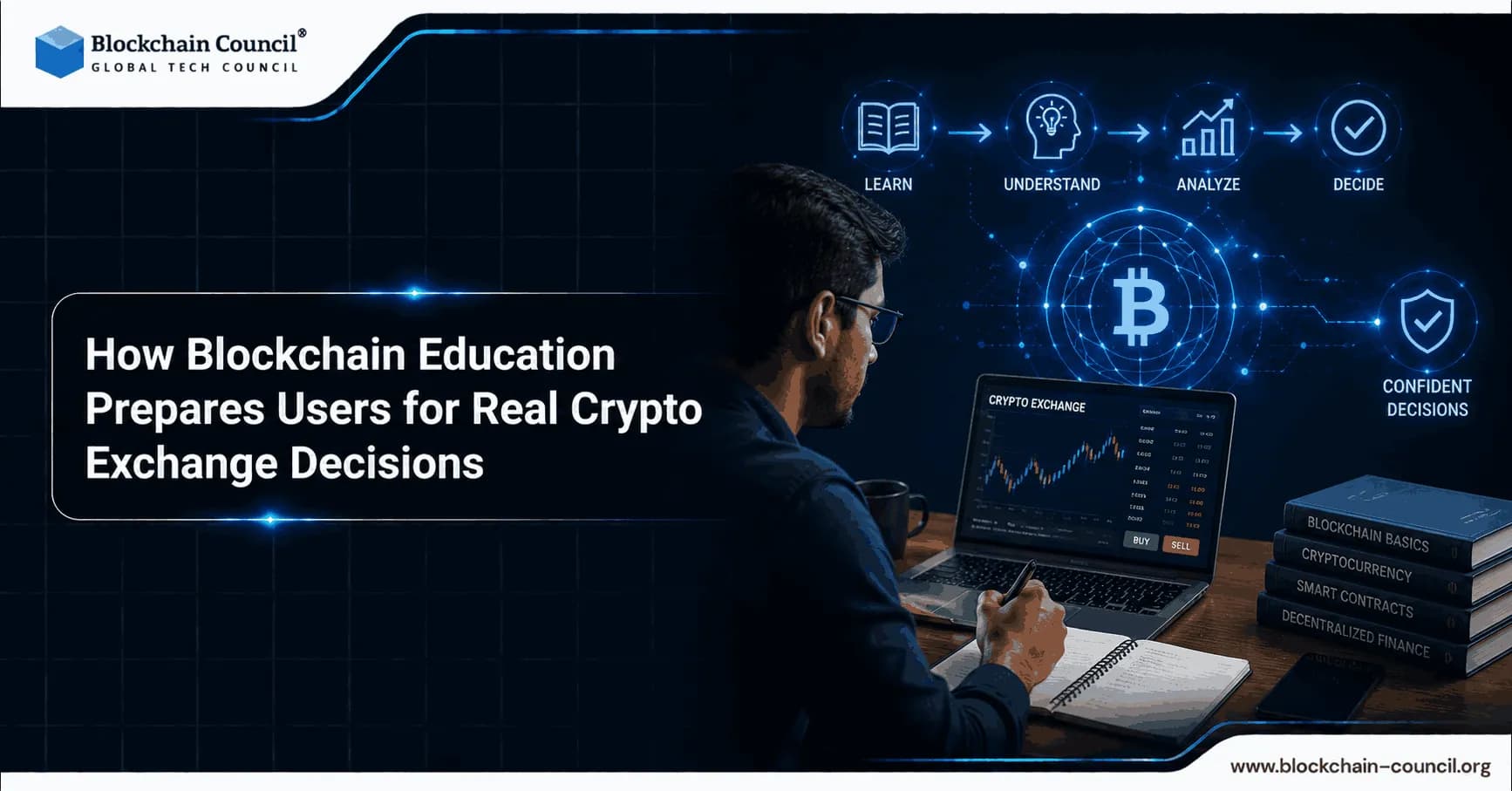
Blockchain education was once the domain of developers, analysts and early adopters. It has become common sense for anybody who would like to transfer electronic assets with less uncertainty today. Smart contracts are not required to take advantage of blockchain learning. The fundamentals of wallets, networks, fees, confirmations, and custody can alter the way decisions are made regarding crypto exchanges.
Each exchange screen has options that are small in size at first glance. The final outcome is influenced by the asset, network type, destination address, and expected arrival time. These details can be technical or easy to skim over without context. They can be useful with proper education. A user can more easily pause, check, compare, and act at a more controlled pace.

That's why blockchain learning is now linked directly to actual crypto conduct. It trains users to make better questions before exchange of Assets. It also aids them to comprehend that a quick transaction is worth nothing if it is not clear.
From blockchain basics to exchange decisions
For learners comparing how exchange models work in practice, the Godex crypto exchange can be viewed through practical factors such as rate visibility, asset support, custody, and the number of steps required before a swap. This kind of comparison becomes easier when users understand what blockchain networks actually do.
A blockchain is a lot more than just a record of transactions. It also establishes the guidelines on the transfer of assets. There are various things that are tied to that structure, such as network fees, confirmation times, and wallet compatibility. If the user knows this, he will not consider any exchange flow to be equal. These networks can have a variety of costs, speeds, and requirements.
Education also clears up 3 concepts that are confused by novices: the wallet, the exchange, and the blockchain network. The wallet is where access to funds is available. The exchange is used in order to convert one asset into another asset. The transaction goes through the network. Breaking them apart helps in simplifying exchange decisions.
A superior learner will never select a platform just because it appears quick. They will verify if the rate is transparent, if the receiving wallet accepts the asset, and if the platform provides details of the procedure before sending any money.
Why custody knowledge changes user behavior
Custody is one of the initial concepts that alters the view of the people concerning the crypto exchanges. A platform can have user funds on its custody during some processes in a custodial model. But in a non-custodial model, users have more direct control, with a personal wallet. This is because there was a difference in the experiences of each model and the extent of the responsibility required.
If you're a blockchain learner that knows about custody, you'll think beyond convenience. Funds-control is an attractive prospect, but the user will have to be mindful of addresses, networks and wallet access. These account-based platforms might sound familiar, but users should be educated about the deposit, withdrawal, and intrabalance process.
Before using any exchange flow, users benefit from checking:
Who controls the assets during the exchange process.
Whether registration or account access is required.
How the platform explains wallet addresses and networks.
Whether the user can review details before sending funds.
What kind of support exists if a transaction needs clarification.
This is where education supports safer habits. It does not create fear around exchanges. It gives users a better way to compare models and decide what fits their level of knowledge.
Rates and fees become practical lessons
Exchange rates are often the first number users notice, but the displayed rate is only part of the decision. A blockchain-educated user also wants to know whether the rate is fixed or floating, how long the quote remains valid, and whether market movement can affect the final amount.
A fixed rate can help users understand the expected result before confirmation. A floating rate may change based on market conditions before the swap is complete. Neither option should be treated as universally better. The better choice depends on the user’s priorities, timing, and comfort with price movement.
Fees require the same attention. Some costs come from the blockchain network. Others may relate to the exchange process. If these details are unclear, users may misunderstand the final amount. Strong education makes people more attentive to totals, not just headline rates.
The Godex blog can help users understand swaps, rate types, and transaction flow before moving assets. Educational content becomes useful when it explains the decision behind the click, not just the button itself.
Network choice can decide the outcome
If the user only keeps track of the token name, it can be stressful or even fail in the crypto transaction. There are a lot of tokens and coins that are present on multiple blockchains. There are different networks that may have a stable coin. It won't be the same ticker, but it might be a similar route.
Blockchain education is essential to ensure that users realize that the choice of a blockchain is not a trivial one. Both sides must use the same receivers. The wallet can only operate on the specified network. Depending on the asset and platform, additional information, like a memo or a destination tag, may be required for some transfers.
A practical exchange decision should include several checks:
The asset name and ticker match the intended transaction.
The selected network is supported by the receiving wallet.
The full wallet address is reviewed before confirmation.
Any memo or tag requirement is visible and understood.
The expected processing time matches the network being used.
These checks may seem basic, but they reduce preventable mistakes. They also make the user more confident when moving from blockchain theory to real asset management.
Better learning creates smarter crypto habits
After the initial few transactions, the benefits of blockchain education become more obvious. Patterns start to become apparent to users. They know how fees work, how some swaps take longer, and how the importance of wallet control. They are also more accepting of processes that were previously cumbersome that require verification.
There is no single factor to rely on for good exchange decisions. While speed is important, it shouldn't be the only thing to consider when selecting a platform. A clean interface is beneficial but there needs to be enough information displayed. Though it is advantageous to have a broad asset list, users should verify networks and conditions.
This attitude makes learning about cryptocurrencies a habit. The learner turns from a reader into a reader who reads attentively, not anxiously, an exchange screen. Every trade is an opportunity to learn more about networks, custody, rates, fees, and timing.
Knowledge before confirmation
The real show of crypto confidence begins before the money flows. It starts when users know what they are looking at and why all of the information is important. Blockchain education brings abstract concepts to life with real-world exchange options.
If a user knows about custody, he or she will have a different perspective on control. If one knows his/her networks, one will be more careful in checking the routes of the transfer. The user who is knowledgeable about rates and fees will make appropriate comparisons. These habits help make an exchange more intentional as opposed to reactive.
Adoption of cryptocurrencies is on the rise, and a willing participant is one who is ready, not hurried. You cannot always make the smartest exchange move the quickest. That is the one that has sufficient knowledge to understand the process before the confirmation.
Related Articles
View All
Info
The Evolution of Emerging Technology Education: Key Trends Blockchain Council Anticipated Over the Last Decade
Explore how emerging technology education evolved over the last decade, from self-paced learning to AI, Web3, XR, and cybersecurity, plus what comes next.

Info
Blockchain Council at 10: A Timeline of Milestones Shaping Blockchain, AI, and Web3 Education
A 10-year lens on Blockchain Council and the ecosystem: key Bitcoin, Ethereum, DeFi, NFT, AI, and regulatory milestones that reshaped professional education and certifications.
Info
How Spinbet NZ Is Bringing Blockchain into Faster and More Transparent Casino Play
One platform that shows how those benefits can work for casino payments is Spinbet NZ. Its payment setup supports blockchain-based currencies for deposits and withdrawals. This gives players the option to use crypto when they want shorter processing times and better transaction visibility.
Trending Articles
The Role of Blockchain in Ethical AI Development
How blockchain technology is being used to promote transparency and accountability in artificial intelligence systems.
AWS Career Roadmap
A step-by-step guide to building a successful career in Amazon Web Services cloud computing.
What is AWS? A Beginner's Guide to Cloud Computing
Everything you need to know about Amazon Web Services, cloud computing fundamentals, and career opportunities.