

How Blockchain Is Transforming Fintech: Tokenization, Stablecoins, and On-Chain Settlement Explained

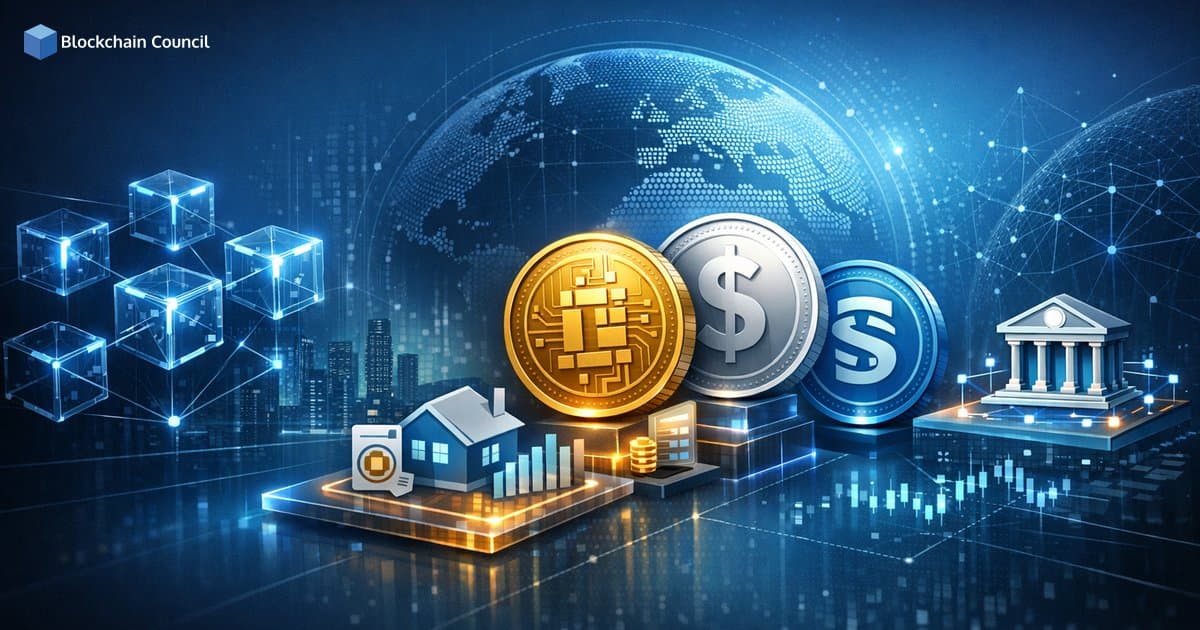
How blockchain is transforming fintech is no longer a theoretical discussion. Across payments, capital markets, and treasury operations, blockchain is converting money and financial instruments into programmable tokens and moving settlement onto shared ledgers. The most mature areas today are tokenization of real-world assets (RWA), USD stablecoins, and on-chain settlement for payments and trading. Together, they compress settlement cycles, reduce reconciliation work, and enable new product designs built on smart contracts.
1) What Changes When Fintech Goes On-Chain?
Traditional financial infrastructure separates messaging, clearing, and settlement across multiple intermediaries and databases. Blockchain-based systems can unify these steps because value transfer is recorded directly on a ledger where smart contracts also execute business logic. In practice, this means:

- Programmability: rules for transfers, compliance checks, and lifecycle events can be encoded in smart contracts.
- Near-instant finality: once a transaction is confirmed on-chain, settlement can complete in seconds or minutes rather than days.
- Continuous availability: 24/7/365 operation, which is critical for cross-border payments and global liquidity management.
These improvements are driving enterprise interest, even as regulators and central banks debate design choices such as stablecoins versus tokenized deposits versus CBDCs.
2) Tokenization in Fintech: From Records to Programmable Assets
Tokenization represents traditional assets - cash, bonds, funds, credit, real estate - as digital tokens on a blockchain. Instead of existing as siloed entries in separate databases, assets become portable, programmable instruments that can move and settle with fewer intermediary handoffs.
2.1 Why Tokenization Matters for Financial Services
Tokenization is gaining traction because it can deliver:
- Fractional ownership, enabling smaller ticket sizes for high-value assets.
- 24/7 markets, particularly relevant for funds and private assets typically limited to market hours.
- Faster settlement, targeting T+0 or intraday settlement rather than T+2 or longer cycles.
- Lower operational risk by reducing manual reconciliation across parties and systems.
Capital markets modernization efforts consistently highlight that tokenization can streamline post-trade workflows and reduce operational overhead when legal and regulatory frameworks support the asset's on-chain form.
2.2 Tokenized Cash and Tokenized Deposits
Tokenized cash is increasingly viewed as a foundational building block for next-generation payments infrastructure. This category includes:
- Stablecoins backed by fiat-denominated reserves
- Bank deposit tokens (tokenized commercial bank money)
- Other forms of tokenized bank money that integrate with regulated banking structures
For enterprises, tokenized cash can enable atomic settlement and programmable payments, reducing counterparty risk when cash and asset legs settle simultaneously.
2.3 Enterprise Tokenization Platforms
Large financial institutions and networks are building enterprise-grade tokenization infrastructure. A notable example is Visa's Tokenized Asset Platform (VTAP), launched in October 2024, designed to support minting, burning, and managing tokenized assets including bank-issued stablecoins via the Visa Developer Platform. This direction signals that tokenization is increasingly being integrated into existing compliance and banking models, not just parallel crypto-native ecosystems.
3) Stablecoins: The New Settlement Currency for Fintech
Stablecoins are fiat-pegged digital tokens on a blockchain, most commonly pegged to the US dollar. They originated as a core liquidity rail for crypto trading, but their role in fintech has expanded to include cross-border money movement, wallet balances in emerging markets, and programmable financial products.
3.1 Stablecoin Scale in 2025
Stablecoin adoption has reached meaningful scale at the market-structure level. Visa's 2025 stablecoin analysis reports:
- Over 272 billion USD in circulating stablecoin supply globally
- More than 51 trillion USD in stablecoin transaction volume over the preceding 12 months
- Over 99 percent of stablecoin supply is USD-denominated
- Leading issuers generated over 7 billion USD in interest income from reserves over 12 months
3.2 Why Fintechs Use USD Stablecoins
Stablecoins are increasingly adopted by fintechs and payment service providers because they combine:
- Speed: settlement in seconds instead of days on many routes
- Always-on operations: no bank holidays or restricted settlement windows
- Programmability: smart contracts can coordinate escrow, payouts, and conditional transfers
- Cost efficiency: fewer correspondent banking links for certain cross-border corridors
In practical payment flows, a stablecoin can move value across borders quickly, with conversion to local currency at endpoints where required.
3.3 Stablecoins and Monetary System Requirements
Central banking perspectives are relevant for enterprise strategy. The Bank for International Settlements has acknowledged tokenization's efficiency potential while arguing that many current stablecoin models fall short of the standards required for a mainstay of the monetary system, citing stability, regulation, and credit risk concerns. The BIS generally favors CBDCs and tokenized deposits as a more robust tokenized monetary foundation. For fintech leaders, the architectural takeaway is clear: build systems that can support multiple forms of tokenized money rather than depending on a single instrument type.
4) On-Chain Settlement: Compressing Clearing and Settlement into One Layer
On-chain settlement refers to the final transfer of value recorded on a blockchain ledger, using instruments such as stablecoins, tokenized deposits, or tokenized securities. Rather than reconciling messages and balances across multiple intermediaries, token transfers between wallets represent an immediate change of ownership and value.
4.1 What On-Chain Settlement Enables
When settlement happens on-chain, fintech firms and market infrastructure operators can implement mechanisms such as:
- Delivery-versus-payment (DvP): cash and securities legs settle simultaneously via a smart contract
- Payment-versus-payment (PvP): two currency legs settle conditionally, reducing FX settlement risk
- Automated margining and collateral management: smart contracts can handle collateral workflows with transparent, auditable rules
Blockchain-based settlement can reduce settlement cycles from days to near-instant, improving capital efficiency and reducing both settlement and counterparty risk.
4.2 Real-World Examples: Stablecoin Settlement in Payment Networks
Visa has integrated stablecoin settlement using USDC on public blockchains for select acquiring partners, enabling settlement of certain obligations directly on-chain rather than relying solely on traditional bank wires. Visa is also piloting stablecoin wallet payouts and stablecoin-enabled account-to-account flows into emerging markets. These examples demonstrate how stablecoins can function as an incremental infrastructure layer within existing payment ecosystems.
5) Use Cases Shaping Blockchain in Fintech Today
5.1 Cross-Border Payments and Payouts
Cross-border payments remain a primary driver because stablecoin rails can reduce time-in-transit and potentially lower fees by bypassing parts of correspondent banking chains for certain routes. Improved transparency and traceability are additional advantages that faster-payments industry bodies recognize as significant when combined with fiat stability.
5.2 Corporate Treasury and Liquidity Management
On-chain treasury is expanding beyond experimentation. Stablecoin settlement can enable near-real-time movement of working capital across entities and jurisdictions, reducing idle balances. Tokenized cash also supports automated treasury workflows such as just-in-time funding or rule-based cash pooling via smart contracts.
5.3 Tokenized Securities, Funds, and Capital Markets Workflows
Tokenization pilots across bonds, repos, and funds are targeting intraday or T+0 settlement. Key outcomes include:
- Fewer settlement fails and reduced settlement risk
- Lower operational overhead through reduced reconciliation
- Potential reduction in capital tied up to manage counterparty exposure
Atomic settlement is particularly important here because it ensures asset transfer and payment occur together - an outcome that is difficult to achieve in fragmented legacy infrastructure.
5.4 Embedded Finance and Programmable Commerce
Stablecoins and tokenized cash support programmable payouts such as escrow releases, milestone-based disbursements, and automated refunds. In emerging markets, some fintechs and wallets also use USD stablecoins as a dollar-denominated store of value alongside local payment options.
6) Constraints Enterprises Must Design For
Even when the technology performs as expected, deployment depends on governance, compliance, and operational resilience. Key constraints include:
- Regulatory requirements: licensing, AML-KYC, reserve and disclosure rules for stablecoins, and securities laws for tokenized instruments
- Custody and segregation: clear controls for safeguarding customer assets and private keys
- Privacy and permissions: many enterprise use cases require controlled visibility and role-based access
- Interoperability: integration across public chains, permissioned ledgers, and existing bank and payment systems
- Operational and cyber risk: resilience planning for network congestion, smart contract vulnerabilities, issuer risk, and incident response
7) Skills and Capabilities Fintech Teams Need
For teams with tokenization, stablecoins, or on-chain settlement on their roadmap, capability building is a practical requirement. Common needs include:
- Smart contract development and secure design patterns
- On-chain monitoring, risk controls, and compliance workflows
- Systems integration across wallets, custody, core banking, and payment orchestration
For structured professional development, Blockchain Council offers relevant certification programs including Certified Blockchain Developer, Certified Smart Contract Developer, Certified Cryptocurrency Expert, and Certified Web3 Expert, covering engineering, product, and compliance-oriented implementation tracks.
Conclusion: Blockchain Is Transforming Fintech Through New Rails and New Assets
The transformation of fintech by blockchain can be summarized in three shifts: assets are being tokenized, dollars are being delivered as stablecoins, and settlement is moving on-chain. Stablecoins already operate at significant scale, while tokenization and on-chain settlement are steadily expanding from pilots into enterprise and market infrastructure initiatives. The next phase will likely be defined by tighter regulation, deeper bank participation, and interoperability across multiple forms of tokenized money - including stablecoins, tokenized deposits, and CBDCs.
For fintech professionals and enterprises, the practical strategy is to build multi-rail, compliance-ready architectures capable of adopting these instruments as they mature, while investing in smart contract security, custody, and operational resilience.
Related Articles
View All
Fintech
Fintech Cybersecurity Checklist: Protecting Digital Wallets, Payment Gateways, and Customer Data
A practical fintech cybersecurity checklist to secure digital wallets, payment gateways, and customer data with layered controls, testing, and compliance alignment.

Fintech
DeFi Meets Fintech: Bridging Traditional Finance with Decentralized Lending and Yield Products
DeFi meets fintech through tokenization, stablecoins, and compliance wrappers, enabling regulated lending and yield products that combine onchain logic with trusted distribution.

Fintech
CBDCs and Fintech: Opportunities, Risks, and What Developers Need to Know
CBDCs are shifting from pilots to limited deployments. Learn key fintech opportunities, major risks, and the digital currency infrastructure developers must build for secure, compliant adoption.
Trending Articles

Top 5 DeFi Platforms
Explore the leading decentralized finance platforms and what makes each one unique in the evolving DeFi landscape.
What is AWS? A Beginner's Guide to Cloud Computing
Everything you need to know about Amazon Web Services, cloud computing fundamentals, and career opportunities.
Claude AI Tools for Productivity
Discover Claude AI tools for productivity to streamline tasks, manage workflows, and improve efficiency.