

This AI Model Can Detect Crypto Fraud in Real-Time
 Michael Willson
A new AI model can now detect crypto fraud in real time. It analyzes blockchain data as it happens, flags suspicious behavior instantly, and reduces the time between a scam and a response. This matters because crypto transactions are fast and irreversible. Delays in detection often mean lost funds. But with AI, fraud can be stopped before damage is done.
In this article, you’ll learn how the model works, where it’s being used, and why it’s outperforming traditional fraud detection systems. You’ll also see how this ties into crypto education and certifications.

How the AI Fraud Detection Model Works
This AI model uses a mix of machine learning and graph-based algorithms. It watches live blockchain transactions and looks for patterns linked to scams, laundering, and suspicious trading.
The system is trained using millions of tagged crypto transactions. It can follow multi-hop wallet flows, detect high-risk addresses, and adapt when scammers change tactics. It runs on streaming inference, which means it processes data instantly instead of waiting to batch it.
The model includes features like:
- Graph neural networks to map complex wallet connections
- Transformer-based processing for real-time updates
- Adaptive learning that improves with every flagged scam
- Risk scoring for each wallet, trade, or transfer
Platforms like Chainalysis, Elliptic, and Feedzai are already applying this type of AI. Their tools help exchanges and financial institutions stop fraud within milliseconds.
Core Capabilities of AI-Based Crypto Fraud Detection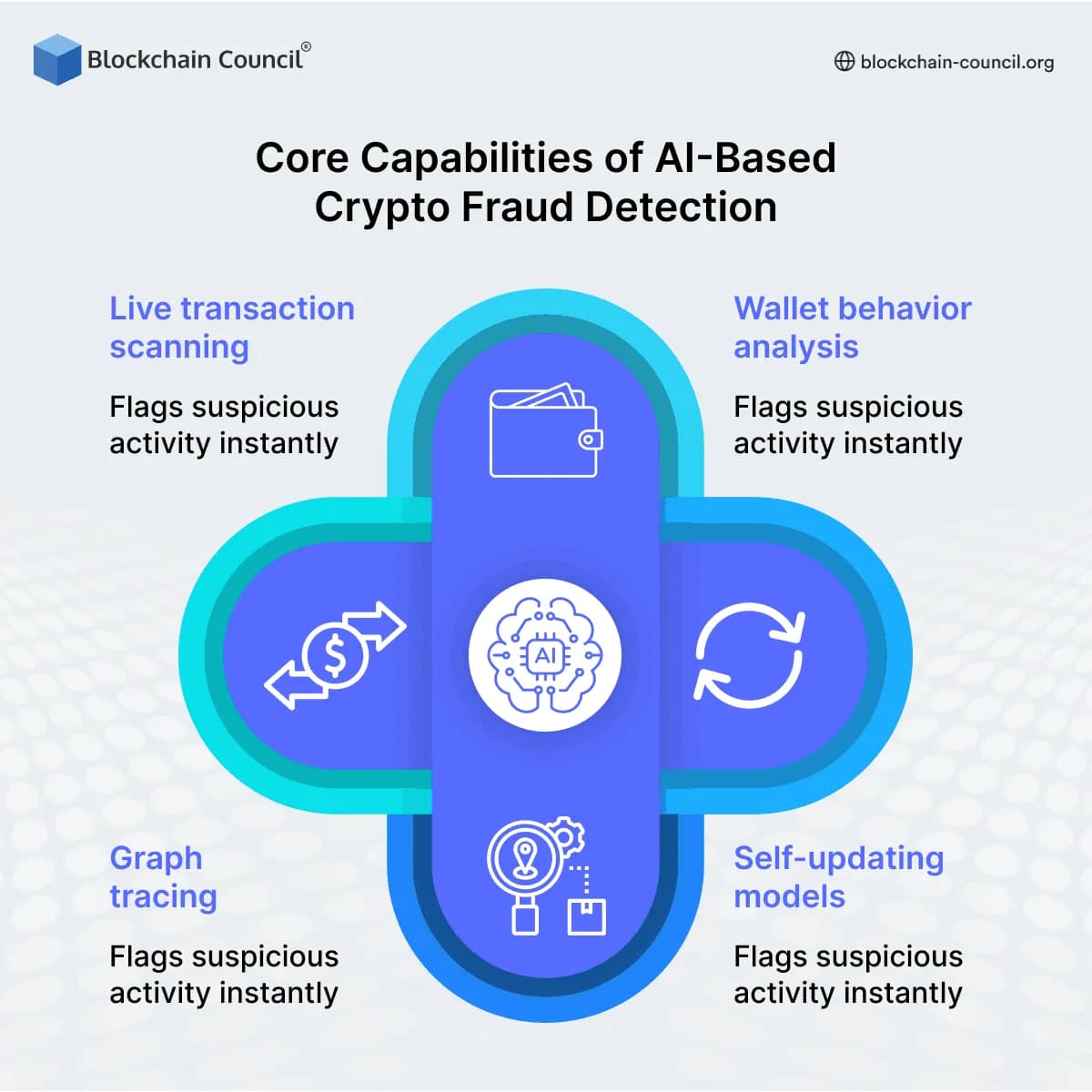
Where This AI Model Is Being Used
Several real-world platforms are using AI fraud detection tools today.
Chainalysis applies AI to detect money laundering by mapping out wallet connections across exchanges. It helps compliance teams stop illicit funds from reaching cash-out points.
ComplyAdvantage and Feedzai use similar tools in banking and crypto payment platforms. These systems watch for login risks, rapid fund movements, and spoofed identities.
MIT and IBM released a dataset with over 200 million tagged crypto transactions. It trains AI systems to recognize scams with higher accuracy and lower false positives than manual review.
Why Real-Time Fraud Detection Matters in Crypto
In crypto, scams move fast. Hackers and fraudsters use bots, mixers, and flash loans to hide their actions. Once a transaction is confirmed, it can’t be reversed. That means you can’t wait minutes or hours to investigate.
This AI model solves that by acting in real time. It sees risky behavior the moment it happens. That gives platforms the chance to freeze accounts, block transfers, or notify users before money disappears.
It also helps law enforcement by identifying scam networks early. This kind of data-driven policing is essential for stopping laundering rings, phishing schemes, and token rug pulls.
Common Crypto Fraud Types and AI Response Actions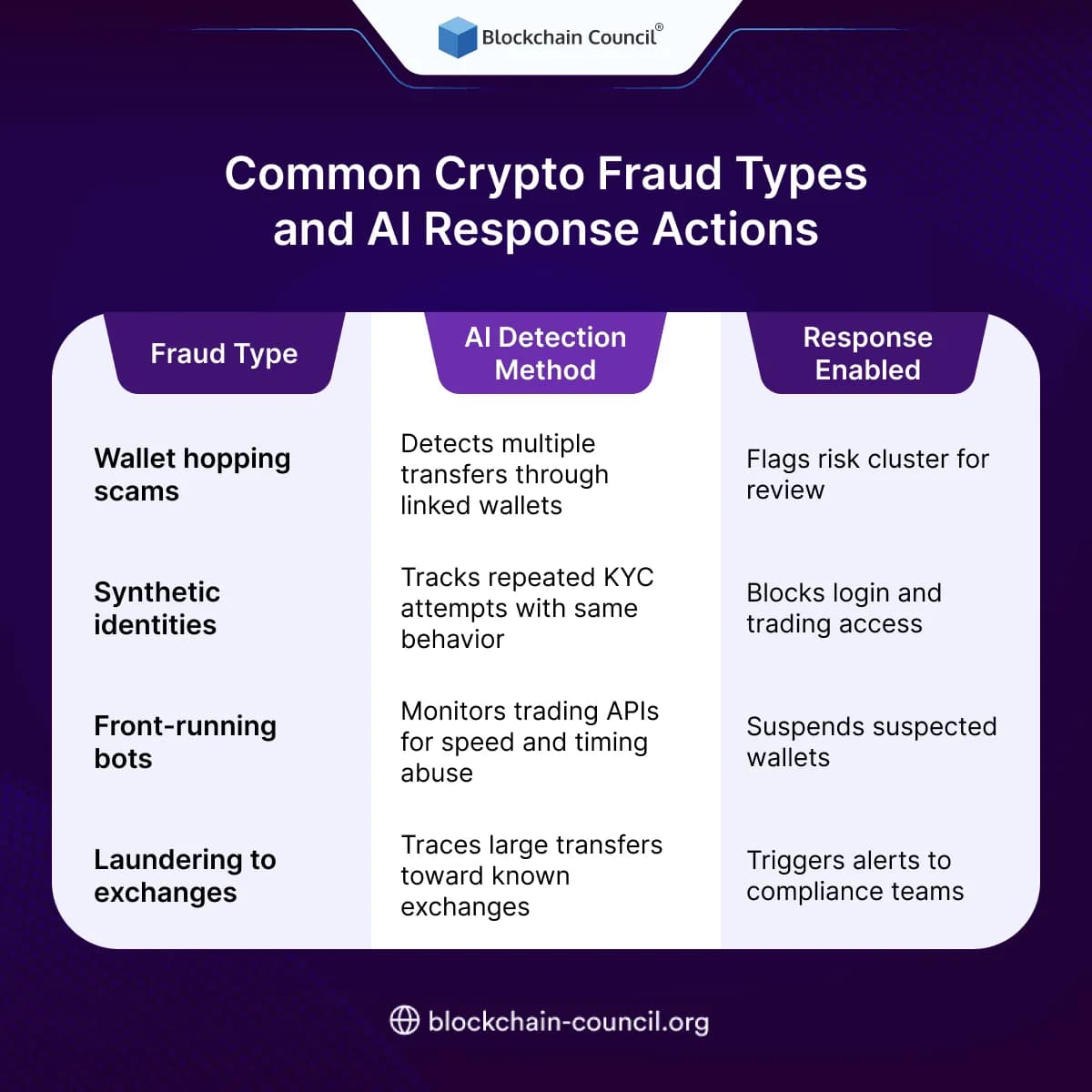
What This Means for Users and Platforms
For exchanges, this AI model lowers financial risk and improves trust. It helps meet regulatory requirements and reduces manual review time. For users, it means fewer scams, faster alerts, and safer platforms.
Even though the tech is complex, the benefit is clear: real-time AI makes crypto safer. And as more fraudsters use AI to build scams, this kind of defense becomes even more critical.
If you’re exploring the crypto industry, understanding fraud detection is just one part. You also need to learn how networks work, how Bitcoin is mined, and how transactions are validated.
If you’re interested in the technical side, this is a good time to learn bitcoin mining. Mining still powers many blockchain networks and is linked to transaction security.
A good bitcoin mining program can show you how block validation works and how networks detect and prevent spam or abuse. To go deeper, becoming a bitcoin mining expert helps you recognize risks not just from a security angle but from an infrastructure level.
You can formalize your skills with a bitcoin mining certification, which signals that you understand mining, fraud prevention, and crypto protocols in depth.
Build Your Skills Around AI and Blockchain Security
Real-time fraud detection is part of a bigger picture. As crypto becomes more complex, professionals need the right skills to keep up. Whether you’re a developer, analyst, or strategist, certifications help.
A Crypto Certification will teach you how tokens move and how fraud happens on-chain.
An AI Certification gives you tools to understand machine learning models like the one used for fraud detection.
A Data Science Certification helps you work with blockchain datasets, train AI models, and find hidden trends.
And for those in leadership or product roles, the Marketing and Business Certification shows how to align business goals with compliance and security needs.
Final Thoughts
This new AI model proves that crypto fraud doesn’t have to go undetected. With the right tools, scams can be caught in real time. That protects users, reduces losses, and builds trust in the system.
AI fraud detection isn’t just a tech upgrade. It’s a major shift in how the crypto industry defends itself. As blockchain grows and more people enter the space, real-time safety will become the standard, not the exception.
Whether you’re building, mining bitcoin, or investing, learning how these systems work puts you ahead.
Related Articles
View All
Cryptocurrency
AI in Crypto Asset Recovery: How Machine Learning Detects Fraud Patterns
Learn how AI in crypto asset recovery uses machine learning, anomaly detection, graph analysis, and NLP to trace fraud and prioritize recovery leads.

Cryptocurrency
The Role of AI in Detecting Crypto Fraud, Scams, and Money Laundering
AI helps detect crypto fraud, scams, and money laundering through transaction monitoring, anomaly detection, graph analysis, and explainable risk scoring.

Cryptocurrency
AI in Crypto Compliance: How Monitoring and Fraud Detection Are Changing
AI in crypto compliance is reshaping AML monitoring, wallet risk scoring, and fraud detection as scams become faster, smarter, and harder to trace.
Trending Articles
The Role of Blockchain in Ethical AI Development
How blockchain technology is being used to promote transparency and accountability in artificial intelligence systems.
AWS Career Roadmap
A step-by-step guide to building a successful career in Amazon Web Services cloud computing.
How to Install Claude Code
Learn how to install Claude Code on macOS, Linux, and Windows using the native installer, plus verification, authentication, and troubleshooting tips.