

Security Tokens Explained: Digital Securities and Compliance Basics

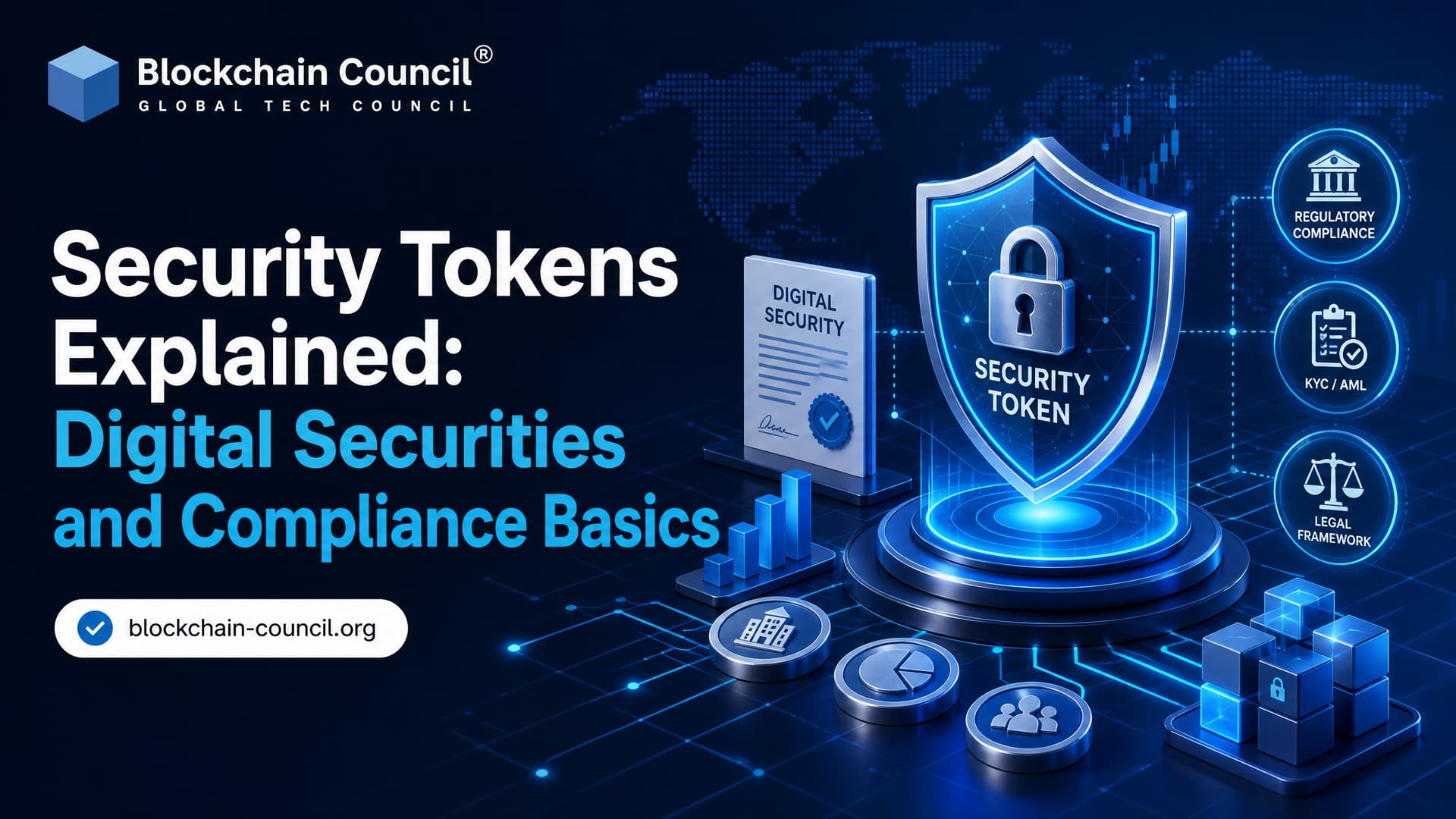
Security tokens are blockchain-based digital securities that represent regulated financial rights, such as equity, debt, fund interests, or real estate claims. The token may move on Ethereum, Polygon, or another distributed ledger, but the legal question stays familiar: what does the holder own, what return is promised, and who is responsible for delivering it?
That distinction matters. A security token is not just a crypto asset with a finance-themed name. It is a digital wrapper around a security, with ownership records, transfer rules, and investor eligibility checks often managed through smart contracts. If you issue, trade, custody, or audit these instruments, you need to understand both blockchain infrastructure and securities compliance.

What Are Security Tokens?
A security token is a tokenized representation of a regulated financial instrument. It can represent shares in a company, a bond, a fund unit, a revenue-sharing right, or a fractional interest in real estate. The blockchain records who holds the token, while legal documents define the actual rights attached to it.
Think of the token as the digital record and transfer mechanism. The economic right still comes from contracts, corporate law, securities law, and offering documents. That is why regulators usually look past the technology and examine the substance of the transaction.
Common rights embedded in security tokens
- Ownership rights: Equity-like claims in a company or asset-holding entity.
- Cash-flow rights: Dividends, interest payments, revenue share, or distributions.
- Voting rights: Governance participation in a company, fund, or asset vehicle.
- Redemption or repayment rights: Common in debt, notes, and fund structures.
- Transfer rights: The ability to sell or transfer, subject to legal restrictions.
The technical implementation varies. Some projects use ERC-20-style tokens with added restrictions. Others use standards designed for regulated assets, such as ERC-1400, ERC-1404, or ERC-3643. The standard matters because unrestricted ERC-20 transfers are usually a poor fit for regulated securities. To be blunt, if anyone can receive the token with no identity or eligibility check, the compliance design is probably not ready for a real securities offering.
Security Tokens vs Utility Tokens and Governance Tokens
Security tokens are often confused with utility tokens and governance tokens. The labels matter less than the rights and expectations attached to the asset.
- Utility tokens usually provide access to a product, service, or network function.
- Governance tokens usually let holders vote on protocol parameters or treasury decisions.
- Security tokens represent an investment contract or financial instrument, often with profit expectations tied to the efforts of an issuer or manager.
In the United States, the Howey Test is still central. If there is an investment of money in a common enterprise with an expectation of profit based mainly on the efforts of others, the asset may be treated as a security. Other jurisdictions use different tests, but the same practical rule tends to apply: if it behaves like a security, putting it on-chain does not make it something else.
Digital Securities and the Economic Reality Test
Regulators increasingly describe tokenized securities as a change in format, not a new asset class sitting outside existing law. Recent SEC staff commentary points in the same direction: tokenized securities remain securities under federal law. Offers and sales must be registered or must qualify for an exemption.
This is sometimes called the economic reality principle. The analysis focuses on the rights represented by the token, how it is sold, who buys it, and what the issuer promises. A tokenized bond is still a bond. Tokenized shares are still shares. A tokenized fund interest is still a fund interest.
That view also shows up in recent SEC and CFTC coordination efforts and industry compliance commentary. The trend is not toward a separate free zone for digital assets. It is toward fitting tokenized instruments into securities, commodities, payments, and other existing regulatory categories.
Compliance Basics for Security Tokens
Security token compliance starts before the first token is minted. The issuer, counsel, compliance team, smart contract developers, transfer agent, broker-dealer, and custodian need to agree on the rules. If they do not, the code may enforce the wrong policy perfectly.
1. Registration or exemption
A security token offering, often called an STO, must be registered or conducted under an exemption in the relevant jurisdiction. In the US, many offerings have used private placement routes and are limited to accredited investors. That is not a blockchain limitation. It is securities law doing what it already does.
2. Disclosure and anti-fraud rules
Investors need accurate information about the issuer, risks, rights, fees, conflicts, and transfer limits. Tokenization does not remove disclosure duties. Anti-fraud rules still apply to statements made in whitepapers, websites, Telegram groups, investor decks, and exchange listings.
3. KYC, AML, and sanctions screening
Most security token systems require identity verification before an investor can receive tokens. KYC and AML checks help address identity, source-of-funds concerns, sanctions exposure, and jurisdictional eligibility. In practice, the smart contract often checks an allowlist before approving a transfer.
4. Transfer restrictions
This is where digital securities differ sharply from ordinary crypto tokens. A compliant security token may block transfers to unknown wallets, investors in restricted jurisdictions, non-accredited investors, or addresses that exceed holding limits. It may also enforce lock-up periods.
A practical detail: when you test these contracts, do not only check whether approve and transferFrom work. A common beginner mistake is whitelisting the investor wallet, then trying to transfer to a new cold wallet that has not passed eligibility checks. The allowance is fine, the balance is fine, and the transaction still reverts. In Hardhat or MetaMask you may see little more than execution reverted. The missing allowlist entry is the real bug.
5. Ongoing monitoring
Compliance does not end at issuance. Regulated firms need surveillance, personal trading controls, restricted lists, and reporting processes that can detect tokenized stocks, bonds, ETFs, or fund interests across multiple platforms. Traditional ticker-based monitoring can miss tokenized versions of the same issuer if identifiers are inconsistent.
Programmable Compliance: Useful, But Not Magic
Programmable compliance means rules are encoded into the token and related smart contracts. This can automate transfer restrictions, investor whitelists, lock-ups, distribution logic, and audit trails. Done well, it cuts manual reconciliation and makes ownership records easier to inspect.
But code is not law by itself. A smart contract can block an ineligible transfer, but it cannot decide whether an offering document was misleading. It cannot replace legal analysis. It also cannot fix weak custody, poor private key management, or a transfer agent process that is out of sync with the token registry.
The best security token projects treat compliance as a system:
- Legal rights are documented off-chain.
- Investor identity is verified by approved providers.
- Eligibility data is reflected on-chain or through controlled registries.
- Smart contracts enforce approved transfers.
- Compliance teams monitor trading, reporting, and exceptions.
Real-World Use Cases for Security Tokens
Tokenized equity
Private company shares can be represented as security tokens, especially in private placements. This can improve cap table visibility, automate certain corporate actions, and simplify secondary transfers when permitted. It is not a shortcut around shareholder agreements or securities exemptions.
Tokenized debt
Bonds and notes can be tokenized so that interest schedules, repayment events, and holder records are easier to administer. The real benefit is operational: fewer reconciliation layers, faster settlement, and clearer ownership history.
Real estate tokenization
Real estate is one of the most discussed digital securities use cases. Tokens may represent interests in a property-owning entity, a fund, or a revenue stream. Fractional ownership can broaden access, but every structure still needs careful handling of investor rights, valuations, tax treatment, and transfer limits.
Funds and ETFs
Tokenized fund units can support subscription, redemption, distribution, and reporting workflows. Compliance teams must still track who holds the token and whether trading creates conflicts, personal trading issues, or restricted-list exposure.
Benefits and Trade-Offs
Security tokens can improve parts of capital markets infrastructure, especially for assets that are hard to transfer or reconcile. Benefits often include:
- Fractional ownership of high-value or illiquid assets.
- Near real-time or T+0 settlement where infrastructure supports it.
- 24/7 market access on approved venues.
- Automated corporate actions and distribution workflows.
- Better auditability through shared ledger records.
The trade-offs are real. Liquidity is not guaranteed. A tokenized asset listed on a thinly traded venue may still be illiquid. Cross-border compliance is difficult. Custody must be institution-grade. Smart contract standards are still fragmented. If your main goal is simple fundraising from a small investor group, a traditional private placement may be faster and cheaper than building a tokenized stack.
Skills Professionals Need
If you work in crypto, compliance, fintech, or capital markets, security tokens sit at the intersection of law, token engineering, custody, and market structure. You do not need to be a securities lawyer and a Solidity engineer at the same time, but you do need enough fluency to ask the right questions.
For structured learning, Blockchain Council programs such as Certified Blockchain Expert™, Certified Cryptocurrency Expert™, Certified Blockchain Developer™, and Certified Smart Contract Auditor™ help readers connect digital asset theory with implementation and risk controls.
What to Do Next
If you are evaluating a security token project, start with one page: define the underlying right, investor eligibility, transfer restrictions, custody model, reporting duties, and the smart contract standard. Then test one forbidden transfer, not just a successful one. That single test will tell you whether the project understands digital securities compliance or merely added a token to a securities product.
Related Articles
View All
Cryptocurrency
Crypto Explained: From Bitcoin to the Digital Asset Revolution
Crypto Explained in simple terms. Learn what cryptocurrency is, why Bitcoin was created, how coins differ from tokens, how wallets work, and the key benefits and risks.

Cryptocurrency
NFTs Explained: Digital Ownership, Collectibles, and Token Standards
NFTs explained through digital ownership, collectibles, ERC-721, ERC-1155, royalties, legal rights, use cases, and practical risks for Web3 professionals.

Cryptocurrency
Cryptocurrency Wallets Explained: How to Store and Manage Digital Assets
Learn how cryptocurrency wallets work, including private keys, hot and cold storage, custodial options, MPC, account abstraction, and security best practices.
Trending Articles
Blockchain in Supply Chain Provenance Tracking
Supply chains are under pressure to prove not just efficiency, but also authenticity, sustainability, and fairness. Customers want to know if their coffee really is fair trade, if the diamonds are con
How to Create Claude Skills?
Claude Skills are one of the most important features Anthropic has introduced for users who want automation that is structured, consistent and reusable. Instead of giving Claude long instructions ever
Claude Code Vs Cursor
Claude Code vs Cursor compares two AI coding tools based on features, automation, and developer workflows.