

Cryptocurrency Wallets Explained: How to Store and Manage Digital Assets

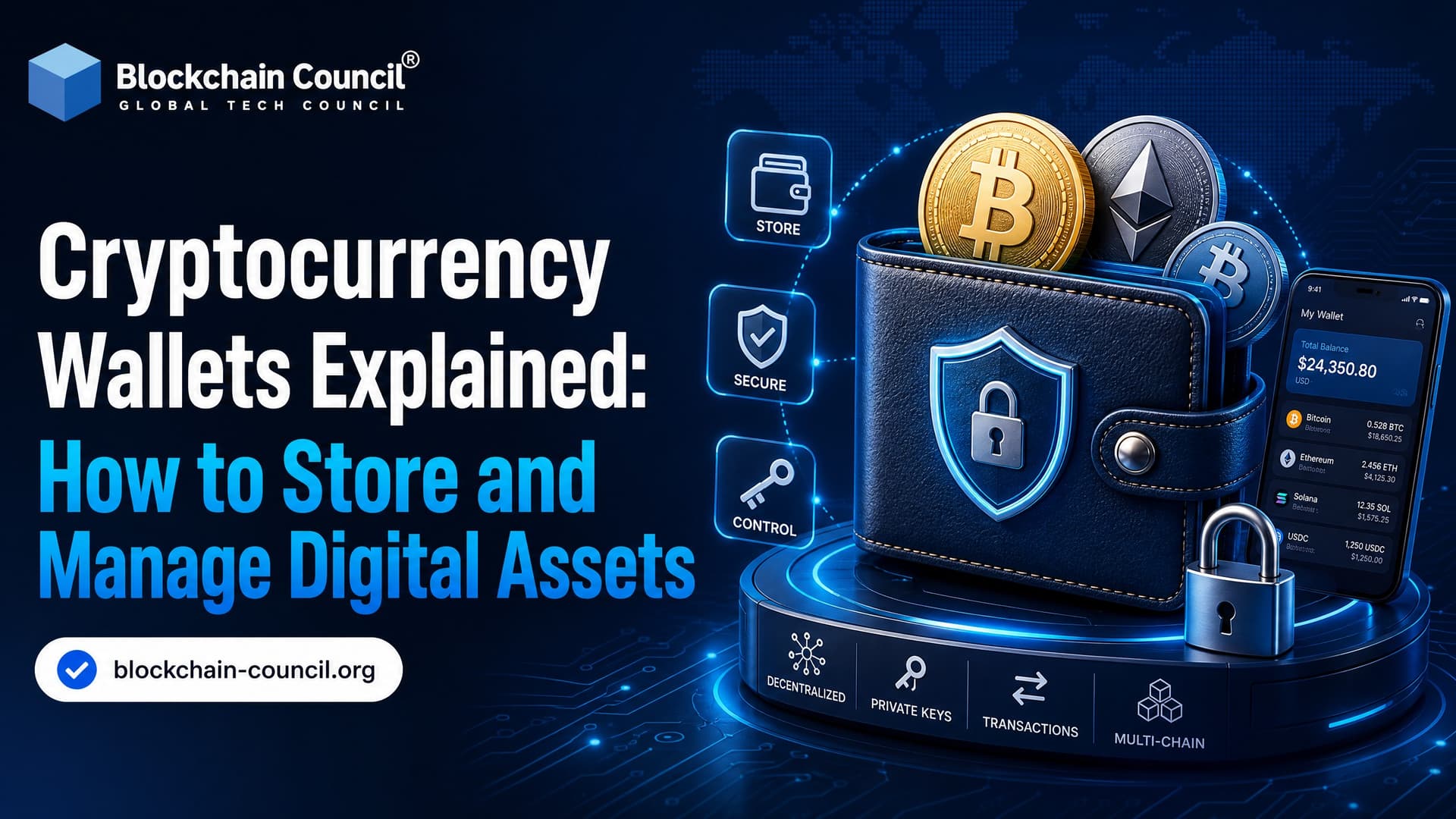
Cryptocurrency wallets are the control layer for your digital assets. They do not hold Bitcoin, Ether, stablecoins, or NFTs inside the app. They manage the cryptographic keys that let you prove ownership and sign transactions on a blockchain.
That distinction matters. If you lose the private key or recovery method for a non-custodial wallet, the blockchain will not reset your password. If someone else gets it, they can move the assets. Simple. Brutal. This is why wallet choice is one of the first serious decisions you make in crypto.

What Is a Cryptocurrency Wallet?
A cryptocurrency wallet is a software app, browser extension, hardware device, or online service that manages the private and public keys used to access blockchain assets. Your assets remain recorded on-chain. The wallet gives you a practical interface to view balances, sign transactions, connect to decentralized applications, and manage token permissions.
Key terms you need to know
- Private key: The secret value used to authorize transactions. Anyone with the private key can control the related assets.
- Public key and address: A shareable identifier used to receive funds and check balances. On Ethereum mainnet, the chain ID is 1, and addresses usually start with 0x.
- Seed phrase: A 12 or 24 word backup used by many wallets to restore access. Never type it into a website claiming to be support.
- On-chain assets: Coins, tokens, and NFTs recorded on the blockchain, not stored inside the wallet application itself.
A common beginner mistake is thinking a wallet stores coins like a physical wallet stores cash. It does not. The wallet stores access. That difference shows up often in crypto certification exams, especially in key custody and private key ownership questions.
Custodial vs Non-Custodial Wallets
The most useful way to classify cryptocurrency wallets is by custody. Who controls the private keys?
Custodial wallets
With a custodial wallet, a third party such as a centralized exchange holds the private keys for you. You log in with an account, password, and usually two-factor authentication. This setup is easier for buying, selling, and converting fiat currencies into crypto.
The trade-off is trust. If the provider freezes withdrawals, suffers a breach, or restricts your account, you may not be able to move your funds immediately. Custodial wallets fit beginners, active traders, and users who need bank-like support. They are not ideal for people who want full self-custody.
Non-custodial wallets
With a non-custodial wallet, you control the keys. Examples include mobile wallets, browser wallets, desktop wallets, and hardware wallets. This is the standard model for DeFi, NFTs, DAO voting, and most Web3 interactions.
The benefit is direct control. The cost is responsibility. If you lose the recovery phrase or recovery setup, there is usually no help desk that can recover the assets. If you approve a malicious smart contract, the wallet will sign what you authorize.
Hot Wallets and Cold Wallets
Wallets can also be grouped by connectivity.
Hot wallets
Hot wallets are connected to the internet. MetaMask, Coinbase Wallet, Trust Wallet, Phantom, and similar apps are common examples. They are useful for daily use, DeFi, swaps, NFT marketplaces, and testnet development.
Use a hot wallet for working capital, not your life savings. Browser extensions are convenient, but they sit close to phishing sites, fake token airdrops, malicious pop-ups, and compromised front ends.
Cold wallets
Cold wallets keep private keys offline or mostly offline. Hardware wallets from established manufacturers are the most common option. They sign transactions inside the device, so the private key does not need to leave the secure hardware environment.
Cold storage is the better choice for long-term holdings, treasury reserves, and larger balances. Newer hardware wallets are also improving usability with features such as NFC pairing and biometric authentication, while still focusing on offline key protection.
How Cryptocurrency Wallets Manage Digital Assets
Modern cryptocurrency wallets have moved far beyond send and receive buttons. Many now act as dashboards for on-chain finance.
Typical wallet functions include:
- Key generation and storage: Creating private keys and protecting recovery methods.
- Transaction signing: Approving transfers, swaps, staking actions, and contract calls.
- Portfolio tracking: Showing balances across Bitcoin, Ethereum, Solana, layer 2 networks, stablecoins, and NFTs.
- dApp connections: Connecting to DeFi protocols for lending, borrowing, liquidity provision, staking, and governance.
- Security controls: PINs, biometrics, hardware signing, multi-signature policies, MPC, and risk alerts.
Here is a detail developers run into fast: an ERC-20 token approval is not the same as sending tokens. When you approve a dApp, you may grant it permission to spend tokens later. Some interfaces request a very large allowance, often the maximum uint256 value. If that contract or front end is malicious, the approval becomes the weak point. Review approvals often.
On Ethereum, you also need to understand EIP-1559 fee fields. A wallet may show a max fee and a priority fee. If the base fee rises above your max fee, the transaction can sit pending. If a contract call is wrong, you may see errors such as execution reverted during simulation or after submission. Do not just click faster. Read the transaction preview.
Wallets as On-Chain Financial Hubs
Wallets are increasingly the primary interface for on-chain activity, and that matches how people actually use them. A single wallet can now support asset swaps, cross-chain bridges, NFT galleries, stablecoin payments, fiat on-ramps, staking, and token approvals.
Market estimates put the decentralized crypto wallet sector in the multi-billion dollar range and growing each year. Active cryptocurrency wallets globally are counted in the hundreds of millions, DeFi wallet usage keeps climbing, and stablecoin transaction volume runs into the trillions of dollars annually. Exact figures vary by source, so treat them as direction rather than precise counts.
The direction is clear: wallets are becoming the user interface for crypto payments, investing, identity, and application access.
New Wallet Technologies to Watch
MPC and seedless recovery
Seed phrases are powerful, but they are unforgiving. Multi-party computation, or MPC, splits key material across devices or parties so that no single stored phrase becomes the only point of failure. Some wallets combine MPC with social recovery, cloud shards, or multi-factor recovery.
This helps mainstream users and enterprises. Still, read the recovery model. If recovery depends on a cloud account, phone number, or vendor service, you have introduced different trust assumptions.
Smart contract wallets and account abstraction
Smart contract wallets make the wallet itself programmable. Account abstraction can support batched transactions, sponsored gas, spending limits, session keys, and custom security rules. For users, this can reduce friction. For developers, it changes how onboarding and transaction flows are designed.
Do not assume every account abstraction wallet is automatically safer. The contract code, upgrade permissions, signer model, and recovery rules all matter.
AI-assisted wallet security
Wallets are starting to use AI and pattern analysis to warn users about suspicious contracts, risky approvals, address poisoning, and scam behavior. This is a good layer of defense, especially for new users. It is not a substitute for understanding what you sign.
Multichain wallet interfaces
Users no longer operate on one chain only. Bitcoin, Ethereum, Solana, Cosmos, and EVM layer 2 networks all have active communities. Leading wallets now provide unified portfolio views and built-in routing for swaps and bridges. That convenience brings risk. Bridges and cross-chain routers add smart contract, liquidity, and counterparty exposure.
Best Practices for Storing and Managing Digital Assets
- Separate daily funds from long-term holdings. Keep small amounts in a hot wallet and larger balances in cold storage or professional custody.
- Back up recovery methods offline. For seed phrases, use paper or metal backup stored securely. Do not store screenshots in cloud photo apps.
- Use hardware wallets for meaningful balances. If losing the funds would hurt, move them away from a browser-only setup.
- Verify addresses carefully. Address poisoning attacks rely on users copying a similar-looking recent address from wallet history.
- Review token approvals. Revoke permissions you no longer need, especially after interacting with unknown dApps.
- Test with a small transfer first. This is boring advice. It saves money.
- Understand network fees. Sending USDT on Ethereum is not the same fee experience as sending it on a layer 2 or another chain.
- Use two-factor authentication for custodial accounts. Prefer authenticator apps or hardware security keys over SMS where possible.
Choosing the Right Cryptocurrency Wallet
Your best wallet setup depends on how you use crypto.
- Beginner buying small amounts: A regulated custodial exchange wallet may be acceptable while you learn the basics.
- DeFi user: Use a non-custodial hot wallet connected to a hardware wallet when possible.
- NFT collector: Keep a separate minting wallet. Do not connect your vault wallet to unknown mint sites.
- Long-term holder: Use a hardware wallet with offline backups and a clear inheritance plan.
- Enterprise treasury team: Consider MPC, multi-signature approvals, role-based controls, audit logs, and compliance workflows.
If you are building professional fluency, Blockchain Council programs such as the Certified Cryptocurrency Expert™, Certified Blockchain Expert™, and Certified Smart Contract Developer™ connect wallet security, blockchain architecture, and smart contract risk into structured learning paths.
Final Takeaway
Cryptocurrency wallets are no longer simple storage tools. They are identity layers, payment interfaces, DeFi gateways, NFT managers, and custody systems. But the core rule has not changed: whoever controls the keys controls the assets.
Start with a clean setup this week. Create one hot wallet for learning, move long-term holdings to cold storage, review approvals, and document your recovery process. If you want to go deeper, study wallet custody models and smart contract permissions before making larger transfers.
Related Articles
View All
Cryptocurrency
Cryptocurrency vs Fiat Currency: How Digital Assets Compare to Traditional Money
Cryptocurrency vs fiat currency explained through control, volatility, settlement, privacy, regulation, use cases, and practical trade-offs for professionals.

Cryptocurrency
How Does Cryptocurrency Work? Blockchain, Wallets, and Transactions Explained
A clear guide to how cryptocurrency works, covering blockchains, wallets, private keys, transaction signing, mining, staking, fees, and real-world use cases.

Cryptocurrency
Crypto Asset Recovery Explained: How to Recover Lost or Stolen Digital Assets
Learn how crypto asset recovery works, what can realistically be recovered, and how to avoid recovery scams after digital asset theft or loss.
Trending Articles
AWS Career Roadmap
A step-by-step guide to building a successful career in Amazon Web Services cloud computing.

Top 5 DeFi Platforms
Explore the leading decentralized finance platforms and what makes each one unique in the evolving DeFi landscape.
How Blockchain Secures AI Data
Understand how blockchain technology is being applied to protect the integrity and security of AI training data.