

How Does Crypto Asset Recovery Work? Step-by-Step Process Explained

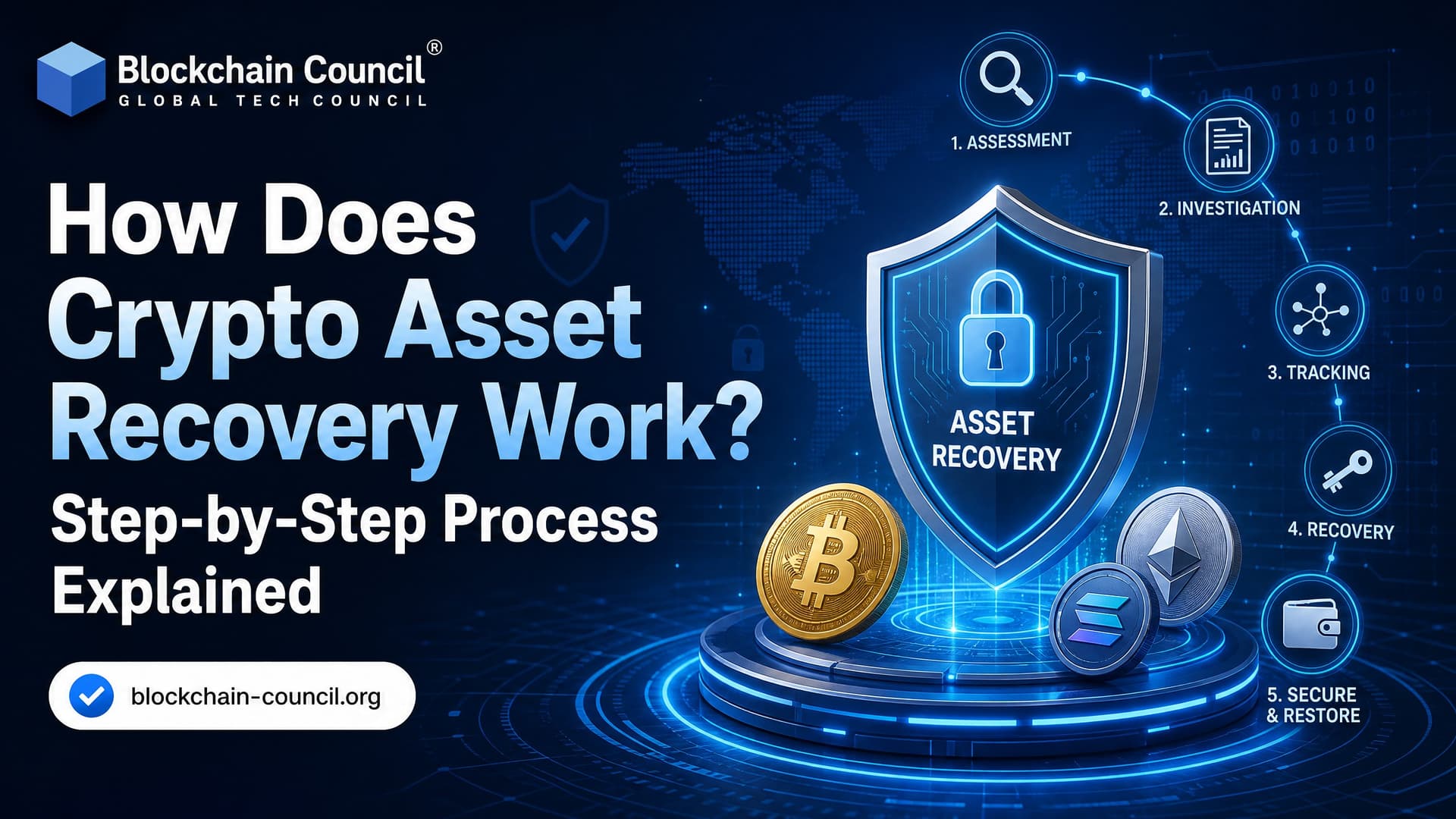
Crypto asset recovery is the work of tracing, freezing, reclaiming, or re-accessing digital assets after theft, fraud, hacks, or wallet lockouts. It is not one single trick. A stolen USDT case may need blockchain forensics and a court order. A lost Bitcoin wallet may need password reconstruction against an old wallet.dat file. Different problem, different path.
The hard truth: recovery is possible in some cases, but never guaranteed. Anyone promising a 100 percent refund is probably selling false hope. The practical process combines evidence collection, blockchain analytics, exchange coordination, legal action, and sometimes technical wallet recovery.

What Is Crypto Asset Recovery?
Crypto asset recovery refers to the retrieval of lost, stolen, or inaccessible cryptocurrencies and tokens. It usually falls into three categories:
- Stolen or scammed assets: phishing, pig-butchering scams, rug pulls, exchange account takeovers, wallet drainers, or DeFi exploits.
- Lost access: forgotten passwords, missing seed phrases, corrupted wallet files, or damaged hardware wallets.
- Law enforcement recovery: seizure, forfeiture, and victim restitution after criminal investigations.
These cases are handled by different people. A wallet password case may involve a technical recovery specialist. A cross-border fraud case may involve blockchain intelligence firms, specialist lawyers, exchanges, and agencies such as the FBI, IRS-CI, the Secret Service, or local cybercrime units.
Step 1: Document the Incident Immediately
If your crypto was stolen, start with evidence. Do this before contacting strangers online or moving remaining funds in a panic.
Collect:
- Transaction hashes, also called TXIDs
- Sending and receiving wallet addresses
- The blockchain network used, such as Ethereum, Bitcoin, BNB Chain, Tron, or Solana
- Exact timestamps and asset amounts
- Screenshots of chats, emails, websites, wallet approvals, and exchange records
- Smart contract addresses, if a token or DeFi protocol was involved
A practitioner detail that matters: on Etherscan, do not check only the main transaction list. ERC-20 and ERC-721 transfers often appear under the Token Transfers tab, and internal value movement may show up separately under Internal Txns. Beginners miss this and assume funds stopped moving when they did not.
Step 2: Secure What Is Left
Before tracing, contain the damage. Change exchange passwords. Revoke suspicious token approvals using trusted tools. Move remaining funds to a fresh wallet if you still control the private keys. Enable app-based two-factor authentication rather than SMS wherever possible.
If a seed phrase was exposed, treat that wallet as burned. Do not keep using it. Restore the wallet only long enough to move remaining assets to a new address generated from a new seed phrase.
Step 3: Perform Initial Blockchain Tracing
Public blockchains are useful because transfers are visible. You can use explorers such as Etherscan, Blockchain.com Explorer, Tronscan, Solscan, or BscScan to follow transactions from your wallet to the attacker's address.
This early tracing helps answer key questions:
- Did the funds move to a centralized exchange?
- Were they swapped through a decentralized exchange?
- Did they pass through a bridge to another chain?
- Were mixers or privacy tools used?
- Are the assets still sitting in one wallet?
Speed matters. After a drainer exploit, funds can be split across dozens of wallets within minutes, bridged, swapped into stablecoins, and sent to an off-ramp. Wait a week and your options shrink.
Step 4: Engage Blockchain Analytics and Intelligence Experts
For serious losses, manual explorer work is not enough. Blockchain analytics firms use clustering, attribution databases, cross-chain tracing, transaction graphing, and exchange exposure data to work out where stolen funds may be heading.
Companies such as Chainalysis, TRM Labs, and other forensic providers support law enforcement and financial institutions in tracing illicit crypto. Their reports can identify exchange deposit addresses, related wallets, laundering patterns, and possible off-ramps. That evidence is often what lawyers and investigators need before asking a platform to freeze funds.
Analytics does not magically identify every scammer. It builds a defensible map of fund flows. That distinction matters in court.
Step 5: Notify Exchanges and Custodians
If tracing shows stolen assets entering a centralized exchange, notify the platform quickly. Provide transaction hashes, wallet addresses, dates, amounts, and a short explanation of the incident. If law enforcement or legal counsel is involved, include case references where available.
Custodial platforms can sometimes freeze accounts or assets. Non-custodial wallets cannot be frozen by customer support because no company controls the private key. This is one of the most important distinctions in crypto asset recovery.
Step 6: File Law Enforcement Reports
Report the crime to your local police or cybercrime authority. In the United States, victims often file with the FBI's Internet Crime Complaint Center, known as IC3. Large fraud cases may later involve federal investigations, seizure warrants, forfeiture actions, and victim compensation processes.
Be precise. "I lost crypto" is too vague. Provide the TXIDs, addresses, screenshots, wallet names, exchange names, and any real-world identity clues. The stronger your file, the easier it is for an investigator to connect your loss to a larger case.
Step 7: Use Legal Tools to Freeze, Seize, or Recover Assets
When assets are identified at an exchange or with an issuer-controlled token, lawyers may seek court orders. These can include freezing injunctions, disclosure orders, seizure orders, or other remedies depending on the jurisdiction.
TRM Labs has described legal mechanisms such as seize, burn, block, and reissue. These tools are more realistic for centrally issued assets or custodial environments than for fully decentralized assets sitting in an unknown non-custodial wallet.
To be blunt, this is where many private recovery claims fall apart. Tracing a wallet is not the same as getting money back. Recovery usually requires cooperation from a platform, a court order, law enforcement action, or control of the relevant keys.
Step 8: Seizure, Forfeiture, and Victim Restitution
In major fraud cases, governments may seize crypto linked to criminal activity. After forfeiture, victims may apply for remission or restoration. In these processes, you usually need to prove the amount lost and show a direct link between your stolen funds and the assets seized.
This can be slow. It may take months or years. Still, for pig-butchering scams and organized fraud, federal seizure and restitution may be the most credible route to compensation.
How Lost Wallet Recovery Works
Lost access is different from theft. If your assets are still in your wallet but you cannot open it, the process focuses on keys, seed phrases, backups, and passwords.
Check Backups and Seed Phrases
Look for encrypted wallet files, paper seed backups, password managers, old phones, USB drives, cloud backups, and hardware wallet recovery sheets. For most non-custodial wallets, the seed phrase is the recovery path. Without it, the wallet provider usually cannot help.
Restore on a New Device
If a hardware wallet is lost but you still have the recovery seed, buy a new device from the manufacturer or a trusted reseller. Restore the wallet, verify balances, then move funds to a new wallet if you think the old device or seed may be compromised.
Use Password Recovery Carefully
For old encrypted wallets, password recovery may work if you remember fragments: old phrases, capitalization habits, dates, symbols, or password patterns. Services such as Crypto Asset Recovery specialize in testing large numbers of password candidates against encrypted wallet files while avoiding custody of the funds.
Do not upload seed phrases into random websites. Do not install "recovery tools" from Telegram links. Many victims are scammed a second time at this stage.
Common Barriers to Crypto Asset Recovery
- No seed phrase or private key: if a non-custodial wallet has no usable backup, technical recovery may be impossible.
- Mixers and privacy tools: these can make tracing and attribution much harder.
- Cross-chain movement: funds may move through bridges, swaps, and different networks before reaching an exchange.
- Weak jurisdictions: some service providers or off-ramps may not cooperate quickly.
- Fake recovery firms: upfront fee scams are common. Vet providers carefully.
How Professionals Can Build Recovery Skills
Crypto asset recovery now sits at the intersection of blockchain, cybersecurity, compliance, and law. If you work in investigations, exchange risk, Web3 security, or compliance, you should understand transaction tracing, wallet types, smart contract approvals, and evidence handling.
For structured learning, Blockchain Council's Certified Cryptocurrency Expert™ (CCE) gives readers a broad foundation in cryptocurrency markets, wallets, and security. Developers and auditors may also benefit from the Certified Blockchain Developer™ and Certified Smart Contract Auditor™ tracks, especially when investigating DeFi exploits and malicious contracts.
Practical Checklist: What You Should Do First
- Stop interacting with the scammer or suspicious website.
- Save TXIDs, addresses, screenshots, emails, and chat logs.
- Secure remaining wallets, exchange accounts, and email accounts.
- Trace the first-hop transactions with a blockchain explorer.
- Report the incident to exchanges and law enforcement.
- Speak with qualified forensic and legal professionals for large losses.
- Never share your seed phrase with any recovery provider.
Final Takeaway
Crypto asset recovery works best when you move quickly, preserve evidence, and pick the right path for the situation. Stolen funds need tracing, reporting, exchange action, and legal pressure. Lost wallets need backups, seed phrases, or credible password recovery. There is no shortcut around private key control.
If you want to work in this field, start by learning how transactions, wallets, token standards, and exchange custody actually function. A practical next step: study wallet security and on-chain analysis through Blockchain Council's cryptocurrency and blockchain certification tracks, then practice tracing real transactions on public explorers before you ever handle a live incident.
Related Articles
View All
Cryptocurrency
Crypto Asset Recovery: How Exchanges, Law Enforcement, and Experts Work Together
Crypto asset recovery depends on exchanges, law enforcement, and recovery experts working together to trace, freeze, and recover stolen digital assets.

Cryptocurrency
Crypto Asset Recovery After a Phishing Attack: Step-by-Step Guide for Investors
A practical incident response guide for investors hit by crypto phishing, covering containment, evidence, tracing, exchange reports, legal action, and scam warnings.

Cryptocurrency
Crypto Asset Recovery Explained: How to Recover Lost or Stolen Digital Assets
Learn how crypto asset recovery works, what can realistically be recovered, and how to avoid recovery scams after digital asset theft or loss.
Trending Articles
AWS Career Roadmap
A step-by-step guide to building a successful career in Amazon Web Services cloud computing.

Top 5 DeFi Platforms
Explore the leading decentralized finance platforms and what makes each one unique in the evolving DeFi landscape.
How Blockchain Secures AI Data
Understand how blockchain technology is being applied to protect the integrity and security of AI training data.