

Digital Assets: Real-Life Examples Across Finance, Business, Gaming, and More

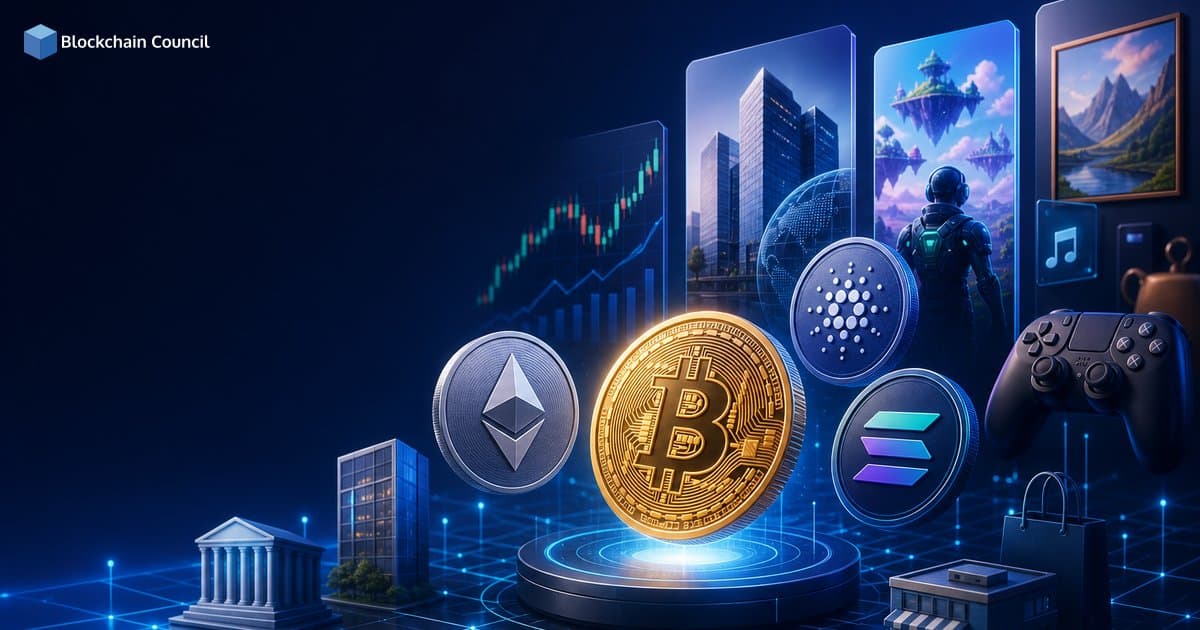
Digital assets are now part of everyday life, from cryptocurrencies used for payments to customer databases that power business decisions. At a basic level, digital assets are electronically stored items that carry value, rights, or utility and can be owned, transferred, managed, or traded. In blockchain contexts, they often represent value using cryptography. In business contexts, they can include software, media files, online accounts, intellectual property, and operational data.
Institutions such as PwC, Fireblocks, State Street Global Advisors, and Wells Fargo, along with financial regulators, now describe digital assets as a permanent part of financial and digital infrastructure. This article explains practical examples of digital assets and how they are used across industries.

What Are Digital Assets?
A digital asset is any electronic item that has economic, operational, legal, or personal value. Some digital assets exist on blockchains, while others are stored in company systems, cloud platforms, or digital accounts.
Common examples include:
- Cryptocurrencies such as Bitcoin and Ethereum
- Stablecoins linked to fiat currencies
- Non-fungible tokens, commonly called NFTs
- Tokenized securities, commodities, and real estate
- Digital business files, software, databases, and brand assets
- Online accounts, gaming items, and virtual goods
The definition shifts by context. The IRS, for example, focuses on blockchain-based representations of value such as cryptocurrencies, stablecoins, and NFTs for tax reporting. Businesses also treat customer records, codebases, creative content, and internal documents as valuable digital assets.
1. Cryptocurrencies as Digital Assets
Cryptocurrencies are among the most recognized digital assets. They are decentralized digital currencies that run on blockchain networks and can be transferred between users without traditional banking intermediaries.
Real-life examples
- Bitcoin: Often used as a store of value or alternative investment asset.
- Ethereum: Used to pay network fees and interact with decentralized applications and smart contracts.
- XRP and other payment tokens: Used in some cross-border transfer and settlement projects.
Cryptocurrencies are used for peer-to-peer payments, remittances, trading, DeFi collateral, and long-term investment. Regulators emphasize that crypto prices can be volatile and that these assets are generally not insured like bank deposits.
Professionals who want to understand this field can explore learning paths such as Blockchain Council's Certified Cryptocurrency Expert or Certified Blockchain Expert programs.
2. Stablecoins for Payments and Settlement
Stablecoins are digital assets designed to maintain a stable value by being linked to another asset, often a fiat currency such as the US dollar. They are widely used in crypto markets because they combine blockchain-based transferability with a relatively stable price target.
Real-life examples
- Dollar-pegged stablecoins used as trading pairs on crypto exchanges
- Stablecoins used for international transfers
- Stablecoins used as collateral in decentralized finance applications
For businesses and individuals, stablecoins may reduce settlement time compared with some traditional cross-border payment systems. Regulators continue to warn about reserve transparency, market stress, liquidity, and consumer protection risks.
3. Central Bank Digital Currencies
Central bank digital currencies, or CBDCs, are digital versions of national currencies issued or backed by central banks. Unlike private stablecoins, CBDCs represent central bank money.
CBDCs are being explored for retail payments, wholesale interbank settlement, financial inclusion, and faster government disbursements. While not every country has launched a CBDC, global pilots show that central banks are actively studying digital money infrastructure.
4. NFTs and Digital Collectibles
NFTs are unique digital tokens that represent ownership, authenticity, or rights related to a specific item. Unlike cryptocurrencies, NFTs are not interchangeable on a one-to-one basis because each token can represent a distinct asset.
Real-life examples
- Digital art: Artists issue NFTs to prove authenticity and sell work directly to collectors.
- Gaming items: Skins, weapons, avatars, or virtual land can be represented by NFTs.
- Music and media rights: NFTs can represent access, royalties, or limited-edition content.
- Identity and credentials: Token formats may be used for digital IDs, certificates, or verifiable credentials.
NFTs have moved beyond collectibles into digital identity, licensing, and intellectual property management. The risks include speculative pricing, platform failure, scams, and unclear legal rights. Learners interested in this area can consider Blockchain Council's Certified NFT Expert program.
5. Tokenized Securities and Financial Assets
Tokenized securities are blockchain-based representations of traditional financial instruments such as stocks, bonds, and fund units. PwC classifies these as security tokens when they meet the definition of a financial security.
Real-life examples
- Tokenized shares in a company or fund
- Digital bonds with faster settlement processes
- Fractional ownership in investment vehicles
- Tokenized money-market or bank deposit products
Financial institutions are exploring tokenization to improve transparency, reduce settlement times, and increase market efficiency. State Street Global Advisors has described digital assets as a next frontier for markets and investors, reflecting growing institutional interest.
6. DeFi Assets in Decentralized Finance
Decentralized finance, or DeFi, uses smart contracts to provide financial services such as trading, lending, borrowing, staking, and yield generation. DeFi assets include governance tokens, liquidity provider tokens, staked tokens, and tokenized claims on pooled funds.
Real-life examples
- Liquidity provider tokens representing a share of a decentralized exchange pool
- Governance tokens used to vote on protocol changes
- Stablecoins deposited into lending protocols
- Staked tokens that represent locked positions in blockchain networks
DeFi demonstrates how digital assets can become programmable financial instruments. It also introduces risks related to smart contract bugs, market volatility, liquidation, and regulatory uncertainty. Developers can strengthen their foundation through courses such as Blockchain Council's Certified Smart Contract Developer.
7. Tokenized Real Estate and Physical Assets
Tokenization can connect physical assets with digital ownership records. Wells Fargo has noted that digital assets can represent digitized claims on physical things such as homes and artwork. This makes tokenized real-world assets one of the fastest-growing areas of digital asset innovation.
Real-life examples
- Tokenized real estate: Investors hold tokens representing fractional interests in property.
- Gold-backed tokens: Tokens represent claims on physical gold stored in vaults.
- Luxury goods and art: Digital tokens can track provenance and ownership of high-value items.
- Tokenized commodities: Oil, agricultural products, or metals can be represented digitally.
These assets may improve access and liquidity, but they also require strong legal frameworks, custody arrangements, audits, and investor disclosures.
8. Intellectual Property and Licensing Tokens
Intellectual property can also become a digital asset. Patents, copyrights, trademarks, media rights, and royalty streams can be represented, tracked, or managed through digital systems and blockchain tokens.
Real-life examples
- Digital certificates proving authenticity of creative works
- Royalty tokens linked to music or media revenue
- Smart contracts that automate licensing payments
- Digital records of ownership for software or creative IP
For creators and businesses, tokenized IP can improve transparency in revenue sharing and rights management. Legal clarity remains essential, since owning a token does not automatically mean owning the copyright unless the rights are properly assigned.
9. Carbon Credits and Environmental Digital Assets
Environmental markets are also adopting digital assets. Tokenized carbon credits, renewable energy certificates, and biodiversity tokens can make sustainability-related claims easier to track and transfer.
Real-life examples
- Carbon offset tokens that represent verified emissions reductions
- Renewable energy certificates recorded and traded digitally
- Environmental assets used in corporate sustainability strategies
These use cases can support traceability in ESG reporting, but they depend on credible verification, transparent registries, and strong environmental standards.
10. Business Digital Assets: Data, Software, and Content
Not all digital assets are crypto assets. In everyday operations, companies rely on a wide range of electronic assets that create measurable value.
Real-life examples
- Brand assets: Logos, design files, product photos, videos, and marketing templates.
- Customer data: CRM records, purchase histories, analytics data, and customer profiles.
- Software: Proprietary code, licensed tools, APIs, databases, and SaaS accounts.
- Documents: Contracts, reports, presentations, financial records, and training materials.
- Online accounts: Social media accounts, e-commerce stores, gaming profiles, and domain names.
Stripe and business advisory sources highlight that digital assets are central to revenue generation, customer engagement, and operational continuity. Managing them requires governance, cybersecurity, backup policies, privacy controls, and clear ownership documentation.
Key Risks to Consider
Digital assets create new opportunities, but they also require careful risk management. Common risks include:
- Volatility: Crypto prices can change rapidly.
- Cybersecurity threats: Wallets, private keys, and business systems can be targeted.
- Regulatory uncertainty: Rules differ by jurisdiction and asset type.
- Tax obligations: In the United States, many blockchain-based digital assets are treated as property for tax purposes.
- Consumer protection gaps: Some transactions are irreversible and may not have traditional safeguards.
- Data privacy: Business data assets must be protected under applicable privacy laws.
The Future of Digital Assets
The digital asset sector is expanding from cryptocurrencies into tokenized securities, real estate, commodities, identity, business data, and environmental markets. PwC has stated that digital assets are no longer merely emerging, while Fireblocks and other infrastructure providers emphasize the growth of stablecoins, CBDCs, and tokenized real-world assets.
For professionals, this creates demand for skills in blockchain architecture, crypto compliance, smart contracts, cybersecurity, data governance, and digital asset strategy. Blockchain Council certifications in blockchain, cryptocurrency, Web3, cybersecurity, and AI can provide structured learning paths for these evolving roles.
Conclusion
Digital assets are no longer limited to Bitcoin or NFTs. They include financial instruments, stablecoins, tokenized real estate, digital art, gaming items, business data, software, online accounts, and environmental credits. In practice, these assets support payments, investment, identity, media rights, sustainability, and enterprise operations.
As adoption grows, the most important skill is not simply knowing the examples. It is understanding how each asset works, what rights it represents, how it is secured, and which risks apply. For businesses and professionals, digital asset literacy is becoming a core capability in the modern digital economy.
Related Articles
View All
Cryptocurrency
Cryptocurrency Wallets Explained: How to Store and Manage Digital Assets
Learn how cryptocurrency wallets work, including private keys, hot and cold storage, custodial options, MPC, account abstraction, and security best practices.

Cryptocurrency
Cryptocurrency vs Fiat Currency: How Digital Assets Compare to Traditional Money
Cryptocurrency vs fiat currency explained through control, volatility, settlement, privacy, regulation, use cases, and practical trade-offs for professionals.

Cryptocurrency
Crypto Asset Recovery Explained: How to Recover Lost or Stolen Digital Assets
Learn how crypto asset recovery works, what can realistically be recovered, and how to avoid recovery scams after digital asset theft or loss.
Trending Articles

Top 5 DeFi Platforms
Explore the leading decentralized finance platforms and what makes each one unique in the evolving DeFi landscape.
How Blockchain Secures AI Data
Understand how blockchain technology is being applied to protect the integrity and security of AI training data.
How to Create Claude Skills?
Claude Skills are one of the most important features Anthropic has introduced for users who want automation that is structured, consistent and reusable. Instead of giving Claude long instructions ever