

The Role of Blockchain Analytics in Strengthening Crypto Compliance

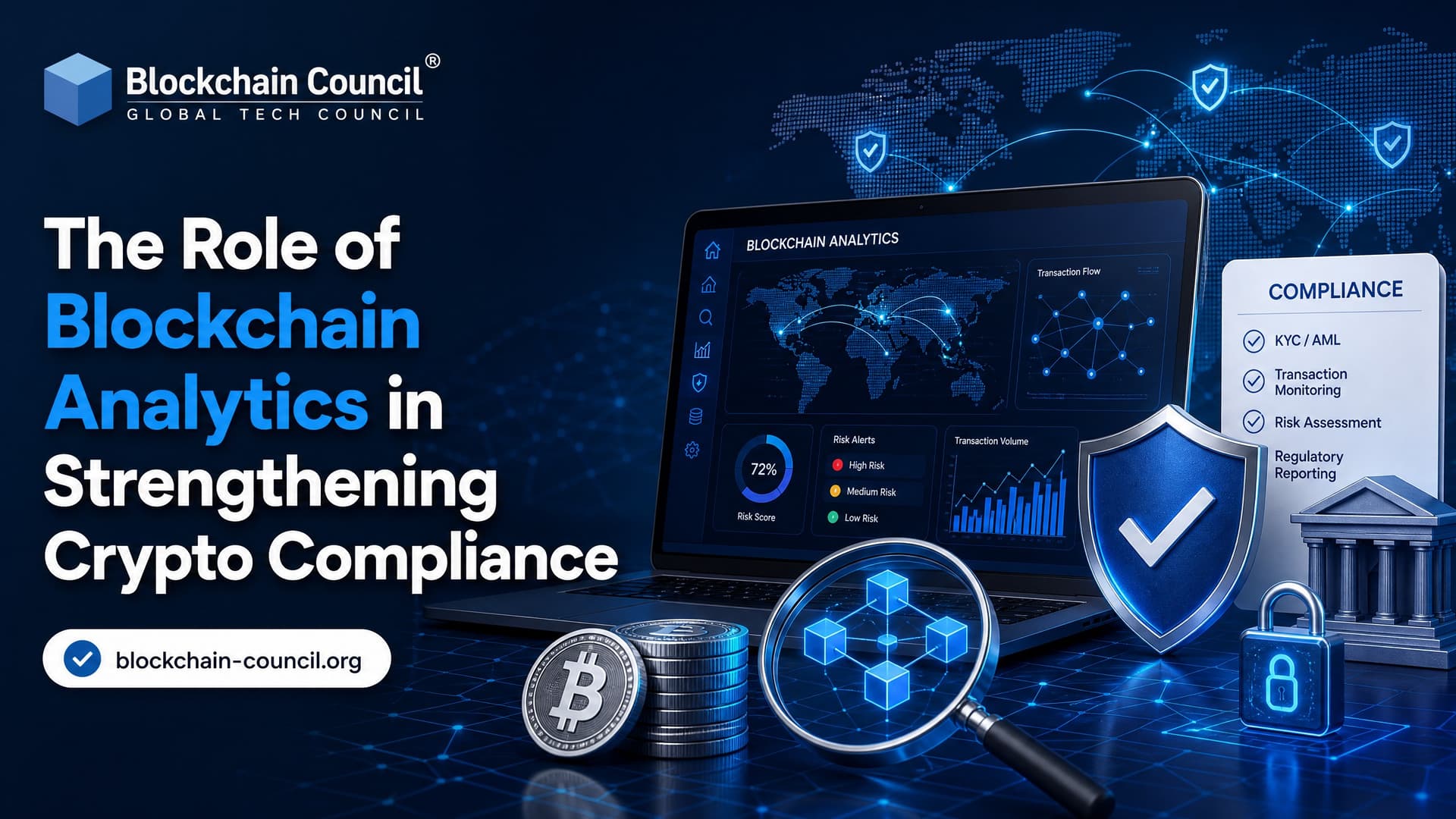
Blockchain analytics has become a practical requirement for crypto compliance, not a nice-to-have investigation tool. If you run a virtual asset service provider, a bank digital asset desk, a custodian, a payment platform, or any compliance function with crypto exposure, you need a way to read on-chain activity, score wallet risk, and connect pseudonymous transactions to real compliance decisions.
That does not mean analytics solves everything. It does not. But it gives you visibility into public blockchain activity that traditional AML systems were never built to interpret.

What Blockchain Analytics Means in Compliance
In a compliance context, blockchain analytics is the process of analyzing blockchain transaction data to trace value flows, identify wallet relationships, and detect exposure to illicit or high-risk activity. It turns raw transaction records into risk signals.
Public chains such as Bitcoin and Ethereum do not show a customer name by default. They do show transaction history. That history can be mapped, clustered, and compared against known entities such as exchanges, darknet markets, ransomware wallets, mixers, sanctioned addresses, and scam infrastructure.
Core components of blockchain analytics
- Transaction graph analysis: Maps wallet-to-wallet movements to identify paths, hops, layering behavior, and hidden relationships.
- Wallet clustering: Groups addresses likely controlled by the same entity using behavioral patterns and heuristics.
- Attribution databases: Connects addresses to known services, threat actors, exchanges, bridges, DeFi protocols, or sanctioned entities.
- Anomaly detection: Uses statistical models and machine learning to flag unusual value movement, velocity, or counterparties.
- Off-chain integration: Combines on-chain risk with KYC, sanctions lists, PEP screening, case management, and fiat transaction monitoring.
Here is a detail that trips up new compliance analysts: screening only the sending wallet is not enough. On Ethereum, ERC-20 transfers are often best tracked through the Transfer(address,address,uint256) event log, whose topic hash starts with 0xddf252ad. If your system only checks the externally owned account that submitted the transaction, you can miss the real token sender or recipient inside the log. That small parsing mistake creates real compliance gaps.
Why Regulators Now Expect On-Chain Visibility
Regulators have moved past the idea that crypto activity is too opaque to supervise. The Financial Action Task Force has repeatedly described blockchain analytics as an important tool for identifying risk in the virtual asset sector, including for virtual asset service providers and targeted financial sanctions.
The pressure increased sharply in 2023. Global enforcement actions against crypto businesses focused heavily on AML and sanctions weaknesses. In the United States, the Commodity Futures Trading Commission reported that nearly half of its enforcement actions in 2023 involved digital assets. The Office of Foreign Assets Control also continued targeting crypto-related entities linked to sanctions evasion, money laundering, and counter-terrorist financing concerns.
The UK Joint Money Laundering Steering Group has made a useful point: public blockchain records are persistent and hard to alter. That stability gives compliance teams and supervisors a rare advantage. You can investigate historical flows long after funds moved, provided you have the right tooling and trained analysts.
How Blockchain Analytics Strengthens Crypto Compliance
1. AML and CFT monitoring
Anti-money laundering and counter-terrorist financing programs need more than customer declarations. They need evidence. Blockchain analytics helps you examine whether a customer wallet has direct or indirect exposure to ransomware proceeds, darknet markets, sanctioned services, high-risk exchanges, mixers, or fraud campaigns.
This matters most at three points:
- Onboarding: Screen customer-provided wallets before allowing deposits, withdrawals, or custodial services.
- Ongoing monitoring: Watch for new risk after a customer passes initial checks.
- Investigations: Trace funds across hops, bridges, exchanges, and DeFi protocols after an alert fires.
Good analytics also helps reduce false positives. A one-hop exposure to a sanctioned service is different from a ten-hop historical exposure through a major exchange hot wallet. Treating them the same wastes analyst time and frustrates legitimate customers.
2. Sanctions compliance
Sanctions risk in crypto is direct, fast, and unforgiving. A wallet can interact with a sanctioned address without passing through a correspondent bank or card network. That is why real-time wallet screening has become standard for serious VASPs.
Compliance teams use analytics to:
- Screen deposit and withdrawal addresses against sanctions and blocklists.
- Trace indirect exposure to sanctioned entities.
- Stop transactions before settlement where possible.
- Create evidence packs for internal escalation and regulatory reporting.
OFAC designations involving crypto addresses have made this especially concrete. You cannot rely on name screening alone when the risk object is a wallet address, smart contract, or service cluster.
3. Suspicious activity reporting
A suspicious activity report or suspicious transaction report is stronger when it includes clear on-chain context. Blockchain analytics can show transaction paths, timestamps, counterparties, exposure categories, and wallet clusters. That helps investigators explain why behavior is suspicious, not just that an alert score crossed a threshold.
Take a customer who deposits funds shortly after they pass through a mixer, splits them into multiple smaller withdrawals, then sends them to newly created wallets. That is a pattern that may indicate layering. The analytics output gives your team a defensible case narrative.
How Banks, VASPs, and Law Enforcement Use It
Blockchain analytics started as a specialist investigation capability. It is now part of ordinary compliance architecture.
Crypto exchanges and payment platforms
Exchanges use analytics for wallet risk scoring, real-time transaction monitoring, customer due diligence, sanctions checks, and investigations. Payment providers use it to reduce blocked legitimate transactions while still detecting high-risk flows. Chainalysis has described deployments with large exchanges and payment firms, including cases where analytics helped reduce false positives in compliance workflows.
Banks and custodians
Banks do not need to operate an exchange to face crypto risk. Their customers may trade with VASPs, receive funds from crypto businesses, or hold tokenized assets. Chainalysis has said its tools support major financial institutions, including the world's largest custodian bank, in digital asset compliance. Elliptic has also reported that HSBC uses its analytics to gain better transparency into crypto-related flows.
Government agencies
Law enforcement and regulators use analytics to trace stolen funds, ransomware payments, terrorist financing networks, sanctions evasion, and fraud proceeds. Providers such as Crystal Intelligence, Chainalysis, Elliptic, and Merkle Science all describe government use cases involving tracing, alerting, and investigation support.
Where Blockchain Analytics Fits in a Compliance Stack
To be blunt, blockchain analytics is not a full AML program. It is one layer.
You still need:
- KYC and customer identity verification.
- Sanctions and PEP screening.
- Fiat payment screening.
- Traditional transaction monitoring.
- Case management and audit trails.
- Travel Rule processes for originator and beneficiary information.
The best setup connects these controls. If a customer's wallet receives assets from a high-risk cluster, that signal should update the customer risk profile, create a case, and inform fiat-side monitoring. Facctum and Unit21 both make this point clearly: on-chain analytics is powerful, but compliance teams also need off-chain identity and behavioral context.
Limitations You Should Not Ignore
Blockchain analytics has weaknesses. Knowing them makes your program stronger.
- Attribution is not perfect: Wallet labels can be incomplete or wrong. Analysts should review high-impact alerts before taking irreversible action.
- Clustering can mislead: Heuristics work well in many cases, but smart contract wallets, exchange omnibus wallets, and cross-chain bridges complicate ownership assumptions.
- Off-chain activity stays hidden: A blockchain cannot show a private agreement, a forged identity document, or a fiat-side payment arrangement.
- Obfuscation keeps changing: Mixers, chain hopping, privacy coins, peel chains, and DeFi routing can make tracing harder.
- Privacy matters: Large-scale surveillance can create data protection and proportionality concerns. Contributors to the Stanford Journal of Blockchain Law and Policy have argued that privacy and compliance do not have to be binary if systems use cryptographic tools such as selective disclosure.
The practical answer is human review plus documented risk rules. Do not let a vendor score make the final decision on its own.
Future of Blockchain Analytics in Crypto Compliance
The next phase will be deeper integration. Expect analytics platforms to connect more tightly with KYC systems, sanctions engines, Travel Rule tools, fraud platforms, and case management workflows. Compliance officers will not want ten dashboards. They will want one risk view that covers on-chain and off-chain behavior.
Cross-chain tracing will also become more important. Funds now move through bridges, decentralized exchanges, layer 2 networks, and smart contracts in minutes. Analytics that works only on one chain will fall short.
AI will help with pattern detection and alert prioritization, but do not overrate it. The quality of labels, heuristics, and analyst review still matters more than a flashy model. A poor attribution database with machine learning on top is still poor evidence.
Skills Compliance and Crypto Professionals Need
If you work in compliance, risk, audit, or blockchain operations, learn the basics of wallet structure, token standards, smart contract activity, exchange flows, and sanctions screening. If you are a developer, learn how compliance teams interpret transaction logs and wallet exposure. It will change how you build products.
For structured learning, consider Blockchain Council programs such as the Certified Cryptocurrency Expert™ (CCE), the Certified Blockchain Expert™ (CBE), and the Certified Blockchain Developer™. These are natural learning paths if you want to connect crypto market knowledge, blockchain architecture, and practical implementation skills.
Final Takeaway
Blockchain analytics strengthens crypto compliance by making pseudonymous activity measurable, traceable, and reviewable. It supports AML, CFT, sanctions compliance, Travel Rule controls, and regulatory investigations. It also has limits, especially around attribution, privacy, and off-chain context.
Your next step is simple: map where crypto risk enters your organization, then test whether your current controls can identify wallet exposure, sanctioned counterparties, and suspicious fund flows. If they cannot, start building blockchain analytics capability now, before an examiner, bank partner, or enforcement agency asks for it.
Related Articles
View All
Cryptocurrency
Crypto Compliance and Asset Recovery: Why KYC, AML, and Forensics Matter
KYC, AML, and blockchain forensics now drive crypto compliance and asset recovery by linking wallets, monitoring risk, and supporting investigations.

Cryptocurrency
Blockchain Analytics for Investigations: Tools, Techniques, and Use Cases
Learn how blockchain analytics for investigations helps trace crypto funds, detect fraud, support AML compliance, and produce evidence-grade reports.

Cryptocurrency
Top Crypto Asset Recovery Tools Used in Blockchain Investigations
Explore the top crypto asset recovery tools used in blockchain investigations, from Chainalysis and TRM Labs to Recovery CAT and stablecoin freezes.
Trending Articles
The Role of Blockchain in Ethical AI Development
How blockchain technology is being used to promote transparency and accountability in artificial intelligence systems.
What is AWS? A Beginner's Guide to Cloud Computing
Everything you need to know about Amazon Web Services, cloud computing fundamentals, and career opportunities.

Can DeFi 2.0 Bridge the Gap Between Traditional and Decentralized Finance?
The next generation of DeFi protocols aims to connect traditional banking with decentralized finance ecosystems.