

Blockchain Forensics Explained: How Investigators Follow Crypto Transactions

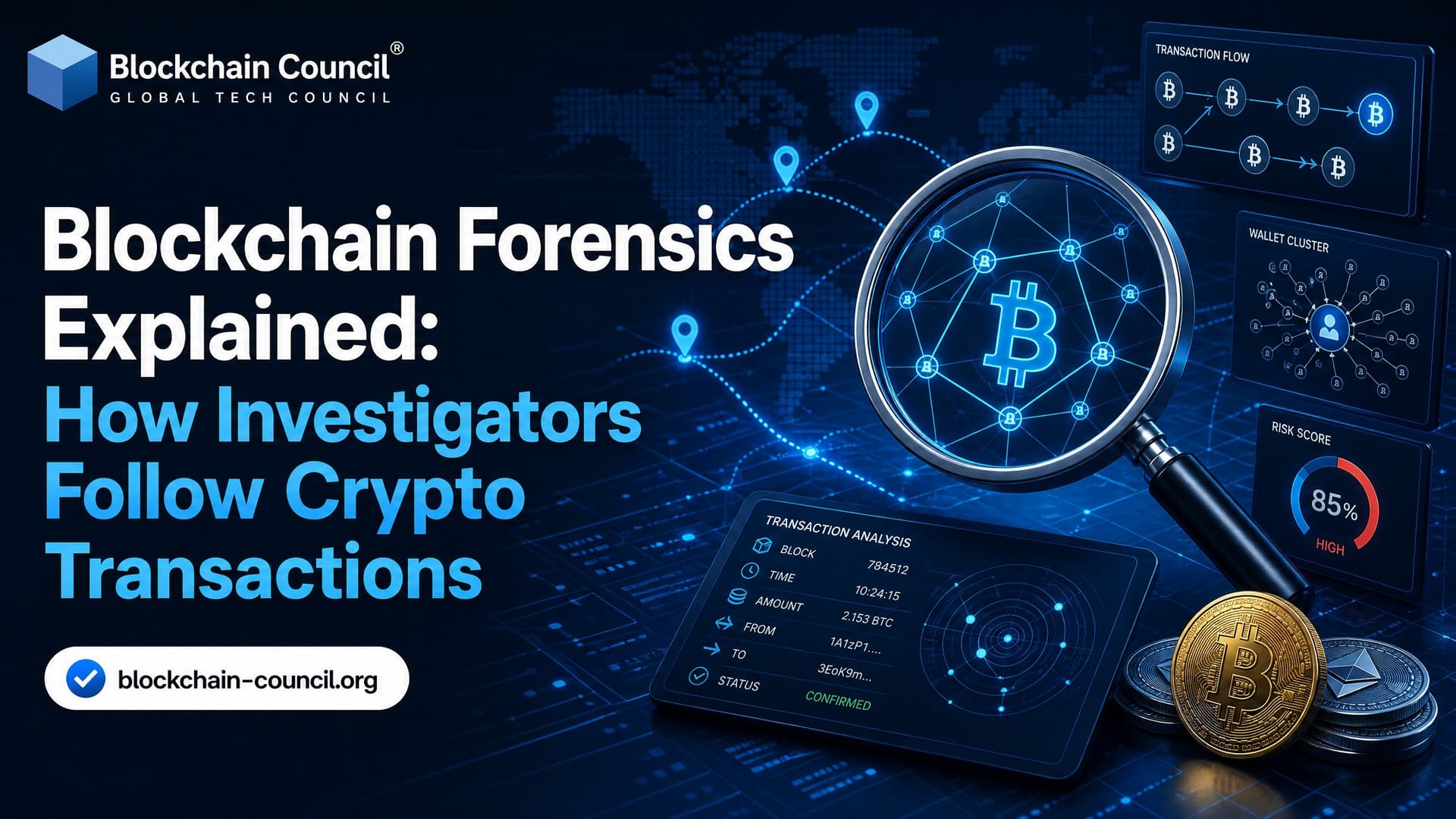
Blockchain forensics is how investigators trace crypto transactions, connect wallets to real-world entities, and turn public blockchain data into evidence. The work is not magic. It is graph analysis, wallet attribution, smart contract review, OSINT, exchange records, and careful documentation that can stand up in a compliance review, civil dispute, or criminal case.
Crypto addresses are pseudonymous, not anonymous. That distinction matters. A Bitcoin address or Ethereum account may not show a legal name, but every transaction leaves a timestamped trail. When that trail touches a regulated exchange, a hacked DeFi protocol, a known mixer, or a wallet already linked to a threat actor, investigators have something to work with.

What Is Blockchain Forensics?
Blockchain forensics is the discipline of collecting, analyzing, and interpreting blockchain data to investigate fraud, theft, sanctions evasion, ransomware, money laundering, terrorism financing, and asset concealment. It combines two evidence streams:
- On-chain data: Transactions, wallet addresses, UTXOs, token transfers, smart contract calls, logs, bridges, swaps, and timestamps.
- Off-chain intelligence: Exchange KYC data, sanctions lists, scam databases, darknet forum posts, device evidence, IP logs, court records, and open-source intelligence.
On-chain records tell you what happened. Off-chain data helps explain who was involved and why it matters.
This is why tools from Chainalysis, Elliptic, TRM Labs, Merkle Science, and similar providers are now used by law enforcement agencies, exchanges, banks, litigation teams, and incident response firms. Academic research on cryptocurrency forensics has also warned that investigative capability has often lagged behind crypto adoption, especially as criminals shift into mixers, privacy tools, bridges, and DeFi.
How Investigators Follow Crypto Transactions
A good investigation usually follows a structured path. The exact steps vary by chain and case type, but the workflow below is common in ransomware, exchange hacks, scam recovery, and AML investigations.
1. Start With a Known Transaction or Wallet
Every case needs a starting point. That could be:
- A ransomware payment address sent to a victim
- A deposit address used in an investment scam
- A wallet that drained a smart contract
- A suspicious exchange withdrawal
- A sanctioned address published by a government authority
From there, investigators pull blockchain records from full nodes, indexers, analytics platforms, block explorers, or internal exchange systems. On Ethereum mainnet, for example, they may review native ETH transfers, ERC-20 token transfers, NFT movements, and smart contract event logs. Beginners often miss this: an ERC-20 transfer may not appear as a normal ETH value transfer. You need the Transfer event, whose event signature hash begins with 0xddf252ad. If you only check the value field, you will miss most token movement.
2. Build the Transaction Graph
Next, investigators map how funds moved from one address to another. This transaction graph may show direct transfers, splitting patterns, consolidation wallets, exchange deposits, mixer usage, bridge activity, or DeFi swaps.
A ransomware case might look simple at first: a victim pays 2 BTC to an attacker address. Then the attacker sends funds through several intermediate wallets, peels off small amounts, sends part to a mixer, and eventually deposits the rest into a centralized exchange. The job is to follow the hops without making assumptions too early.
Graph tools help here because raw block explorer tabs become unreadable fast. A single laundering chain can include hundreds of transactions, especially when criminals split funds into small outputs or use automated scripts.
3. Cluster Addresses Carefully
Address clustering groups wallets that likely belong to the same actor or service. In Bitcoin investigations, one common heuristic is multi-input spending: if several addresses are used together as inputs in one transaction, they may be controlled by the same wallet. Change address heuristics can also help identify which output returned to the sender.
But heuristics are not proof. To be blunt, bad clustering can ruin a case. CoinJoin transactions, such as those associated with Wasabi Wallet, are designed to break simple assumptions about common ownership. Investigators need to label confidence levels and explain why a cluster is likely, not just paste a tool screenshot into a report.
4. Attribute Wallets to Entities
Attribution is where blockchain forensics becomes more useful. Analytics firms maintain large databases of wallet clusters linked to exchanges, darknet markets, gambling services, mixers, scam campaigns, ransomware groups, DeFi protocols, and sanctioned entities.
Attribution can come from many sources:
- Exchange deposit and withdrawal records
- Publicly tagged addresses
- Seizure notices and sanctions publications
- Darknet market payment pages
- Scam victim reports
- Malware wallet reuse
- OSINT from Telegram, X, Reddit, GitHub, forums, and paste sites
If stolen funds reach a regulated exchange, law enforcement may use subpoenas, mutual legal assistance processes, or emergency disclosure requests to obtain customer records and freeze funds. In civil cases, attorneys may use forensic reports to support injunctions, asset preservation orders, or disclosure requests.
5. Detect Mixers, Bridges, and DeFi Obfuscation
Criminals rarely cash out in a straight line. They may use mixers, chain-hopping, stablecoin swaps, decentralized exchanges, bridges, and privacy tools to complicate the trail.
Common laundering patterns include:
- Peeling chains: Repeatedly sending small amounts away while moving the balance forward.
- Fan-out transactions: Splitting funds across many fresh wallets.
- Fan-in transactions: Consolidating many wallets into one exchange deposit or service wallet.
- Bridge movements: Moving assets from Ethereum to another network, then swapping or cashing out.
- Mixer interaction: Sending funds through services designed to weaken transaction linkage.
Tornado Cash is a well-known Ethereum mixer example. Wasabi Wallet often comes up in Bitcoin privacy analysis because of CoinJoin. These tools have lawful privacy uses, but they also appear in laundering cases, so investigators treat them as high-risk points in a flow, not as automatic proof of crime.
Where Smart Contract Forensics Fits
DeFi and NFT cases require more than wallet tracing. You need to read smart contract calls, logs, proxy patterns, approvals, and token permissions.
In an ERC-20 theft, the attacker may not have taken funds through a direct transfer from the victim. The real cause might be an unlimited token approval granted to a malicious contract. In a DeFi exploit, the key transaction may include a flash loan, an oracle manipulation, a swap through an automated market maker, and a final bridge transaction, all in one block.
Analysts often inspect:
- Contract source code on Etherscan or verified repositories
- Event logs and internal transactions
- Proxy admin changes
- Suspicious mint, burn, pause, or owner-only functions
- Token approval histories
- Flash loan paths and price impact
If you work in Web3 security, this is where blockchain forensics overlaps with smart contract auditing. Professionals building this skill set may pair Blockchain Council's Certified Blockchain Expert™ with security-focused learning such as Certified Cybersecurity Expert™, then add hands-on practice with Hardhat, Foundry, Etherscan, Tenderly, and Dune.
Off-Chain Evidence Still Matters
Blockchains do not show a passport number. Investigators still need traditional digital forensics and legal process.
Device and Wallet Forensics
When a suspect device is seized, examiners may look for wallet files, browser extensions, seed phrase screenshots, exchange sessions, encrypted containers, clipboard history, and mobile wallet artifacts. Memory forensics can sometimes reveal active wallet data, although modern encryption and secure enclaves make this difficult.
OSINT and Identity Linkage
OSINT can connect a wallet to a person through small mistakes. A scammer may reuse a username across a darknet forum and a public social profile. A developer may commit a wallet address to GitHub. A fraud operator may post the same deposit address in multiple Telegram groups. These links are rarely enough alone, but they can guide subpoenas and interviews.
Exchange Records and Legal Requests
Centralized exchanges remain major cash-out points. Once funds hit an exchange cluster, investigators may request account details, IP logs, bank withdrawal records, device fingerprints, and KYC documents. This is often where pseudonymous blockchain activity becomes attributable evidence.
Blockchain Forensics in Compliance and AML
Exchanges, custodians, payment firms, and financial institutions use blockchain forensics every day, not only after hacks. Wallet screening can flag exposure to sanctions, darknet markets, ransomware, stolen funds, and high-risk services before a deposit is credited or a withdrawal is processed.
Chainalysis annual crypto crime reporting has consistently found that illicit crypto activity is a small fraction of total on-chain volume, typically far below 1 percent, yet the absolute value can still reach tens of billions of dollars. That is why regulators expect serious crypto businesses to maintain AML controls, transaction monitoring, and documented escalation processes.
If your role touches compliance, the Certified Cryptocurrency Expert™ can be a useful internal learning path to understand transaction mechanics, wallets, exchanges, and crypto risk models before moving into investigation tooling.
Limits of Blockchain Forensics
Blockchain forensics is powerful, but it has limits.
- Privacy coins are harder: Monero uses privacy features that make tracing far more difficult than on transparent chains.
- Cross-chain flows add noise: Bridges, wrapped assets, and decentralized swaps require accurate event interpretation.
- Labels can be wrong: Entity databases improve over time, but false positives happen.
- Heuristics are not evidence by themselves: They need context, corroboration, and clear confidence scoring.
- Legal access varies by jurisdiction: A clear exchange deposit does not guarantee fast records or asset recovery.
The best investigators are skeptical. They preserve raw data, document assumptions, separate facts from inferences, and avoid overstating attribution.
The Future of Blockchain Forensics
The field is moving toward stronger cross-chain analytics, AI-assisted anomaly detection, better smart contract tracing, and tighter collaboration between agencies, exchanges, and private investigators. Layer 2 networks, bridges, account abstraction, DeFi derivatives, and tokenized real-world assets will all create new evidence patterns.
AI will help prioritize alerts and identify suspicious clusters, but it will not replace human judgment. A model can flag a risky transaction. It cannot explain intent, draft a defensible affidavit, or decide whether a CoinJoin output belongs in the same attribution cluster. That work still needs trained analysts.
Want to build practical capability? Start small. Trace a public Ethereum exploit transaction, decode ERC-20 logs, map the fund flow into a graph, and write a one-page evidence note with assumptions clearly marked. Then deepen your foundation with Blockchain Council's Certified Blockchain Expert™, Certified Cryptocurrency Expert™, or Certified Cybersecurity Expert™, depending on whether your goal is blockchain architecture, crypto markets, or investigative security work.
Related Articles
View All
Cryptocurrency
How Does Cryptocurrency Work? Blockchain, Wallets, and Transactions Explained
A clear guide to how cryptocurrency works, covering blockchains, wallets, private keys, transaction signing, mining, staking, fees, and real-world use cases.

Cryptocurrency
Crypto Explained: From Bitcoin to the Digital Asset Revolution
Crypto Explained in simple terms. Learn what cryptocurrency is, why Bitcoin was created, how coins differ from tokens, how wallets work, and the key benefits and risks.

Cryptocurrency
Crypto Lending and Borrowing Explained: DeFi Loans, Rates, and Risks
Crypto lending and borrowing lets users earn yield or access liquidity through DeFi loans, but rates, collateral rules, and liquidations matter.
Trending Articles
The Role of Blockchain in Ethical AI Development
How blockchain technology is being used to promote transparency and accountability in artificial intelligence systems.
AWS Career Roadmap
A step-by-step guide to building a successful career in Amazon Web Services cloud computing.
What is AWS? A Beginner's Guide to Cloud Computing
Everything you need to know about Amazon Web Services, cloud computing fundamentals, and career opportunities.